Austin, TX
Greatest U.S. Golf Resorts: This Austin, Texas Classic Is Better Than Ever


The Horseshoe Bay Resort sits on 6,500-acre Lake LBJ, so there is no shortage of water. This is the … [+]
Why take a golf vacation to the Austin area? Well, it starts with great golf, but when you throw in world-class barbecue, other amazing cuisine, world-class music, and wonderful waterfront, you get a combination that’s hard to beat—if you know where to go.
The golf resort landscape in the United States has changed dramatically in recent years, with the emergence of multiple “mega-resorts” boasting four courses or more under one roof. When I started covering golf travel, you could count those on the fingers of one hand.
This trend, along with the reality of the golf media business, which is to focus on the shiny and new and ignore the classics, caused many once high-profile destinations to drop under the national radar. I’ve recently been focused on exploring golf’s many hidden gems, because it is usually much easier to get rooms and tee times, you often get more bang for your buck and almost always more than you expected, and travel is an industry where it’s all about exceeding expectations. Most recently here at Forbes I covered a top Midwest golf destination that offers ten 18-hole courses, Top 100 in the U.S. golf, and a first-class golf academy at a reasonable price point yet does not get the industry attention it deserves.
There are many pools and multiple lodging options, including the main hotel.
Today we head to Texas, where everything is bigger, including the Horseshoe Bay Resort. Since 2020, renovations and additions here have exceeded $150 million, including brand new golf related improvements of note this year. After these upgrades, it’s fair to say that the iconic Texas resort, while a classic, is better than ever, and worth a look for anyone considering a golf vacation, especially as its starts to get cold in much of the country.
It’s a bit hard to classify Horseshoe Bay as a hidden gem, because I remember when it was one of the biggest destination golf resorts in the country and part of just about every conversation that began “where can we go to a full-service resort and play multiple great golf courses without leaving or driving around?”
Ram Rock is the toughest of the three courses, and architect Robert Trent Jones, Sr. did not skimp … [+]
The resort is home to three famous eighteens by one renowned designer, Robert Trent Jones, Sr., something you will not find anywhere else. When the third of these, Apple Rock, opened in 1986, it was immediately crowned the “Best New Resort Course in America,” by Golf Digest. But that was almost 40 years ago, and how quickly we forget.
I wanted to refresh my memory, so I went back to Horseshoe Bay this year to check out the old and the new. It’s wildly popular in the drive market region, and during peak season it can be hard to get a room, but it is still way too overlooked by those getting on a plane to play golf, considering the amenities and golf variety here—and how easy it is to pair up with charming cities Austin and San Antonio.
Horseshoe Bay just added the first floating pool in the nation, modelled on the famous one at … [+]
While there have been several new resorts with three or more courses on the scene since Horseshoe Bay (Bandon Dunes, Sand Valley, Crystal Springs, Streamsong, Reynolds Lake Oconee), there is still a huge drop-off after 36-holes, and the vast majority of “golf resorts” in the world have just one course, two if they are lucky. To me it’s three or more that makes a place a “destination” resort worth a trip, though there are exceptions with two excellent courses, or places that have a lot of great accessible golf nearby (Pine Needles and Mid-Pines, SC come to mind).
In this sense Horseshoe Bay is still in rarefied company by virtue of having three eighteens (one of only two such options in Texas), especially since golf resorts are increasingly building short courses and counting them toward these towards their totals. Unlike some exaggerators, these are three “real” golf courses (there’s also a fourth, private members-only layout, Summit Rock, a Jack Nicklaus Signature course tied to real estate, and easily enough land for another eighteen at some point).
While all three resort courses are by the same artist, they are very different—which is what you want in a golf resort.
The “Million Dollar Hole” and its famous drive-across waterfall, the 14th at Slick Rock.
For better players (single digit or better), the appeal of Ram Rock is its challenge, and it is very challenging. It’s also a bit of an education in golf course architecture, and quickly demonstrates who much harder uphill approaches play, and how tightly framed greenside bunkers can make a big difference on the scorecard. Mid-handicappers often feel like they are playing well despite frequent near misses, and many green complexes allow for near misses with possibilities of up and down recoveries. Not Ram Rock. Here the approaches are more do or die, and most of them will be longer than you would like. Once you get there, undulating greens make three putts a very real factor. There is also water in play on more than half the holes, and to give you an idea, from the tips the par-3 fourth plays 186-yards—to a penal island green. It’s not unfair, it’s not gimmicky, it’s g just old school hard.
Ram Rock is also the highest ranked course here by Golf Digest and one of the tops in Texas, which demonstrates how course rankings remain skewed towards the tiny percentage of excellent golfers. I like the idea of playing all three on a visit, and it’s very educational, but if you play off more than about 12, Ram Rock is going to be a long day. It’s a par-71 layout but the course rating from the back is 75.2.
Island green par-3 fourth at Ram Rock.
Slick Rock is the oldest course and has always been the member and resident favorite. It is known for its “Million Dollar Hole,” a shortish par-4 that requires a not long, but still scary tee shot over a double tiered and very wide waterfall, one bisected by the cart path so you drive across it. It’s a Vegas touch, very reminiscent of the signature cart path 18th waterfall hole at Wynn Golf Club, only decades older. The large and relatively flat greens provide benign relief with the putter, and overall, this was the one I found the most fun to play. From the regular tees this par-72 has a friendly course rating of 71.4
Apple Rock sits sort of in between, with a lot of elevation change, and holes that play both uphill and downhill, but there’s more room for error, and a big focus on waterfront holes and scenery of huge Lake LBJ on which the resort sits. It is also very good.
If I was going back, I’d play Slick Rock and Apple Rock twice and Ram Rock once, but if you were a low single digit handicapper, I’d put more emphasis on Ram Rock. That’s the beauty of having three distinct courses, still quite rare at golf resorts worldwide.
The state-of-the-art Cap Rock Golf Academy was just added and will host 1, 2 and 3-day immersion … [+]
There are extensive practice facilities at both clubhouses, but on top of this, Horseshoe Bay just built a brand-new state-of-the-art Cap Rock Golf Academy which is opening imminently. The 3,000 square foot academy has two indoor bays with Trackman and Toptracer technology, club-fitting services, a club repair room, and a demonstration area with shafts, grips and clubheads from top manufacturers. There are eight covered outdoor bays with the same Toptracer technology used in the indoor teaching sessions, and a menu of schools, clinics and private lessons for individuals and groups.
Horseshoe Bay’s Director of Golf Instruction Bobby Steiner explained the importance of the new facility: “I worked for Golf Digest schools for about a dozen years and at the Westin Mission Hills in Palm Springs for 18 years, and we taught golf academies. That’s something we just haven’t done here, the one-, two- and three-day golf schools where people come and take lessons as an accompaniment to a vacation. Three hours of instruction on the range followed by lunch, followed by a nine-hole playing lesson followed by unlimited golf. We’re excited to offer this at the resort. Daily clinics will be an attractive offering, too. To give students the chance to focus on different parts of their games: short game clinics, chipping, pitching, putting, bunker play, will be a big benefit.”
The 18-hole grass Whitewater Putting Course was one of the first in the world, and just got a total … [+]
They also just renovated the Whitewater Putting course. Talk about being ahead of your time: in the past few years just about every major golf resort in the country has scrambled to add some sort of putting course, a tradition that hearkens back to the Himalayas at the birthplace of golf, Scotland’s St. Andrews, but was largely ignored in this country until very recently—except at Horseshoe Bay, where the putting course has been a popular fixture for almost 30 years.
This is an 18-hole, par-72 putting course on immaculate Zoysia grass, with everything the big courses offer on a smaller scale: waterfalls, bunkers, water hazards, “fairways,” and extras such as exotic birds and rose gardens. It’s lit up at night, is a ton of fun for golfers and non-golfers of all ages, and surrounds the Whitewater 360 Sports Club, which needless to say, has a bar, adding to the fun. The recent renovations upgraded the grass, sand, irrigation and added new LED uplighting that can be programmed with various colors and themes, alongside an enhanced sound system. They also added adjacent horseshoes, cornhole, and marshmallow roasting, and there’s even a scaled-down take on the classic beverage cart, a roving beverage bike to keep everyone hydrated. Horseshoe Bay Resort just partnered with Callaway so that each golfer who plays receives a new Callaway ball, and Whitewater gets a new fleet of the latest Callaway putters each year. Scheduled theme nights run the gamut from classic rock “Thirsty Thursday” to “Putting, Pizza, Pop Friday” and “Saturday Night Fever Silent Disco.”
That’s just golf. If all you care about on a golf trip playing 36 a day, grabbing a burger and hitting the pillow, there is more competition and choices, but if you prefer a fully amenitized big time resort with multiple courses plus lots of non-golf facilities, the bar gets raised much higher, and this is where Horseshoe Bay excels.
There’s also a yacht club at the lakefront resort.
Horseshoe Bay is a huge (7,000-acre) lakefront resort with just about every amenity you can imagine, including the recent addition of one of just two floating swimming pools in the world, nearly 3,000-sqaure feet of swimming plus private cabanas parked right out on Lake LBJ (the other iconic one is at the famed Villa d’Este resort on Italy’s Lake Como). There are other pools, a beach club, sand volleyball, a floating “splash park” for kids, huge spa, state of the art fitness center, and much more.
The lakeside racquet club with 28 tennis and pickleball courts includes the just added Mouratoglou Tennis Center at Horseshoe Bay Resort. Hailing from Nice, France, this prestigious and world-famous tennis program has been utilized by pro superstars including Serena Williams and Coco Gauff and offers a range of adult and junior camps and clinics, with hard and red clay surfaces. Horseshoe Bay even has its own airport and private jet center. The resort marina is one of the finest in the country, with a brand-new fleet of Mastercraft boats for water skiing and wake boarding, with lessons available, plus Sea-Doos, kayaks, paddleboards and, luxury-chartered pontoon boats, guided fishing, you name it, if it floats they have it.
Horseshoe Bay’s golf and Austin’s urban vibrancy make a perfect vacation combination.
There are restaurants everywhere you go in the resort, from both golf clubhouses to the marina to the main hotel, and of course, plenty of slow smoked Texas barbecue on site (though if you have a car, it’s worth the short drive to Opie’s, a nearby roadside barbecue pit that is world-class). On demand free shuttles link the different courses and parts of the resort, and can also take you to the nearby shops (including food and adult beverage stores) between the main campus and the golf courses.
In keeping with all the options for activities, leisure and food, there’s an equally wide range of lodging choices, including a few hundred hotel rooms and suites in the main Lakeside Tower hotel. There are the one-, two- and three-bedroom Palm Villas, rental condos in the new Residences at Horseshoe Bay, and a variety of unique private home rentals throughout the large community (former Dallas Cowboys legendary quarterback and self-made real estate tycoon Roger Staubach has one of the biggest houses on the lake here).
It’s Texas—Don’t forget the BBQ!
According to the National Golf Foundation, Texas has the fourth most golf courses of any U.S. State with 821, but despite this, Horseshoe Bay is just one of two resorts in the entire huge Lonestar State with more than two eighteens, making it a standout vacation choice. All of this is a straightforward one-hour drive from Austin, and while you probably would not go back and forth during your stay, it’s a great way to bookend your golf vacation with an overnight or two (or three) in the vibrant Texas capital, famed for its live music, food (especially BBQ), eclectic shopping, and vibrancy.
It’s also two hours or less (without traffic) from San Antonio, another great tourism city, home to the Alamo, River Walk and some amazing Tex Mex cuisine. San Antonio also has a bigger airport with more flights than Austin.



AUSTIN, Texas — After Senator Charles Perry vowed to introduce another bill to ban THC in Texas next legislative session, an Austin cannabis shop owner is urging lawmakers to find a middle ground.
Estella Castro owns Austinite Cannabis Co., a family-owned shop that makes and sells cannabis and hemp products.
Austinite Cannabis Co. (Photo: CBS Austin/Audrey Wong)
Her business has faced a potential THC ban before. During the 2025 legislative session, Senate Bill 3 attempted to enact a broad ban on all cannabinoids except CBD and CBG.
Castro says she was most worried for her customers. “It was a big initial hit of like, what are we gonna do? How are we gonna pivot? How are we gonna keep the doors open for everybody to keep their jobs?” she said.
RELATED | Texas state senator plans to introduce new THC ban bill in upcoming session
That bill passed, but was later vetoed by Governor Greg Abbott. Similar legislation failed to pass during the subsequent special session.
However, the possibility of a total ban bill being introduced and passed next session could spell trouble for Austinite Cannabis.
During a hearing Tuesday, July 7, Senator Charles Perry vowed to present such a bill next session as public officials, medical experts, and others discussed THC’s medical uses, effects on minors, and regulation.
Castro says over half of the store’s revenue comes from products that contain THC.
“I would say it’s about a 60/40 split: 60% THC and 40 CBD… So feel like it is a huge number that affects my store in so many ways,” she said.
ALSO | Texas French Bread reopens dining room four years after fire
She feels that a total ban on THC would negatively affect multiple parties.
“Banning it is just hurting the consumer,” she said. “Making the consumer go and find a street dealer… killing any dispensaries… it’s gonna hurt your small business owner.”
If another THC ban bill is written, it will be introduced during the next legislative session, which begins in January 2027.
In the meantime, Castro’s two stores will continue to operate as normal. She hopes lawmakers will think twice about instituting a complete ban on THC.
“I feel like we’re better than that, you know, we’re Texas,” she said. “We need to find some middle ground where it’s not a complete ban, and we can still be able to come together.”

AUSTIN (KXAN) – Trevor Goosby is a projected first-round pick in the upcoming 2027 NFL Draft. The Texas offensive lineman anchors the group up front for one of the best teams in the country and was named a preseason All-American by Walter Camp.
But his football career felt in jeopardy when he was in high school.
“That was kind of my biggest question,” said Goosby. “I was really nervous because would I be the same football player coming back?”
Goosby was born with a congenital heart defect and had open-heart surgery when he was just 16 years old. He wasn’t sure how this would change his everyday life, including his football career.
“Definitely a lot of nerves just because you’re getting your ribs cracked open essentially and getting your heart worked on…It was a scary moment. I remember driving up to the hospital super nervous.”
Goosby was able to recover and become a great football player. He said not only has he become a person in learning to fight through adversity, but it helped him as a player as well with improved endurance.
Now, the star Longhorn is giving back as much as possible.
Goosby hosted a camp in Austin to benefit the Children’s Heart Foundation. The organization works to fund research on congenital heart defects.

The offensive tackle is matching all donations up to $20,000 made to the Children’s Heart Foundation through the event and campaign.
“It means a lot to me just because of the heart condition I did have back when I was 16. That just kind of changed my life. I just want to bring awareness to that.”
The camp was at Hyde Park High School in Northwest Austin. Goosby spoke about what he hopes the young campers took away from the event.
“I think it’s just more than football. Football is a big part of what I do but it’s not who I am…I just want to show all these kids that I’m just another great guy and just someone they can look up to.”

-
 Business4 minutes ago
California soccer fans sue StubHub after it fails to deliver expensive World Cup tickets
-
 Entertainment7 minutes ago
Lucas Museum to give free annual passes to South L.A. neighbors, host community preview day
-
 Lifestyle12 minutes ago
Meow Wolf taps famed L.A. animation house for its new Los Angeles venue
-
Politics19 minutes ago
Column: Trump decries ‘communism’ while his government takes ownership of companies
-
 Science22 minutes ago
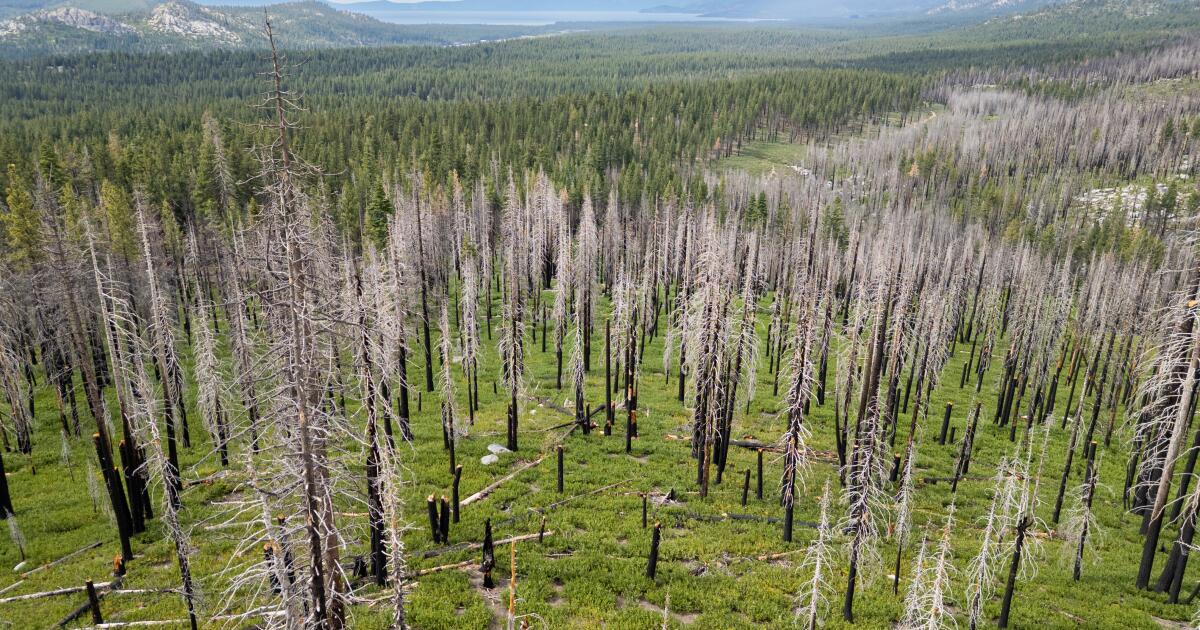
‘I’d rather my house burn down than get cancer’: Herbicide use upends California’s fight to save forests
-
 Sports27 minutes ago
Dodgers scheduled to visit White House in late July to celebrate 2025 World Series win
-

 World37 minutes ago
Former US Olympian pleads not guilty in DC reflecting pool vandalism case
-
 News1 hour ago
Former Olympian pleads not guilty in reflecting pool vandalism charges


