Atlanta, GA
Habitat for Humanity building a legacy by transforming former Atlanta skate park into neighborhood

At Langston Park in Sylvan Hills, a once-abandoned eight-acre skate park is being transformed into a new community.
Over the course of a single week, over 700 volunteers are working alongside future homeowners to build 24 homes as part of a major Habitat for Humanity effort.
Habitat for Humanity hasn’t constructed a development in Atlanta since 1988.
For Chip Carter, the project carries both personal and global meaning. His parents, former President Jimmy Carter and first lady Rosalynn Carter, began their work with Habitat for Humanity in 1984, helping elevate the organization into a worldwide mission. Over the past 50 years, Habitat says it has helped more than 65 million people access new or improved housing.
Homes are sold without interest and built largely through volunteer labor, helping keep costs within reach. That matters in a city like Atlanta, where housing affordability has become increasingly strained. According to JPMorgan Chase, the share of median income needed for a monthly mortgage in the city jumped from 25 percent to 41 percent in just five years.
Habitat homes aren’t giveaways. Applicants go through years of screening, including financial reviews, background checks, and proof of steady employment and income. They also complete more than 250 hours of training to prepare for the responsibilities of homeownership.
“This is a much bigger deal,” Carter said. “To have a place to sleep is a big deal. And not having to pay rent — when you put money into it, you get to build equity.”
For Langston Park’s future homeowners like Lauren Clarke, that path to ownership is anything but automatic. Clarke, a University of Georgia graduate and single mother of twin 5-year-olds, has been living with her parents while searching for stable housing.
As she helped to hammer nails into the wall siding, Clarke professed, “It makes me feel strong. I feel strong today.”
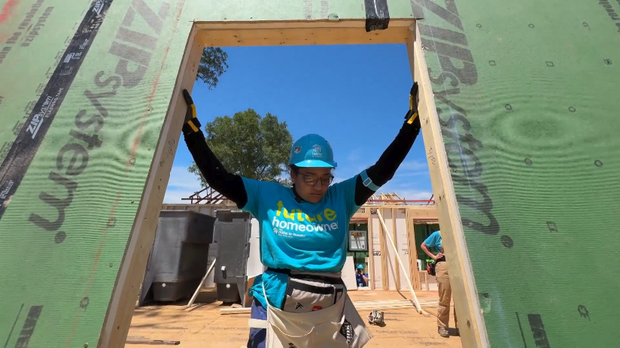

For her, the opportunity represents more than just a roof over her family’s heads.
“When you buy a house, it gives you a sense of pride — in the best way,” she said. “Maybe we can keep that going generation to generation.”
Sixty-eight families are expected to begin moving into the homes by the end of the summer, and there are plans to expand the development in the next few years.