Arkansas
Arkansas lawmakers approve emergency rule to grant SNAP benefits to Marshallese migrants • Arkansas Advocate


A legislative subcommittee on Thursday approved an emergency rule to comply with a new federal law that extends certain public assistance program benefits to migrants from the Marshall Islands.
Arkansas is home to the largest Marshallese community in the country, according to U.S. Census Bureau estimates.
The emergency rule the Department of Human Services presented to the Arkansas Legislative Council’s Executive Subcommittee Thursday afternoon updates eligibility provisions contained in the DHS Division of County Operations (DCO) rules to comply with the Consolidated Appropriations Act of 2024.
The Act, which President Joe Biden signed into law on March 9, contains changes to the renegotiated Compacts of Free Association (COFA), which extend Supplemental Nutrition Assistance Program (SNAP) and Transitional Employment Assistance (TEA) eligibility to citizens from the Republic of the Marshall Islands, Federated States of Micronesia and the Republic of Palau.
Immigrants in Arkansas struggle to achieve better life they came to the U.S. to find
COFA allows the United States to operate military bases in these Pacific Island nations in exchange for guarantees and economic assistance. Migrants from these Freely Associated States can live and work in the U.S. as lawful non-immigrants.
According to documents submitted to the committee, an emergency rule is required because the Pacific Islander community has the highest poverty rate in Arkansas and “there exists imminent peril to the public health, safety and welfare of the state.”
More than 32% of the state’s Native Hawaiian and Pacific Islander population live below the poverty rate, according to American Community Survey census data.
“We’ve just now received the guidance from [USDA Food and Nutrition Service] and we have been asked repeatedly by some of the Marshallese for the need of this, so we bring it to you as an emergency rule to have it implemented,” said Janet Mann, DHS deputy secretary for programs and the state Medicaid director.
With no discussion from members, the committee quickly approved the rule, which co-chair Rep. Jeff Wardlaw, R-Hermitage, said would become effective upon adjournment of the Arkansas Legislative Council’s meeting Friday.
A permanent rule will be promulgated to be effective by Dec. 1, according to documents submitted by DHS.
A report released last year by Arkansas Advocates for Children and Families and the Arkansas Coalition of Marshallese recommended granting Marshallese migrants SNAP eligibility through legislation like the Compact Impact Fairness Act to address the community’s struggles with food insecurity.
Co-sponsored by Arkansas U.S. Rep. Steve Womack and Sen. John Boozman, the Compact Impact Fairness Act proposed allowing COFA migrants to qualify for most safety net programs, including SNAP. Language from that bill was incorporated into the amended compact with the Marshall Islands, which was agreed to last October.
GET THE MORNING HEADLINES DELIVERED TO YOUR INBOX
Compensation for past nuclear weapons testing by the U.S. was a sticking point in COFA negotiations and it delayed the renewal process. From 1946 to 1958, the U.S. conducted 67 nuclear weapons tests on and near the Marshall Islands, including the largest bomb ever detonated by the United States.
The original compact with the Republic of the Marshall Islands became effective in 1986, with economic assistance beginning in 1987. The RMI signed agreements in 2003 to renew compact assistance, and Congress passed legislation amending the compacts and extending economic assistance for 20 years.
But Marshallese migrants lost access to programs like Medicaid and SNAP two decades ago when their unique immigration status was not accounted for in the Personal Responsibility and Work Opportunity Reconciliation Act, a 1996 welfare reform law. Congress restored Medicaid access in 2020, and the Consolidated Appropriations Act of 2024 amended the 1996 law to restore SNAP access this year.
Under the updated compact, COFA citizens are not subject to a waiting period and are immediately eligible for benefits as long as they meet all other SNAP requirements, according to guidance issued by the U.S. Department of Agriculture in July.
COFA citizens who applied on or after March 9, 2024, and were denied SNAP benefits prior to the USDA issuing guidance may reapply or request a fair hearing within 90 days of the denial date. If an official determines the household was eligible for SNAP at the time of application, the state agency should issue retroactive benefits from the date of application, according to the guidance.
The USDA also encouraged state agencies to track COFA citizens who have been denied SNAP benefits since March and encourage them to reapply or request a fair hearing.



Fort Smith Historic Site: Law, conflict and the West
Explore Fort Smith Historic Site, where westward expansion, federal justice and Native American history shaped life on the American frontier.
A former Arkansas Tech University graduate and commander of the U.S. Army Intelligence and Security Command is being remembered with two posthumous honors recognizing his lasting influence on the nation’s military intelligence operations.
The late Maj. Gen. Gary W. Johnston, a 1987 Arkansas Tech graduate and Russellville native, was honored during a dedication ceremony June 25 at Fort Huachuca, Arizona, where the Army officially named a newly consolidated military intelligence complex the Major General Gary W. Johnston Consolidated Mission Facility.
Johnston also was posthumously inducted into the Military Intelligence Hall of Fame for helping reshape Army intelligence through the integration of emerging technologies, including big data analytics, artificial intelligence and machine learning.
The new facility serves as a central hub for U.S. Army Intelligence and Security Command (INSCOM) operations at Fort Huachuca, known as the “Home of Army Intelligence.” It houses some of the Army’s most critical intelligence personnel and brings together units that had previously operated from aging buildings spread across the installation.
Army officials said the previous arrangement created operational challenges, including limited secure workspaces, outdated infrastructure and additional security requirements. Beginning in 2018, INSCOM launched an effort to consolidate those missions by renovating two existing buildings into a 16,300-square-foot intelligence operations center designed to improve collaboration and security.
The facility now houses INSCOM G3’s Detachment 52, elements of the U.S. Army Counterintelligence Command, representatives from the Ground Intelligence Support Activity, an emerging Foundry program element and other intelligence organizations.
Among those attending the dedication were Johnston’s wife, Brig. Gen. Amy Johnston, daughter Lauren Woodworth and granddaughter Arabella Woodworth.
Maj. Gen. Rhett R. Cox, commanding general of U.S. Army Intelligence and Security Command, said the building represents more than a new workplace.
“As we dedicate the U.S. Army INSCOM Major General Gary W. Johnston Consolidated Mission Facility, we do more than just open a new facility… we consecrate a tribute to his indelible legacy,” Cox said. “This facility will stand as a constant reminder of his service, his vision and his unwavering commitment to our nation and to the soldiers he led. It will inspire future generations of intelligence professionals to emulate his example of leadership and selfless service.”
Retired Chief Warrant Officer 5 Kevin Boughton, former INSCOM command chief warrant officer, said Johnston envisioned closer collaboration between the Army’s intelligence training and operational communities.
Boughton said Johnston believed the distance between the Intelligence Center of Excellence and INSCOM’s operational units “shouldn’t be measured in miles,” but instead by “a seamless flow of data, doctrine, and talent” where operational experience and institutional knowledge move freely between soldiers in the field and those training the next generation.
Johnston graduated from Russellville High School in 1983 before earning a Bachelor of Science in Business Administration from Arkansas Tech in 1987. Through the university’s Reserve Officers’ Training Corps program, he received his commission as a U.S. Army officer.
During a military career spanning more than 34 years, Johnston served in command and staff assignments ranging from platoon level to senior leadership within the Army and Department of Defense. He deployed in support of Operation Desert Shield, Operation Desert Storm, Operation Joint Endeavor, Operation Enduring Freedom and Operation Freedom’s Sentinel.
In 2015, Johnston became the seventh graduate of Arkansas Tech’s Army ROTC program to attain the rank of general officer. He was promoted to major general in 2017.
He concluded his military career as commanding general of U.S. Army Intelligence and Security Command, overseeing approximately 17,500 personnel operating in more than 40 countries.
Army leaders credited Johnston with helping modernize military intelligence by laying the groundwork for the establishment of the U.S. Army Counterintelligence Command, which was formally created in 2022 after his retirement. He also led development of what became the Army Intelligence Data Platform, designed to incorporate advanced data analytics, artificial intelligence and machine learning into intelligence operations while supporting future large-scale combat operations.
Johnston also promoted data science education within the military intelligence community by partnering with George Mason University to provide specialized training for Army warrant officers.
Colleagues remembered Johnston not only for his strategic vision but also for his leadership style. Despite working in one of the Army’s most demanding operational environments, they described him as a source of humor, kindness and encouragement whose focus remained on the soldiers, civilians and contractors carrying out the intelligence mission.
Johnston retired from active duty in 2021 and died in January 2022.
His latest recognitions add to previous honors from his alma mater. Johnston was a member of the inaugural Arkansas Tech Army ROTC Hall of Honor in 2017 and was inducted into the university’s Hall of Distinction in 2019.
The Arkansas Lottery offers several draw games for those aiming to win big.
Here’s a look at Tuesday, July 7, 2026 results for each game:
Winning Mega Millions numbers from July 7 drawing
02-31-35-36-63, Mega Ball: 12
Check Mega Millions payouts and previous drawings here.
Winning Cash 3 numbers from July 7 drawing
Midday: 6-0-0
Evening: 0-0-8
Check Cash 3 payouts and previous drawings here.
Winning Cash 4 numbers from July 7 drawing
Midday: 3-7-6-5
Evening: 7-2-5-0
Check Cash 4 payouts and previous drawings here.
Winning Natural State Jackpot numbers from July 7 drawing
10-18-26-33-38
Check Natural State Jackpot payouts and previous drawings here.
Winning Millionaire for Life numbers from July 7 drawing
27-43-48-49-50, Bonus: 02
Check Millionaire for Life payouts and previous drawings here.
Feeling lucky? Explore the latest lottery news & results
When are the Arkansas Lottery drawings held?
- Powerball: 9:59 p.m. CT on Monday, Wednesday, and Saturday.
- Mega Millions: 10 p.m. CT on Tuesday and Friday.
- Cash 3 Midday: 12:59 p.m. CT daily except Sunday.
- Cash 3 Evening: 6:59 p.m. CT daily.
- Cash 4 Midday: 12:59 p.m. CT daily except Sunday.
- Cash 4 Evening: 6:59 p.m. CT daily.
- Lucky For Life: 9:30 p.m. CT daily.
- Natural State Jackpot: 8 p.m. CT daily except Sunday.
- LOTTO: 9 p.m. CT on Wednesday and Saturday.
- Millionaire for Life: 10:15 p.m. CT daily.
This results page was generated automatically using information from TinBu and a template written and reviewed by an Arkansas editor. You can send feedback using this form.
Arkansas
Sanders Appoints Steve Kueter to the Arkansas Game and Fish Commission • Arkansas Game & Fish Commission

Kueter is a lifelong resident of Greene County and earned a Bachelor of Science degree in Wildlife Management from Arkansas State University. He owns and operates Kueter’s Fish Company, Inc., a third-generation catfish and baitfish farm in Paragould.
An avid hunter and fisherman since childhood, Kueter developed a lifelong appreciation for Arkansas’s outdoors through time spent hunting and fishing alongside his father, grandfather and extended family. Today, he continues that tradition with his wife, Emily, their three children, and two grandchildren.
“In my lifetime, there have been so many success stories facilitated by the Arkansas Game and Fish Commission,” Kueter said. “When I was growing up, you had to travel hours away to deer hunt, and turkeys were just being reintroduced to the Ozarks. When we deer hunted in north Arkansas, we came back talking about seeing a lone track or the flash of a deer’s tail. It wasn’t often that you heard of someone harvesting a deer. Today, turkey and deer are abundant throughout most of the state. It is humbling to be appointed by Gov. Sanders and entrusted to continue the good work of the Arkansas Game and Fish Commission and the commissioners who have come before me.”
-

 Arizona23 seconds ago
Arizona man pleads guilty after illegally living in forest for years among ‘1,000lbs of trash’
-

 Arkansas5 minutes ago
Army names intelligence facility for Arkansas Tech graduate
-

 California12 minutes ago
How California Effectively Legalized an Open-Air Sex Market
-

 Colorado15 minutes ago
Julian Lewis Says Deion Sanders’ Colorado ‘Wasn’t Really Looking at Defenses Much’ Last Season
-
 Idaho20 minutes ago
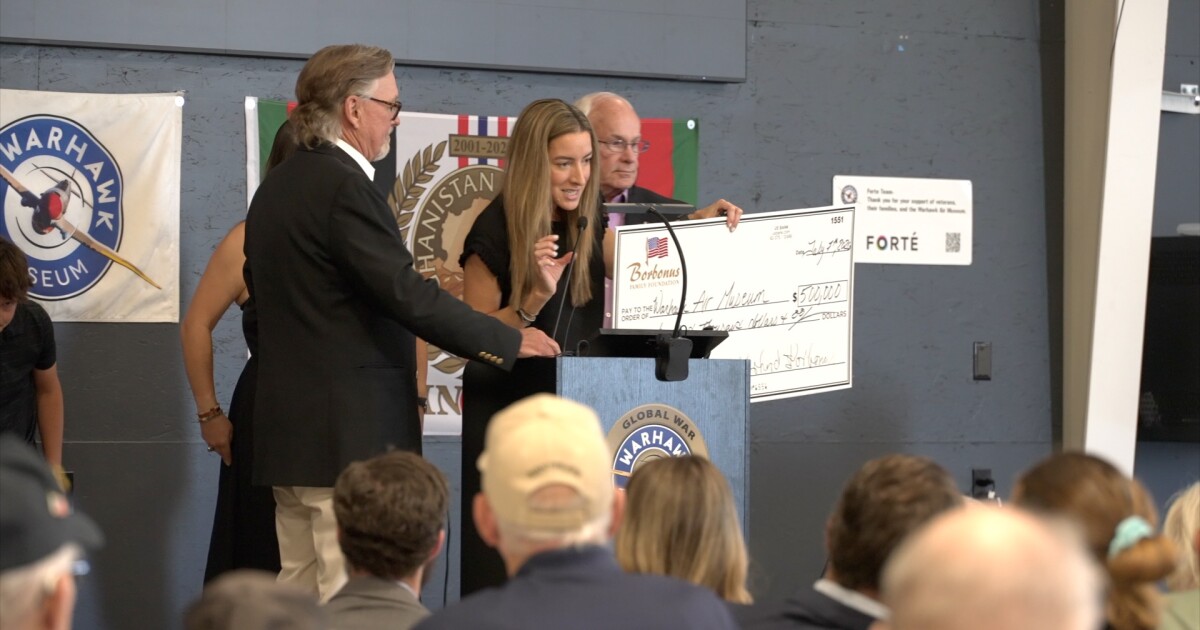
Warhawk Air Museum receives $500K grant honoring fallen Idaho soldier
-

 Connecticut20 minutes ago
Several beaches closed to swimming due to potential bacteria in the water
-

 Delaware27 minutes ago
Delaware Libraries Introduce Digital Literacy Specialists Program – State of Delaware News
-

 Florida30 minutes ago
Video shows man attack Florida deputies in snake-and-gator-infested canal, sheriff says

