Alabama
Gov. Kay Ivey pushes for school voucher-like program in State of the State – Alabama Reflector

Gov. Kay Ivey called for the creation of a voucher-type program for Alabama public school students and a variety of programs on education and health in her annual State of the State address on Tuesday.
The governor also called for high starting salaries for teachers and a pilot program to deliver care to pregnant women in the state.
The voucher-type program, called the CHOOSE Act, was the climax of a speech that touched on several big issues in the state – particularly prisons and low workforce participation – without providing specific details on addressing them.

The CHOOSE Act, filed by Sen. Arthur Orr, R-Decatur, earlier on Tuesday, would create a schedule of tax credits for parents to use. For the first two years, it would offer a tax credit of up to $7,000 for households making up to 300% of the poverty level – about $75,000 a year for a family of three – to use toward private school tuition. The income cap would be lifted in the third year of the program.
“As additional families choose to participate in the program, and as our revenue increases, we can grow the program responsibly so that it can be fully universal for every Alabama family who wishes to participate,” Ivey said.
She said the goal would be to put the state “on a trajectory to make our program fully universal.”
Ivey also called for teacher raises, calling for Alabama to have the highest starting salary for teachers among neighboring states, and called for it to be done in this session.
“At the end of the day, I believe the CHOOSE Act — packaged with providing our K-12 teachers the highest starting salaries — will help our public schools become even stronger,” she said.
GET THE MORNING HEADLINES DELIVERED TO YOUR INBOX
Finance Director Bill Poole earlier Tuesday said Governor Kay Ivey’s proposed General Fund budget would amount to about $3.3 billion, an 8.16% rise from the current year, with an ETF proposal of $9.3 billion, marking a 6.25% increase.
Poole said the governor would emphasize education savings accounts, targeted K-12 funding, and additional allocations for specific education-related initiatives within the proposed budgets.
Alabama lawmakers were briefed by finance officials Tuesday morning regarding the condition of the state’s two budgets, in which they called for caution in the foreseeable future.
Kirk Fulford, the director of the Fiscal Division of the Alabama Legislative Services Agency, projected appropriations for the Education Trust Fund budget (ETF), responsible for K-12 education, will grow from approximately $8.8 billion to $9.3 billion for the fiscal year 2025. Similarly, appropriations for the General Fund, funding non-educational aspects, were estimated to increase from $3 billion to $3.36 billion in 2025.
Fulford highlighted the unprecedented growth in education revenue in recent years, fueled primarily by substantial federal pandemic relief funds. Poole echoed Fulford’s presentation regarding the unsustainable nature of the rapid growth in education budget in recent years.

House Minority Leader Anthony Daniels, D-Huntsville, was concerned with what would be the threshold for the families in need. He said he imagines the threshold to be a family yearly income of $75,000, which is not something he could get behind.
“I think that using the term ‘low-income,’ I don’t necessarily know that that threshold fits that description of what low income means” Daniels said.
He feels that Alabama needs to look at and repair its current education system, instead of building a new one, which he called uncertain and “with no proven track record.”
“We have public charters. We have AAA. We have public schools,” he said. “How many more options do you need?”
Senate Minority Leader Bobby Singleton, D-Greensboro, expressed concerns about private schools’ lack of accountability and proposed stricter certification requirements for teachers, and said that public schools are what’s best for children.
“Families that are most in need, most likely, if there’s no transportation, they can’t get to the next county or the next best school if it’s not within their area. That says a whole lot but it says nothing to me,” he said.
Gambling
Ivey Tuesday reiterated her long-held position that Alabamians should vote on gaming.
“This year when Alabamians make their way to the ballot box, I hope they will be voting on another issue: gaming,” she said.
Two House Republicans – Reps. Andy Whitt of Harvest and Chris Blacksher of Smiths Station – are developing gambling legislation that they said could have lottery, casino and enforcement provisions, though the details have not been made public.
Any legalized gambling in Alabama requires a constitutional amendment that would be submitted to voters for approval. If the Legislature approves a gambling bill, it will go straight to the ballot. The governor does not have a role in the process.
Ivey said she would be “carefully watching” the legislation as it moves through the Legislature.”
Daniels said they are in a good place, but he couldn’t say for certain where they are in the negotiations since there are lawmakers still opposed to it.
“We’re still working out the details,” he said.

Prisons
Gov. Ivey said the Alabama Department of Corrections “remains a key focus in our state’s public safety efforts.”
She said they are moving forward with building two new state prison facilities. Last year, the price for one prison topped $1 billion, taking up almost all the funding allocated by the Legislature for two new men’s prisons in 2021.
”We are moving forward in our mission to build two new facilities,” she said, though she did not share details.
Ivey also praised ADOC Commissioner John Hamm, saying there was “no one more capable to lead” efforts to improve state prisons.
The state’s prisons have faced overcrowding and violence for decades. In 2020, the U.S. Department of Justice filed a lawsuit against Alabama following two reports on physical and sexual assaults within men’s correctional facilities.
According to Alabama Appleseed, 325 people died in the state’s prisons last year.
Health care
In her speech, Ivey suggested that the Alabama School of Healthcare Sciences, which she proposed for Demopolis as its location, could be a solution to health care concerns, especially in rural Alabama.
“This school will directly expose young men and women from around Alabama, and particularly rural students, to various healthcare fields, and it gives them options,” she said.
Ivey also said she launching a pilot program to provide pregnant people with checkups at nine county health departments that she said was in areas of need, crediting Alabama being a “pro-life state.”
“I am more committed than ever to protect the sanctity of life, and as I said on this occasion last year, our work is not done” she said.
Alabama has some of the highest rates of maternal mortality in the South.

Economic development
In her speech, Ivey also said her administration is committed to reforming the state’s workforce development sector but didn’t provide specifics.
“When it comes to workforce developments, there are two customers: jobseekers and employers,” she said.
She said Alabama must raise the workforce participation rate, which is below the national average, at 57%. She said that Alabama can’t reach “its full potential with nearly half of its population on the sidelines.”
Alabama’s workforce participation rate has trailed the nation’s since 1976. Experts say a lack of access to child care and transportation play a role.
Singleton, who credited Alabama’s economy and low unemployment rate to President Joe Biden, said that having a job is different from having a job with a livable wage. He said that, especially in rural Alabama, people have to travel to work, some over an hour. He said the state needs to create jobs in rural areas so that people don’t have to travel over an hour to work.
“We must develop jobs in our rural areas so that people don’t have to travel so far to be able to make it to work, so they’ve got dollar that they are making to equal to something that means something to them,” Singleton said.

Alabama
Alabama’s role in Artemis II mission includes Birmingham native who helped shape NASA rocket

Alabama’s footprint in NASA’s return to deep space was on display this week as the Artemis II mission launched, marking the first human journey toward the moon in more than 50 years.
From work at Marshall Space Flight Center in Huntsville to leadership across the Artemis program, the state has played a central role in developing the systems powering the mission.
Among those contributions is Kimberly Robinson, a Birmingham native who helped develop the Artemis program and contributed to the formulation of the Space Launch System rocket used for the mission.
Robinson also served as payload mission manager for Artemis I, the uncrewed test flight that laid the groundwork for Artemis II.
Her connection to the current mission extends to its crew. Years ago, Robinson briefed astronaut candidate Victor Glover on the Artemis rocket during a visit to Marshall Space Flight Center. Glover now serves as pilot of Artemis II.
Robinson, a graduate of Shades Valley High School, told Birmingham television station WBRC the moment carries both personal and professional significance.
“It’s very historic and has a lot of meaning for me personally as I was a part of setting up the program and organizing it,” Robinson said.
She reflected on how her path to NASA began with an early interest in space exploration.
“It’s really incomprehensible. I can’t believe it. I remember doing my 5th grade term paper on Wernher von Braun and his rocket team. Never in my wildest imagination would I think that I would ever do something in a center he created,” she said in her interview with the outlet.
Robinson spent more than 30 years at NASA and later led the U.S. Space and Rocket Center before retiring in 2025.
The Artemis II mission is expected to push astronauts farther into space than ever before, building on decades of work led in part by Alabama-based teams.
“Not only are we returning them to the area, picking up where we left off but we are going further than humans have ever ventured into space before. They will have a perspective that we have not ever had before and I want to hear about their experiences so I’m very excited for that,” Robinson said, according to the station.
She added that continued space exploration could lead to advances beyond spaceflight itself.
“It’s very important that we keep pushing forward and meeting challenges because that’s where we’re going to find new materials, new drugs to cure diseases that have been around a long time,” she said.
Artemis II’s mission is anticipated to last ten days, with the astronauts returning to earth in mid-April.
Sherri Blevins is a staff writer for Yellowhammer News. You may contact her at [email protected].

TUSCALOOSA, Ala.— You could hear a pin drop in Rhoads Stadium after the first inning of Friday night’s game between No. 1 Texas and No. 5 Alabama, but the silence didn’t last very long.
Despite trailing by four runs after the top of the second inning, the Crimson Tide rallied for five two-out runs in the bottom half of the frame and kept it going with an 11-4 win to even the series against the Longhorns.
“Before you look up, it’s 4-0, and it’s like, ‘Uh oh, here we go again,’” Alabama head coach Patrick Murphy said after the game. “And then in the bottom of the second, the hitters took over
Freshman Vic Moten could not find the strike zone for Alabama to start the game. She was lifted for Jocelyn Briski after facing just eight batters, but five of those batter drew walks, and the Longhorns scored three runs. Moten had previously not allowed more than three walks in any of her previous starts.
The Alabama pitcher showed ultimate grit when she re-entered for Briski with bases loaded and one out in the third inning. She got out of the jam unscathed and did not allow another run for the remainder of the game.
Moten gets out of the bases-loaded jam😤
📺 @SECNetwork | https://t.co/gTEKqX9hp4#Team30 #RollTide pic.twitter.com/WNFOzv4KG9
— Alabama Softball (@AlabamaSB) April 4, 2026
“I knew my stuff was moving today, it was just a matter of finding the strike zone and executing timely pitches,” Moten said. “I just went out and worked on the pitch that wasn’t working, and I came back in, and it worked.”
Pitching coach Lance McMahon told Moten that she would eventually be coming back into the game right after she exited. She took a deep breath and went to work in the bullpen. Moten threw 46 pitches in the first inning alone and only 61 pitches over the final 5.1 innings she threw. She finished with six strikeouts, including the final out of the game.
Texas had its own issues throwing strikes as Alabama drew four free passes in that second inning. Brooke Wells provided the big blow with her bases-clearing double that gave the Tide its first lead of the series at 5-4.
“We had our best hitter up to bat with the bases loaded, and that’s what you want,” Murphy said. “She comes through in the clutch.”
Brooke Wells with the bases-clearing double‼️
📺 @SECNetwork | https://t.co/gTEKqX9hp4#Team30 #RollTide pic.twitter.com/a5QbofVI4q
— Alabama Softball (@AlabamaSB) April 4, 2026
Freshman Ambrey Taylor continued to prove why she belongs in the lineup with a leadoff home run in the bottom of the fourth inning absolutley crushed out to dead center. She followed it up the next inning with a two-RBI single to make it 10-4 Tide. Taylor wasn’t even a starter when conference play began, but she already has four home runs and 10 RBIs in SEC play.
Ambrey Taylor with the MOONSHOT🌛
📺 @SECNetwork | https://t.co/gTEKqX9hp4#Team30 #RollTide pic.twitter.com/f7GZTj6jhb
— Alabama Softball (@AlabamaSB) April 4, 2026
“When the one went over tonight, I was like, ‘Damn, this kid is a gamer,’” Murphy said of Taylor. “I mean, there’s no other way around it… She worked her way into the lineup for sure. She showed me. She absolutely showed me, ‘You gotta put my name in the lineup.’ And she continues to do it. That’s what you want as a coach.”
Audrey Vandagriff added on the final run with an RBI single in what was a two-hit day for her down in the six spot.
The Crimson Tide easily could’ve folded after facing a four-run deficit to the defending national champions and top-ranked team in the nation, especially after losing the first game of the series by eight runs. Instead Alabama rallied in Rhoads for an important win that can be a building block for the rest of the season.
“Our biggest thing on the season this year is just not getting beat back to back, and we really take pride in that,” Moten said. “So today we knew we were coming out with a dog-fight mentality.”
Alabama (34-3, 8-3 SEC) will be going for its fourth straight SEC series win while trying to hand Texas (32-3, 9-2 SEC) its first conference series loss in the finale on Saturday at 12:30 p.m.
Sign up to our free newsletter and follow us on Twitter/X, Facebook, YouTube, Instagram, Threads and Blue Sky for the latest news.


D’Road Cafe offers signature brunch items. See for yourself
A look at some of the brunch offerings at downtown Montgomery’s D’Road Cafe.
Every year, Americans devour an estimated 50 million burgers, a sizzling testament to the nation’s enduring passion for beef, buns and bold toppings.
From roadside diners to upscale gastropubs, the hamburger has become a culinary symbol, with each state offering its own unique twist.
The team at Foodie has taken on the delicious challenge of finding the very best burger in every state. By combing through hundreds of customer reviews, spotlighting local award winners and even digging into regional news coverage, they’ve crafted a list that celebrates standout spots from coast to coast.
And when it comes to Alabama, one burger rises above the rest.
What is the best burger in Alabama?
In Alabama, Vicki’s Lunch Van in Montgomery claims the top spot.
What sets it apart? According to Foodie, the small, no-frills spot is “darn-near flawless,” known for freshly made cheeseburgers that taste exactly how a classic burger should.
If there’s one dish that defines the experience, it’s the Gunter Pile. This decadent creation layers a juicy burger patty with gravy and a mixture of fried and crispy onions, all atop a bed of fries. It’s messy, indulgent and distinctly Southern.
How to grab your burger at Vicki’s Lunch Van
If you want to try Vicki’s Lunch Van, note that this Montgomery favorite typically operates during limited lunch hours. Vicki’s is located at 106 Coliseum Blvd.
A lasting legacy
According to posts shared on Facebook, the restaurant’s owner, Vicki Lammon, passed away in February 2026.
The news brought an outpouring of support and memories from devoted customers. Many spoke not just of the quality of the food, but also of the welcoming atmosphere and personal touch that made the place special.
Jennifer Lindahl is a Breaking and Trending Reporter in Alabama for USA TODAY’s Deep South Connect Team. Connect with her on X @jenn_lindahl and email at jlindahl@usatodayco.com.

Final Four: Yaxel Lendeborg vows to play vs. UConn after finishing win over Arizona with MCL, ankle injuries — ‘I’m gonna play unless I can’t walk’

3 people killed, passenger injured in Arkansas crashes | Northwest Arkansas Democrat-Gazette

Loved ones search for missing 15-year-old Southern California girl

Connecticut’s top Indian restaurants of 2026, according to Connecticut Magazine

2 injured, including 1 teen, in Wilmington shooting, both in critical condition

Florida High School Football Rankings: Top 25 teams – Oct. 21

How old is Bo Nix? What to know about Oregon quarterback ahead of 2024 NFL Draft

Cleary's 21 help Le Moyne down Central Connecticut State 69-64 in OT

99th annual Pony Swim held in Virginia

Indiana Members Credit Union announced as new anchor tenant at Bottleworks District

FBI’s Patel delivers blunt warning to law enforcement attackers: ‘We’re going to put you down’

Indonesia receives bodies of peacekeepers killed in southern Lebanon
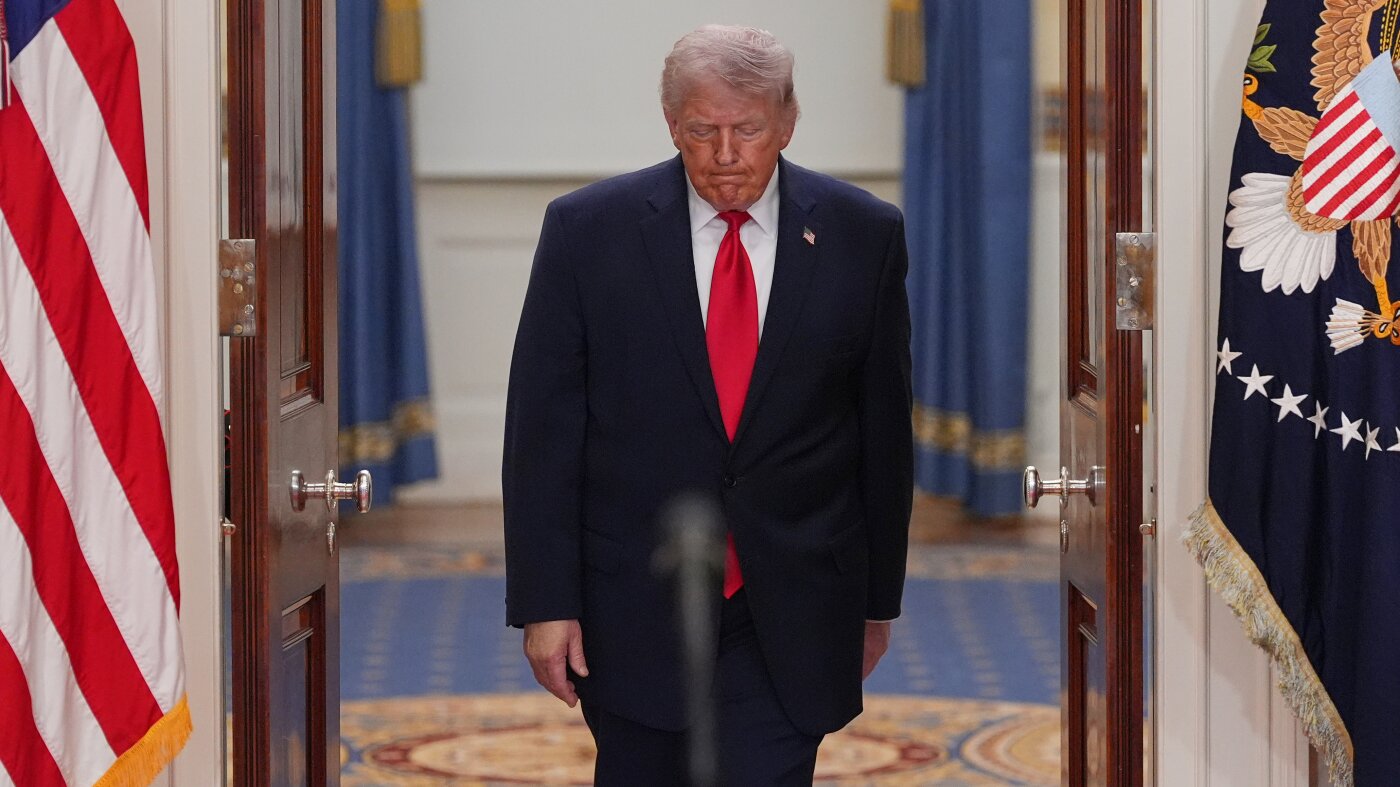
Judge halts Trump effort requiring colleges to show they don’t consider race in admissions

Trump says ‘America needs God’ in Good Friday message touting ‘resurgence of religion’
Fact check: How can a country actually withdraw from NATO?
-

 South-Carolina7 days ago
South Carolina vs TCU predictions for Elite Eight game in March Madness
-

 Miami, FL1 week ago
Jannik Sinner’s Girlfriend Laila Hasanovic Stuns in Ab-Revealing Post Amid Miami Open
-

 Education1 week ago
Video: Transgender Athletes Barred From Women’s Olympic Events
-

 Minneapolis, MN1 week ago
Boy who shielded classmate during school shooting receives Medal of Honor
-

 Vermont7 days ago
Skier dies after fall at Sugarbush Resort
-

 Politics7 days ago
Trump’s Ballroom Design Has Barely Been Scrutinized
-

 Atlanta, GA7 days ago
Fetishist ‘No Kings’ protester in mask drags ‘Trump’ and ‘JD Vance’ behind her wheelchair
-
 Entertainment3 days ago
Inside Ye’s first comeback show at SoFi Stadium