Science
The Surprising Ways That Siblings Shape Our Lives


Joshua Goodman, an associate professor of education and economics at Boston University, found a similarly striking effect at the college level. Goodman looked at a data set of students whose SAT scores were right on the margin of a cutoff point established for admission to what he called “target colleges.” The candidates were essentially equivalent, with scores that differed by no more than 10 SAT points, a function of one student’s getting maybe just one more question right — a difference so slight that it might be left to chance; but on average, those right above the threshold gained admittance, and the ones right below didn’t. Goodman found that the younger siblings of those who were admitted were significantly more likely to end up at an equally selective college than those whose older siblings missed out by just a few points. The younger siblings who ended up at selective colleges may have had their expectations raised; they could see a path forward; they could benefit from what their older siblings did.
Michelle Obama’s experience in college can be seen as a reflection of Goodman’s findings, though she applied decades before he undertook his research. Obama’s parents raised her in a working-class neighborhood on the South Side of Chicago. Her older brother, Craig, was a strong student, but Ivy League schools were not on their parents’ radar. Craig, however, also had the benefit of being a star athlete, which is why he was recruited to play basketball at Princeton University. As Obama writes in her book “Becoming,” seeing where her brother ended up expanded her own sense of possibility. “No one in my immediate family had much in the way of direct experience with college, so there was little, anyway, to debate or explore,” Obama wrote about a visit to her brother at college. “As had always been the case, I figured that whatever Craig liked, I would like, too, and that whatever he could accomplish, I could as well. And with that, Princeton became my top choice for school.” A guidance counselor told her, she recalls, she was “not Princeton material”; that did not dissuade Obama. She writes of her own faith in herself; but it’s very likely that she knew her brother well enough to assess his talents relative to her own. She knew that if he was Princeton material, she surely was as well.
Zang’s and Goodman’s findings suggest that effective interventions aimed at one child in a lower-income family might have positive knock-on effects for their siblings too, which means that successful interventions could have more impact than previously realized: Improve the older sibling’s experience, and it could have ripple effects that change the trajectory of the entire family.
Zang’s research found that nearly a third of siblings’ academic similarity can be attributed to the spillover effect (as opposed to their shared environment or their overlapping genetics). But the spillover effect can work negatively as well, especially in disadvantaged families. A child growing up in a disadvantaged home is more likely to suffer academically because of various disruptions; but that child’s academics will additionally suffer from whatever traumatic exposures have hurt his sibling’s success at school, Zang theorizes. Because test scores are reliable predictors of income later in life, sibling influences in these families can translate to lower lifetime earnings.
Zang and Goodman both found the spillover effect to be strongest in less-advantaged families, highlighting the need for researchers to appreciate that sibling influence functions differently across class lines. A study published in 2022 in Frontiers in Psychology, for example, complicated the often-replicated finding that oldest siblings are the most academically high-achieving in their families. The oldest siblings in high-risk families and in families in which the parents are not native English speakers do not, in fact, score higher on cognitive tests when they reach age 2 or show more school readiness at age 4. In those families, there is no birth-order effect, or the younger children score higher, probably because they benefit from their older siblings’ fluency and the experience their parents gain over time in interacting with preschools and schools.






At this point in a typical year, as the seasons officially turn from winter to spring, snowpack would still be accumulating across the Mountain West.
But this winter wasn’t typical, even before a heat wave this past week. It was the warmest on record for six Western states. Snow cover is the lowest level on record for the Colorado River Basin, and across much of the rest of the West, there are record or near-record low amounts of snow.
That alone would create a challenging year for water managers, who rely on slow and steady snowmelt to feed streams, rivers and reservoirs and meet spring and summer demand for irrigation and drinking water. While rainfall runs off quickly and can more readily evaporate from soil, snowpack serves as a valuable and lasting source of moisture and accounts for a majority of water supplies across the region, as much as 80 percent in some areas.
Current snowpack compared to historical averages
The intense heat wave threatens to make water management all the more challenging.
Much of the thin snowpack was already “ready to melt” before the heat set in, said Jon Meyer, assistant state climatologist at the Utah Climate Center. “This is the nail in the coffin.”
It’s unusual to see the whole West like this, said Leanne Lestak, an associate senior scientist at the University of Colorado Boulder who specializes in mapping snow and how much water it holds.
In early March, Ms. Lestak and her team found that vast majority of the Western United States had less than two-thirds of the amount of snow typical for this time of year, with few exceptions. In Arizona and parts of Nevada, New Mexico and Oregon, snowpack was less than a quarter of what it would usually be.
“The situation is pretty dire,” Dr. Meyer said.
The heat wave is also increasing the already-elevated fire risk across some drought-stricken areas. In Nebraska, drought set the stage for the largest wildfire in state history, which broke out last week and has not yet been contained.
The conditions that led to this year’s low snowpack are unusual, too. Snow droughts often develop from dry weather patterns that starve the West of any significant precipitation during the winter, said Dan McEvoy, a climatologist at the Desert Research Institute and Western Regional Climate Center.
But in many places, it wasn’t necessarily a dry year, he said. Instead, temperatures have been so warm that precipitation has fallen as rain, rather than snow, even at higher elevations.
Many of the mountaintops could still see some more snowfall. But as Cody Moser, a hydrologist with the Colorado Basin River Forecast Center in Salt Lake City, looks ahead to predicting how the spring will go, he doesn’t foresee any significant change in weather patterns. Now he’s expecting peak snowmelt flows to occur earlier than ever recorded in many locations, he said this week.
“I think it’s highly likely we’ve seen peak snowpack,” Mr. Moser said.
Snowpack feeding the Colorado River reaches historic lows
Even after a winter that was the warmest on record for Arizona, New Mexico, Colorado, Utah, Wyoming and Oregon, the heat that set in across much of the West this past week was extreme. Meteorologists said they were expecting to set record highs for the month of March in many locations, and the earliest arrivals of 100-degree temperatures in records that go back more than a century.
Across the Colorado River Basin, even at elevations as high as 10,000 feet, temperatures were forecast to surge into the 50s and 60s Fahrenheit on Friday and Saturday, Mr. Moser said, some 15 to 20 degrees warmer than average.
Relatively light winds and dry air over the region could limit snowmelt to some degree, he said, but the warmth and sunshine may prevent some moisture from ever reaching stream beds, said John Fleck, a water policy expert at the University of New Mexico.
“A lot of it is going to evaporate off before it even has a chance to hit the stream,” Mr. Fleck said.
This heat wave is so extreme that it would only be expected to occur once about every 500 years in the current climate, according to World Weather Attribution, a group of scientists who study links between extreme weather events and climate change.
“These temperatures are completely off the scale for March, and our data shows that they would be virtually impossible in a world without human-caused climate change,” said Ben Clarke, a research associate in extreme weather and climate change at Imperial College London.
In places like the Colorado Front Range, home to the majority of that state’s population, snowpack serves as the largest source of water. For the utility Denver Water, snowpack usually contains significantly more water than its largest surface reservoir, said Taylor Winchell, the agency’s climate adaptation program lead.
Denver Water has enough supply to handle a low-water year, but the snowpack conditions are creating “very high levels of concern,” Mr. Winchell said. The Denver Water Board is poised to officially declare Stage One drought restrictions, asking residents to significantly reduce their outdoor watering. If the snow drought were to repeat for multiple years, the problem could compound and worsen, he said.
The snow drought occurs at a critical time for the larger Colorado River Basin. An agreement among the basin’s seven states over how to divide its water expired at the end of last year, and negotiations to develop a new water plan fell apart last month. (The states are also obligated to share a small portion of the water with Mexico.)
The snow drought is complicating that work. Snowpack from the river’s Upper Basin, across mountains of Colorado, Utah, New Mexico and Wyoming, accounts for a majority of the river’s natural flow each year. Declining spring precipitation and rising temperatures have caused the Colorado’s flow to decrease by nearly 20 percent over the past quarter century.
Recent forecasts estimated that inflows to Lake Powell, a key reservoir that straddles the Utah-Arizona border, will be the third-smallest on record. The lake’s surface could drop to a critical level for hydroelectric power production by the end of this year, affecting a power grid that serves seven states.
Officials at the Bureau of Reclamation, the federal agency that oversees the Colorado River and its reservoirs, declined to be interviewed but said in a statement they were monitoring hydrologic conditions to guide decisions about how to manage the Colorado River system.
Mr. Fleck said a crisis without precedent could be brewing. While a drought that hit the basin in 2002 was worse, it was relatively more manageable than what the West now faces: “We’re having one of the worst years in many decades, but with no cushion of reservoir storage to fall back on to bail us out.”

Researchers investigating the long-term effects of the 2025 firestorms on L.A.’s beaches have found that rarest of things: good news.
In the year following the Palisades and Eaton fires, levels of harmful metals like lead in coastal sand and seawater have remained far below California’s limits for safe drinking water and the U.S. Environmental Protection Agency’s safety thresholds for aquatic life.
“We’re not seeing any evidence for harm in the ecosystem or harm for human health,” said Noelle Held, a University of Southern California marine biogeochemist and principal investigator for the CLEAN Waters project, which is measuring post-fire water quality.
The Palisades and Eaton fires burned more than 40,000 acres and destroyed at least 12,000 buildings, blanketing the ocean in ash for up to 100 miles offshore. Heavy rains a few weeks later washed the charred remnants of plastics, batteries, cars, chemicals and other potentially toxic material into the sea and up onto beaches via the region’s massive network of storm drains and concrete-lined rivers.
Initial testing by the nonprofit environmental group Heal the Bay in the weeks after the fires documented a spike in lead, mercury and other heavy metals in coastal waters. Concentrations of beryllium, copper, chromium, nickel and lead in particular were significantly above established safety thresholds for marine life, prompting fears for the long-term health of fish, marine mammals and the marine food chain.
For their most recent study, Held’s team analyzed seawater samples collected along multiple locations on five different dates between Feb. 10 and Oct. 17 in 2025, along with sand collected in August.
Seawater lead concentrations were highest in the month after the fire and in October, when the season’s first major rain had just washed months’ worth of urban pollution into the ocean.
Even at their peak, lead levels barely surpassed 1 microgram per liter — well below the U.S. Environmental Protection Agency’s aquatic life safety threshold of 8.1 micrograms per liter.
While levels of iron, manganese and cobalt were higher in sampling locations near the Palisades burn scar than they were in other areas, even there they remain well below concentrations that could pose harm to human or marine life.
For beach sand collected in August, lead levels never topped 14 parts per million at any location, significantly below both the current California residential soil standard of 80 parts per million and the stricter 55 parts per million standard proposed by environmental health researchers.
“This isn’t something we would flag if we were testing your soil in your yard,” Held said.
The recent findings are consistent with water quality tests the State Water Resources Control Board conducted earlier in 2025. A board spokesperson said those found both higher relative concentrations of metals closest to the burn scars and no overall evidence that post-fire pollution poses an ongoing threat to human health.
Yet the need for continued testing remains. Officials struggled to answer questions about post-fire beach safety in part because of a lack of historical data on pollution levels, a pitfall researchers would like to forestall before another disaster arrives.
Future rainstorms could also continue to wash metals into Will Rogers Beach and the Rustic Creek outfall, both of which are near the Palisades burn scar, CLEAN Waters warned.
“Post-fire impacts can change over time, depending on rainfalls, runoffs and sediment movements,” said Eugenia Ermacora, manager of the nonprofit Surfrider Foundation’s L.A. chapter, which has partnered with Held’s team to collect samples. “It’s not just about the fires, but it’s about urbanization and how much our city needs to continue the work of doing testing in the water.”
Science
Freaked out by the news? Tips for staying calm from ex-refugees, hostages and ‘uncertainty experts’

War in Iran. Sleeper cells. Soaring gas prices. A new virus. ICE arrests. The acceleration of AI. And a rogue food delivery robot. Is your heart racing yet?
Amid one of the highest-stakes, most chaotic news cycles in recent memory, it’s hard to keep calm while scrolling through the day’s doom-saturated headlines.
Fear not. A team of British scientists, two authors and a group of thought leaders once deemed societal outcasts are here to help. Sam Conniff and Katherine Templar-Lewis’ new book, “The Uncertainty Toolkit: Worry Less and Do More by Learning to Cope With the Unknown,” presents evidence-based strategies to help you not only tolerate uncertainty, but thrive in the face of it.
Conniff, a self-described author and “social entrepreneur,” and Templar-Lewis, a neuroscientist, partnered with the University College London’s Centre for the Study of Decision-Making Uncertainty as well as real world “uncertainty experts” — former prisoners, drug addicts, hostages, refugees and others — to execute the most extensive study to date on “Uncertainty Tolerance,” which published in 2022. Their web project, “Uncertainty Experts,” is an interactive “self development experience” that includes workshops and an online Netflix-produced documentary, through which viewers can test their own uncertainty tolerance.
Their “Uncertainty Toolkit” book, out April 7, addresses the three emotional states that uncertainty puts us in — Fear, Fog and Stasis — while blending personal stories from the subjects they interviewed with the latest science on uncertainty, interactive exercises and guided reflections.
“The Uncertainty Toolkit” aims to help you keep calm amid chaos.
(Bluebird / Pan Macmillan)
“We are scientifically in the most uncertain times,” Templar-Lewis says. “There’s something called the World Uncertainty Index, which charts uncertainty [globally]. And it’s spiking. People say life has always been uncertain, and of course it has; but because of the way we’re connected and on digital platforms and our lives are so busy, we’re interacting with more and more moments of uncertainty than ever before.”
We asked the authors to relay three strategies for staying calm in challenging times, as told to them by their uncertainty experts.
This interview has been edited for length and clarity.
Advice from an ex-addict: Be grateful: Morgan Godvin is an ex-addict and human rights activist from Oregon who served four years of a five-year sentence in a federal prison, Conniff says.
“She developed a practice of ‘Radical Gratitude.’ Even in a world that feels so overwhelming, we can all find an object from which to derive a sense of gratitude,” he says. “As an emotion, gratitude provides a counterweight to anxiety that is almost as powerful as breath work or any of the other [anti-anxiety] well-known interventions.”
In prison, Godvin — who suffers from anxiety — created a daily practice to help her cope. “She began being grateful for the blankets, the only thing she had — and they were threadbare blankets,” Conniff says. “And by digging deep and really emphasizing the warm sensation we know of as gratitude, it became a biological hack. When the body starts to feel grateful, the hormones the body releases brings it back into what’s known as homeostasis or a sense of equilibrium; it activates the parasympathetic nervous system. It’s a very humbling and very healthy practice when the world’s just too much.”
Advice from a survivor of suicidal depression: Lean into the unknown. Vivienne Ming is a leading neuroscientist based in the Bay Area who faced a web of personal challenges in her early 20s. Ming, who was assigned male at birth, dropped out of the Massachusetts Institute of Technology, became homeless and was “living out of their car with a gun on their dashboard,” Conniff says. “They faced homelessness and near suicidal depression before finding a path that took them through gender transition to a place of real identity, marriage, family and success as a scientist.”
How? They developed and cultivated an awareness of “negativity bias,” Conniff says. “We all have a predetermined negativity bias. And in times of uncertainty, that negativity bias goes off the charts and we start to limit ourselves and shut ourselves down. By understanding this, we begin to be able to make a choice: Am I shutting myself down to the opportunities of life? Am I not getting back to people? Am I not taking the chances that are presented to me?”
What’s more, uncertainty, Dr. Ming pointed out, is actually good for you. It unlocks parts of your brain.
“Uncertainty drives neuroplasticity, our ability to learn,” Conniff says. “So [it’s about] resisting negativity bias — that this is all dangerous and difficult and we’re told not to trust each other — and instead, Dr. Ming’s response is to lean into the unknown. She says ‘the best way forward is to all walk slowly into the deep end of our own lives.’”
Advice from an ex-refugee: Reflect on your gut. Rez Gardi grew up in a refugee camp in Pakistan, before her family relocated to New Zealand. She’s now a lawyer and human rights activist working in Iraq.
“Rez correctly identified the scientific explanation for what we all call ‘gut instinct,’” Conniff says. “It’s known as ‘embodied cognition.’ The idea is that we have two brains — the gut instinct is an incredibly complex system of data points and it literally is in our gut and it’s connected to our brains via the vagus nerve. What it does is it brings your intuition in line with your intellect.”
So how to tap into it? “Rez talked about reflecting on her gut instinct,” Conniff says. “So when you have a feeling that you are right or wrong, go back to that feeling: What color was it? What shape was it? Where was it in your body? What temperature was it? Rez honed her gut instinct to become incredibly accurate: Should she trust this person? Was she safe? And that gut instinct became a highly tuned instrument. When we are trying to solve problems, when we are trying to communicate, these signals are as accurate as the best of our cognitive problem-solving abilities.”
Conniff and Templar-Lewis spoke to nearly 40 uncertainty experts in all. And with all of them, Conniff adds, “they kind of learned these techniques themselves, but the scientific evidence really backs it up.”

Martial arts star Chuck Norris dies at 86

Halide co-founder is suing former partner Sebastiaan de With for taking source code to Apple

Trump proven right on Iran’s long-range missile capability as regime targets US-UK base, experts say

Trump gives Iran 48-hour ultimatum to reopen Strait of Hormuz or face strikes on power plants

Top 5 states with the highest number of safe hospitals, according to new report

Florida High School Football Rankings: Top 25 teams – Oct. 21

How old is Bo Nix? What to know about Oregon quarterback ahead of 2024 NFL Draft

Cleary's 21 help Le Moyne down Central Connecticut State 69-64 in OT

99th annual Pony Swim held in Virginia

Indiana Members Credit Union announced as new anchor tenant at Bottleworks District
Trump gives Iran 48-hour ultimatum to reopen Strait of Hormuz or face strikes on power plants

Macron pushes tougher EU digital action ahead of key votes
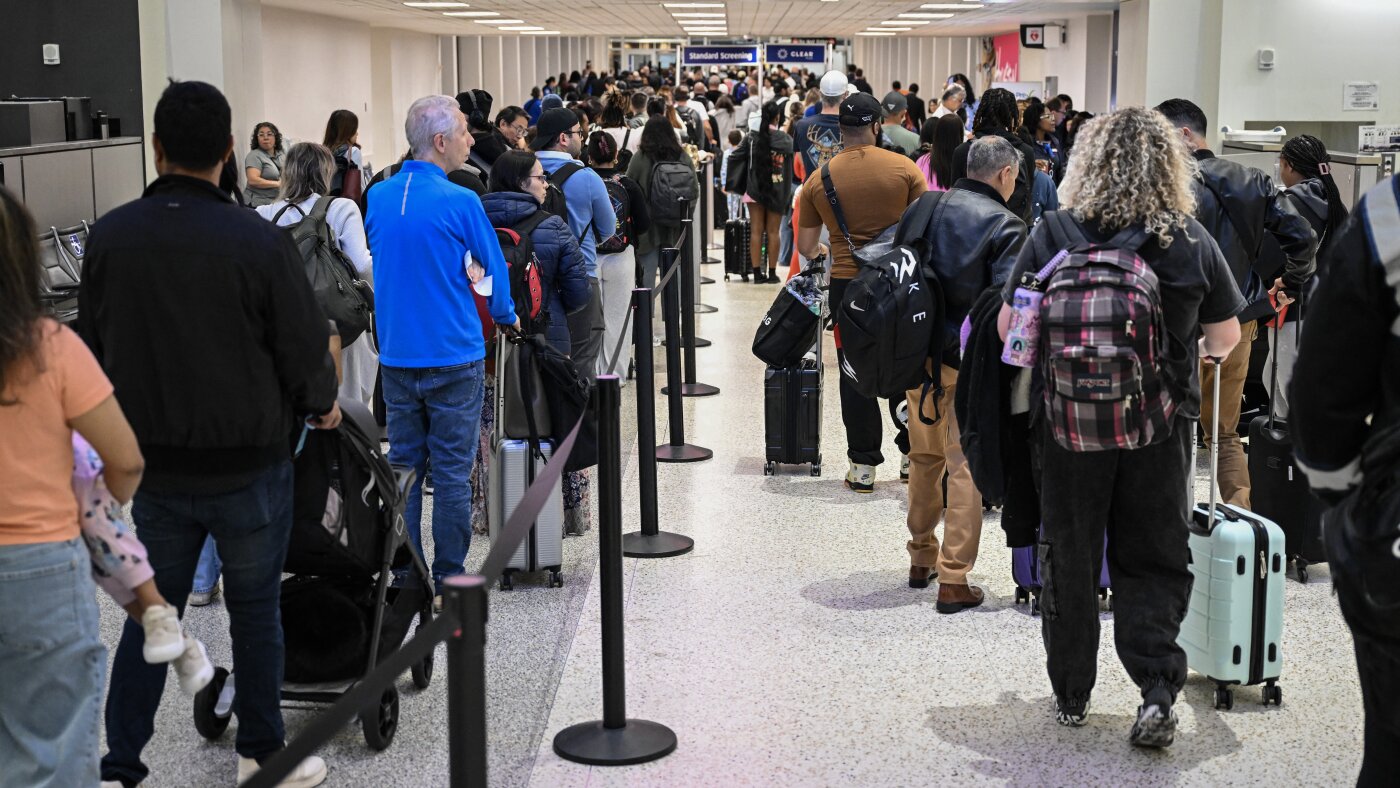
Airport security lines are long. Here’s what to know if you’re flying

Schumer gambit fails as DHS shutdown hits 36 days and airport lines grow

Iranian ballistic missile explodes near Israeli nuclear plant
-

 Detroit, MI3 days ago
Drummer Brian Pastoria, longtime Detroit music advocate, dies at 68
-

 Oklahoma1 week ago
Family rallies around Oklahoma father after head-on crash
-

 Nebraska1 week ago
Wildfire forces immediate evacuation order for Farnam residents
-

 Georgia6 days ago
How ICE plans for a detention warehouse pushed a Georgia town to fight back | CNN Politics
-

 Alaska7 days ago
Police looking for man considered ‘armed and dangerous’
-

 Minnesota1 week ago
Many with Minnesota ties make Forbes list of world’s richest people
-
 Science1 week ago
Federal EPA moves to roll back recent limits on ethylene oxide, a carcinogen
-
 Science1 week ago
H5N1 bird flu spreads to sea otters and sea lions along San Mateo coast, wildlife experts say