Science
State moves to suspend licenses of troubled L.A. nursing home companies


The California Department of Public Health is moving to suspend the licenses of seven Southern California nursing facilities that have been repeatedly cited in recent years for contributing to patients’ deaths.
The state health department sent letters last month to seven companies in Los Angeles County that received at least two “AA” violations within the last two years, indicating a failure that contributed substantially to the death of a resident.
The facilities include Ararat Nursing Facility, a Mission Hills nursing home cited last year over lapses related to two residents’ deaths less than three months apart.
Mark E. Reagan, an attorney for Ararat, said the facility plans to appeal the suspension.
“Not only is any action for suspension unwarranted, it is also not in the best interests of the community or residents of the facility,” Reagan said. “The facility’s top priority is and always has been the safety and well-being of its residents.”
In addition to Ararat, the state said other facilities targeted for license suspension were Antelope Valley Care Center in Lancaster, Brier Oak on Sunset in Hollywood, Golden Haven Care Center in Glendale, Kei-Ai Los Angeles Healthcare Center in Lincoln Park, Santa Anita Convalescent Hospital in Temple City and Seacrest Post-Acute Care Center in San Pedro.
None of those facilities sent letters by the state responded to requests for comment Thursday.
An AA violation is a relatively rare penalty within state enforcement. Only 99 have been issued to the more than 1,200 skilled nursing facilities in California since the start of 2020, according to state data.
According to California law, the state can move to suspend or revoke a nursing home’s license once the facility gets two such violations within two years.
In practice, the AA citation has been issued so infrequently that few facilities crossed that threshold, said Tony Chicotel, a senior staff attorney with California Advocates for Nursing Home Reform.
Chicotel said he was “pleasantly surprised” by the state’s recent vigor in issuing AA violations and moving forward with license suspensions.
“As far as I know — and I’ve been doing this a long time, a couple decades — this is new,” Chicotel said.
Representatives from the state public health department didn’t immediately respond to requests for comment.
In each case, state investigations found failures and oversights that contributed directly to residents’ deaths.
At Golden Haven in Glendale, which previously operated as Glenoaks Convalescent Hospital, an investigation revealed that staff withheld a diabetic resident’s insulin and failed to monitor the person’s blood sugar for 61 days, resulting in the patient’s hospitalization and death in April 2024, according to the state’s report.
At Brier Oak on Sunset, a resident died in August 2024 after rolling off a bed while her nurse was tending to a different patient, the state said in its citation report, which noted that paramedics found the woman lying on the floor in a pool of blood.
Facilities in violation frequently resolve citations through appeals, settlements or other alternate routes that lower the severity level of their violation, their fine amount or both, Chicotel said.
All seven of the companies cited were informed by letter that their license would be suspended in 30 days from the sending date if they did not exercise their right to appeal. Advocates said they expected all of them to appeal.
Rachel Tate, vice president of ombudsman services at the nonprofit Wise & Healthy Aging, said she was troubled by the fact that many facilities recorded multiple patient deaths before the state took action.
“I understand that we need to be giving facilities due process and these other opportunities, but it seems we are sacrificing patient care in the process,” Tate said. “How many people are you allowed to kill and still get to appeal and keep your license? That’s very concerning.”



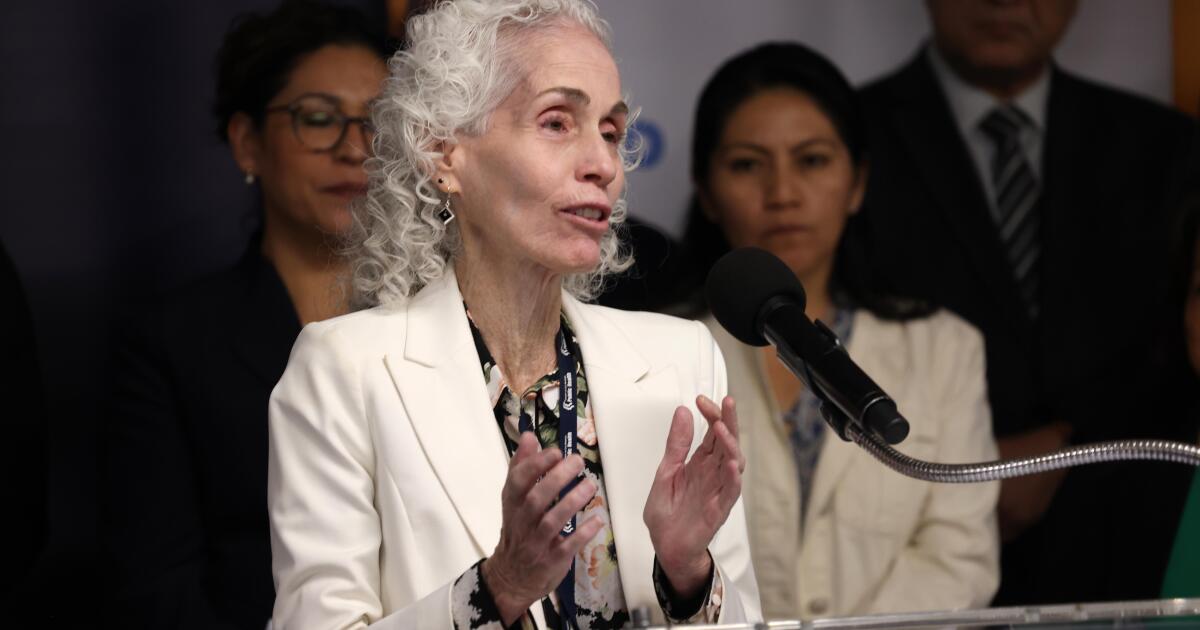
Because of budget cuts, the Los Angeles County Department of Public Health has ended clinical services at seven of its public health clinic sites.
As of Feb. 27, the county is no longer providing services such as vaccinations, sexually transmitted infection testing and treatment, or tuberculosis diagnosis and specialty TB care at the affected locations, according to county officials and a department fact sheet.
The sites losing clinical services are Antelope Valley in Lancaster; the Center for Community Health (Leavy) in San Pedro, Curtis R. Tucker in Inglewood, Hollywood-Wilshire, Pomona, Dr. Ruth Temple in South Los Angeles, and Torrance. Services will continue to be provided by the six remaining public health clinics, and through nearby community clinics.
The changes are the result of about $50 million in funding losses, according to official county statements.
“That pushed us to make the very difficult decision to end clinical services at seven of our sites,” said Dr. Anish Mahajan, chief deputy director of the L.A. County Department of Public Health.
Mahajan said the department selected clinics with relatively lower patient volumes. Over the last month, he said, the department has sent letters to patients about the changes, and referred them to unaffected county clinics, nearby federally qualified health centers or other community providers. According to Mahajan, for tuberculosis patients, particularly those requiring directly observed therapy, public health nurses will continue visiting patients.
Public health clinics form part of the county’s healthcare safety net, serving low-income residents and those with limited access to care. Officials said that about half of the patients the county currently sees across its clinics are uninsured.
Mahajan noted that the clinics were established decades ago, before the Affordable Care Act expanded Medi-Cal coverage and increased the number of federally qualified health centers. He said that as more residents gained access to primary care, utilization at some county-run clinics declined.
“Now that we have a more sophisticated safety net, people often have another place to go for their full range of care,” he said.
Still, the closures have unsettled providers who work closely with local vulnerable populations.
“I hate to see any services that serve our at-risk and homeless community shut down,” said Mark Hood, chief executive of Union Rescue Mission in downtown Los Angeles. “There’s so much need out there, so it always is going to create hardship for the people that actually need the help the most.”
Union Rescue Mission does not receive government funding for its healthcare services, Hood said. The mission’s clinics are open not only to shelter guests, up to 1,000 people nightly, but also to people living on the streets who walk in seeking care.
Its dental clinic alone sees nearly 9,000 patients a year, Hood said.
“We haven’t seen it yet, but I expect in the coming days and weeks we’ll see more people coming through our doors looking for help,” he said. “They’re going to have to find help somewhere.” Hood said women experiencing homelessness are especially vulnerable when preventive care, including sexual and reproductive health services, becomes harder to access.
County officials said staffing impacts so far have been managed through reassignment rather than layoffs. Roughly 200 to 300 positions across the department have been eliminated amid funding cuts, officials said, though many were vacant. About 120 employees whose positions were affected have been reassigned; according to Mahajan, no one has been laid off.
The clinic closures come amid broader fiscal uncertainty. Mahajan said that due to the Trump administration’s “Big Beautiful Bill,” Los Angeles County could lose $2.4 billion over the next several years. That funding, he said, supports clinics, hospitals and community clinic partners now absorbing patients who previously went to the clinics that closed on Feb. 27.
In response, the L.A. County Board of Supervisors has backed a proposed half-cent sales tax measure that would generate hundreds of millions of dollars annually for healthcare and public health services. Voters are expected to consider the measure in June.

Sharon Horton stepped through the door of a sky-blue mobile clinic and onto a Skid Row sidewalk. She wore a yellow knit beanie, gold hoop earrings and the relieved grin of a woman who has finally checked a mammogram off her to-do list.
It had been years since her last breast cancer screening procedure. This one, which took place in City of Hope’s Cancer Prevention and Screening mobile clinic, was faster and easier. The staff was kind. The machine that X-rayed her breast was more comfortable than the cold hard contraption she remembered.
Relatively speaking, of course — it was still a mammogram.
“It’s like, OK, let me go already!” Horton, 68, said with a laugh.
The clinic was parked on South San Pedro Street in front of Union Rescue Mission, the nonprofit shelter where Horton resides. Within a week, City of Hope, a cancer research hospital, would share the results with Horton and Dr. Mary Marfisee, the mission’s family medical services director. If the mammogram detected anything of concern, they’d map out a treatment plan from there.
Naureen Sayani, 47, a resident of Union Rescue Mission, left, discusses her medical history with Adriana Galindo, a medical assistant, before getting a mammogram on last week.
(Kayla Bartkowski / Los Angeles Times)
“It’s very important to take care of your health, and you need to get involved in everything that you can to make your life a better life,” said Horton, who is looking forward to a forthcoming move into Section 8 housing.
Horton was one of the first patients of a new women’s health initiative from UCLA’s Homeless Healthcare Collaborative at Union Rescue Mission. Staffed by third-year UCLA Medical School students and led by Marfisee, a UCLA assistant clinical professor of family medicine, the clinic treats mission residents as well as unhoused people living in the surrounding neighborhood.
The new cancer screening project arrives at a time of dire financial pressures on county public health services.
Citing rising costs and a $50-million reduction in federal, state and local grant and contract income, the Los Angeles County Department of Public Health on Feb. 27 ended services at seven of 13 public clinics that provide vaccines, tests and treatment for sexually transmitted diseases and other services to housed and unhoused county residents.
Although Union Rescue Mission’s own funding comes mainly from private sources and is less imperiled by public cuts, the 135-year-old shelter expects the need for its services to rise, Chief Executive Mark Hood said.
Even as unsheltered homelessness declined for the last two years across Los Angeles County, the unsheltered population on Skid Row — long seen as the epicenter of the region’s homelessness crisis — grew 9% in 2024, the most recent year for which census data are available.
For many local women navigating daily concerns over housing, food and personal safety, “their own health is not a priority,” Marfisee said.
Those whose problems have become too serious to ignore face daunting obstacles to care. Marfisee recalled one patient who came to her with a lump in her breast and no identification.
In order to get a mammogram, Marfisee explained, the woman first needed to obtain a birth certificate, and then a state-issued identification card. Then she needed to enroll in Medi-Cal. After that, clinic staff helped her find a primary care physician who could order the imaging test.
Given the barriers to preventative care, homeless women die from breast cancer at nearly twice the rate of securely housed women, a 2019 study found. Marfisee’s own survey of the mission’s female residents found that nearly 90% were not up to date on recommended cancer screenings like mammograms and pap smears, which detect early cervical cancer.
To address this gap, Marfisee — a dogged patient advocate — reached out to City of Hope. The Duarte-based research and treatment center unveiled in March 2024 its first mobile cancer screening clinic, a moving van-sized clinic on wheels that it deploys to food banks and health centers, as well as to companies offering free mammograms as an employee benefit.
“In true Dr. Mary fashion, she saw the vision,” said Jessica Thies, the mobile screening program’s regional nursing director. After working through some logistical hurdles, the mission and City of Hope secured a date for the van’s first visit.
The next challenge was getting the word out to patients. Marfisee and her students walked through the surrounding neighborhood, went cot to cot in the women’s dorm and held two informational sessions in December and January to answer patients’ questions.
At the sessions, the team walked through the basics of who should get a mammogram (women age 40 or older, those with a family history of breast cancer) and the procedure itself. (“Like a tortilla maker?” one woman asked skeptically after hearing a description of the mammography unit.)
The medical students were able to dispel rumors some women had heard: The test doesn’t damage breast tissue, nor do the X-rays increase cancer risk. Others questioned a mammogram’s value: What good was it knowing they had cancer if they couldn’t get follow-up care?
On this latter point, Marfisee is determined not to let patients fall through the cracks.
Thirteen patients received mammograms at the van’s first visit on Wednesday. Within a week, City of Hope will contact patients with their results and send them to Marfisee and her team. She is already mentally mapping the next steps should any patient have a situation that requires a biopsy or further imaging: working with their case manager at the mission, calling in favors, wrangling with any insurance the patient might have.
“It’ll be a good fight,” Marfisee said, as residents in the adjacent cafeteria carried trays of sloppy joes and burgers to their lunch tables. “But we’ll just keep asking for help and get it done.”

At first glance, it looks like nothing more than a charming Spanish-revival, quintessentially Californian home — but this Pacific Palisades rebuild is constructed like a tank.
Every exterior wall of the steel-framed home is a foot-thick, fire-resistant barricade. The home is connected to a satellite fire monitoring service. Should a fire start in town, sturdy metal shutters descend to cover every window. An exterior sprinkler system can pump 40,000 gallons of water from giant tanks hidden behind the shrubs in the property’s yard. If the cameras and heat sensors around the house detect danger, the system can envelop the home in over 1,000 gallons of fire retardant and hundreds of gallons of fire-suppressing foam.
Palisades resident and architect Ardie Tavangarian is so confident in his design that he even asked the fire department if they could start a controlled fire on the property to test it all out. (They said no.)
Tavangarian built a career designing multimillion-dollar luxury homes in Los Angeles, but after the Palisades fire destroyed 13 of his works — including his family’s home — he found another calling: how to design a house that can handle what the Santa Monica Mountains throw at it. And how to do it quickly and affordably.
Water tanks form part of a backup water supply in a newly built fire-resistant home in Pacific Palisades.
“Nature is so powerful,” he said, sitting on a couch in the new house, which he built for his adult twin daughters. “We are guests living in that environment and expecting, ‘Oh, nature is going to be really kind to me.’ No, it’s not. It does what it’s supposed to do.”
Tavangarian watched the Jan. 1 Lachman fire from his property not far from here; a week later that fire rekindled, grew into the Palisades fire, and burned through his house. But the painful details of the fire — the missteps of the fire department, the empty reservoir — didn’t matter when it came to deciding how to rebuild, he said. The reality is, many fires have burned in these mountains. Many more will.

A sprinkler on the roof is part of a house-wide sprinkler system.
For the architect, who has spent much of his 45-year career designing for luxury, hardening a home against wildfire has brought a new kind of luxury to his homes: peace of mind.
It’s a sentiment that resonates with fire survivors: Tavangarian says he’s received considerable interest from other property owners in the Palisades looking to rebuild their houses.
The metal shutters and advanced outdoor sprinkler system are the flashiest parts of Tavangarian’s home hardening project, and the efficacy of these adaptations is still up for debate. Because the measures have not yet been widely adopted, there are few studies exploring how much or little they protect homes in real-world fires.

Architect Ardie Tavangarian inside the house he designed.
Anecdotal evidence has indicated the effectiveness of sprinklers can vary significantly based on the setup and the conditions during the fire. Extreme wind, for example, can make them less effective. Lab studies have generally found shutters can reduce the risk of windows shattering.
These measures aren’t cheap, either. Sprinkler systems can cost north of $100,000, for example. However, Tavangarian said when all was said and done, the home he built for his daughters cost around $700 per square foot — less than what Palisades residents said they expected to pay, but more than what Altadena residents expected for their rebuilds.
Tavangarian also hopes to see insurers increasingly consider the home-hardening measures property owners take when writing policies, which he said could potentially offset the extra cost in a decade or less. As he explored getting insurance for the new home, one insurer quoted him $80,000 a year. After he convinced the company to visit the property, it lowered the quote to just $13,000, he said.

The house includes metal heat shields that can drop down if a fire approaches.
The home also has essentially all of the other less flashy — but much cheaper and well-proven — home hardening measures recommended by fire professionals: The underside of the roof’s overhang is closed off — a common place embers enter a home. The roof, where burning embers can accumulate, is made of fire-resistant material. The windows, vulnerable to shattering in extreme heat, are made of a toughened glass. There is virtually no vegetation within the first five feet of the home.
When asked if he felt he had compromised on design, comfort or aesthetics for the extra protection — one of the many concerns Californians have with the state’s draft “Zone Zero” requirements that may significantly limit vegetation within five feet of a home — Tavangarian simply said, “You be the judge.”

2 young girls found dead in suitcases in Cleveland, police say

Augusta picks new planning and development director

CHERRY BLOSSOM COUNTDOWN: Peak Bloom prediction drops Thursday

Bodies of 2 young girls found in suitcases in Cleveland’s South Collinwood neighborhood

Texas Primary: Breakdown of Texas races

Florida High School Football Rankings: Top 25 teams – Oct. 21

Cleary's 21 help Le Moyne down Central Connecticut State 69-64 in OT

How old is Bo Nix? What to know about Oregon quarterback ahead of 2024 NFL Draft

99th annual Pony Swim held in Virginia

Indiana Members Credit Union announced as new anchor tenant at Bottleworks District

Video: Senators Question Kristi Noem on ICE Immigration Tactics

Combustible Republican Senate primary in Texas heading into overtime

Hungarian veto proves EU needs less unanimity, says new Dutch PM

Pregnant migrant girls are being sent to a Texas shelter flagged as medically risky

Fraud-plagued Minnesota sues Trump admin for withholding $243M in Medicaid payments
-

 World6 days ago
Exclusive: DeepSeek withholds latest AI model from US chipmakers including Nvidia, sources say
-

 Massachusetts7 days ago
Mother and daughter injured in Taunton house explosion
-

 Denver, CO7 days ago
10 acres charred, 5 injured in Thornton grass fire, evacuation orders lifted
-

 Louisiana1 week ago
Wildfire near Gum Swamp Road in Livingston Parish now under control; more than 200 acres burned
-

 Oregon5 days ago
2026 OSAA Oregon Wrestling State Championship Results And Brackets – FloWrestling
-

 Florida3 days ago
Florida man rescued after being stuck in shoulder-deep mud for days
-

 Maryland3 days ago
AM showers Sunday in Maryland
-

 Culture1 week ago
Try This Quiz on Thrilling Books That Became Popular Movies