Science
A pediatrician's dilemma: Should a practice kick out unvaccinated kids?


Orange County pediatrician Dr. Eric Ball still feels guilty about the Disneyland measles outbreak of 2014.
At the time, his office allowed children whose parents refused to vaccinate them to still remain as patients. Many took advantage of the policy, leaving the children in his practice well below the 95% threshold that experts say is needed to achieve herd immunity. In the end, a single measles case at the theme park spread to 145 people across the country; several were part of his practice.
“I was traumatized,” said Ball. “I felt that like we didn’t do enough as a practice, and I didn’t do enough as a pediatrician, to convince families to get vaccinated.” Not only were the children of his anti-vaccine parents left vulnerable to the measles, but they had also exposed other children in his waiting room who couldn’t receive the vaccine because they were too young or immunocompromised.
Noah, 9 months old, sees Dr. Eric Ball at Southern Orange County Pediatric Associates in Ladera Ranch in 2024.
(Christina House/Los Angeles Times)
As a doctor, Ball felt torn: He had a moral obligation to care for all his patients, regardless of their parent’s vaccine choices. But he also had a duty to protect his other patients, as well as the rest of the community, from a deadly virus that was almost entirely preventable.
With another measles outbreak continuing to spread in Texas and New Mexico — bringing the first two U.S. measles deaths in a decade — and eight cases already in California this year, physicians are again facing a moral quandary: Should they refuse to see families who don’t want to vaccinate their children, or keep them in their practices in the hopes of changing their minds?

Engage with our community-funded journalism as we delve into child care, transitional kindergarten, health and other issues affecting children from birth through age 5.
After the Disneyland outbreak, the doctors at Ball’s practice decided to crack down. In 2015, they instituted a new policy: Southern Orange County Pediatric Associates would no longer accept patients who did not plan to immunize their children. Existing patients who didn’t want to vaccinate would need to find a new doctor.
A growing trend of dismissing unvaccinated patients
“Dismissal” policies were once discouraged by the medical establishment, both because pediatricians have a duty to care for all their young patients, and because some anti-vaccine parents can be convinced over time to change their minds.
But in 2016, the American Academy of Pediatrics came up with new guidance: Vaccines against preventable diseases like the measles were so important that if, after repeated attempts, a pediatrician couldn’t convince a parent to get their child immunized, a practice could righteously kick them out.
“I think that made a big difference to a lot of us. It gave us cover,” said Ball.
Since then, dismissal policies have grown much more popular.
In 2013, some 21% of pediatricians reported that they often or always dismissed families who refused vaccination, according to a survey published in the journal Pediatrics. By 2019, the share had grown to 37%; the 2019 survey, published in the Journal of the American Medical Assn., also found that just over half of pediatricians said their office had a dismissal policy in place.
For families that seek to spread out vaccines with an alternative schedule, dismissals are much less common: just 8% of individual pediatricians reported often or always dismissing these families, while 28% reported that their office has such a dismissal policy, according to the academy.
Dismissal policies are much more common among private practices. Academic medical institutions, including UCLA, large health systems like Kaiser Permanente, rural clinics and safety net systems for low-income patients generally accept all patients, regardless of whether the parents intend to vaccinate their children. Cedars-Sinai Medical Center is an exception and discourages pediatricians in their clinics from treating unvaccinated patients.

-
Share via
The question of whether to dismiss has become increasingly pressing amid growing anti-vaccine sentiment and a decline in coverage. The proportion of kindergartners nationwide who completed their measles, mumps, and rubella vaccine series dropped from about 95% — the federal coverage target — before the pandemic to less than 93% last school year.
In California, 96.2% of kindergartners were fully vaccinated against the measles in the 2023-24 school year, a slight decline from the year before.
“No matter what your policy, you feel ethically justified,” said Dr. Sean O’Leary, a professor of pediatrics at the University of Colorado Anschutz Medical Campus, who co-wrote the American Academy of Pediatrics’ latest guidance on vaccines. In January, the New England Journal of Medicine presented arguments on both sides of the debate, with O’Leary writing a statement in favor of accepting unvaccinated patients. “I personally understand both sides.”
Why doctors dismiss vaccine-hesitant families
These days, many pediatric practices are upfront about their policies, and some announce it on their website, letting prospective patients know to stay away if they don’t want to vaccinate.
At Larchmont Pediatrics, for example, Dr. Neville Anderson requires all patients to be vaccinated. If parents refuse to vaccinate their infants after a final conversation at the 3-month visit, the practice sends them an official dismissal letter.

Dr. Neville Anderson is photographed in between vaccinating young patients at Larchmont Pediatrics in Los Angeles on Tuesday.
(Allen J. Schaben / Los Angeles Times)
“If a parent is truly anti-vax and does not want to vaccinate their child, our values and our goals and our beliefs are so antithetical to each other that we’re not a good team,” said Anderson. “I’m not the right doctor for them, and they’re not the right patient for me.” Larchmont dismisses only one to four patients each year, she said, since most anti-vaccine families know their reputation and tend to go elsewhere.
But for some patients, the dismissal policy is a real draw. “We get a lot of people who will come to us because we have this policy and we enforce it,” said Anderson. “They’re afraid of bringing their 7-month-old into a waiting room where there’s an unvaccinated child.”
Doctors should make every effort to convince a family to vaccinate before dismissing them, said Dr. Jesse Hackell, a retired pediatrician in New York who also co-wrote the pediatric academy’s report on improving vaccine communication. The problem, he said, is that these conversations are time-consuming and unpaid for busy pediatricians who often only have 20 minutes with a patient. “It’s frustrating, and it’s one of the issues that leads to moral injury and burnout.”
Hackell, 74, remembers a time before vaccination, when many of his young patients ended up hospitalized with measles and other vaccine-preventable diseases. “I don’t want to ever go back to those days of worrying about the 2 a.m. phone call about a kid with 105-degree fever. That’s that’s not good for me as a physician. It’s not good for the kid or the family.” His practice had a dismissal policy long before the pediatrics academy said it was acceptable.
One ethical argument in favor of dismissing is based on parents having a moral obligation to vaccinate their children to reduce the risk of infecting others, said Dr. Doug Opel, a bioethicist and professor of pediatrics at the University of Washington School of Medicine.
Another point is that “vaccination is viewed as a social contract,” he said. “So it’s not fair to share in the collective benefits of vaccination without accepting the small burdens of vaccination by getting your child vaccinated themselves.”
1

2

3

1. Dr. Neville Anderson, right, tries to cheer up Iris Behnam, 4, while nurse Breanna Kirby, left, gives her DTap Polio and MMR Chickenpox (Varicilla) vaccinations while her mom, Haley Behnam, holds her. 2. Dr. Neville Anderson, right, tries to distract Perry Roj, 4, while nurse Breanna Kirby, left, gives her DTap Polio vaccination while her mom, Devin Homsey holds her. 3. Dr. Neville Anderson, left, with Arlo Vasquez, 7 months-old, held by his mom Christa Iacono, not pictured, while getting a flu, Covid, Hepatitis B vaccinations at Larchmont Pediatrics. (Allen J. Schaben / Los Angeles Times)
The moral case for accepting vaccine-hesitant families
Opel said that, as a bioethicist, he comes down on the side of keeping families in a practice.
“In what other area of medicine even do we expect patients or parents to hold the same values and beliefs that we have?” he asked. “Instead, we approach differences with humility and respectfully explore those values as a way to find common ground and shared understanding.” Opel said about 30% of parents do end up changing their mind. “Vaccine hesitancy is a modifiable behavior.”
O’Leary said there is also little evidence that accepting unvaccinated children leads to the transmission of vaccine-preventable illnesses in an office setting. And it isn’t clear whether the threat of dismissal actually convinces parents to get vaccinated, or whether patients who get kicked out of a practice end up finding other sources of care.
ln San Diego County, Children’s Primary Care Medical Group — a large practice with 28 offices in the region — has a policy of accepting all patients, regardless of vaccination status.
“The basic philosophy is it’s not the kids who refuse, it’s the parents. And we don’t punish kids for the decisions of the parents,” said Dr. Adam Breslow, the group’s president and CEO.
About 90% of the group’s patients are vaccinated on schedule, Breslow said. Of the 2-3% who refuse all vaccinations, most come from wealthier areas where parents can afford to homeschool or send their children to private school. He said it’s rare that he’s able to convince them to vaccinate in a single office visit, but over the course of several years in his practice, some parents do eventually change their minds.
“By keeping them in the practice, there’s a chance they’re going to get vaccinated,” said O’Leary. “But if you kick them out, who knows what’s going to happen?”
Where do parents who don’t vaccinate kids go?
Widespread dismissal policies can make it difficult for vaccine-hesitant families to find regular sources of care. In local Facebook groups, parents often exchange tips about practices that are more tolerant of spreading out or refusing vaccines.
Some advise using concierge practices, which charge thousands of dollars in annual fees on top of insurance payments but may allow more flexibility with vaccination schedules. Some of these practices offer unproven alternatives to vaccination with little or no evidence to back them up.
Whitney Jacks, a mother in Escondido, recently posted in a moms group on Facebook for help finding a new pediatrician who would accept her preference to limit vaccines. With her older child, who is 7, she used to pay for a concierge doctor in Maryland whom she saw over Zoom. But her son doesn’t have a regular pediatrician and therefore skips his annual well visits, though he does see a specialist several times a year.
Now pregnant with her second child, she was hoping to find someone local who would accept her insurance and support her decision to wait until the baby turns 2 before starting vaccinating.
Other moms in the Facebook group were hesitant to share the names publicly for fear that the doctors could get into trouble, she said, preferring to direct message her instead. One mom sent her a list of names, which she used to set up meet-and-greet appointments with the four closest to her home.
But as she began to meet with them, one after another gave her the same response: “We won’t kick you out, but we don’t like this,” said Jacks, who is an acupuncturist. “So they’re already putting it at you that they disapprove of your point of view.” None made her feel welcome.
She picked the most convenient office. But Jacks worries that every visit will focus on vaccination instead of other issues like feeding and sleeping that are important in the first years.
“It doesn’t give me any confidence or faith in the provider.”
This article is part of The Times’ early childhood education initiative, focusing on the learning and development of California children from birth to age 5. For more information about the initiative and its philanthropic funders, go to latimes.com/earlyed.




Central Coast Water authorities approved waste discharge permits for Diablo Canyon nuclear plant Thursday, making it nearly certain it will remain running through 2030, and potentially through 2045.
The Pacific Gas & Electric-owned plant was originally supposed to shut down in 2025, but lawmakers extended that deadline by five years in 2022, fearing power shortages if a plant that provides about 9 percent the state’s electricity were to shut off.
In December, Diablo Canyon received a key permit from the California Coastal Commission through an agreement that involved PG&E giving up about 12,000 acres of nearby land for conservation in exchange for the loss of marine life caused by the plant’s operations.
Today’s 6-0 vote by the Central Coast Regional Water Board approved PG&E’s plans to limit discharges of pollutants into the water and continue to run its “once-through cooling system.” The cooling technology flushes ocean water through the plant to absorb heat and discharges it, killing what the Coastal Commission estimated to be two billion fish each year.
The board also granted the plant a certification under the Clean Water Act, the last state regulatory hurdle the facility needed to clear before the federal Nuclear Regulatory Commission (NRC) is allowed to renew its permit through 2045.
The new regional water board permit made several changes since the last one was issued in 1990. One was a first-time limit on the chemical tributyltin-10, a toxic, internationally-banned compound added to paint to prevent organisms from growing on ship hulls.
Additional changes stemmed from a 2025 Supreme Court ruling that said if pollutant permits like this one impose specific water quality requirements, they must also specify how to meet them.
The plant’s biggest water quality impact is the heated water it discharges into the ocean, and that part of the permit remains unchanged. Radioactive waste from the plant is regulated not by the state but by the NRC.
California state law only allows the plant to remain open to 2030, but some lawmakers and regulators have already expressed interest in another extension given growing electricity demand and the plant’s role in providing carbon-free power to the grid.
Some board members raised concerns about granting a certification that would allow the NRC to reauthorize the plant’s permits through 2045.
“There’s every reason to think the California entities responsible for making the decision about continuing operation, namely the California [Independent System Operator] and the Energy Commission, all of them are sort of leaning toward continuing to operate this facility,” said boardmember Dominic Roques. “I’d like us to be consistent with state law at least, and imply that we are consistent with ending operation at five years.”
Other board members noted that regulators could revisit the permits in five years or sooner if state and federal laws changes, and the board ultimately approved the permit.
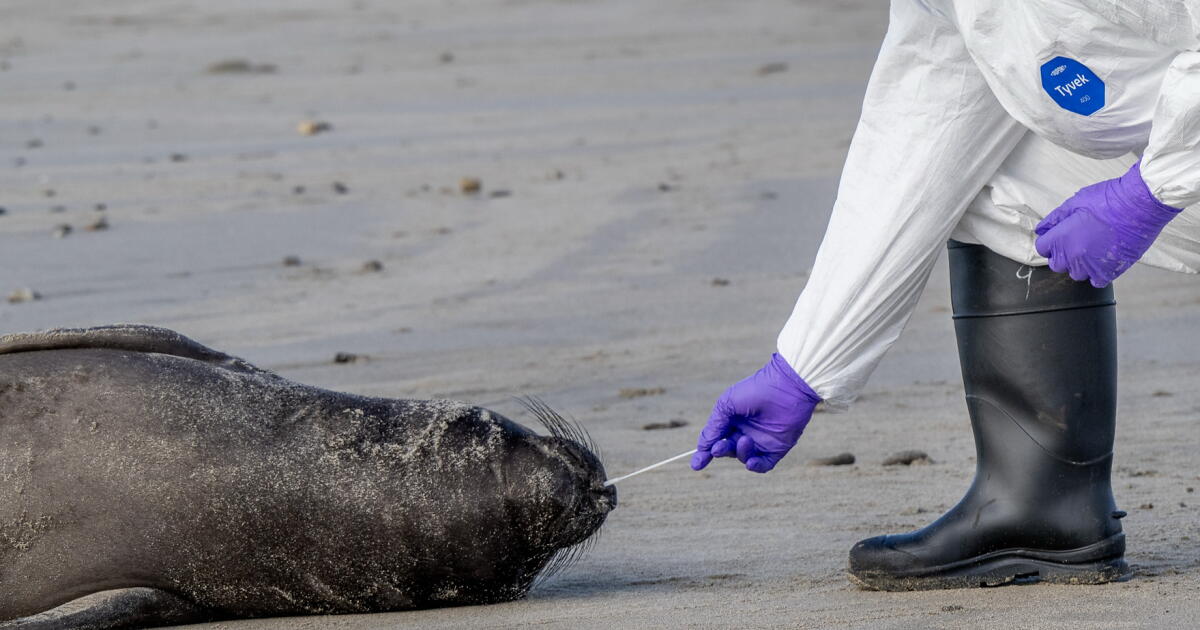
The H5N1 bird flu virus that devastated South American elephant seal populations has been confirmed in seals at California’s Año Nuevo State Park, researchers from UC Davis and UC Santa Cruz announced Wednesday.
The virus has ravaged wild, commercial and domestic animals across the globe and was found last week in seven weaned pups. The confirmation came from the U.S. Department of Agriculture’s National Veterinary Services Laboratory in Ames, Iowa.
“This is exceptionally rapid detection of an outbreak in free-ranging marine mammals,” said Professor Christine Johnson, director of the Institute for Pandemic Insights at UC Davis’ Weill School of Veterinary Medicine. “We have most likely identified the very first cases here because of coordinated teams that have been on high alert with active surveillance for this disease for some time.”
Since last week, when researchers began noticing neurological and respoiratory signs of the disease in some animals, 30 seals have died, said Roxanne Beltran, a professor of ecology and evolutionary biology at UC Santa Cruz. Twenty-nine were weaned pups and the other was an adult male. The team has so far confirmed the virus in only seven of the dead pups.
Infected animals often have tremors convulsions, seizures and muscle weakness, Johnson said.
Beltran said teams from UC Santa Cruz, UC Davis and California State Parks monitor the animals 260 days of the year, “including every day from December 15 to March 1” when the animals typically come ashore to breed, give birth and nurse.
The concerning behavior and deaths were first noticed Feb. 19.
“This is one of the most well-studied elephant seal colonies on the planet,” she said. “We know the seals so well that it’s very obvious to us when something is abnormal. And so my team was out that morning and we observed abnormal behaviors in seals and increased mortality that we had not seen the day before in those exact same locations. So we were very confident that we caught the beginning of this outbreak.”
In late 2022, the virus decimated southern elephant seal populations in South America and several sub-Antarctic Islands. At some colonies in Argentina, 97% of pups died, while on South Georgia Island, researchers reported a 47% decline in breeding females between 2022 and 2024. Researchers believe tens of thousands of animals died.
More than 30,000 sea lions in Peru and Chile died between 2022 and 2024. In Argentina, roughly 1,300 sea lions and fur seals perished.
At the time, researchers were not sure why northern Pacific populations were not infected, but suspected previous or milder strains of the virus conferred some immunity.
The virus is better known in the U.S. for sweeping through the nation’s dairy herds, where it infected dozens of dairy workers, millions of cows and thousands of wild, feral and domestic mammals. It’s also been found in wild birds and killed millions of commercial chickens, geese and ducks.
Two Americans have died from the virus since 2024, and 71 have been infected. The vast majority were dairy or commercial poultry workers. One death was that of a Louisiana man who had underlying conditions and was believed to have been exposed via backyard poultry or wild birds.
Scientists at UC Santa Cruz and UC Davis increased their surveillance of the elephant seals in Año Nuevo in recent years. The catastrophic effect of the disease prompted worry that it would spread to California elephant seals, said Beltran, whose lab leads UC Santa Cruz’s northern elephant seal research program at Año Nuevo.
Johnson, the UC Davis researcher, said the team has been working with stranding networks across the Pacific region for several years — sampling the tissue of birds, elephant seals and other marine mammals. They have not seen the virus in other California marine mammals. Two previous outbreaks of bird flu in U.S. marine mammals occurred in Maine in 2022 and Washington in 2023, affecting gray and harbor seals.
The virus in the animals has not yet been fully sequenced, so it’s unclear how the animals were exposed.
“We think the transmission is actually from dead and dying sea birds” living among the sea lions, Johnson said. “But we’ll certainly be investigating if there’s any mammal-to-mammal transmission.”
Genetic sequencing from southern elephant seal populations in Argentina suggested that version of the virus had acquired mutations that allowed it to pass between mammals.
The H5N1 virus was first detected in geese in China in 1996. Since then it has spread across the globe, reaching North America in 2021. The only continent where it has not been detected is Oceania.
Año Nuevo State Park, just north of Santa Cruz, is home to a colony of some 5,000 elephant seals during the winter breeding season. About 1,350 seals were on the beach when the outbreak began. Other large California colonies are located at Piedras Blancas and Point Reyes National Sea Shore. Most of those animals — roughly 900 — are weaned pups.
It’s “important to keep this in context. So far, avian influenza has affected only a small proportion of the weaned at this time, and there are still thousands of apparently healthy animals in the population,” Beltran said in a press conference.
Public access to the park has been closed and guided elephant seal tours canceled.
Health and wildlife officials urge beachgoers to keep a safe distance from wildlife and keep dogs leashed because the virus is contagious.
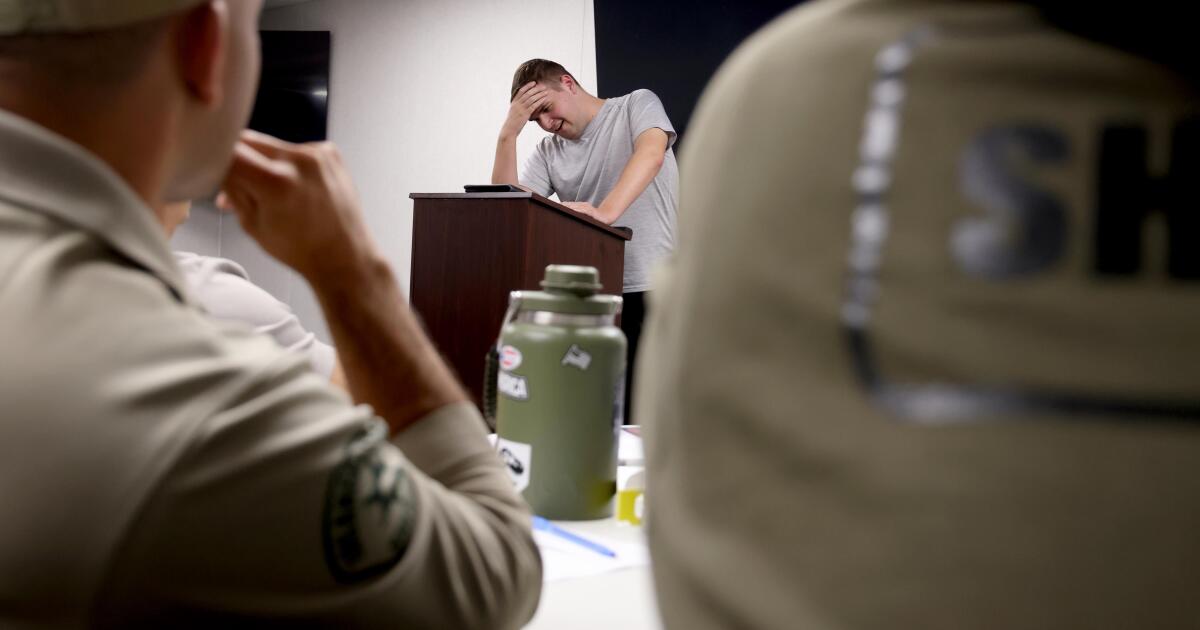
Kate Movius moved among a roomful of Los Angeles County sheriff’s deputies, passing out a pop trivia quiz and paper prism glasses.
She told them to put on the vision-distorting glasses, and to write with their nondominant hand. As they filled out the tests, Movius moved about the City of Industry classroom pounding abruptly on tables. Then came the cowbell. An aide flashed the overhead lights on and off at random. The goal was to help the deputies understand the feeling of sensory overwhelm, which many autistic people experience when incoming stimulation exceeds their capacity to process.
“So what can you do to assist somebody, or de-escalate somebody, or get information from someone who suffers from a sensory disorder?” Movius asked the rattled crowd afterward. “We can minimize sensory input. … That might be the difference between them being able to stay calm and them taking off.”
Movius, founder of the consultancy Autism Interaction Solutions, is one of a growing number of people around the U.S. working to teach law enforcement agencies to recognize autistic behaviors and ensure that encounters between neurodevelopmentally disabled people and law enforcement end safely.
She and City of Industry Mayor Cory Moss later passed out bags filled with tools donated by the city to aid interactions: a pair of noise-damping headphones to decrease auditory input, a whiteboard, a set of communication cards with words and images to point to, fidget toys to calm and distract.
“The thing about autistic behavior when it comes to law enforcement is a lot of it may look suspicious, and a lot of it may feel very disrespectful,” said Movius, who is also the parent of an autistic 25-year-old man. Responding officers, she said, “are not coming in thinking, ‘Could this be a developmentally disabled person?’ I would love for them to have that in the back of their minds.”
A sheriff’s deputy reads a pamphlet on autism during the training program.
(Genaro Molina / Los Angeles Times)
Autism spectrum disorder is a developmental condition that manifests differently in nearly every person who has it. Symptoms cluster around difficulties in communication, social interaction and sensory processing.
An autistic person stopped by police might hold the officer’s gaze intensely or not look at them at all. They may repeat a phrase from a movie, repeat the officer’s question or temporarily lose their ability to speak. They might flee.
All are common involuntary responses for an autistic person in a stressful situation, which a sudden encounter with law enforcement almost invariably is. To someone unfamiliar with the condition, all could be mistaken for intoxication, defiance or guilt.
Autism rates in the U.S. have increased nearly fivefold since the Centers for Disease Control began tracking diagnoses in 2000, a rise experts attribute to broadening diagnostic criteria and better efforts to identify children who have the condition.
The CDC now estimates that 1 in 31 U.S. 8-year-olds is autistic. In California, the rate is closer to 1 in 22 children.
As diverse as the autistic population is, people across the spectrum are more likely to be stopped by law enforcement than neurotypical peers.
About 15% of all people in the U.S. ages 18 to 24 have been stopped by police at some point in their lives, according to federal data. While the government doesn’t track encounters for disabled people specifically, a separate study found that 20% of autistic people ages 21 to 25 have been stopped, often after a report or officer observation of a person behaving unusually.
Some of these encounters have ended in tragedy.
In 2021, Los Angeles County sheriff’s deputies shot and permanently paralyzed a deaf autistic man after family members called 911 for help getting him to a hospital.
Isaias Cervantes, 25, had become distressed about a shopping trip and started pushing his mother, his family’s attorney said at the time. He resisted as two deputies attempted to handcuff him and one of the deputies shot him, according to a county report.
In 2024, Ryan Gainer’s family called 911 for support when the 15-year-old became agitated. Responding San Bernardino County sheriff‘s deputies shot and killed him outside his Apple Valley home.
Last year, police in Pocatello, Idaho, shot Victor Perez, 17, through a chain-link fence after the nonspeaking teenager did not heed their shouted commands. He died from his injuries in April.

Sheriff’s deputies take a trivia quiz using their non-writing hands, while wearing vision-distorting glasses, as Kate Movius, standing left, and Industry Mayor Cory Moss, right, ring cowbells. The idea was to help them understand the sensory overwhelm some autistic people experience.
(Genaro Molina / Los Angeles Times)
As early as 2001, the FBI published a bulletin on police officers’ need to adjust their approach when interacting with autistic people.
“Officers should not interpret an autistic individual’s failure to respond to orders or questions as a lack of cooperation or as a reason for increased force,” the bulletin stated. “They also need to recognize that individuals with autism often confess to crimes that they did not commit or may respond to the last choice in a sequence presented in a question.”
But a review of multiple studies last year by Chapman University researchers found that while up to 60% of officers have been on a call involving an autistic person, only 5% to 40% had received any training on autism.
In response, universities, nonprofits and private consultants across the U.S. have developed curricula for law enforcement on how to recognize autistic behaviors and adapt accordingly.
The primary goal, Movius told deputies at November’s training session, is to slow interactions down to the greatest extent possible. Many autistic people require additional time to process auditory input and verbal responses, particularly in unfamiliar circumstances.
If at all possible, Movius said, wait 20 seconds for a response after asking a question. It may feel unnaturally long, she acknowledged. But every additional question or instruction fired in that time — what’s your name? Did you hear me? Look at me. What’s your name? — just decreases the likelihood that a person struggling to process will be able to respond at all.
Moss’ son, Brayden, then 17, was one of several teenagers and young adults with autism who spoke or wrote statements to be read to the deputies. The diversity of their speech patterns and physical mannerisms showed the breadth of the spectrum. Some were fluently verbal, while others communicated through signs and notes.
“This population is so diverse. It is so complicated. But if there’s anything that we can show [deputies] in here that will make them stop and think, ‘Hey, what if this is autism?’ … it is saving lives,” Moss said.

Mayor Cory Moss, left, and Kate Movius hug at the end of the training program last November. Movius started Autism Interaction Solutions after her son was born with profound autism.
(Genaro Molina / Los Angeles Times)
Some disability advocates cautioned that it takes more than isolated training sessions to ensure encounters end safely.
Judy Mark, co-founder and president of the nonprofit Disability Voices United, says she trained thousands of officers on safe autism interactions but stopped after Cervantes’ shooting. She now urges families concerned about an autistic child’s safety to call an ambulance rather than law enforcement.
“I have significant concern about these training sessions,” Mark said. “People get comfort from it, and the Sheriff’s Department can check the box.”
While not a panacea, supporters argue that a brief course is better than no preparation at all. Some years ago, Movius received a letter from a man whose profoundly autistic son slipped away as the family loaded their car at the beach. He opened the unlocked door of a police vehicle, climbed into the back and began to flail in distress.
Though surprised, the officer seated at the wheel de-escalated the situation and helped the young man find his family, the father wrote to Movius. He had just been to her training.
Baz Luhrmann will make you fall in love with Elvis Presley

Here’s your first look at Kratos in Amazon’s God of War show

State Dept authorizes non-essential US Embassy personnel in Jerusalem to depart ahead of possible Iran strikes

Where Iran’s ballistic missiles can reach — and how close they are to the US

Heart disease threat projected to climb sharply for key demographic

Florida High School Football Rankings: Top 25 teams – Oct. 21

Cleary's 21 help Le Moyne down Central Connecticut State 69-64 in OT

How old is Bo Nix? What to know about Oregon quarterback ahead of 2024 NFL Draft

99th annual Pony Swim held in Virginia

Indiana Members Credit Union announced as new anchor tenant at Bottleworks District
Where Iran’s ballistic missiles can reach — and how close they are to the US

Has India’s influence in Afghanistan grown under the Taliban?

Bill Clinton to testify before House committee investigating Epstein links

Read Judge Schiltz’s Order

Vulnerable House Dem lashes out at Trump’s ‘racist’ SOTU challenge: ‘That was uncomfortable’
-

 World1 day ago
Exclusive: DeepSeek withholds latest AI model from US chipmakers including Nvidia, sources say
-

 Massachusetts2 days ago
Mother and daughter injured in Taunton house explosion
-

 Montana1 week ago
2026 MHSA Montana Wrestling State Championship Brackets And Results – FloWrestling
-

 Oklahoma1 week ago
Wildfires rage in Oklahoma as thousands urged to evacuate a small city
-

 Louisiana4 days ago
Wildfire near Gum Swamp Road in Livingston Parish now under control; more than 200 acres burned
-

 Technology6 days ago
YouTube TV billing scam emails are hitting inboxes
-

 Denver, CO2 days ago
10 acres charred, 5 injured in Thornton grass fire, evacuation orders lifted
-

 Technology6 days ago
Stellantis is in a crisis of its own making