Politics
The 'Appeal to Heaven' flag involved in Alito controversy evolved from Revolutionary War symbol to banner of the far right


U.S. Supreme Court Justice Samuel Alito is embroiled in a second flag controversy in as many weeks, this time over a banner that in recent years has come to symbolize sympathies with the Christian nationalist movement and the false claim that the 2020 presidential election was stolen.
An “Appeal to Heaven” flag was flown last summer outside Alito’s beach vacation home in New Jersey, according to the New York Times, which obtained several images showing it on different dates in July and September 2023. The Times previously reported that an upside down American flag — a sign of distress — had flown outside Alito’s Alexandria, Va., home less than two weeks after the violent Jan. 6, 2021, attack on the U.S. Capitol by supporters of former President Trump.
Some of the rioters carried the inverted American flag or the “Appeal to Heaven” flag, which shows a green pine tree on a white field. The revelations have escalated concerns over Alito’s impartiality and his ability to objectively decide cases currently before the court that relate to the Jan. 6 attackers and Trump’s attempts to overturn the results of the 2020 election. Alito has not commented on the flag at his summer home.
Here is the history and symbolism of the “Appeal to Heaven” flag.
What are its origins?
Ted Kaye, secretary for the North American Vexillological Assn., which studies flags and their meaning, said the “Appeal to Heaven” banner dates to the Revolutionary War. Six schooners outfitted by George Washington to intercept British vessels at sea flew the flag in 1775 as they sailed under his command. It was the maritime flag of Massachusetts from 1776 to 1971, he said.
According to Americanflags.com, the pine tree on the flag symbolized strength and resilience in the New England colonies while the words “Appeal to Heaven” stemmed from the belief that God would deliver the colonists from tyranny.
How has its symbolism changed?
There are a few reasons people fly “Appeal to Heaven” flags today, said Jared Holt, a senior analyst at the Institute for Strategic Dialogue, a London-based think tank that tracks online hate, disinformation and extremism.
Some identify with a “patriot” movement that obsesses over the Founding Fathers and the American Revolution, he said. Others adhere to a Christian nationalist worldview that seeks to elevate Christianity in public life.
“It’s not abundantly clear which of those reasons would be accurate” in this situation, Holt said. But he called the display outside Alito’s home “alarming,” saying those who do fly the flag are often advocating for “more intolerant and restrictive forms of government aligned with a specific religious philosophy.”
The “Appeal to Heaven” flag was among several banners carried by Jan. 6 rioters, who also favored the Confederate flag and the yellow Gadsden flag, with its rattlesnake and “Don’t Tread on Me” message, said Bradley Onishi, author of “Preparing for War: The Extremist History of White Christian Nationalism.”
“That’s the family,” he said.
What about Mike Johnson?
House Speaker Mike Johnson displays the flag in the hallway outside his office next to the flag of his home state, Louisiana.
Johnson, a Republican, told the Associated Press he did not know the flag had come to represent the “Stop the Steal” movement.
“Never heard that before,” he said.
The speaker, who led one of Trump’s legal challenges to the 2020 election, defended the flag and its continued use despite the modern-day symbolism around it.
“I have always used that flag for as long as I can remember, because I was so enamored with the fact that Washington used it,” Johnson said. “The Appeal to Heaven flag is a critical, important part of American history. It’s something that I’ve always revered since I’ve been a young man.”
He added: “People misuse our symbols all the time. It doesn’t mean we don’t use the symbols anymore.”
Johnson said he had never flown the U.S. flag upside down in distress, as Alito did, and he declined to assess the justice’s situation and whether raising the flags at his home was appropriate.
But he called the criticism of the “Appeal to Heaven” flag “contrived.”
“It’s nonsense,” he said. “It’s part of our history. We don’t remove statues and we don’t cover up things that are so essential to who we are as a country.”
Should Alito recuse?
The House Democratic whip, Rep. Katherine Clark of Massachusetts, said in a statement that the display of the “Appeal to Heaven” flag at an Alito home was “not just another example of extremism that has overtaken conservatism. This is a threat to the rule of law and a serious breach of ethics, integrity and Justice Alito’s oath of office.”
She called for Alito to recuse himself from any cases related to Jan. 6 and the former president.
There’s a clear difference between the House speaker displaying the flag outside his office and a Supreme Court justice flying it and the upside down American flag outside his homes as the court is deciding cases involving issues those flags have come to symbolize, said Alicia Bannon, director of the Judiciary Program at the Brennan Center for Justice at New York University. Alito’s actions don’t “just cross the line,” she said. “They take you out of the stadium and out of the parking lot.”
Alito and the court declined to respond to requests for comment on how the “Appeal to Heaven” flag came to be flying and what it was intended to express. Alito has said the upside down American flag was briefly flown by his wife during a dispute with neighbors and that he had no part in it.
Another blow to the court’s reputation?
The Supreme Court already was under fire as it considers unprecedented cases against Trump and some of those charged for the attack on the Capitol.
An issue is that the high court does not have to adhere to the same ethics codes that guide other federal judges. The Supreme Court had long gone without its own code of ethics, but it adopted one in November 2023 in the face of sustained criticism over undisclosed trips and gifts from wealthy benefactors to some justices, including Alito. The code lacks a means of enforcement, however.
The federal code of judicial ethics does not universally prohibit judges from involvement in nonpartisan or religious activity off the bench. But it does say that a judge “should not participate in extrajudicial activities that detract from the dignity of the judge’s office, interfere with the performance of the judge’s official duties” or “reflect adversely on the judge’s impartiality.”
Jeremy Fogel, executive director of the Berkeley Judicial Institute at the UC Berkeley Law School, said the flag revelations lead to questions about whether Alito can be impartial in any case related to Jan. 6 or Trump.
“Displaying those particular flags creates the appearance at least that the justice is signifying agreement with those viewpoints at a time when there are cases before the court where those viewpoints are relevant,” he said.
A March AP/NORC poll found that only about one-quarter of Americans think the Supreme Court is doing a somewhat or very good job upholding democratic values. About 45% think it’s doing a somewhat or very bad job.
Fields, Mascaro and Amiri write for the Associated Press. AP writer Ali Swenson in New York contributed to this report.



NEWYou can now listen to Fox News articles!
President Donald Trump is taking his feud with Rep. Thomas Massie, R-Ky., to the libertarian lawmaker’s home turf on Wednesday.
Trump is expected to hold an event in Hebron, Kentucky, on Wednesday, the Republican Party of Kentucky announced on social media Monday. It’s located in the northern part of the state’s 4th Congressional District, which Massie represents.
Massie’s primary rival, Ed Gallrein, will attend the Hebron event, his campaign confirmed to Fox News Digital on Tuesday, while deferring all other questions on the matter to the White House.
Massie himself will miss the event due to a previously scheduled official engagement, his spokesperson told Fox News Digital.
KHANNA AND MASSIE THREATEN TO FORCE A VOTE ON IRAN AS PROSPECT OF US ATTACK LOOMS
President Donald Trump will be visiting Rep. Thomas Massie’s congressional district on Wednesday. (Win McNamee/Getty Images; Nathan Posner/Anadolu via Getty Images)
When asked about the visit, White House spokeswoman Liz Huston told Fox News Digital, “President Trump will visit the great states of Ohio and Kentucky on Wednesday to tout his economic victories and detail his Administration’s aggressive, ongoing efforts to lower prices and make America more affordable.”
The president has thrown his considerable influence behind Gallrein to unseat Massie after the GOP lawmaker publicly defied Trump on multiple occasions.
MASSIE, KHANNA TO VISIT DOJ TO REVIEW UNREDACTED EPSTEIN FILES
Massie most recently was one of two House Republicans to vote to stop Trump’s joint operation in Iran with Israel, though the legislation was successfully blocked by the majority of GOP lawmakers and a handful of Democrats.
Ed Gallrein, left, seen with President Donald Trump in the Oval Office at the White House. (Ed Gallrein congressional campaign)
He was also one of two Republicans to vote against Trump’s “big, beautiful bill” last year.
Trump in turn has hurled a slew of personal attacks against Massie, including calling him “weak and pathetic” in a statement endorsing Gallrein in October.
“He only votes against the Republican Party, making life very easy for the Radical Left. Unlike ‘lightweight’ Massie, a totally ineffective LOSER who has failed us so badly, CAPTAIN ED GALLREIN IS A WINNER WHO WILL NOT LET YOU DOWN,” Trump posted on Truth Social at the time, one of numerous criticisms targeting the Kentucky Republican through the years.
He called Massie the “worst Republican congressman” in July amid Massie’s bipartisan push to force the Department of Justice (DOJ) to release its files on Jeffrey Epstein.
Then-Rep. Marjorie Taylor Greene, a Republican from Georgia, Rep. Thomas Massie, a Republican from Kentucky, and Rep. Ro Khanna, a Democrat from California, during a news conference outside the U.S. Capitol in Washington, D.C., on Tuesday, Nov. 18, 2025. (Graeme Sloan/Bloomberg via Getty Images)
But Massie has so far appeared to defy political gravity despite making political enemies out of both Trump and House GOP leaders.
CLICK HERE TO DOWNLOAD THE FOX NEWS APP
He handily defeated multiple primary challengers in 2024 and 2022, despite public feuds with Trump, and has served his district since 2012.
Gallrein is a retired Navy SEAL and farmer who launched his campaign days after Trump made his endorsement. Their primary election day is May 19.
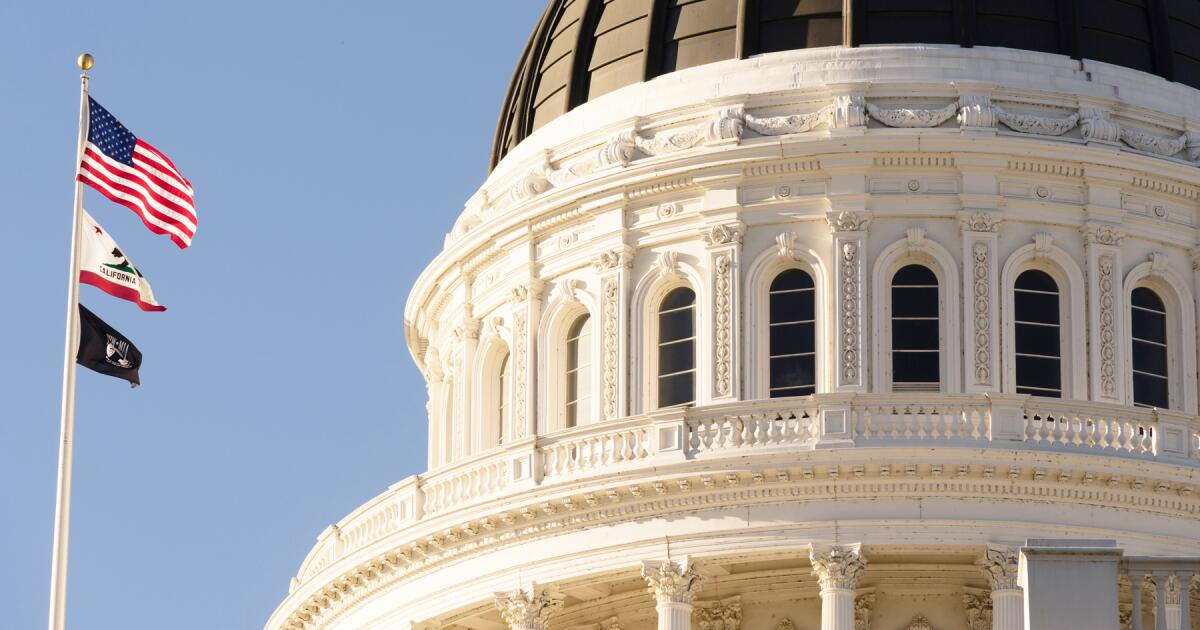
As anxiety mounts among California Democrats about the potential of a Republican being elected governor, the state party will spend hundreds of thousands of dollars on polling to assess the viability of the sprawling field of candidates hoping to replace termed-out Gov. Gavin Newsom, according to plans released Tuesday.
The move comes after nearly every Democratic candidate refused party leaders’ call last week to withdraw from the race to avoid splitting the vote in the June primary — an outcome that could lead to a Republican being elected to statewide office for the first time in two decades.
“Candidates have filed, and now they’ve got the opportunity to showcase their viability, their path to win. I want to simply ensure that everybody has information to fully understand the current state of the race,” said Rusty Hicks, the leader of the California Democratic Party.
As campaign season ramps up, the series of six polls will allow “candidates, supporters, the media, voters, anyone and everyone to have a clear understanding of what is or is not happening in this particular race,” he said.
The filing deadline to appear on the June 2 ballot was Friday. Three days earlier, Hicks released an open letter urging candidates who did not have a path to victory to withdraw from the race. Of the nine prominent Democrats who had announced runs for governor, only one heeded his call: former state Assembly Majority Leader Ian Calderon.
That means the eight other candidates’ names will appear on the ballot, regardless of whether they decide to later drop out. And that creates the possibility of a Republican winning the race because of how California elections are decided.
The state has a voter-approved top-two primary system, under which the two candidates who receive the most votes in the June primary advance to the November general election, regardless of party.
Two prominent Republicans will appear on the ballot: former conservative commentator Steve Hilton and Riverside County Sheriff Chad Bianco. Even though Democratic voters outnumber Republicans nearly 2 to 1, and the state’s electorate last elevated Republicans to statewide office in 2006, it is mathematically possible for Democrats to splinter the vote, allowing the two GOP candidates to advance.
Under such a scenario, not only would Republicans be guaranteed the leadership of the nation’s most-populous state, but Democratic voter turnout also would probably be depressed in November, potentially affecting down-ballot races such as those that could determine control of Congress.
Hicks’ call last week prompted concerns among candidates of color, including former U.S. Health and Human Services Secretary Xavier Becerra and state Supt. of Public Instruction Tony Thurmond, that the effort was aimed at every nonwhite candidate in the race.
The state party chairman responded that his letter was not aimed at any specific candidate.
“It’s not something I lose sleep over,” Hicks said when asked about the racial claims. But he added that the voter surveys will be conducted by Los Angeles-based Evitarus, the state’s only Black- and Latino-led full-service polling firm, and will oversample historically underrepresented communities: Latino, Black and Asian American voters.
Hicks said the polling will cost “multiple six figures” but did not specify the exact amount.
The first poll will be released on March 24, and then five additional surveys will come out every seven to 10 days until voters start receiving mail ballots in early May.
“We’re putting this forward to ensure everyone is armed with the information they need to clearly have an eyes-wide-open assessment of where the state of the race currently is between now and when ballots land in the mailboxes of voters,” Hicks said.
Politics
Trump reveals top issues GOP should focus on to secure midterms victory: ‘I’ve never been more confident’

NEWYou can now listen to Fox News articles!
President Donald Trump outlined five key items he believes will tip the upcoming midterm elections in the GOP’s favor — if Republicans can muscle them through Congress.
“No transgender mutilation surgery for our children,” Trump told an audience at the Republican Members’ Issues Conference. “Voter ID, citizenship [verification], mail-in ballots, we don’t want men playing in women’s sports.”
“It’s the best of Trump. Those are the best of Trump. This is the number one priority, it should be, for the House,” Trump said.
Trump’s exhortations to Republican lawmakers come as the GOP wages an uphill campaign to hang on to a controlling majority in the House of Representatives and the U.S. Senate. He framed his legislative priorities as a way for Republicans to capitalize on popular demands within the GOP base that would increase their chances of preserving a Republican governing trifecta.
President Donald Trump gestures as he boards Air Force One before departing Palm Beach International Airport in West Palm Beach, Florida, on March 1, 2026. (Mandel Ngan / AFP via Getty Images)
HOUSE REPUBLICANS PUSH ELECTION OVERHAUL WITH VOTER ID, MAIL-IN BALLOT CHANGES AHEAD OF MIDTERMS
Currently, Republicans hold just four more seats than Democrats in the House of Representatives.
The GOP holds six more than Democrats in the Senate.
To keep the numbers in their favor, Republicans will need to beat historical trends. In the vast majority of past cases, parties that capture the White House in presidential elections face blowback in the midterms. Notably, the last time a majority party gained seats in both chambers of Congress in the midterms came under the Bush administration in 2002, following devastating attacks on the World Trade Center.
House Speaker Mike Johnson, R-Louisiana, left, and President Donald Trump shake hands during an Invest America roundtable in the State Dining Room of the White House in Washington, District of Columbia, on June 9, 2025. (Yuri Gripas/Abaca/Bloomberg via Getty Images)
REPUBLICANS, TRUMP RUN INTO SENATE ROADBLOCK ON VOTER ID BILL
Trump said he believes Republicans have a shot at bucking the trend come November if they focus on his list.
“It’ll guarantee the midterms,” Trump said of his legislative priorities.
Republicans have already taken strikes towards two of them through the SAVE America Act, a piece of legislation that would require proof of citizenship to register to vote and cast a ballot. That bill cleared the House last month for a second time in the 119th Congress.
Its future is uncertain in the Senate, where Republicans would need the assistance of seven Democrats to overcome the 60-vote threshold to defeat a filibuster. Democrats, for their part, believe the legislation would disenfranchise voters who cannot readily provide documented proof of citizenship through a passport, REAL ID, or birth certificate.
Senate Majority Leader John Thune, R-S.D. has promised a vote on the package despite its long odds.
Sen. Mike Lee, R-Utah, talks with a guest during a “Only Citizens Vote Bus Tour” rally in Upper Senate Park to urge Congress to pass the Safeguard American Voter Eligibility (SAVE) Act on Wednesday, Sept. 10, 2025. (Tom Williams/CQ-Roll Call, Inc via Getty Images)
CLICK HERE TO DOWNLOAD THE FOX NEWS APP
Several members have introduced bills on transgender issues, although none of them have cleared either chamber.
“I’ve never been more confident that if we keep these promises and deliver on this popular agenda, the American people will stand with us in overwhelming numbers, just as they did in 2024,” Trump said.

Shelter in place issued after suspicious object found in mailbox

Visitors flock to Death Valley National Park in California and Nevada for rare superbloom

Senate panel endorses reporting exemption for players on New Hampshire Fisher Cats

Chemistry Class | DEVILS NOW | New Jersey Devils

Tanya Tucker to perform at New Mexico State Fair

Florida High School Football Rankings: Top 25 teams – Oct. 21

How old is Bo Nix? What to know about Oregon quarterback ahead of 2024 NFL Draft

Cleary's 21 help Le Moyne down Central Connecticut State 69-64 in OT

99th annual Pony Swim held in Virginia

Indiana Members Credit Union announced as new anchor tenant at Bottleworks District

Map: 2.3-Magnitude Earthquake Reported North of New York City

Trump stirs GOP primary drama with visit to Massie’s Kentucky home turf

Israeli air strike targets building in south Lebanon

Ed Martin, outspoken Justice Department lawyer, is formally accused of ethical violations | CNN Politics

Trump reveals top issues GOP should focus on to secure midterms victory: ‘I’ve never been more confident’
-

 Wisconsin1 week ago
Setting sail on iceboats across a frozen lake in Wisconsin
-

 Massachusetts1 week ago
Massachusetts man awaits word from family in Iran after attacks
-

 Maryland1 week ago
AM showers Sunday in Maryland
-

 Pennsylvania5 days ago
Pa. man found guilty of raping teen girl who he took to Mexico
-

 Florida1 week ago
Florida man rescued after being stuck in shoulder-deep mud for days
-

 Sports6 days ago
Keith Olbermann under fire for calling Lou Holtz a ‘scumbag’ after legendary coach’s death
-

 Miami, FL6 days ago
City of Miami celebrates reopening of Flagler Street as part of beautification project
-

 Detroit, MI4 days ago
U.S. Postal Service could run out of money within a year