Politics
Supreme Court denies California's plea for immunity for COVID-19 deaths at San Quentin

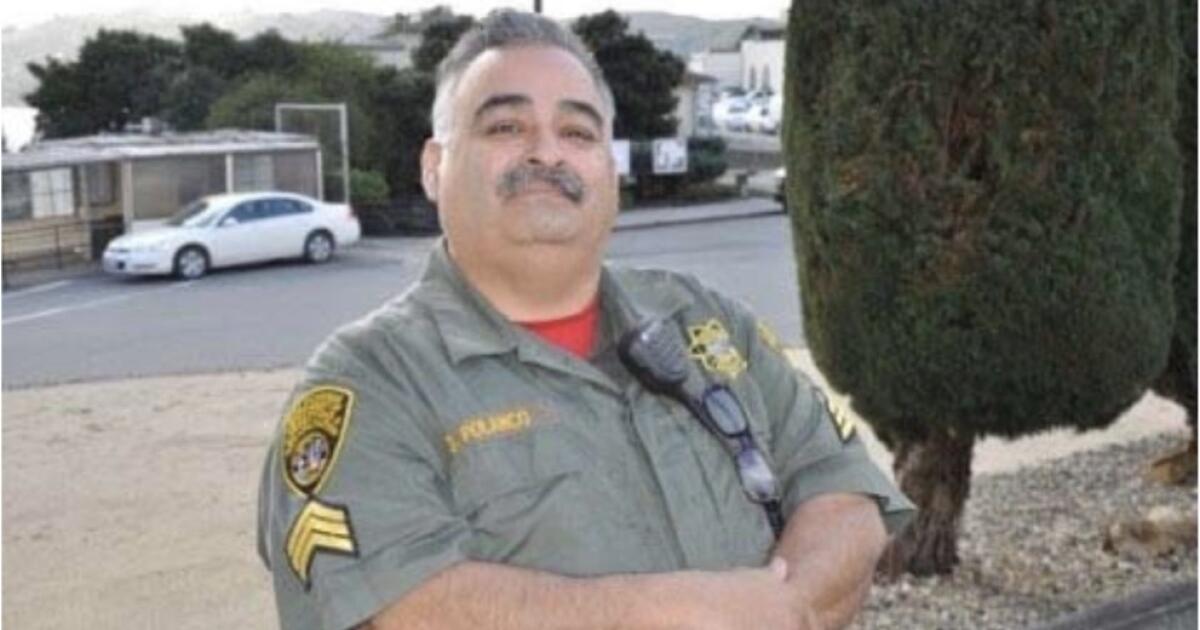
The Supreme Court on Monday turned down an appeal from California prison officials who sought immunity from lawsuits for having transferred inmates with COVID-19 to San Quentin in May 2020, setting off an outbreak that killed 26 prisoners and one guard.
The justices denied the appeals with no comment or dissent.
The transfer decision was later lambasted by state lawmakers as a “fiasco,” “abhorrent” and “the worst prison health screw-up in state history.”
The California Institution for Men in Chino had been hit hard by COVID-19. Nine of its inmates had died and about 600 were infected in May 2020.
San Quentin then had no known cases at that time. In an effort to prevent further harm at CIM, prison officials decided to move 122 inmates from Chino north to San Quentin.
Within days, San Quentin reported 25 COVID cases among the 122 new arrivals. Within three weeks, the virus spread to 499 others.
By early September, at least 2,100 inmates and 270 staff had tested positive.
The state now faces four major lawsuits from the families of those who died as well as from inmates and staff who were infected but survived.
Those lawsuits can proceed now that the federal courts in California and the Supreme Court have denied the state’s claim that prison officials had “qualified immunity” that shielded them from being sued.
“The state has had its due process all the way to the Supreme Court. They’re not getting off on a technicality,” Michael J. Haddad, the attorney for the families, said in response to the court’s order. “Now it’s time to face the facts. Prison administrators killed 29 people in what the 9th Circuit called a ‘textbook case’ of deliberate indifference.”
The defense of qualified immunity often shields police officers from lawsuits. The justices have said that police and other government officials may be sued for violating the constitutional rights of individuals, but only if they knowingly violated a “clearly established” right.
Courts have said that police officers frequently must make split-second decisions on whether, for example, a suspect being pursued has a gun. For that reason, the courts sometimes shield officers from being sued for an “unreasonable seizure” if an officer shoots a fleeing person based on the mistaken belief that the suspect was armed.
The pending prison cases are quite different, lawyers for the families said, because prison officials decided to make the transfers without taking the precautions that were understood as needed at the time.
Sgt. Gilbert Polanco, the guard who died, was 55 years old and had worked at San Quentin for more than two decades. He had multiple health conditions, including obesity, diabetes and hypertension, which put him at high risk if he were to contract COVID-19.
His duties during the pandemic included driving sick inmates to local hospitals, but lawyers said prison officials refused to provide him or the inmates with personal protective equipment.
In late June 2020, he contracted COVID-19, and after a lengthy hospital stay, he died in August.
In Polanco’s case, the lawsuit alleges he lost his life because of a “state-created danger.”
The U.S. 9th Circuit Court of Appeals said prison officials had affirmatively exposed Polanco to a danger he would not have faced otherwise and failed to take steps to protect him from the danger they had created.
The Supreme Court in the past had also ruled that prisoners have a right to be protected against “the unnecessary and wanton infliction of pain,” including as a result of “deliberate indifference to their serious medical needs.” Lawyers for the San Quentin inmates said prison officials can be held liable under that standard.
California state attorneys urged the Supreme Court to review and reverse the 9th Circuit decisions that rejected a qualified immunity defense for the prison officials.
“The facts of these cases are undeniably tragic,” they said. But in “the early months of the COVID-19 pandemic, when little was known about the disease and testing supplies were limited, the defendant officials attempted to protect the lives of scores of vulnerable inmates who were confined in a prison where the virus was rampant.”
With the benefit of hindsight, they agreed their actions may be judged as mistaken, but “no clearly established law placed them on notice that their alleged mismanagement of the COVID-19 pandemic at San Quentin prison was unconstitutional.”



NEWYou can now listen to Fox News articles!
An appeals court struck down a local law in the District of Columbia that banned gun magazines containing more than 10 bullets, describing the measure as unconstitutional.
The ruling Thursday from the District of Columbia Court of Appeals also reversed the conviction of Tyree Benson, who was taken into custody in 2022 for being in possession of a handgun with a magazine that could contain 30 bullets, according to The New York Times.
“Magazines capable of holding more than 10 rounds of ammunition are ubiquitous in our country, numbering in the hundreds of millions, accounting for about half of the magazines in the hands of our citizenry, and they come standard with the most popular firearms sold in America today,” Judge Joshua Deahl wrote on behalf of the two-judge majority in the three-judge panel.
“Because these magazines are arms in common and ubiquitous use by law-abiding citizens across this country, we agree with Benson and the United States that the District’s outright ban on them violates the Second Amendment,” he added.
A salesperson holds a high capacity magazine for an AR-15 rifle at a store in Orem, Utah, in March 2021. (George Frey/Bloomberg via Getty Images)
“This appeal presents a Second Amendment challenge to the District’s ban on firearm magazines capable of holding ‘more than 10 rounds of ammunition.’ Appellant Tyree Benson argues that ban contravenes the Second Amendment so that his conviction for violating it should be vacated,” Deahl also wrote. “The United States, which prosecuted Benson in the underlying case and defended the ban’s constitutionality in the initial round of appellate briefing, now concedes that this ban violates the Second Amendment. The District of Columbia, which is also a party to this appeal, continues to defend the constitutionality of its ban.”
“We therefore reverse Benson’s conviction for violating the District’s magazine capacity ban. And because Benson could not have registered, procured a license to carry, or lawfully possessed ammunition for his firearm given that it was equipped with a magazine capable of holding more than 10 rounds, we likewise reverse his convictions for possession of an unregistered firearm, carrying a pistol without a license, and unlawful possession of ammunition,” Deahl said.
Chief Judge Anna Blackburne-Rigsby, the judge who dissented, wrote that, “The majority bases its common usage analysis on ownership statistics that show only that magazines holding 11, 15, or 17 rounds of ammunition are in common use.”
GUN RIGHTS ON PRIVATE PROPERTY DEBATED AT SUPREME COURT
Magazines at Norm’s Gun & Ammo shop in Biddeford, Maine, in April 2013. From left, the first two are high capacity magazines for handguns, an AK-47 magazine, an AR-15 magazine and an SKS magazine. (Shawn Patrick Ouellette/Portland Press Herald via Getty Images)
“The majority, however, fails to contend with the reality that these statistics do not support the conclusion that the particularly lethal 30-round magazine, such as the one Mr. Benson possessed here, is in common use for self-defense. It simply is not,” she added.
The District of Columbia can now appeal the decision to the Supreme Court, or ask the local appeals court to take another look at the ruling with a larger panel of judges, according to the Times.
High-capacity rifle magazines are removed from a display at Freddie Bear Sports in January 2023 in Tinley Park, Illinois. (Scott Olson/Getty Images)
CLICK HERE TO DOWNLOAD THE FOX NEWS APP
The newspaper also reported that in a previous case, the U.S. Court of Appeals for the District of Columbia upheld the constitutionality of the local law surrounding gun magazine sizes. It’s unclear how the two rulings will interact.
Related Article


If Democrats expect to flip a U.S. Senate seat in Texas, they’ll need all the stars to align. This almost never happens, because politics has a way of scrambling the constellations. But on Tuesday, the first star blinked on.
I’m referring to state Rep. James Talarico’s victory over Rep. Jasmine Crockett in the Democratic primary. Most political prognosticators agree that Talarico, an eloquent young Democrat who speaks openly about his Christian faith, is their best hope in a red state that Donald Trump won by 14 points.
The second star was Crockett’s conciliatory concession — far from a foregone conclusion after a nasty primary — in which she pledged to “do my part,” adding that “Texas is primed to turn blue, and we must remain united because this is bigger than any one person.”
The third star — a vulnerable Republican opponent — has not yet appeared over the Texas sky, although forecasters say it might.
Most observers agree that scandal-plagued Atty. Gen. Ken Paxton would be beatable in the general election, while incumbent Sen. John Cornyn would present a much tougher challenge. Cornyn is the kind of steady, conventional politician who tends to win elections, and so, of course, modern voters are extremely suspicious of him.
In the GOP primary on Tuesday, Cornyn’s 42% share of the vote edged out Paxton by about a point. Unfortunately for Republicans, neither candidate garnered enough votes to avoid a May 26 runoff election.
Conventional wisdom suggests that when a majority of Republican voters choose someone other than the incumbent in the first round of voting, an even greater majority will inevitably break toward the challenger in the runoff. If that happens, Paxton would become the nominee, and Democrats would get their third star to align.
Even better for Democrats — a fourth star, so to speak — would be for this protracted runoff to become a “knife fight,” as one Texas Republican predicted, in which Paxton staggers out of the fight as the battered GOP nominee.
The only problem is that Republicans can see these stars aligning, too.
And while the Texas Senate seat matters a lot on its own, it matters even more in the context of nationwide midterm elections, in which a Texas win would help Democrats take back the Senate.
Enter the cavalry — or, more accurately, President Trump, who is now entering a second war in the span of a week, this one a civil war in the Lone Star State.
The day after the primary, Trump announced that he would be “making my Endorsement soon, and will be asking the candidate that I don’t Endorse to immediately DROP OUT OF THE RACE!”
Reports suggest Trump may endorse Cornyn in order to save the seat for Republicans. But who knows? Trump is famously unpredictable. And it’s likely he admires Paxton’s ability to survive scandals that would have caused most normal politicians to curl up in the fetal position. As they say, “game recognizes game.”
Whomever he backs, conventional wisdom also says Trump should make his endorsement “soon,” as he promised. That would save Republicans a lot of time and money. But Trump currently has enormous leverage. Right now, people are coming to him, pleading for his support.
Do you think he wants to resolve that situation quickly?
Me neither.
With Trump, you never know what you’re going to get. In 2021, he helped torpedo Republican Senate candidates David Perdue and Kelly Loeffler in Georgia, handing Democrats control of the Senate. The following year he backed football legend Herschel Walker in another Georgia Senate race, which did not exactly work out great. Democrat Raphael Warnock won and holds that seat, though Walker is now ambassador to the Bahamas so that’s something.
This is to say: Trump’s political assistance does not always assist.
It’s unclear whether Trump’s endorsement would be dispositive — and whether he could muscle the other Republican out of the primary race.
Paxton, for example, initially vowed to stay in the race, no matter what. (He later suggested he would “consider” dropping out if the Senate passes the SAVE America Act, a bill to require proof of citizenship to vote.)
There’s also this: Trump’s endorsements tend to either be made out of vengeance or to pad the totals of an already inevitable winner, so his track record is probably overrated.
Case in point: While most of his endorsed candidates won their Texas elections, his endorsed candidate for agriculture commissioner lost reelection. And according to the Texas Tribune, “at least three Trump-endorsed candidates for Congress were headed to runoffs, one of them in a distant second place.”
Another issue is that Cornyn needs more than a perfunctory endorsement: He needs a clear, full-throated endorsement.
In a 2022 Missouri Senate race, Trump endorsed “ERIC,” which was awkward because two candidates named Eric were running.
More recently, he endorsed two rival candidates in the same 2026 Arizona gubernatorial race — like betting on both teams in the Super Bowl.
This is all to say that the only thing standing between Texas Democrats and a rare celestial alignment may be the whims of the Republican Party’s one and only star.
Sure, establishment Republicans can beg Trump to quickly step in and settle the race, and maybe he will. But it’s entirely possible the president will find a way to blow up his party’s chances for holding the U.S. Senate — and there’s nothing they can do to stop him.
When you’re a star, they let you do it.
Matt K. Lewis is the author of “Filthy Rich Politicians” and “Too Dumb to Fail.”

new video loaded: President Fires Noem as Homeland Security Secretary
transcript
transcript
President Fires Noem as Homeland Security Secretary
President Trump fired Kristi Noem, his embattled homeland security secretary, on Thursday and announced his plans to replace her with Senator Markwayne Mullin of Oklahoma.
-
“The fact that you can’t admit to a mistake which looks like under investigation is going to prove that Ms. Good and Mr. Pretti probably should not have been shot in the face and in the back. Law enforcement needs to learn from that. You don’t protect them by not looking after the facts.” “Our greatness calls people to us for a chance to prosper, to live how they choose, to become part of something special. Anyone who searches for freedom can always find a home here. But that freedom is a precious thing, and we defend it vigorously. You crossed the border illegally — we’ll find you. Break our laws — we’ll punish you.” “Did you bid out those service contracts?” “Yes they did. They went out to a competitive bid.” “I’m asking you — sorry to interrupt — but the president approved ahead of time you spending $220 million running TV ads across the country in which you are featured prominently?” “Yes, sir. We went through the legal processes. Did it correctly —” Did the president know you were going to do this?” “Yes.” “I’m more excited about just ready to get started. There’s a lot of work we can do to get the Department of Homeland Security working for the American people.”

By Jackeline Luna
March 5, 2026

Dog reunites with owner after 43 days lost in the mountains

Connecticut is Poised to Lose More Residents If It Fails to Fix Affordability

Widow of fallen Delaware state trooper launches foundation in his memory

EV battery maker SK lays off nearly 1,000 workers at Georgia Plant

NJ’s Jake Thistle to be featured on ‘American Idol’ Hawaii episode

Florida High School Football Rankings: Top 25 teams – Oct. 21

Cleary's 21 help Le Moyne down Central Connecticut State 69-64 in OT

How old is Bo Nix? What to know about Oregon quarterback ahead of 2024 NFL Draft

99th annual Pony Swim held in Virginia

Indiana Members Credit Union announced as new anchor tenant at Bottleworks District

Appeals court declares DC ban on certain gun magazines unconstitutional

‘No deal with Iran except unconditional surrender,’ Trump says

A dead woman’s key fob and two grisly crime scenes: How the Utah triple-murder suspect was tracked across state lines | CNN

DOJ continues Biden autopen probe despite former president unlikely to face charges
Fact check: Did French border guards mock influencers returning from Dubai amid Iran war?
-

 World1 week ago
Exclusive: DeepSeek withholds latest AI model from US chipmakers including Nvidia, sources say
-

 Wisconsin5 days ago
Setting sail on iceboats across a frozen lake in Wisconsin
-

 Massachusetts4 days ago
Massachusetts man awaits word from family in Iran after attacks
-

 Massachusetts1 week ago
Mother and daughter injured in Taunton house explosion
-

 Maryland6 days ago
AM showers Sunday in Maryland
-

 Florida6 days ago
Florida man rescued after being stuck in shoulder-deep mud for days
-

 Denver, CO1 week ago
10 acres charred, 5 injured in Thornton grass fire, evacuation orders lifted
-

 Oregon1 week ago
2026 OSAA Oregon Wrestling State Championship Results And Brackets – FloWrestling