Politics
Six Questions We Asked 65 Republican Convention Attendees


With the Republican National Convention in Milwaukee this week, we wanted to learn how the party has changed and where it might be going, not from the officials who will give prime-time convention speeches, but in the words of some of its most committed members from across the country.
We spoke with 65 delegates and other attendees, a majority of whom were going to their first convention. We asked them their views on Donald J. Trump, the issues that drive them, what they’ve seen change, formative political moments, their favorite Republicans and who might be the next leader of the party. The initial conversations happened before the attempted assassination of Mr. Trump on Saturday, and we followed up with respondents at the convention.
1/6
How would you describe your feelings or level of enthusiasm about Donald Trump as the nominee?
Most of the attendees we spoke to said they were very enthusiastic about nominating him. Some said they were energized by his felony conviction in Manhattan in May. While the delegate selection process varies by state, the presumptive nominee has significant influence on who is chosen.
“This is a time where our country needs a hero, and I believe that Donald Trump is that hero.”
Jason Soseman, 52, Missouri
self-employed worker

“He has nothing to gain. He doesn’t need the money, he doesn’t need the jet, he doesn’t need the big house.”
Jeff Rawls, 59, Florida
construction company owner
“On a scale of one to a hundred for enthusiasm — one being I don’t want to leave the couch on Election Day and a hundred being that I would crawl over broken glass — I’m probably at a 99.”
AK Kamara, 40, Minnesota
contract courier
When asked at the convention how they felt about the shooting, many said they were even more determined to see Mr. Trump elected. Another common response was the belief that God had intervened to protect him. Some expressed hope that the political temperature would cool down, while others blamed the rhetoric of Mr. Trump’s detractors. “When you dehumanize people, it opens the door for others to take action in some ways,” said Matthew Rust, a delegate from Wisconsin.
In conversations leading up to the convention, some respondents expressed their support for Mr. Trump but acknowledged that he was not always their first choice, or that they preferred his policies to his personality.
“There were other candidates that I liked better, but of course I will still support him come November.”
Hayden Head, 20, Texas “I like the guy’s policies. As far as hanging out with him …”
Todd Gillman, 57, Michigan “Over the years he could have chosen his words a little more carefully about people, but the alternative is just really sad.”
Gwen Ecklund, 66, Iowa
student
disabled veteran
retiree
Just one participant said he was not at all enthusiastic about Mr. Trump. Jason Watts, a former district party treasurer who was impeached after telling The New York Times that he had not voted for Mr. Trump in 2016 or 2020, says he feels like an abandoned orphan in the party.
“It doesn’t serve our candidiates up and down the ticket if we are stuck with a cult of personality instead of a decipherable platform.”
Jason Watts, 47, Michigan
political consultant
2/6
Is there a particular issue that drives you toward or excites you about the Republican Party right now?
The economy was mentioned by more than 40 percent of respondents. Younger Republicans were more likely to be concerned about the cost of living. “It is near impossible to buy a home, to get married and afford to have kids,” said Stevie Giorno, a 24-year-old delegate from Tennessee.
“We are the crushed and destroyed generation, whether it’s on rent, whether it’s on quality of life, whether it’s on wages that have been far outstripped by inflation and the cost of living.” Kip Christianson, 33, Minnesota “The cost of living for Americans. And I think the national deficit is another issue that we’ve got to get under control.”
Logan Z. Glass, 22, Alabama “The ability to actually take care of your family, buy milk, pay an electric bill, not put everything on credit. That’s my biggest driving factor —survival.”
Bethany Wheeler, 45, Michigan
donor adviser
county government official
government employee
Immigration was mentioned just as frequently (most respondents raised more than one driving issue), especially among older attendees. The responses track with a recent Times/Siena College poll in which more than half of Republicans said either the economy or immigration was the most important issue in deciding their vote.
Last week, Republican Party members approved a new, significantly pared down party platform reflective of Mr. Trump’s priorities. The document calls for mass deportations as well as sealing off the border to migrants.
“Trump’s policies when it comes to the Southern border and shutting it down is the No. 1 thing.”
Mike Crispi, 31, New Jersey “I just feel the country is just not safe anymore. You can say it’s partly because of all the people we let into the country that we just don’t know who they are.” Janice Fields, 55, New Jersey “I don’t think everybody coming into this country is bad, but we’ve got to have a process to vet these folks that come across that border.”
Susan Aiken, 71, South Carolina “My ancestors came also legally from many, many years back from Pakistan. If you want to come, you can come, but go through the legal channels. Don’t just cross the border.”
Arif Shad, 66, Alabama
talk show host
retiree
retiree
retired customs agent
Several respondents talked about the size of government and the national debt, long-held Republican priorities that were largely dropped from the party’s platform.
Abortion came up less frequently in the survey. The new party platform softens the party’s stance on the issue, reflecting Mr. Trump’s recent position that it should be handled by the states, upsetting many anti-abortion activists.
A handful of respondents mentioned issues surrounding education, gender and sexuality, including the Biden administration’s revised Title IX rules. A few respondents included election integrity as important to them, or offered that they believed in the false claim that the 2020 election was stolen.
“You have grassroots conservatives who are getting activated, and a lot of the establishment Republicans — the old-style Republicans — are either stepping down or being pushed out.” Bob Witsenhausen, 62, New Mexico “Since 2016, I think it’s become more of a working-class party rather than a big business party.”
Matthew Bingesser, 29, Kansas “I don‘t think we’ve got the cohesiveness now that we had a dozen years ago.”
Jim Stalzer, 78, South Dakota 3/6
Is there something you’ve seen change in the party?
electrical contractor
attorney
state legislator
Nearly all of the respondents hold positions within their local or state parties, or are members of groups for young Republicans or Republican women. Some hold public office. Many acknowledged an internal struggle in the party stemming from an influx of conservative activists.
“We have a serious rise in purists that want everyone to agree with them 100 percent. They want to push every normal human out.”
Bethany Wheeler, 45, Michigan “Because of all the battles we’re fighting — with the health freedom, with Covid, with parental rights and all of that stuff — a lot more people have gotten involved.”
Rachel Cadena, 54, Iowa “I can say that the grass roots are finally heard. We’re finally taking over from the local party up to the national.”
David Lara, 58, Arizona “Some parts of the party have gotten very radical, and I don’t think they were like that during the Reagan days.”
Jennifer Cunningham, 46, South Carolina
government employee
insurance adjuster
self-employed worker
child care director
Other respondents said they’d seen a sustained movement of the working class toward their party since blue-collar voters helped secure Mr. Trump’s victory in 2016.
“We had a reputation before of maybe the elite party, and now we’re the working person’s party. We’ve been more embracing of everyone.”
Deborah McMullen, 74, Florida
real estate broker, entrepreneur
“When you look at the millionaires that we have in the United States, most of them are running with the Democrat Party.”
Jack Ladyman, 77, Arkansas
state legislator
“Since the arrival of Trump at the scene, there has been a lot more voice to issues that are specific to our region, namely trade and loss of industry.”
Ian Shetron, 33, Michigan
finance operations manager
When it comes to foreign conflicts like in Gaza and Ukraine, they say today’s party is less willing to be involved.
“The Republicans were always the party of being pro-war, and Democrats were not. In the past four years or five years, there’s really been a shift there.”
Jake Hoffman, 33, Florida “Why don’t we take care of our own in our own country, before we spend millions outside of our country?” Juan Carlos Porras, 27, Florida
Co-founder of a digital media company
state legislator, small business owner
Some, but not all, who mentioned diversity said it had increased. In surveys over the past year, Mr. Trump has improved his standing with young and nonwhite voters.
“The Republican Party is very much open to some different ideas, and more open to different kinds of people.”
Nina O’Neill, 60, District of Columbia “My Moms for Liberty group has seen a tremendous inpouring of younger people coming into the party and wanting to get involved.” Amber Schroeder, 42, Wisconsin “We don’t have a pipeline, a future. I am the only Native American going to the delegation for New Mexico, and the only one in the county party.”
Leanna Derrick, 56, New Mexico
teacher
stay-at-home mom, political consultant
research analyst
4/6
Has there been a particularly meaningful or formative political moment in your life?
Most of the respondents said they had been Republicans their entire lives (or at least since they could vote). One said he campaigned door-to-door with his mother when he was still in the womb. Another recalled running a Reagan re-election campaign at his elementary school as a first grader.
“I remember going around third grade telling all my friends, ‘My mom is voting for Romney.’ And no one else was saying the same thing.”
Liliana Norkaitis, 20, Maryland
student
“I have this beautiful picture with my mom and me and Laura Bush, and each one of us holding one of my daughters. My mom was the one who did politics with me, and she passed away recently.”
Christine Peters, 47, New Hampshire
educator
On Richard Nixon: “I remember watching him leave the White House with my girlfriend; we were having a sleepover, and we were crying.”
Nina O’Neill, 60, District of Columbia
teacher
Researchers have estimated that the years between age 14 and 24 are the most formative in shaping political preferences. Many of the major national or world events cited by respondents as meaningful occurred during their young adult years. Karl Von Batten, a 37-year-old lobbyist in Washington, remembered that after Sept. 11: “President George Bush got on a bullhorn and made a call for action. I joined the Army after that.”
“The Brett Kavanaugh hearings. Personally, I thought that there wasn’t much evidence to these accusations. I felt it was politically motivated.”
Sydney Salatto, 25, Florida “The disasterous withdrawal from Afghanistan in the Biden administration.” Bill G. Schuette, 28, Michigan “I remember seeing the Elián González saga every day on TV and going with my parents to the solidarity marches.”
Kevin M. Cabrera, 33, Florida “When Reagan became president. I really felt a connection to the party at that time.”
Deborah McMullen, 74, Florida
grass-roots organizer
state legislator
Miami-Dade county commissioner
real estate broker, entrepreneur
For most, an election or a campaign event activated their involvement. For the few who were not lifelong Republicans, these moments motivated them to join the party.
“The Ron Paul campaign in 2008 gave me the conservative bug.”
Jon Smith, 46, Michigan “The Dan Quayle political rally in Farmington, N.M.”
Gerrick Wilkins, 46, Alabama “In 2019, President Trump came to Bossier to endorse Eddie Rispone and had a rally. I’ve been in politics since I was 13. It was the highlight of my life.”
Parker Ward, 32, Louisiana “The election of Ronald Reagan and the optimism that he brought to the country. Shortly after that, the rise of Rush Limbaugh, who day after day explained the virtues of conservative doctrine.”
Dean Black, 58, Florida “Hosting Pat Buchanan for my first political fund-raiser. When you fast-forward 16 years later, Trump won on the policies that Buchanan advocated for in that campaign.” Dan Mason, 46, Oregon
online salesperson
automotive consultant
property manager
state legislator, small business owner
property manager
The pandemic was also frequently mentioned.
“During Covid, I think everybody saw what a lot of us felt was overreach of the government and other institutions.”
Matthew Rust, 55, Wisconsin “Our kids were starting to be locked out of schools, and we saw this tremendous amount of learning loss happening in our public education system. That really woke me up. I actually ended up recalling four school board members.” Amber Schroeder, 42, Wisconsin
product developer
stay-at-home mom, political consultant
5/6
Which Republican figure do you consider your favorite, or think aligns most closely with your positions?
Many respondents mentioned Mr. Trump. But more than half, including those born long after his presidency, mentioned Ronald Reagan. “Any true Republican should hold Reagan in the highest regard,” said Arik Amundsen, a 24-year-old delegate from Oklahoma.
“Reagan, of course. I just think he was the full package — he was charismatic but he was also rhetorically sound in everything he said.”
Sandy Graves, 68, Florida “He was able to disagree with folks without being disagreeable.”
Dan Schuberth, 40, District of Columbia “I feel like the circumstances are somewhat similar in the sense that as gracious as Jimmy Carter was, he was not a good president. And Ronald Reagan brought back a lot of the economy and so forth that was in a mess.”
Renée Gentle Powers, 72, Alabama
retiree
executive
retiree
Many people couldn’t name just one favorite. In all, they mentioned 40 Republicans. These were named more than once:
There were a wide range of others mentioned once, including several home-state lawmakers.
On the former representative Fred Upton of Michigan: “A willingness to compromise to get to the best solutions is something I think we’ve lost.”
Jason Watts, 47, Michigan “I love Tucker Carlson. He’ll speak truth to the media. He’ll do a lot things that most journalists will never do.”
Carson M. Butler, 27, Alabama On Representative Daniel Webster of Florida: “He’s not sexy — he’s no Matt Gaetz. But he’s a gentleman, he’s a worker, works behind the scenes, he gets things done. People in both parties respect him.”
Ralph Smith, 67, Florida
political consultant
electrician
tire store owner
6/6
Is there someone you see as the next leader of the party after Trump?
Participants named 25 people they thought had potential to lead the party after Mr. Trump. Gov. Ron DeSantis of Florida received the most mentions, from more than one-third of respondents.
“We’re huge fans of Ron DeSantis down here in Florida.” Jake Hoffman, 33, Florida “I’ve found myself wanting to be a citizen of Florida at times, because they have a strong leader who gets things accomplished for his citizenry.”
Aaron Bullen, 37, Utah “I think it could be someone like DeSantis. It could be someone like Tulsi Gabbard, maybe Kristi Noem.”
Lori Martinez, 63, Arizona
Co-founder of a digital media company
engineer
mortgage loan originator and property manager
These responses were compiled before Senator J.D. Vance of Ohio was announced as Mr. Trump’s running mate, with some attendees saying they were waiting to see who the choice would be. The most common names mentioned after Mr. DeSantis were Vivek Ramaswamy, Senator Tim Scott of South Carolina, and the former South Carolina governor Nikki Haley — all onetime primary contenders.
“Tim Scott was unknown to so many of us. Really like him.”
Mack N. Butler, 61, Alabama “The only thing I could see as far as competence-wise … maybe one of the boys, maybe Don Jr., or Eric.”
Jason Mikkelborg, 51, Michigan “I see a lot of people up and coming, like Vivek Ramaswamy. I think he could really make an impact in the future. A lot of people right now probably just think he’s too young.”
Taylor Broyles, 26, Oklahoma
state legislator, small business owner
disabled combat veteran
county employee
More than 20 percent of participants did not name anyone with the potential to take up Mr. Trump’s mantle.
“I hate to keep bringing up Reagan, but I want someone who has the ability to bring people from the other side to a place where we can find more solutions.”
William Wallis, 56, Louisiana “If somebody tells you, ‘Well, so and so is the heir apparent,’ well they’re just talking, because they don’t have any basis in which to say that.”
John H. Merrill, 60, Alabama “We have so much talent, and we’ll have to see. Four years is an eternity in politics.”
Dean Black, 58, Florida
radio show host
Alabama secretary of state from 2015 to 2023
state legislator, small business owner







NEWYou can now listen to Fox News articles!
The federal government has entered its third partial shutdown of the last half-year after Congress failed to reach an agreement on all 12 of its annual spending bills.
Unlike past shutdowns, however, this one just affects the Department of Homeland Security (DHS). It comes after Democrats walked away from a bipartisan deal to fund the department amid uproar over President Donald Trump’s immigration crackdown in Minneapolis.
And while some 97% of the federal government has been funded at this point, a DHS shutdown will still have effects on everyday Americans — effects that will become more apparent the longer the standoff continues.
DHS SHUTDOWN EXPLAINED: WHO WORKS WITHOUT PAY, WHAT HAPPENS TO AIRPORTS AND DISASTER RESPONSE
Homeland Security Secretary Kristi Noem delivers a press conference on Jan. 24, 2026. (Al Drago/Getty Images)
Air travel delays
Disruptions to the TSA, whose agents are responsible for security checks at nearly 440 airports across the country, could perhaps be the most impactful part of the partial shutdown to Americans’ everyday lives.
Acting Administrator Ha Nguyen McNeill told lawmakers at a hearing on Wednesday that around 95% of TSA employees — roughly 61,000 people — are deemed essential and will be forced to work without pay in the event of a shutdown.
“We heard reports of officers sleeping in their cars at airports to save money on gas, selling their blood and plasma, and taking on second jobs to make ends meet,” she said of the last shutdown.
But it would take some time before TSA funding could translate to delays. TSA agents, like other essential federal workers, received back pay once the shutdown was over. Those who did not miss shifts also got a $10,000 bonus for added relief.
FETTERMAN BUCKS DEMOCRATS, SAYS PARTY PUT POLITICS OVER COUNTRY IN DHS SHUTDOWN STANDOFF
TSA paychecks due to be issued on March 3 could see agents getting reduced pay depending on the length of the shutdown. Agents would not be at risk of missing a full paycheck until March 17.
If that happens, however, Americans could see delays or even cancellations at the country’s busiest airports as TSA agents are forced to call out of work and get second jobs to make ends meet.
Passengers wait in line to use automated passport control kiosks set up for international travelers arriving at Miami International Airport. (Joe Raedle/Getty Images)
Natural disaster reimbursement
The Federal Emergency Management Agency (FEMA) is one of the largest and most critical recipients of federal funding under DHS.
Associate Administrator of the Office of Response and Recovery Gregg Phillips told lawmakers on Wednesday that FEMA has enough funds to continue disaster response through a shutdown in the immediate future, but that its budget would be strained in the event of an unforeseen “catastrophic disaster.”
That means Americans hit by an unexpected natural disaster during the shutdown could see delayed federal reimbursement for their homes and small businesses.
Others who have already lived through a natural disaster in the last year but still have not received their checks — FEMA is currently working through a backlog worth billions of dollars — could see that relief delayed even further during the shutdown.
“In the 45 days I’ve been here … we have spent $3 billion in 45 days on 5,000 projects,” Phillips said. “We’re going as fast as we can. We’re committed to reducing the backlog. I can’t go any faster than we actually are. And if this lapses, that’s going to stop.”
People are seen outside a wildfire shelter at the Pasadena Convention Center on Jan. 21, 2025. (Frederic J. Brown/AFP via Getty Images)
Worker visa processing
American business owners who rely on certain types of worker visas could see processing times extended during a DHS shutdown.
That’s because United States Citizenship and Immigration Services (USCIS) programs are run under DHS and are responsible for processing most immigration applications as well as temporary visas.
CLICK HERE TO DOWNLOAD THE FOX NEWS APP
The majority of those programs are funded by fees and are largely untouched. However, areas like e-Verify, the EB-5 Immigrant Investor Regional Center Program, Conrad 30 J-1 doctors, and non-minister religious workers all rely on funding appropriated by Congress, according to the American Immigration Lawyers Association.
USCIS could allow employers to use alternate processes if e-Verify is disrupted during a shutdown, but it’s not clear how much time it would add to business owners’ day-to-day responsibilities to learn a new route for that paperwork.
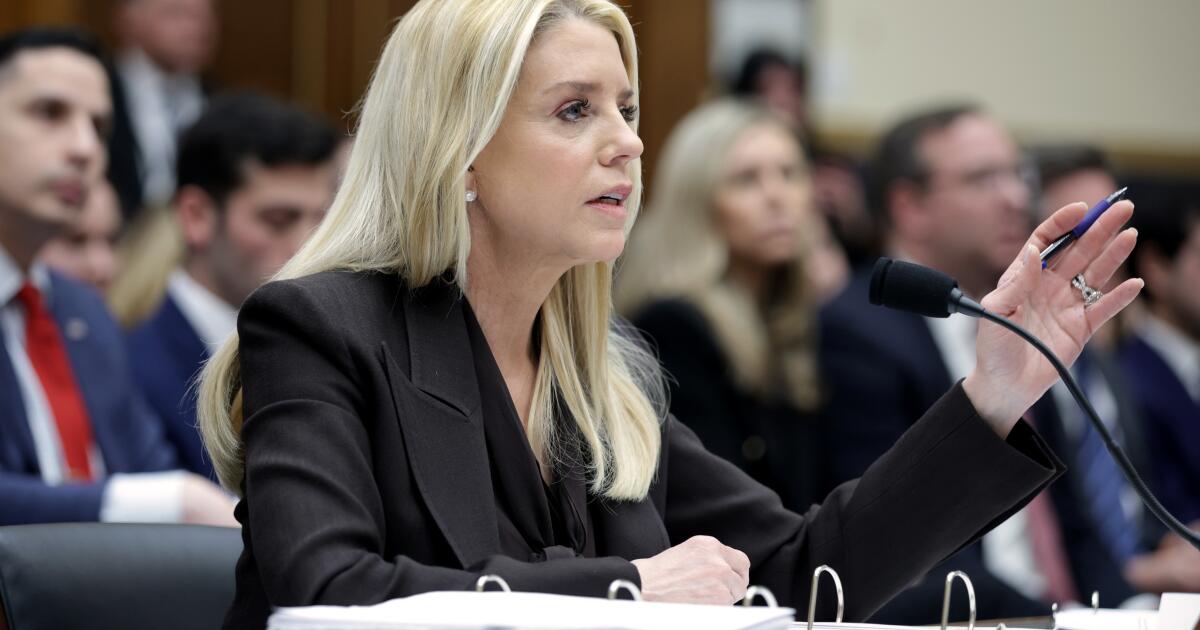
At a House Judiciary hearing on Wednesday, Atty. Gen. Pam Bondi was holding a document labeled “Jayapal Pramila Search History” that included a list of files from the unredacted Epstein archive accessible to lawmakers such as Rep. Pramila Jayapal (D-Wash.).
That means over the course of a year Bondi’s Department of Justice has made time to speak with Ghislaine Maxwell — the New York socialite who helped Jeffrey Epstein run his billion-dollar child-sex-trafficking operation — and it made time to surveil a Democratic lawmaker who conducts oversight as a member of the Judiciary Committee. But it has yet to meet with the victims of Epstein’s crimes who want to talk.
When she took office, Bondi promised us transparency. She didn’t promise we would like what we would see from her.
The general public’s awareness of Epstein’s heinous crimes came with political baggage. However at this point, the question we all should wonder is: How does redacting the names of the men who helped fund Epstein’s operation benefit either political party? It may be good for the rich and powerful men trying to avoid accountability, but it’s not exactly a campaign platform.
Yet here we are as a country, chained to the same vocabulary used during an election, so a conversation that should be about right and wrong is accompanied by poll numbers and analysis about the midterm elections. As if the Justice Department’s refusal to interview rape survivors is an inside-the-Beltway topic and not reflective of a larger moral crisis. We have seen Congress kept out of session to avoid voting on the release of the Epstein files; we have heard equivocation about whether Epstein was a pedophile. We know Epstein’s island was a place where evil resided.
The investigation, or lack of investigation, into Epstein’s fellow abusers should not be seen by anyone as a political quandary in which the object of the game is to keep your party in power. The fact that there is a Republican-vs.-Democrat divide on accountability for sex abuse reveals a national moral crisis. When the abuse of children is viewed through a partisan lens, how else can one describe this period in America?
Fifty years ago, when President Carter was tasked with healing the nation after the Watergate scandal, he told Americans in his inaugural address that he was leaning on his faith, and one prophet in particular.
“He hath shewed thee, O man, what is good; and what doth the Lord require of thee, but to do justly, and to love mercy, and to walk humbly with thy God?,” Carter said, quoting Micah 6:8. “This inauguration ceremony marks a new beginning, a new dedication within our government, and a new spirit among us all. A president may sense and proclaim that new spirit, but only a people can provide it.”
The Hebrew prophet Micah was from a rural area, not born into the wealth of the royal court. He was not being compensated by those who were. Instead, Micah reflected the voice of the people who were forced to live in poor conditions because of corruption. He described the actions of the morally bankrupt judges, political leaders and other elites in graphic, violent terms, condemning those “who hate the good, and love the evil; who pluck off their skin from off them, and their flesh from off their bones.”
This, he said, is what it is like being ruled by those who are not guided by what is good and what is evil, but rather what is most beneficial for themselves in the moment. When Micah spoke, it wasn’t about the latest poll numbers. His warnings about government corruption are not unique to any particular faith, nor are they married to any political party. They embody centuries of human history, a history that tells what happens to a society when power goes unchecked.
And be not mistaken, it was unchecked power — not any party affiliation — that provided Epstein and Maxwell with patronage. It was moral failure, not conservatives or liberals, that provided cover for their child-sex-trafficking ring.
So if for partisan reasons the abusers of children are not held accountable for their crimes, the language of politics fails us. The word for that is simply: evil.
YouTube: @LZGrandersonShow
Insights
L.A. Times Insights delivers AI-generated analysis on Voices content to offer all points of view. Insights does not appear on any news articles.
Viewpoint
Perspectives
The following AI-generated content is powered by Perplexity. The Los Angeles Times editorial staff does not create or edit the content.
Ideas expressed in the piece
-
The Department of Justice under Attorney General Pam Bondi has created a moral crisis by allowing the investigation into Jeffrey Epstein’s fellow abusers to become a partisan political issue rather than a matter of fundamental accountability and justice[3]. The DOJ has monitored a Democratic lawmaker’s access to Epstein files while reportedly meeting with Ghislaine Maxwell but declining to meet with Epstein survivors seeking to discuss their experiences[1][3].
-
Redacting the names of wealthy and powerful men implicated in Epstein’s crimes while exposing victims’ identities serves no legitimate governmental interest and only protects the rich and powerful from accountability regardless of political affiliation[3]. The failure to hold co-conspirators accountable after more than a year in office, combined with refusals to apologize to survivors, demonstrates a troubling prioritization of protecting certain interests over justice[3].
-
When child sexual abuse becomes filtered through partisan politics rather than evaluated on moral grounds, it reflects a fundamental failure of governance and represents a national crisis of conscience[3]. The politicization of this issue obscures what should be a universal principle: that accountability for crimes against children transcends party affiliation and election cycles[3].
Different views on the topic
-
The Department of Justice maintains that it records all searches conducted in its systems specifically to safeguard against the disclosure of victim information, suggesting that monitoring access to sensitive Epstein files serves a protective function rather than partisan surveillance[1]. Attorney General Bondi stated that the department has pending investigations in its office related to potential Epstein conspirators[2], indicating that prosecutorial work continues despite public criticism.
-
The release of Epstein files is an ongoing process requiring careful legal review to protect victims’ privacy and ensure proper handling of sensitive evidence[4]. The DOJ’s approach to redacting certain information may reflect legitimate institutional concerns about victim protection and the complexities of managing millions of declassified documents[1].

new video loaded: ‘I Will Not Back Down’: Don Lemon Enters Not Guilty Plea
transcript
transcript
‘I Will Not Back Down’: Don Lemon Enters Not Guilty Plea
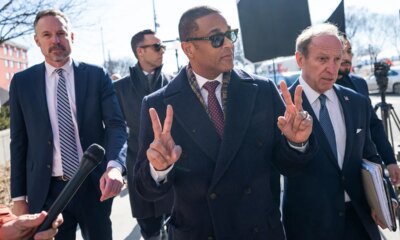
The journalist Don Lemon entered a not guilty plea on Friday to two accounts stemming from his participation in a protest at Cities Church in St. Paul, Minn., last month.
-
Far left. Going your way here. How do you feel going in? This is what community looks like. Show me what community looks like. This is what community looks like. I wanted to say this isn’t just about me. This is about all journalists, especially here in the United States. For more than 30 years, I’ve been a journalist, and the power and protection of the First Amendment has been the underpinning of my work. The First Amendment, the freedom of the press, the bedrock of our democracy. I will not be intimidated. I will not back down. I will fight these baseless charges and I will not be silenced. Thank you very much. Thank you.
By Meg Felling
February 13, 2026

Will Warsaw become the seat of a new EU agency? To be decided in March

Four people on NASA’S Crew-12 arrive at the International Space Station

Illegal alien youth coach could face death penalty after allegedly murdering, raping teen player

Don Lemon formally arraigned, pleads not guilty on charges stemming from viral Minnesota church storming

Medical examiner determines Texas A&M student’s manner of death as family attorney disputes finding: ‘Flawed’

Florida High School Football Rankings: Top 25 teams – Oct. 21

Cleary's 21 help Le Moyne down Central Connecticut State 69-64 in OT

How old is Bo Nix? What to know about Oregon quarterback ahead of 2024 NFL Draft

99th annual Pony Swim held in Virginia

Indiana Members Credit Union announced as new anchor tenant at Bottleworks District
Will Warsaw become the seat of a new EU agency? To be decided in March
Four people on NASA’S Crew-12 arrive at the International Space Station

Video: Vermont Made Child Care Affordable. Could It Lead by Example?

Here’s how the DHS shutdown could impact the lives of everyday Americans

AU calls for end to ‘extermination’ of Palestinians, decries African wars
-

 Politics1 week ago
White House says murder rate plummeted to lowest level since 1900 under Trump administration
-

 Alabama1 week ago
Geneva’s Kiera Howell, 16, auditions for ‘American Idol’ season 24
-

 Ohio1 week ago
Ohio town launching treasure hunt for $10K worth of gold, jewelry
-

 News1 week ago
The Long Goodbye: A California Couple Self-Deports to Mexico
-

 Science1 week ago
Video: Rare Giant Phantom Jelly Spotted in Deep Waters Near Argentina
-

 Culture1 week ago
Video: Farewell, Pocket Books
-

 News1 week ago
Video: Investigators Say Doorbell Camera Was Disconnected Before Nancy Guthrie’s Kidnapping
-

 Technology1 week ago
Apple might let you use ChatGPT from CarPlay