Lynne Vezina of the Vermont Family Pharmacy in Burlington on Dec. 30, 2021. File photo by Glenn Russell/VTDigger
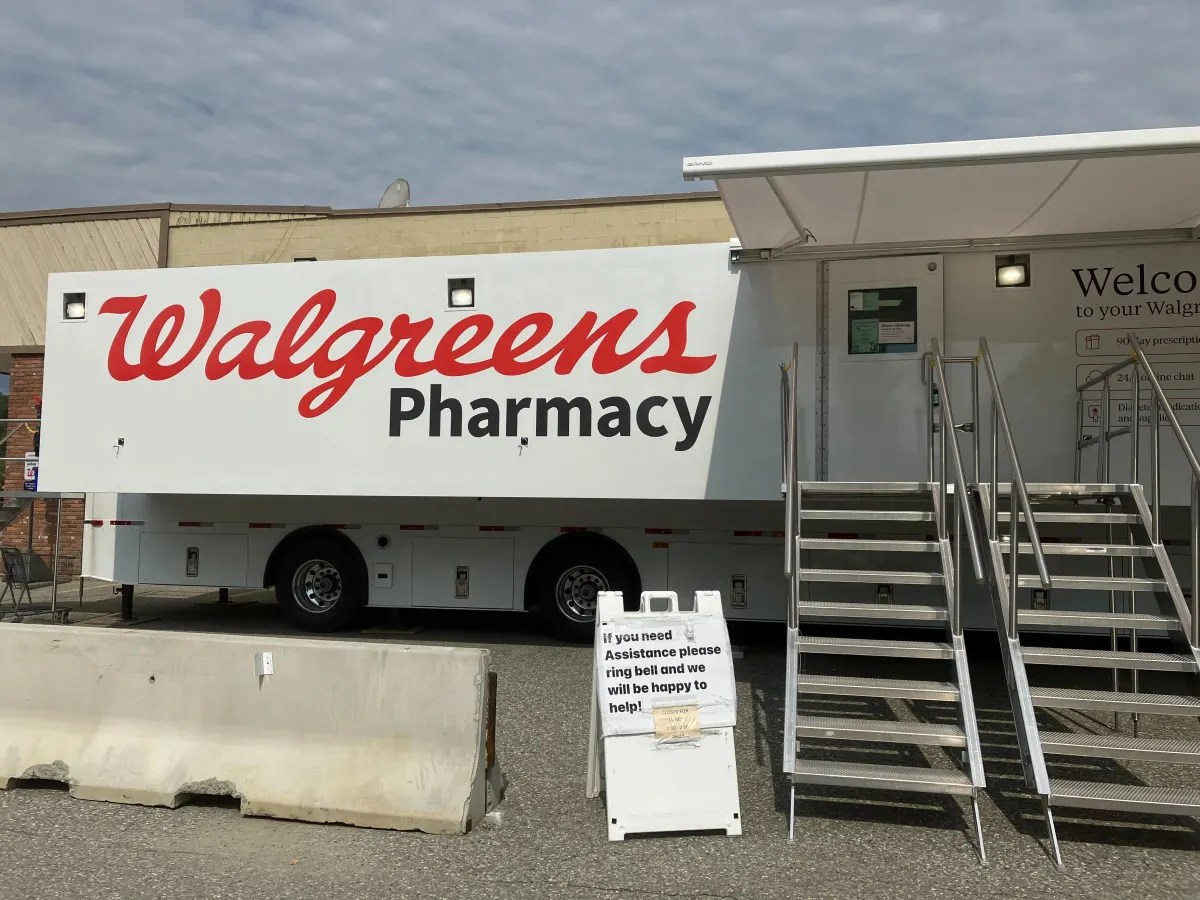
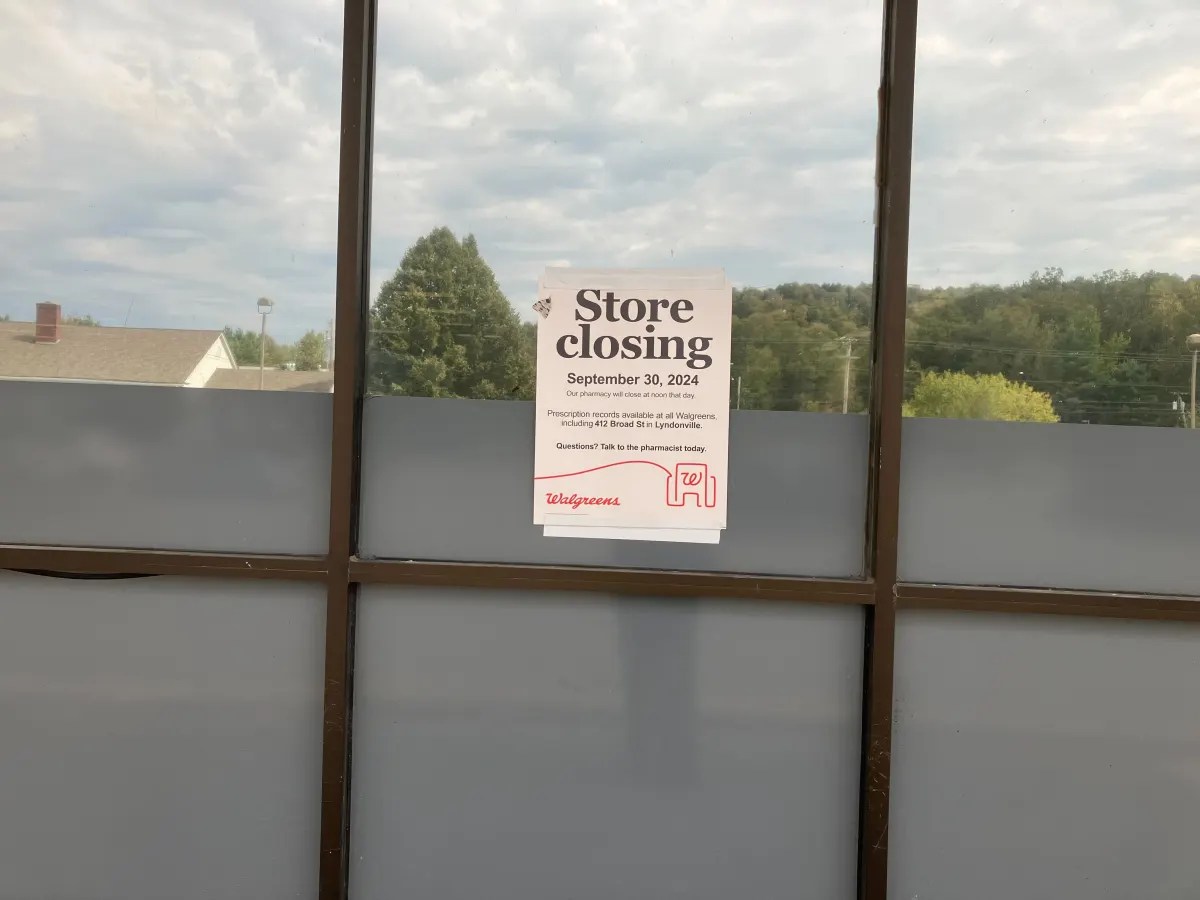
Hardwick’s sole pharmacy — a Walgreens that had twice been hit by Vermont’s recent summer floods — closed for good at the end of September. Since then, residents have had to drive 25 minutes to access a pharmacy in Morrisville or 40 minutes to the closest Walgreens in Lyndon, leaving Hardwick squarely in a “pharmacy desert.”
Pharmacy deserts are generally defined as places where there is no or limited access to a pharmacy. In rural areas, this means the closest is over 10 miles away, while in urban areas, the closest is over one mile away.
Hardwick is hardly the only pharmacy desert in the state. According to a recent analysis of pharmacy locations across the country, 41 of Vermont’s 193 census tracts (21%) had low access to a pharmacy in 2022. The analysis, published by the academic journal Health Affairs Scholar, defined low access as at least one-third of the tract’s population living within a pharmacy desert. Between closures of independent pharmacies and national chains continuing to scale back back “less profitable” operations, the number of pharmacy deserts is only increasing.
Mike Fisher, Vermont’s chief health care advocate, said that pharmacy closures across the state are an ongoing and “very serious” trend.
Advertisement
“I live in Addison County,” he said. “When the local Marble Works Pharmacy closed, I remember just how upsetting and difficult that was for so many people.”
According to the state’s Board of Pharmacy, 28 Vermont pharmacies have closed permanently over the past five years, leaving 126 currently operating in the state. A nationwide study has linked such closures to a decline in older Americans taking their prescription cardiovascular medications.
Often, Fisher said, there’s another pharmacy in town, as in Middlebury. But in a growing number of towns, there isn’t.
Advertisement
” data-medium-file=”https://vtdigger.org/wp-content/uploads/2023/01/VTD-Hotel-Pharmacy-2-300×225.jpeg” data-large-file=”https://i1.wp.com/vtdigger.org/wp-content/uploads/2023/01/VTD-Hotel-Pharmacy-2-1200×900.jpeg?crop=1&ssl=1″ fifu-data-src=”https://i1.wp.com/vtdigger.org/wp-content/uploads/2023/01/VTD-Hotel-Pharmacy-2-1200×900.jpeg?crop=1&ssl=1″ alt=”” class=”wp-image-537566″ srcset=”https://i1.wp.com/vtdigger.org/wp-content/uploads/2023/01/VTD-Hotel-Pharmacy-2-1200×900.jpeg?crop=1&ssl=1 1200w, https://vtdigger.org/wp-content/uploads/2023/01/VTD-Hotel-Pharmacy-2-300×225.jpeg 300w, https://vtdigger.org/wp-content/uploads/2023/01/VTD-Hotel-Pharmacy-2-125×94.jpeg 125w, https://vtdigger.org/wp-content/uploads/2023/01/VTD-Hotel-Pharmacy-2-768×576.jpeg 768w, https://vtdigger.org/wp-content/uploads/2023/01/VTD-Hotel-Pharmacy-2-1536×1152.jpeg 1536w, https://vtdigger.org/wp-content/uploads/2023/01/VTD-Hotel-Pharmacy-2-2048×1536.jpeg 2048w, https://vtdigger.org/wp-content/uploads/2023/01/VTD-Hotel-Pharmacy-2-800×600.jpeg?crop=1 800w, https://vtdigger.org/wp-content/uploads/2023/01/VTD-Hotel-Pharmacy-2-600×450.jpeg?crop=1 600w, https://vtdigger.org/wp-content/uploads/2023/01/VTD-Hotel-Pharmacy-2-400×300.jpeg?crop=1 400w, https://vtdigger.org/wp-content/uploads/2023/01/VTD-Hotel-Pharmacy-2-200×150.jpeg?crop=1 200w, https://vtdigger.org/wp-content/uploads/2023/01/VTD-Hotel-Pharmacy-2-1568×1176.jpeg 1568w” sizes=”(max-width: 1200px) 100vw, 1200px”>Brattleboro’s Hotel Pharmacy has operated out of the town’s former Methodist church since 1993. Photo by Kevin O’Connor/VTDigger
According to a study published this month in the journal Health Affairs, more pharmacies closed than opened between 2018 and 2021 both nationally and in Vermont, with independent pharmacies and those located in Black and Latinx communities a higher risk for closure.
Options for those living in a pharmacy desert do exist. In Hardwick, area residents can utilize mail-order pharmacies for their prescriptions and Kinney Drugs offers weekly deliveries. However, Fisher notes, pharmacies don’t solely dispense medications, but also vaccines and advice.
“The pharmacist at the local pharmacy counter is an accessible, front-line healthcare professional that many people depend on,” he said. “You lose something really important when you lose your community pharmacist.”
Marty Irons, a full-time Vermont pharmacist for almost two decades and a member of the Vermont Pharmacists Association’s board, said in an email that the organization is very aware of pharmacy closures and expects them to continue to impact Vermont.
Pharmacists largely attribute closures to pharmacy benefit managers: companies that act as intermediaries between drug manufacturers and insurance companies. In Vermont, two pharmacy benefit managers — CVS Caremark and Express Scripts — account for 95% of Vermont’s drug market for commercial health insurance plans, according to the state Attorney General’s Office.
Pharmacy benefit managers, often abbreviated as PBMs, are known to under-reimburse pharmacies for the costs of filling prescriptions. According to Irons, this loss of income often requires pharmacies to pull back on services — such as the number of hours they’re open — and, in some cases, close.
Advertisement
“Negative, or below cost, reimbursement is no longer the exception,” Mike Duteau, president of the Vermont Association of Chain Drug Stores, said in an email. “The growing impact is so substantial that pharmacies are closing in larger numbers and more quickly.”
READ MORE
Advertisement
In addition, Irons and Duteau point to staffing challenges only exacerbated by the closure of Vermont’s only pharmacy school three years ago.
The Legislature passed a bill this year to regulate PBMs, the system for which is currently being set up at the Department of Financial Regulation, Fisher said. The bill requires PBMs to obtain a license from the department, strengthens its oversight and bans some of the companies’ practices.
In addition, Vermont Attorney General Charity Clark announced a lawsuit against PBMs earlier this year, alleging that the state’s two major PBMs skim money from drug transactions. However, it is unclear how — and how soon — these two state efforts might improve the situation for pharmacies and their customers.
“Our Vermont pharmacy infrastructure is so fragile,” said Irons. “Most people assume it will always be there; I hope so!”
The National Weather Service is investigating whether a small tornado touched down in Woodstock in eastern Vermont on Thursday afternoon as intense storms swept through the area, uprooting and snapping trees, and causing structural damage.
A damage survey team is expected to assess the damage on Friday morning to confirm whether any tornadoes touched down during the severe thunderstorms, the Weather Service in Burlington, Vt., said.
The suspected tornado occurred some time between 2 p.m. and 3 p.m., according to the NWS. A tight vortex, a marker for rotation, was spotted on radar, although there was no debris signature detected on radar. No tornado warnings were issued at the time.
If a tornado is confirmed to have touched down, the survey team will also determine the size, path, and intensity of the twister.
Advertisement
Some of the damage left behind by what is believed to have been a tornado that touched down Thursday.Chris Markos
The last tornado to touch down in Vermont was just a couple of months ago. On April 16, 2026, an EF1 touched down in Williamstown, Vt., according to the NWS. An EF1 tornado is the second-lowest rating for twisters, according to the Enhanced Fujita Scale, which ranks them based on intensity.
Several supercells had tracked across northern New York into southern and central Vermont, producing large hail and damaging winds, and eventually spawning the tornado, which the Weather Service said was about a half-mile long and 200 yards wide at its peak. The damage survey team also found ”extensive wind damage between Ainsworth State Park and Jackson Center with estimated winds between 70 and 80 mph,“ which was caused by an accompanying microburst, the NWS said.
Large trees are seen uprooted near Staples Pond in Williamstown, Vt., in April.NWS
More than an hour after the Vermont storm, two tornado warnings were issued for southern Worcester County after a pair of tight vortexes were spotted on radar, indicating a possible tornado.
No structural or other damages were found, but storm spotters have submitted reports of a funnel cloud near the Spencer-Leicester town line.
Ken Mahan can be reached at ken.mahan@globe.com. Follow him on Instagram @kenmahantheweatherman. Marianne Mizera can be reached at marianne.mizera@globe.com. Follow her @MareMizera.
It’s been nearly a year and a half since border agent David ‘Chris’ Maland was shot and killed during a traffic stop near the interstate in Coventry, Vermont. Now, a group of law enforcement officers are petitioning to dedicate a section of I-91 to him.
SWANTON, Vt. (WCAX) – Police say a woman was shot and injured at her home in Swanton Town by a stray bullet.
It happened Wednesday at about 12:30 p.m. at a home on Ceres Circle in Swanton. Vermont troopers say the stray bullet was fired nearby and went into the woman’s residence.
Police say they have identified those involved, and there is no danger to the public.
The woman was taken to the hospital in St. Albans. We do not know her condition.
Advertisement
Anyone with information is asked to call the state police in St. Albans at 802-524-5993 or to submit an anonymous tip online.