Vermont
A new coalition is addressing Vermont’s housing crisis at the state level: Who’s behind it?


A new Vermont nonprofit, Let’s Build Homes, has the ambitious goal of building 30,000 units of housing across the state by 2030.
This nonprofit, non-partisan alliance is working to “create a future of housing abundance for households of all background and income levels in Vermont while preserving the state’s unique character and cherished landscape.”
They hope to do this through breaking down barriers to construction, advocating and creating flexible policies that allow communities to grow in ways that work for them.
The organization has already garnered support from over 100 Vermont businesses and hundreds of individual residents. Let’s Build Homes has begun the process of organizing as a new, non-profit, 501(c)3. During the current start-up period, the Vermont Housing Finance Agency (VHFA) is serving as the organization’s fiscal agent.
VHFA’s Executive Director Maura Collins said the coalition’s mission is to build more homes of all types for Vermonters of every background and income level.
How will building 30,000 new homes be possible?
At the Montpelier Statehouse Jan. 14, Collins was joined by steering committee members of Let’s Build Homes, including former Bulington Mayor Miro Weinberger, to introduce this new initiative.
While the organization is still in its early stages, they spoke about what people can expect to see from them in the coming months. Let’s Build Homes will tackle the housing crisis through:
- Shifting the Narrative: Promoting a shared vision of Vermont as a state that welcomes new neighbors, growth and opportunity while preserving its unique character.
- Building a Broad Coalition: Uniting individuals, organizations, municipalities and businesses to support housing growth.
- Advocating for Pro-housing State Policy: Driving reform at the state level, including support for pro-housing legislation and regulatory streamlining.
- Engaging Local Governments: Advocating for local ordinances and other local actions that enable and promote housing growth and supporting property owners and builders in navigating complex permitting processes.
- Strategic Planning: Engaging in Act 250 Tier-mapping and ensuring infrastructure investments in village centers, downtowns and growth areas.
The state of the housing shortage in Vermont
The struggle to find affordable housing has been an ongoing issue not only in Vermont, but nationally. Collins gave the perspective that it’s not an issue only lowest income earners deal with anymore, but people with degrees, in the middle of their careers are struggling when they never did decades ago. She said data shows why that is.
The Vermont Agency of Commerce and Community Development recently released a 2025-2029 Vermont Housing Needs Assessment. The comprehensive analysis is used to identity the current and projected housing needs of a region by examining population growth, household demographics and the availability and affordability of housing.
Looking to the past, there was a spike in the 1980s of construction, where three times the number of houses or apartments were being built compared to current numbers. The census reports Vermont’s 2024 population at 647,818, up a significant amount from 511,546 residents reported in 1985. The increase in population with a slower rate of homebuilding has left many Vermont areas with few vacancies, and even fewer affordable vacancies.
The assessment projects that Vermont needs 30,000 homes by the end of 2029 to achieve strong economic performance and growth that the state needs. To reach that number, the rate of production would need to be doubled.
But it’s a challenge Let’s Build Homes says needs to be contested, and they’re ready to unite Vermont businesses and people to fix the housing crisis.
Collins spoke directly to Vermonters stating that without housing action, “Vermont risks becoming a playground for the rich and famous while moderate-income workers struggle to live here.”
Sydney P. Hakes is the Burlington city reporter. Contact her at SHakes@gannett.com.



An international ambassador for tennis from South Burlington and a three-sport captain at Burlington High School and the University of Vermont more than 100 years ago are the final members for the 2026 Vermont Sports Hall of Fame banquet, the organization announced in a news release on Thursday, March 26.
Jake Agna, the former legendary tennis coach at South Burlington High School, is the 2026 David Hakins inductee, which honors an individual or a group or organization for exceptional promotion of sports, athletics and recreation in the state. Fenwick Watkins, a pioneer and exceptional athlete and coach who helped break color barriers in sports in the early 1900s, has been named the hall’s historic inductee.
Agna and Watkins join 10 other members previously announced this year who will officially be enshrined during a celebration banquet at the Delta Marriott Burlington Hotel on 1117 Williston Road in South Burlington on Saturday, April 25.
The dinner begins with a reception at 5:30 p.m. followed by the induction ceremony. To purchase tickets to the 2026 event, visit the VSHOF website at vermontsportshall.com. The cost is $95 per plate with part of the proceeds going to Prevent Child Abuse Vermont, the longtime designated charity for VSHOF.
Over 38 years coaching girls tennis at South Burlington, Agana compiled a 489-95 record with eight perfect seasons, 16 Division I titles and 13 runner-up trophies before stepping down prior to the 2023 season.
Agna is also founded Kids on the Ball in 2000, which is designed to teach children life lessons such as relationships and respect by learning the game of tennis. He has led 31 trips to Cuba to help expand the sport. His tennis programs reach out to over 200 kids each day in school and after school programs.
Agna’s work to help resurface 10 courts and renovation of the National Tennis Center in Cuba in 2017 was recognized by the Tennis Channel.
Watkins was a three-sport star in football, basketball, baseball at Burlington before graduating in 1905. At UVM, he is believed to be the first Black captain of a non-historical Black college or university sport and was captain for all three sports at both BHS and UVM, according to VSHOF.
After UVM, Watkins went on to become a high school and college head coach in North Dakota at Concordia College (football) and what is now known as North Dakota State (baseball and football). He died in 1943.
The previous winners for the Hakins award are: Barry Stone (2024); Thomas Dunkley (2023); Ted Ryan (2022); Cochran’s Ski Area, Mickey & Ginny Cochran (2020); Mal Boright (2019); Helmut Lenes (2017); Ernie Farrar (2015); Tom Curley (2014) and Ray Pecor (2013).
The previous historic winners include: Leo Papineau, St. Michael’s College, athlete, coach and official (2025); Clarence Demar, South Hero, distance running, (2017); Fred Harris, Brattleboro, outdoors/ski jumping, (2015); James Taylor, Windsor, outdoors, (2014); and Charles Adams, Newport, National Hockey League, (2013).
Contact Alex Abrami at aabrami@freepressmedia.com. Follow him on X, formerly known as Twitter: @aabrami5.

Eason DeMarsico-Thorne, a student at Brattleboro Union High School, won the 2026 Poetry Out Loud State Finals, held the Flynn on March 5, according to a community announcement.
DeMarsico-Thorne will represent Vermont at the national competition at the end of April in the nation’s capital. Gretchen Wertlieb of South Burlington High School was the runner-up, and Aiva Reed of Windsor High School placed third.
The state finals featured 10 students who recited poems over three rounds. The top three, with the highest cumulative scores after the first two rounds, advanced to the final round.
DeMarsico-Thorne recited “Fruit of the Flower” by Countee Cullen, “I Shall Return” by Claude Mckay and “A Southern Road” by Helene Johnson.
Wertlieb recited “To a Young Dancing Girl” by Elsa Gidlow, “Thoughts in Jail” by Katharine Rolston Fisher and “I shall forget you presently, my dear” (Sonnet IV), by Edna St. Vincent Millay.
Reed recited “Why We Oppose Women Travelling in Railway Trains” by Alice Duer Miller, “Militants to Certain Other Women” by Katharine Rolston Fisher and “If I Had Known” by Alice Moore Dunbar-Nelson.
The other finalists were Phoebe Gresham from Mount Mansfield Union High School, Ranee Hall from Thetford Academy, Marcus Burns from St. Johnsbury Academy, Taylor Daleb from Peoples Academy, Moya Thayer from Burlington High School, Theo Novak from Champlain Valley Union High School and Patrick Tester from Lyndon Institute.
Eighteen schools across Vermont registered to bring the national Poetry Out Loud program to their classrooms for the 2025-26 school year, reaching 2,000 students with about 60 teachers participating, according to the announcement. Fifteen students were selected by their teachers as school champions and participated in the statewide semifinals, held on Feb. 12 at the Barre Opera House.
DeMarsico-Thorne received $200 and advances to the national finals, where $50,000 in awards and school stipends are distributed. The state champion’s school receives $500 for the purchase of poetry materials. Wertlieb received $100, with $200 for her school.
Poetry Out Loud is supported by the National Endowment for the Arts and the Vermont Arts Council. Since the program began in 2005, more than 4 million students across the country have participated. The Poetry Foundation provides and administers the monetary prizes.
For more information about Vermont Poetry Out Loud, visit flynnvt.org/Education/poetry-out-loud.
This story was created with the assistance of Artificial Intelligence (AI). Journalists were involved in every step of the information gathering, review, editing and publishing process. Learn more at cm.usatoday.com/ethical-conduct.

BARTON, Vt. (WCAX) – Vermont police are asking the public for help identifying a man suspected in a road rage assault.
It happened on Main Street in Barton on Feb. 14, just before noon.
Troopers say a man got out of his green Subaru Forester and hit another driver in the face, then got back in his vehicle and left.
They released photos of the man on Wednesday.
If you know who he is, state police want to hear from you. Call the barracks in Derby at 802-334-8881 or leave an anonymous tip online.
Copyright 2026 WCAX. All rights reserved.

Indiana coach Cignetti sends message to star transfer with pre-practice dress code lesson

Drone food delivery launches in New Jersey

FKA twigs sues ex-boyfriend Shia LaBeouf over ‘unlawful’ NDA
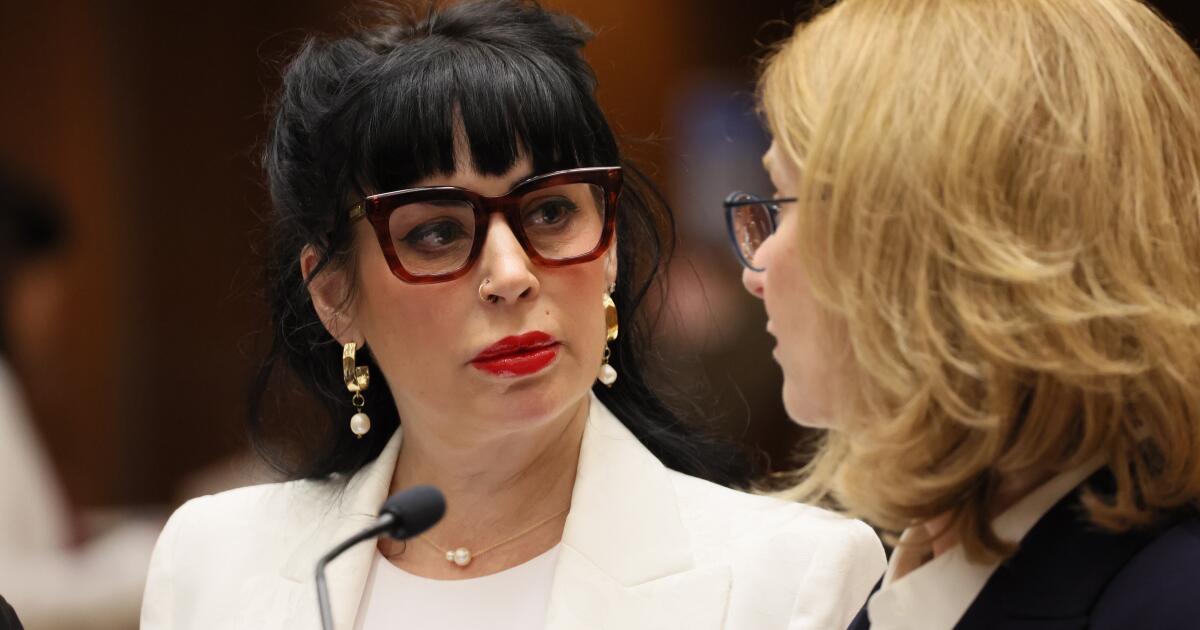
LAPD chief backed cops who shot at author, Weezer bassist’s ex; commission overruled him

What European Luxury Can Learn From American Fashion

Florida High School Football Rankings: Top 25 teams – Oct. 21

How old is Bo Nix? What to know about Oregon quarterback ahead of 2024 NFL Draft

Cleary's 21 help Le Moyne down Central Connecticut State 69-64 in OT

99th annual Pony Swim held in Virginia

Indiana Members Credit Union announced as new anchor tenant at Bottleworks District

Rubio joins crucial G7 talks as Iran war set to dominate second day

A surprise resignation could open the door for an independent to win a Montana Senate seat

Video: Savannah Guthrie Says She Believes Her Mother Was Taken for Ransom

Stefanik grills University of Michigan leader on lack of audit after string of Chinese national arrests

Photos: More than one million displaced by Israel’s evacuations in Lebanon
-

 Detroit, MI1 week ago
Drummer Brian Pastoria, longtime Detroit music advocate, dies at 68
-

 Science1 week ago
How a Melting Glacier in Antarctica Could Affect Tens of Millions Around the Globe
-

 Movie Reviews1 week ago
‘Youth’ Twitter review: Ken Karunaas impresses audiences; Suraj Venjaramoodu adds charm; music wins praise | – The Times of India
-
 Science1 week ago
I had to man up and get a mammogram
-

 Sports6 days ago
IOC addresses execution of 19-year-old Iranian wrestler Saleh Mohammadi
-

 New Mexico4 days ago
Clovis shooting leaves one dead, four injured
-

 Texas7 days ago
How to buy Houston vs. Texas A&M 2026 March Madness tickets
-

 Tennessee3 days ago
Tennessee Police Investigating Alleged Assault Involving ‘Reacher’ Star Alan Ritchson