Northeast
Secret Service will amp up security at upcoming Pennsylvania Trump rally due to 'copycat' fears: experts

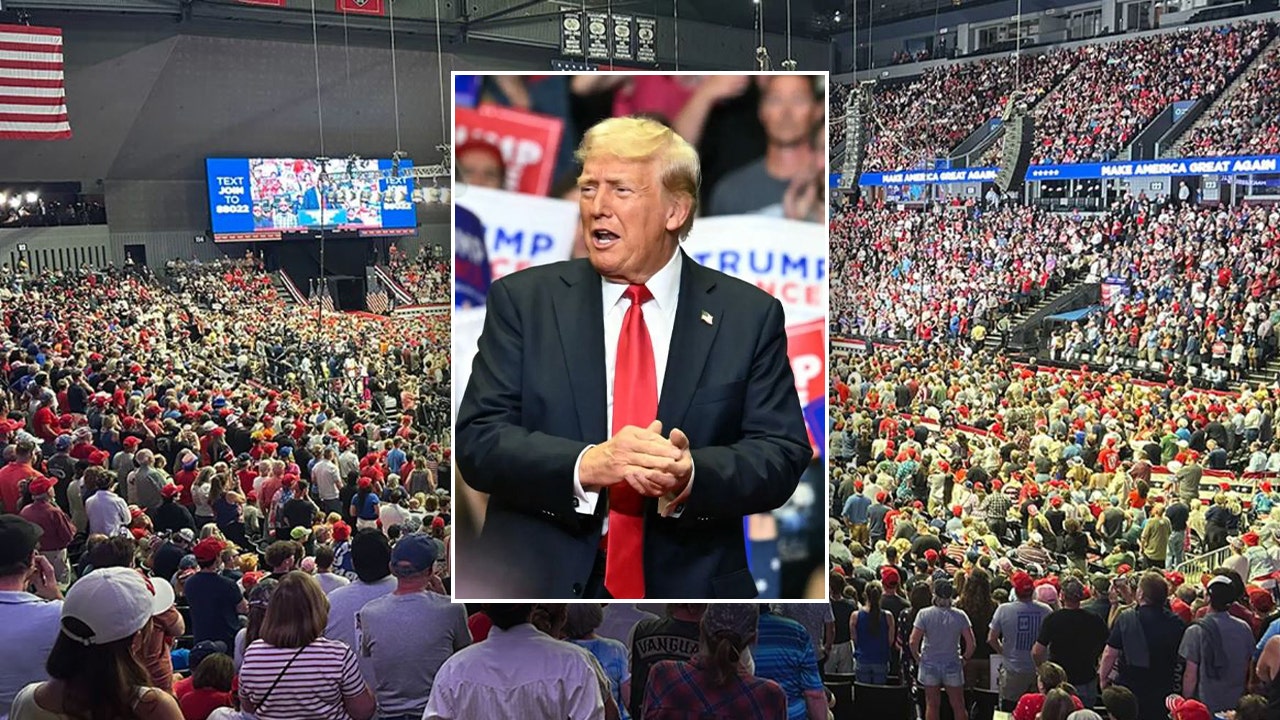
Former President Donald Trump is slated to speak in Pennsylvania on Wednesday, about 200 miles from the venue where an attempt was made on his life earlier this month. Experts tell Fox News Digital that security measures will be “amped up” in light of scrutiny facing the U.S. Secret Service and the potential for a “copycat” killer.
“You have the expression ‘copycats.’ They say, ‘Look at the attention that [would-be assassin Thomas Matthew Crooks] got,’ and they say, ‘I want that attention,’” Kevin Maloy, a former special agent with the State Department, told Fox News Digital.
“I’m sure the Secret Service have amped up their efforts because, you know, you do have the fear a little bit of a copycat out there. He got that close to ultimate success that easily – maybe I could do something,” he continued.
TRUMP SHOOTING: TIMELINE OF ASSASSINATION ATTEMPT RAISES QUESTIONS ABOUT HOW GUNMAN EVADED SECURITY
Former President Trump survived an assassination attempt on July 13 during Pennsylvania rally. (Trump Campaign Office / Handout/Anadolu via Getty Images)
Gene Petrino, who served as the SWAT commander for Florida’s Plantation Police Department for 26 years and is an expert on active shooter incidents, told Fox News Digital that there is “always a concern for copycat shooters,” and that “a recent attack would most definitely tighten the security risk and response.”
The fear of another attempt isn’t unfounded. Within the three weeks before John F. Kennedy Jr. was shot dead by Lee Harvey Oswald, there had been assassination plots against him thwarted in Chicago and Miami, according to interviews with former Secret Service agents conducted by CBS Miami and ABC Chicago.
The GOP nominee will take the stage at the Pennsylvania Farm Show Complex & Expo Center in Harrisburg, which has over one million square feet of indoor floor space, according to its website.
TRUMP TO RETURN TO PENNSYLVANIA FOR FIRST TIME SINCE ASSASSINATION ATTEMPT
More than 12,000 people piled into Van Andel Arena in Grand Rapids, Michigan, on July 20, 2024, to see former President Donald Trump and vice presidential nominee J.D. Vance at their first joint rally, and the first since Trump was struck by a would-be assassin’s bullet but survived. (Fox News Digital/Brandon Gillespie)
Pennsylvania State and Capitol Police will assist the Secret Service in securing the venue, State Police told Fox News Digital, while the local Harrisburg Police Department will cover traffic control surrounding the venue.
“You would think that [an indoor venue] would be easier to secure,” said Maloy, who protected former Democratic nominee Hillary Clinton and former Secretary of State John Kerry. “But the potential size of the crowd jammed into the space, especially after the Butler event, could pose its own concerns with visibility.”
Security sweeps of the stadium have likely already taken place or are underway, Maloy said, to determine potential security vulnerabilities and locations where a weapon or explosive could potentially be stashed.
“We have already seen a big difference in [Trump’s] security detail at the RNC. For his rally, I would expect to see the same thing,” Petrino said. “I think you will see more distance between Trump and the crowd, and a wide pathway as he approaches the stage. I would be shocked if there weren’t drones providing aerial coverage, multiple sniper teams covering multiple angles, and even K-9 teams.”
SECRET SERVICE’S TRUMP RALLY SECURITY FAILURE COULD HAVE BEEN AVOIDED WITH ‘EYES IN THE SKIES’: REP GUEST
Butler, Pennsylvania, crowd at former President Trump’s rally (Fox News)
“I think he will not spend a lot of time getting on and off stage,” Petrino added.
Arriving and departing a venue are “one of the most vulnerable times for a protectee,” Maloy said, because their timing and movement are predictable.
“You want to consider alternatives to that main entrance – an underground parking lot, a back or side door, something with a back or side view,” Maloy said. “If you can’t do that, you want to tent the area so that you can obscure vision to that area.”
Inside the venue, Maloy noted that there are catwalks, balconies and boxed seating that could be ideal vantage points for a potential shooter, and said that “access to these area should be controlled.” The maintenance catwalks, he said, would be an ideal position for Secret Service counter snipers.
He also noted that an evacuation strategy for the former president will be laid out, with a motorcade ready for him outside in the event that another assassination attempt takes place.
Thousands lined the streets of Grand Rapids, Michigan on July 20, 2024, to attend former President Donald Trump’s first rally since the failed assassination attempt against him. (Fox News Digital/Brandon Gillespie)
The close call in Butler, Maloy said, was either caused by “incompetency or complacency” within the Secret Service, but that since then, he has “[seen] lessons learned from the Butler incident.”
“Their pride was not only dinged, it was hammered,” Maloy said of the Secret Service. “They are a professional agency, overall. Everyone stole the Secret Service’s protection book.”
“Whether it was incompetence on some individuals or a series of individuals or complacency setting in, I don’t know the answer to that – that’s what everyone is trying to figure out,” he continued.
Read the full article from Here


This story by Liberty Darr was first published in the Shelburne News on June 25, 2026.
“In New York, the models I’ve had to depend on are all washed-out and unhealthy. Up here, I not only encounter practically every type of American I’ll ever have to use, but they look healthy!”
The quote by iconic illustrator Norman Rockwell helps to understand the new Shelburne Museum exhibit “Norman Rockwell: At Home in Vermont.”
The exhibit examines how the beloved American illustrator shaped an enduring vision of Vermont — one with real people — during his years living and working in Arlington from 1939 to 1953. But Arlington wasn’t just a place for him to find refuge from city life in New Rochelle, New York. He was truly woven into the community. He attended the local swing dances and the PTA meetings, judged many art fairs and even crowned a carnival queen, according to Carolyn Bauer, curator at Shelburne Museum.
He knew the local firemen, the doctor and the young children down the street. And he used them to inform his work of painting a picture of true, American life — one that represented not only the values Vermonters hold dear, but also what the country was yearning for at that time.
“Take a step back and think about what is happening in America during those 14 years too,” Bauer said. “We’re coming out of the Great Depression, World War II and the postwar era. How is the country changing its identity? And vis-a-vis, how is Vermont becoming part of the collective national imagination?”
Rockwell was not the only artist of that time finding relief from city life in the quaint town of Arlington in the Green Mountain State. The way Bauer puts it, Rockwell was not creating in a vacuum. The town’s strong artist circle had already taken root with the likes of Mead Schaeffer, John Atherton and Gene Pelham — who would all play a key role in Rockwell’s creations throughout that time.
While in Vermont, Rockwell created 175 covers for The Saturday Evening Post, Bauer said, and at the time, there were more Saturday Evening Post illustrators per capita in Arlington than anywhere else in the nation.
“They were also really looking to distill into their imagery and inspiration these values that were found in Vermont that couldn’t be found elsewhere at that moment,” Baur said, noting virtues like self-reliance, neighborliness, civic duty — things the country was looking for especially during periods of crisis.
Author Dorothy Canfield Fisher, whose legacy has since been tarnished by her alleged ties to the eugenics movement, captured the idea particularly well in 1942, portraying Vermont as a stronghold of democratic spirit and cultural integrity.
“Much of what we call ‘Vermontism,’” she wrote, “is nothing but good ‘old-Americanism’ surviving in an out-of-the-main-current community, which has not been so beaten upon as communities elsewhere by the storms of modern life.”
While the exhibit is separate from the museum’s “America 250” exhibition, it is, at its core, a celebration of Americana.
It’s nearly impossible to talk about Rockwell without talking about patriotism, Bauer said. She pointed to his well-known works in the “Four Freedoms” series — “Freedom of Speech,” “Freedom of Worship,” “Freedom from Want” and “Freedom from Fear” — painted during World War II, with inspiration taken from American ideals spelled out by President Franklin D. Roosevelt.
The first, “Freedom of Speech,” depicts a man standing up at what appears to be a traditional Vermont town meeting, a copy of the town’s annual report in hand.
“Not everyone understands that level of civic duty that is instilled to us here in Vermont,” Bauer said.
The exhibit features 40 of the 175 covers Rockwell created for The Saturday Evening Post in addition to large-scale original favorites like “The Tattoo Artist” and “The Young Lady with the Shiner.”
The exhibit, roughly a year in the making — which is record time for a museum — was largely inspired by the museum’s recent acquisition of three Rockwell paintings that, at one point, were commissioned by Rock of Ages in Barre for the company’s national advertising campaign in 1955.
The museum last year was given “Kneeling Girl” and “The Craftsman” — both the final product and also a sketch. Both of them, Bauer said, are important hallmarks of Vermont industry and craftsmanship.
Bauer hopes that those who visit the exhibition — which is on view through Oct. 25 — walk away with not only an understanding of the broader context of the work, but a knowledge of how deeply personal these works were to the artists on display.
“We know Rockwell as this individual genius, but again, he wasn’t working alone, he was working in collaboration with these other Arlington artists, but also the community, the models, the people down the street,” she said. “He knew these people intimately, this town, the American people at large. He was an incredibly empathetic person, and you could read that in each of his works.”

The 24-year-old forward had a career-high 68 points (27 goals, 41 assists) in 2024-25 with the Sabres before getting traded to Utah in June, 2025. Peterka posted 47 points (25 goals, 22 assists) through 82 games in his first year with the Mammoth.
“He’s got an elite shot. Probably gives us another look on the elbows in a power play situation. His power play minutes dipped a little bit last year; his 5-on-5 production has been really good, plays both wings, can probably play with a couple different types of centers,” Sweeney said.
Peterka had a similar assessment for himself.
“I think a pretty fast game, likes to score goals,” he said. “Just overall, exciting player that loves to make plays.”
Sweeney also sees a versatility in Peterka’s game that can benefit his new teammates up and down the lineup.
“I think he fits into a good group age-wise because he’s able to have played in the league with all the experience he’s had, the success he’s had, so he can ride shotgun with David because he has had scoring,” Sweeney said. “He can go down and drive a line, which he has done.”
The prospect of him playing with someone like David Pastrnak is something that excites both Sweeney and Peterka.
“That would be pretty sick, not going to lie,” Peterka said. “If you have that caliber of a player, I think everyone wants to play with him. From the past, playing against him, even watching him, was always super special. I would be super honored, for sure.”
While Peterka has already played four full seasons in the NHL, he still has his whole career in front of him. He joins a young new wave of Bruins players – alongside the likes of Reichel, Fraser Minten, Marat Khusnutdinov and James Hagens – who will carve the future identity of the team. The ceiling is high for Peterka.
“In JJ’s case, he has had success. We have to come in and put him in the right situations so he continues to score at the level we think he can. Morgan [Geekie] is a great example,” Sweeney said. “Did we think he was going to score 39 goals when we first acquired him? No. But that’s always the hope – that a player will take advantage of a new opportunity and playing with different types of players than what they were in their other environment.”
Peterka is ready for the challenge and to prove that he has another gear to his game to help the Bruins win.
“I think it’s always nice to have a fresh start. I think especially after the year I had last year where I wasn’t really happy with the performance I put on the ice,” Peterka said. “For me, I feel like it’s a fresh start. And for a team like Boston, it couldn’t be any better.”

The Pittsburgh Penguins got what they wanted.
Friday night was life-changing for Pittsburgh Penguins’ first-round pick Liam Ruck of the Medicine Hat Tigers. The organization selected him with the 22nd overall pick. Saturday morning was life-changing for his identical twin brother Markus Ruck as the Penguins used the first of their second-round picks to select him.
And the twins and teammates in Medicine Hat, who have spent only four days apart in their first 18 years, got what they wanted, too. They’re both Pittsburgh Penguins.
Penguins general manager Kyle Dubas told reporters Friday night, following the conclusion of Round One, that it appeared more likely in the days leading to the draft that the team would not be able to trade up and that Liam Ruck would be available to them.
There were credible rumors emanating from the league side that some teams considered taking Markus to spur trade talks with the Penguins, but eventually, the other half of the WHL’s high-scoring duo was available Saturday morning with the 39th overall pick.
While Liam had 45 goals and 104 points in 68 games, Markus was the slick playmaking center who kept him fed. Markus Ruck had 108 points with 87 assists. Both brothers need to both add bulk but also improve their skating, which scouts consider a weakness.
Liam is the slightly larger twin, at 6-foot, 177 pounds. Markus weighs in at 6-foot, 167 pounds.
The story is developing, and Pittsburgh Hockey Now will update the story after Markus Ruck speaks with the media.
Categorized:2026 NHL Draft Pittsburgh Penguins
-

 Utah3 minutes ago
Eight fires sparked by lightning overnight near Utah border, growing Jones Fire billowing smoke
-

 Vermont10 minutes ago
Rockwell was ‘At Home in Vermont’ – VTDigger
-

 Washington13 minutes ago
The Washington Capitals Select Tyus Sparks | Washington Capitals
-

 Virginia13 minutes ago
Southwest, Central Virginia Weather | 6 p.m. – June 27, 2026
-

 Wisconsin25 minutes ago
These natural attractions in Wisconsin are worth a visit this summer
-

 West Virginia28 minutes ago
History Made: WVU Has Two First-Team All-Americans in the Same Season
-

 Wyoming33 minutes ago
Wyoming Cultural Trust Fund awards $529K in grants, including several Fremont County projects
-

 Crypto40 minutes ago
Sharplink Breaks 8-Month ETH Drought With Silent $18M Buy Through FalconX

