Rhode Island
URI poll measures Rhode Islanders’ opinions on election ‘hot topics’


KINGSTON, R.I. – Oct. 15, 2024 – Amid a polarizing presidential campaign, a University of Rhode Island opinion poll released today finds agreement across party affiliations on issues of election integrity, trust in election officials and concerns about election-related violence – while seeing a divide in worries over voter fraud.
The poll – the second annual edition from URI’s Rhode Island Survey Initiative – surveyed a representative sample of 500 Rhode Island residents ages 18 and older between Aug. 15 and Sept. 8, 2024. The survey was administered by the highly respected polling firm YouGov via the internet; participants were chosen from YouGov’s opt-in survey panel of Rhode Island residents who agree to participate in YouGov surveys. The margin of error for the poll is +/- 6.02%.
“While there are national polls that also focus on American confidence in election administration, our survey results offer a detailed snapshot of Rhode Islanders’ levels of trust in election authorities and systems and trust in government as well as attitudes about democracy, media, policy, and political participation in the state,” said Emily Lynch, URI professor of political science. “The survey results indicate that Rhode Islanders trust state election systems, but at the same time they have concerns about the upcoming election in a number of areas, such as AI-generated fake political information and political violence.”
Majorities from each party – Democrats (92%), Independents (69%), and Republicans (55%) – say they feel votes are somewhat often or very often counted accurately. And solid majorities of all three parties – Democrats (85%), Republicans (79%), and Independents (73%) – think political violence is a somewhat or very big problem in the U.S. today. A smaller majority of all three are concerned about civil unrest after election day in Rhode Island.
There was a divide on questions about fraud, however. A majority of Republicans and Independents are somewhat or very concerned about voter fraud – specifically noncitizen voting, citizens voting more than once, vote tampering, and people claiming to be another person in order to vote. Democrats lagged on all four questions – with the highest level of concern (37%) found with regard to vote tampering.
The survey also asked respondents who they will vote for on Nov. 5 in the presidential race and the state’s U.S. Senate race. Among those who indicated that they were registered voters, 53% said they would vote for Vice President Kamala Harris and 27% backed former President Donald Trump, while 52% indicated they would vote for incumbent U.S. Sen. Sheldon Whitehouse, and 24%, state Rep. Patricia Morgan.
The 2024 Rhode Island Survey Initiative looked at numerous topics affecting Rhode Island residents, from government spending and public schools to the blue economy and quality of life. It also included a special module on elections, trust, and democracy, which included questions about political violence and election interference. Complete results can be found on the survey website.
“The last few months have been a whirlwind in American politics and we were able to include specific hot topics at the national and state level in this year’s survey,” said Julie Keller, an associate professor of sociology and director of the Social Science Institute for Research, Education, and Policy.
Among the key findings are:
Trust in election officials: A majority of respondents reported that they have a great deal or fair amount of trust in election authorities – poll workers, local boards of canvassers, the state Board of Elections and Department of State. Across party affiliations, Rhode Islanders had a fair amount or great deal of trust in the state’s voting machines, led by Democrats (93%), Republicans (71%), and Independents (69%). Meanwhile, only 34% and 35% of Republicans had a fair amount or great deal of trust in mail ballot drop boxes and mailing a ballot using the U.S. Postal Service, respectively – compared with 84% of Democrats and 43% of Independents on both mail ballot questions.
Worries about AI and R.I. elections: About 6 in 10 respondents worry artificial intelligence will somewhat or greatly hurt the election process. No matter party affiliation, the majority of respondents – 79% of Republicans, 77% of Democrats, and 77% of Independents – are somewhat or very concerned about the use of AI-generated political media, such as fake images or video, and support state legislation to ban AI-generated political media.
General Assembly election-related legislation: An overall majority of respondents also back many of the other proposed bills before the assembly related to elections. A solid majority of Republicans (80%) – and smaller majorities of Democrats (56%) and Independents (69%) – support legislation that would increase the responsibilities of the state Division of Motor Vehicles in preventing noncitizens from registering to vote. Smaller majorities support limits on who can mail another person’s mail ballot, while only a majority of Democrats (56%) approve legislation related to rank-choice voting in Rhode Island presidential primaries.
Opinions on media and politics: The top social media sites for respondents to get political and election news are Facebook (44%), YouTube (40%), Instagram (33%) and TikTok (23%). The top three national media sources for Rhode Islanders are Fox News, CNN, and NBC Nightly News. When it comes to local reporting on elections and campaigns, there is a split in opinion on the fairness of journalists. A solid majority of Democrats (80%) feel journalists provide fair coverage of elections somewhat often or very often. Meanwhile, 68% of Republicans and 66% of Independents feel Rhode Islanders are somewhat often or very often exposed to inaccurate information.
Public policy, education and quality of life: A majority of Democrats, Independents, and Republicans support an increase in spending on education, housing, and building and repairing roads. Asked to select the most important priorities for the governor and General Assembly, Democrats included housing (55%), health care (45%), and education (43%); Independents, housing (58%), health care (40%), and roads and bridges (38%); and Republicans, roads and bridges (54%), crime (53%), and housing (43%).
Polled for the second year on the most important problem facing K-12 public schools in Rhode Island, the largest increase between 2023 and 2024 was in the percentage of respondents who chose insufficient funding (up six percentage points, to 29%). The poll showed a rise in satisfaction with the overall quality of life in Rhode Island over the last year, going from 45% to 52% of respondents, and perceptions that the state’s economy is very or somewhat strong, an increase of five percentage points, to 22%. Results were fairly consistent with last year’s percentages because of the poll’s margin of error.
An annual opinion poll
The Rhode Island Survey Initiative was launched last year by a team of researchers from URI’s Harrington School for Communication and Media; Social Science Institute for Research, Education, and Policy; and the Department of Political Science, with plans to conduct at least one survey of Rhode Island residents each year. Each poll will include different focus areas, with some repeated questions to gauge the change in attitudes of Rhode Island residents.
Keller said the survey initiative reflects the institute’s goal of providing evidence-based insights to communities across the state.
“The initiative continues to strengthen experiential learning opportunities for URI students while helping to inform decision-making across the state,” she said. “This year, more organizations were consulted about what topic areas should be addressed. And more faculty trained students to work with the data as well.”
College of Arts and Sciences Fellows Delaney Sullivan ’25 and Abigail Noetzel ’26 helped choose election topics in the survey’s election module based on research and interviews and helped construct the survey questionnaire using an online survey tool. Their research included reviewing information about local and federal elections and public opinion in academic articles, books, and reports; listening to local political podcasts and shows; and conducting interviews with state and local election officials and advocacy groups.
“Interviewing election officials allowed me to understand our election system more extensively,” said Sullivan, a double major in political science and criminology and criminal justice. “I believe that public opinion research in Rhode Island has been minimal, which is why I think this survey is vital to election officials and residents in Rhode Island, as it allows us to understand the state better.”
“Going forward, I am confident that I can excel in my courses at URI given what I have learned through the fellowship, especially in terms of research,” said Noetzel, a double major in psychology and criminology and criminal justice. “I have developed countless transferable skills, and I am super grateful for that.”
Note about methodology
Party identification was constructed using the seven-point scale in which self-identified Democrats and Independent-leaning Democrats were combined into the “Democrat” category; self-identified Republicans and Independent-leaning Republicans were combined into the “Republican” category; and Independents are in the “Independent” category.



Rhode Island court tosses Justin Chandler conviction
Rhode Island Supreme Court overturns Justin Chandler’s murder conviction due to prejudicial texts, orders new trial.
The trucking industry will have to pay its own legal bills for the unsuccessful eight-year-old lawsuit it brought to stop Rhode Island’s truck toll system, a federal judge ruled Friday, March 27.
The American Trucking Associations was seeking $21 million in attorneys fees and other costs from the state, but a decision from U.S. District Judge John McConnell Jr. says the truckers lost the case and will have to pick up the tab.
The state had previously filed a counterclaim for reimbursement of $9 million in legal bills, but an earlier recommendation from U.S. Magistrate Judge Patricia Sullivan had already thrown cold water on that possibility.
McConnell ordered American Trucking Associations to pay Rhode Island $199,281, a tiny fraction of the amount the state spent defending the network of tolls on tractor trailers.
Settling the lawyer tab may finally bring an end to a court fight that bounced back and forth through the federal judiciary since the toll system launched and the truckers brought suit in 2018.
As it stands, the state’s truck toll network has been mothballed since 2022 when a since-overturned judge’s ruling temporarily ruled it unconstitutional.
The Rhode Island Department of Transportation said it hopes to relaunch the tolls around March 2027.
The court costs fight hinged on which side could claim legal “prevailing party” status as the winner of the lawsuit.
The trucking industry claimed that it had won because the First Circuit Court of Appeals ruled an in-state trucker discount mechanism, known as caps, in the original truck toll system was unconstitutional.
But Rhode Island argued that it is the winner because the appeals court had ruled that the larger system and broad concept of truck tolls is constitutional and can relaunch with the discounts stripped out.
“The Court determines that ATA has vastly overstated the benefit, if any, that they have received from the ultimate resolution of their challenge to the RhodeWorks program,” McConnell wrote.
The truckers “failed to obtain any practical benefit from the First Circuit’s severance of the [in-state toll] caps,” he went on. “Specifically, the evidence from this dispute confirmed that the lack of daily caps will result in ATA paying a higher amount in daily tolls and that it does not receive any tangible financial benefit from their elimination.”
In her December analysis of the legal fees question, Sullivan had concluded that the Trucking Associations’ outside counsel had overbilled and overstaffed the case.
But she had recommended that the industry be reimbursed $2.7 million for its bills, while McConnell’s ruling gives it nothing.

Here are five ways how you can save some money when food shopping.
Here are five ways how you can save some money when food shopping.
Your household can earn more than $160,000 a year and still be considered part of the “middle class” in Rhode Island, according to a recent study by SmartAsset.
Rhode Island is the state with the 17th-highest income range for households to be considered middle class, based on SmartAsset’s analysis using 2024 income data from the U.S. Census Bureau. The Pew Research Center defines the middle class as households earning roughly two-thirds to twice the national median household income.
According to a 2022 Gallup survey, about half of U.S. adults consider themselves middle class, with 38% identifying as “middle class” and 14% as “upper-middle class.” Higher-income Americans and college graduates were most likely to identify with the “middle class” or “upper-middle class,” while lower-income Americans and those without a college education generally identified as “working class” or “lower class.”
Here’s how much money your household would need to bring in annually to be considered middle class in Rhode Island.
How much money would you need to make to be considered middle class in RI?
In Rhode Island, households would need to earn between $55,669 and $167,008 annually to be considered middle class, according to SmartAsset. The Ocean State has the 17th-highest income range in the country for middle-class households.
The state’s median household income is $83,504.
How do other New England states compare?
Rhode Island has the fourth-highest income range for middle-class households in New England. Here’s what households would have to earn in neighboring states:
- Massachusetts (#1 nationally) – $69,885 to $209,656 annually; median household income of $104,828
- New Hampshire (#6 nationally) – $66,521 to $199,564 annually; median household income of $99,782
- Connecticut (#10 nationally) – $64,033 to $192,098 annually; median household income of $96,049
- Rhode Island (#17 nationally) – $55,669 to $167,008 annually; median household income of $83,504
- Vermont (#19 nationally) – $55,153 to $165,460 annually; median household income of $82,730
- Maine (#30 nationally) – $50,961 to $152,884 annually; median household income of $76,442
Which state has the highest middle-class income range?
Massachusetts ranks as the state with the highest income range to be considered middle class, according to SmartAsset. Households there would need to earn between $69,900 and $209,656 annually. The state’s median household income is $104,828.
Which state has the lowest middle-class income range?
Mississippi ranks last for the income range needed to be considered middle class, according to SmartAsset. Households there would need to earn between $39,418 and $118,254 annually. The state’s median household income is $59,127.

“Nationally there are 59 million Americans who are providing care for a loved one and that is 49.5 billion hours of care annually. It’s valued at a trillion dollars,” said Catherine Taylor, the director of AARP Rhode Island; AARP, the nation’s largest non- profit, dedicated to empowering people 50 and older.
In Rhode Island, the report shows 155,000 people serve as caregivers, providing 111 million hours of care.
Barbara Morse reports on unpaid caregivers. (WJAR)
“The total impact is $2.8 billion a year,” said Taylor.
It’s not just babysitting a loved one.
Catherine Taylor, the director of AARP Rhode Island, spoke with NBC 10’s Barbara Morse about the value of caregiving. (WJAR)
“People are doing a lot more nursing tasks, you know–wound care, injections and things like that and they’re doing a lot more intensive daily care, like bathing, and dressing and feeding than we used to,” she said.
Its latest report–“Valuing the Invaluable.”
“The whole point of this report is to draw attention to how many family care givers there are and what the magnitude of what the need is for their support,” said Taylor.
That includes financial support and respite care.
AARP wants you to know this:
An older man using equipment in a gym. (FILE)
In Rhode Island, temporary caregiver insurance or TCI is available to folks who qualify, for up to eight weeks.
There are federal tax credits you may qualify for. There is help.
BE THE FIRST TO COMMENT
“All you have to do is call 211 and say you’re a family caregiver and they will connect you to all of AARP’S trusted information, including a Rhode Island specific guide on resources for caregivers,” she said.

Wyoming Has Half Of The West’s 26 100-Year-Old Dude Ranches
Is Crypto Legal in Norway? EY Explains the Regulations

Car finance saga: Millions of motorists to find out how they will be compensated

Does Medicare Help Pay for Gym Memberships?
Movie reviews reveal 2026’s best Certified Fresh films are arriving in March – Art Threat

Florida High School Football Rankings: Top 25 teams – Oct. 21

How old is Bo Nix? What to know about Oregon quarterback ahead of 2024 NFL Draft

Cleary's 21 help Le Moyne down Central Connecticut State 69-64 in OT

99th annual Pony Swim held in Virginia

Indiana Members Credit Union announced as new anchor tenant at Bottleworks District

JD Vance says he was ‘obsessed’ with UFOs, believes aliens are actually ‘demons’
The EU's recipe for trade deals : easy on beef, tough on wine
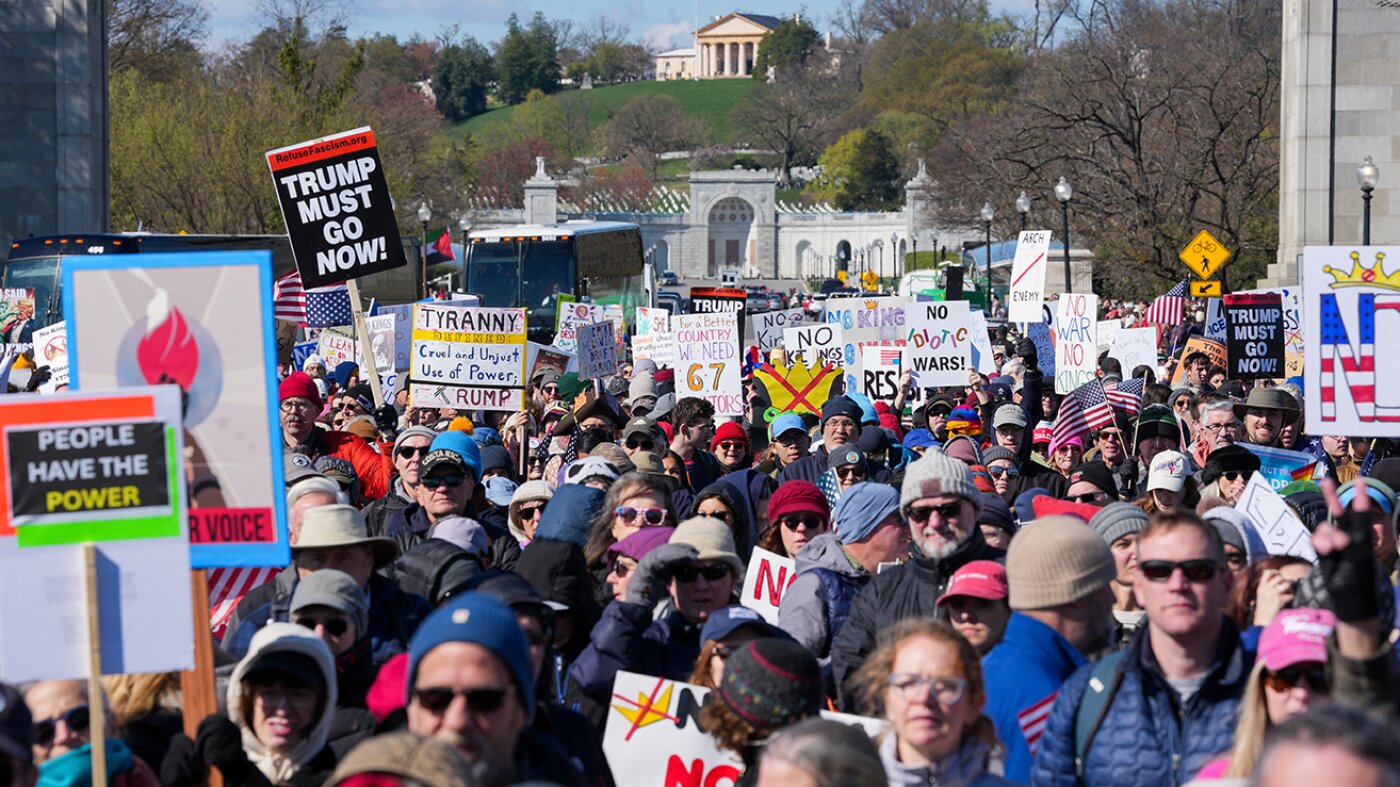
Photos: ‘No Kings’ protests across the country

Jeffries declines to break with indicted Democrat after ethics panel’s guilty verdict

Hundreds of thousands march through London in stand against the far right
-

 Sports1 week ago
IOC addresses execution of 19-year-old Iranian wrestler Saleh Mohammadi
-

 New Mexico6 days ago
Clovis shooting leaves one dead, four injured
-

 Tennessee6 days ago
Tennessee Police Investigating Alleged Assault Involving ‘Reacher’ Star Alan Ritchson
-

 Technology7 days ago
YouTube job scam text: How to spot it fast
-

 Minneapolis, MN3 days ago
Boy who shielded classmate during school shooting receives Medal of Honor
-

 Science1 week ago
Record Heat Meets a Major Snow Drought Across the West
-

 Texas1 week ago
How to buy Houston vs. Texas A&M 2026 March Madness tickets
-

 Politics1 week ago
Schumer gambit fails as DHS shutdown hits 36 days and airport lines grow