Rhode Island
One of Africa’s soccer giants will be based in Rhode Island for the World Cup – The Boston Globe


Providence has positioned itself as an alternative to Boston, one of the official host cities for the 2026 competition. Located just 30 miles away from Gillette Stadium — or “Boston Stadium” as it will be known during the World Cup — Rhode Island’s leaders have been touting the tiny state as more-affordable for fans and closer to the action. Seven matches, including a quarterfinal, are scheduled to be played in Foxborough.
“Today we announce that Ghana will be staying in Providence and we’d also like to extend an invitation to the fans and families to come to our city,” said Providence Mayor Brett Smiley in a statement on Thursday. “We are committed to being a festive destination for soccer fans from around the world.”
The news has created excitement among the local Ghanaian community in the state.
Kwame Larbi, the president of the Ghana Association of Rhode Island, said Ghana’s decision will be a chance for people to celebrate the West African country’s culture through its soccer team and an opportunity to see what successful Africans look like on a grand stage.
“The Black Stars represent everything Ghanaian. They are Ghana’s pride and joy, our strength, perseverance, and freedom,” he said. “Hosting the Black Stars at Bryant would mean so much for our community. More specifically, our youth. Representation is everything.”
Larbi said the local community plans to show out for the team with traditional Ghanaian dances at Foxborough when they face England on June 23.
“We will all be in our Ghana T-shirts, Ghana flags and our drums,” he said. “I just came from Ghana. My shirts are ready.”
This is the fifth time that Ghana has qualified for the World Cup. Their best showing was in 2010, when they reached the quarterfinal after defeating Team USA only to be eliminated when Uruguay prevented them from scoring in extra time with an intentional handball on the goal line. The team boasts some world-class talent who compete in top leagues around the world, such as star players Mohammed Kudus, who plays for the English Premier League team Tottenham Hotspur, and Antoine Semenyo of Manchester City.
Larbi is bullish about Ghana’s chances at this year’s tournament.
“We are going to beat England. It’s a big name, but we have hope. We are going to surprise everyone, and with the spirit of brotherhood and all, we are going to be successful,” he said.

Rhode Island Congressman Gabe Amo said his father, who hails from Ghana, is excited about the team being based in the state.
“The first thing he texted back to me upon the announcement was ‘Nice. Exclamation point. Buy me a ticket,‘” he said. “There’s a lot of immigrants and immigrant kids who are going to feel some special feelings across the weeks that Ghana has us as their home base.”
Amo said he hopes Ghanaian fans from places such as Worcester, Mass., and New York City will join their compatriots in Rhode Island and create a vibrant atmosphere in the state.
“This is a big deal for our state. We get to showcase all the things that make us special — our food, our amazing Rhode Island summer and our people — to Ghana,” he said. “So it’s going to be great soccer … and it’s going to be a great setting for the World Cup.”
State officials say that the team’s training sessions will be closed to the public, but the country’s football association was planning some events with young players in the state.
“We’re working hard to ensure that the FIFA World Cup leaves behind a legacy of passion for the sport and a commitment to growing the game of soccer in Rhode Island. Partnering with the Black Stars will fuel these young players’ passion,” said Jonathan Walker, executive director of the Rhode Island Sports Commission.
For Larbi, he said Rhode Island’s Ghanaian community is ready to prepare some jollof rice for the team. He has lived in Rhode Island for more than 40 years and he never thought that he would see his country’s national team be based in the state for such a huge tournament.
“It has never occurred to us that one day the Ghana Black Stars will be based in Rhode Island…competing for the World Cup,” he said. “It’s not only Ghanaians, but it’s for the whole of Africa.”
Omar Mohammed can be reached at omar.mohammed@globe.com. Follow him on Twitter (X) @shurufu.



“Nationally there are 59 million Americans who are providing care for a loved one and that is 49.5 billion hours of care annually. It’s valued at a trillion dollars,” said Catherine Taylor, the director of AARP Rhode Island; AARP, the nation’s largest non- profit, dedicated to empowering people 50 and older.
In Rhode Island, the report shows 155,000 people serve as caregivers, providing 111 million hours of care.
Barbara Morse reports on unpaid caregivers. (WJAR)
“The total impact is $2.8 billion a year,” said Taylor.
It’s not just babysitting a loved one.
Catherine Taylor, the director of AARP Rhode Island, spoke with NBC 10’s Barbara Morse about the value of caregiving. (WJAR)
“People are doing a lot more nursing tasks, you know–wound care, injections and things like that and they’re doing a lot more intensive daily care, like bathing, and dressing and feeding than we used to,” she said.
Its latest report–“Valuing the Invaluable.”
“The whole point of this report is to draw attention to how many family care givers there are and what the magnitude of what the need is for their support,” said Taylor.
That includes financial support and respite care.
AARP wants you to know this:

An older man using equipment in a gym. (FILE)
In Rhode Island, temporary caregiver insurance or TCI is available to folks who qualify, for up to eight weeks.
There are federal tax credits you may qualify for. There is help.
BE THE FIRST TO COMMENT
“All you have to do is call 211 and say you’re a family caregiver and they will connect you to all of AARP’S trusted information, including a Rhode Island specific guide on resources for caregivers,” she said.
Rhode Island
A new safety role at Rhode Island College comes into sharper focus after Brown shooting – The Boston Globe

Lawrence was recently named RIC’s first emergency management director, a role college leaders had been planning before the December mass shooting across town at Brown University, but which took on new urgency after the tragedy.
Few resumes are better suited to the job.
A 20-year career in the New York Police Department. Commanding officer of the NYPD’s Employee Assistance Unit. A master’s degree from Harvard.
Lawrence got to Rhode Island the way a lot of people do: through someone who grew up here and never really left, at least not in spirit. Her husband, Brooke Lawrence, grew up in West Greenwich, and is director of the town’s emergency management agency.
“I couldn’t imagine retiring in my 40s,” Lawrence told me. “And I couldn’t imagine not giving back to my community.”
Public service has been part of Lawrence’s life for as long as she can remember. A New Jersey native, she dreamed of following in the footsteps of her mentor, a longtime FBI agent. She graduated from Monmouth University and earned a master’s degree in forensic psychology from John Jay College in 2001, shortly before the Sept. 11 attacks.
There was high demand for police in New York at the time, so Lawrence raised her hand to serve. She worked her way up the ranks from patrol to lieutenant, eventually taking charge of the department’s Employee Assistance Unit, a peer support program that helps rank-and-file officers navigate the most traumatic parts of the job. She later earned a second master’s degree from Harvard’s Kennedy School.
“It’s making sure our officers are getting through their career in the same mental capacity as they came on the job,” Lawrence said.
There’s a version of Lawrence’s new job that feels routine, especially at a quiet commuter campus like Rhode Island College. And when Lawrence was initially hired part-time last fall, it probably was.
Then the shooting at Brown University changed the stakes almost overnight.
On Dec. 13, Claudio Manuel Neves Valente, a Portuguese national and one-time student at Brown, opened fire inside the Barus and Holley building, killing two students and injuring nine others. Neves Valente also killed an MIT professor before he was found dead in a New Hampshire storage unit of a self-inflicted gunshot wound.
In eerie videos recorded in the storage unit, Neves Valente admitted that he stalked the Brown campus for weeks prior to his attack. He largely went unnoticed by campus security, which led the university’s police chief to be placed on leave and essentially replaced by former Providence Police Chief Colonel Hugh Clements.
Lawrence assisted with the response at Brown. She leads the trauma response team for the Rhode Island Behavioral Health Medical Reserve Corps, which staffed the family reunification center in the hours after the shooting.
RIC’s campus is more enclosed than Brown’s — there are only two major entryways to the college — but there are unique challenges.
For one, it’s technically located in both Providence and North Providence, which requires coordination between multiple public safety departments in both communities.
More specifically, Lawrence noted that every building on campus has the same address, which can present a challenge in an emergency. Lawrence has worked with RIC leadership and local public safety to assign an address to each building.
Lawrence stressed that she doesn’t want RIC to overreact to the tragedy at Brown, and she said campus leaders are committed to keeping the tight-knit community intact.
But she admits that the shooting remains top of mind.
“Every campus community sees what happened at Brown and says ‘please don’t let that happen to us,’” Lawrence said.
Lawrence said everyone at RIC feels a deep sense of responsibility to keep students safe during their time on campus.
And she already feels right at home.
“I want to come home from work every day and feel like I made a difference,” she said.
Dan McGowan can be reached at dan.mcgowan@globe.com. Follow him @danmcgowan.

If you thought the smart money was on pop icon Taylor Swift and gridiron star Travis Kelce tying the knot in Rhode Island, an online crypto casino and sportsbook is here to tell you you’re wrong.
The Ocean State was the second favorite at +155 and 39.22%, and Pennsylvania and Ohio were together at a distant third at +1,600 and 5.88%.
Tennessee was the fifth choice at +2,000 and 4.76%.
“New York is the favourite because it’s the city most closely tied to Taylor Swift’s public life, with multiple residences, strong emotional branding, and world‑class venues that offer privacy and security for a high‑profile event,” an unidentified spokesperson said in a media release.
Human Remains Found Near Taylor Swift’s Mansion Identified: Report

Don’t want to miss the bloom? This L.A. scientist created a poppy forecast

DHS attorney said agents in Los Angeles should have ‘started hitting’ protesters, emails show
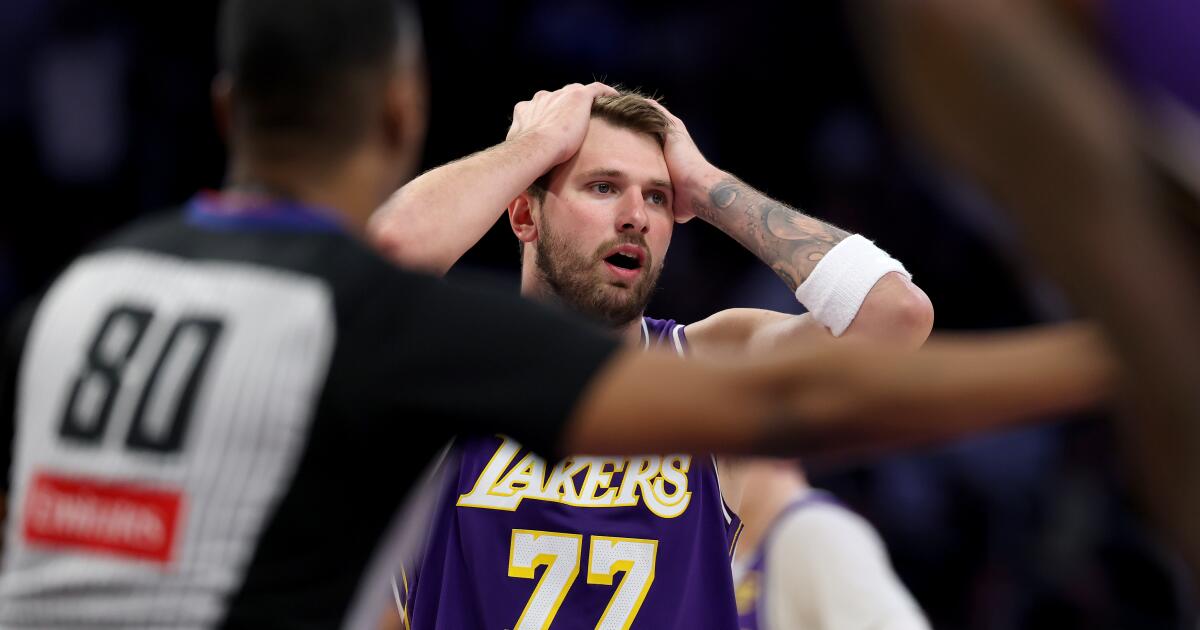
Lakers beat Nets, but Luka Doncic is facing suspension again after 16th technical

EU Parliament unblocks key political hurdle in digital euro talks

Man arrested in plot to firebomb Palestinian activist’s home after undercover op

Florida High School Football Rankings: Top 25 teams – Oct. 21

How old is Bo Nix? What to know about Oregon quarterback ahead of 2024 NFL Draft

Cleary's 21 help Le Moyne down Central Connecticut State 69-64 in OT

99th annual Pony Swim held in Virginia

Indiana Members Credit Union announced as new anchor tenant at Bottleworks District
EU Parliament unblocks key political hurdle in digital euro talks
Man arrested in plot to firebomb Palestinian activist’s home after undercover op

WATCH: Senate hearing goes silent after Angel Father confronts top Dem over daughter’s death

US diplomat Marco Rubio denounces settler violence, tolls in Hormuz strait

Iran-linked hackers have breached FBI Director Kash Patel’s personal emails | CNN Politics
-

 Detroit, MI1 week ago
Drummer Brian Pastoria, longtime Detroit music advocate, dies at 68
-

 Movie Reviews1 week ago
‘Youth’ Twitter review: Ken Karunaas impresses audiences; Suraj Venjaramoodu adds charm; music wins praise | – The Times of India
-

 Sports7 days ago
IOC addresses execution of 19-year-old Iranian wrestler Saleh Mohammadi
-

 New Mexico5 days ago
Clovis shooting leaves one dead, four injured
-
 Business1 week ago
Disney’s new CEO says his focus is on storytelling and creativity
-

 Technology6 days ago
YouTube job scam text: How to spot it fast
-

 Tennessee4 days ago
Tennessee Police Investigating Alleged Assault Involving ‘Reacher’ Star Alan Ritchson
-

 Texas1 week ago
How to buy Houston vs. Texas A&M 2026 March Madness tickets