Rhode Island
Democrats assail federal budget bill, but what will it really mean for RI? What we know.


House passes ‘Big, Beautiful Bill,’ heads to Trump’s desk next
Republicans’ sweeping bill to cut taxes and slash benefit programs like Medicaid has passed the House and now heads to President Donald Trump’s desk.
The sweeping federal budget bill passed by Congress and expected to be signed by President Donald Trump on July 4 calls for major changes to taxation and social programs, but the impact on Rhode Island could take years to determine.
The bill’s tax cuts for businesses and individuals will, in general, take effect imminently, including an increase in the standard deduction, no taxes on tips and an increase in deductions for state and local tax payments.
New restrictions on public benefits − including work requirements for food stamps and health insurance − phase in this year and next.
And spending cuts feared by state officials in both red and blue states − including reductions in federal Medicaid and the Supplemental Nutrition Assistance Program (SNAP) − will not take effect until 2028, after the 2026 elections.
Will a special fall session of the General Assembly be needed?
In debate about the just-enacted $14.3 billion Rhode Island budget, General Assembly leaders said they might be forced to hold a special fall session to respond to any federal cuts or policy changes that would throw state plans out of whack.
The delayed effective dates for the Medicaid and SNAP cuts make a special session less likely, but Assembly leaders on July 3 would not rule anything out and said they would need “a thoughtful review and formal information-sharing on the possible short- and long-term impacts of federal government action.”
RI’s Democratic leaders assail reduced access to food assistance, Medicaid
All four members of Rhode Island’s all-Democratic congressional delegation voted against the bill, and the ruling State House triumvirate of governor, speaker and Senate president all opposed the GOP bill.
“For many of our neighbors, this budget reduces access to supports like SNAP food assistance. It puts health insurance for thousands of Rhode Islanders in jeopardy, breaking President Trump’s empty promise to protect Medicaid,” Gov. Dan McKee said in a video.
House Speaker K. Joseph Shekarchi and Senate President Valarie Lawson said in a joint statement that they would work to pass policies that “protect access to health care like we did in this year’s state budget.”
“We believe it is cruel for Republicans in Washington to pay for large tax breaks for billionaires by stripping Medicaid from vulnerable residents, which will potentially destabilize health care systems at the state level,” Shekarchi and Lawson’s statement said.
RI GOP: Bill delivers ‘massive tax relief,’ cuts to ‘reckless’ spending
Rhode Island Republicans, on the other hand, hailed the new budget bill.
“This bill delivers exactly what President Trump and Republicans promised, massive tax relief for the middle class, real border security to protect our communities, and deep cuts to reckless Washington spending,” state GOP Chairman Joe Powers said. “Democrats in both chambers had the chance to stand with working Americans, and instead, they stood in lockstep with their radical base. Make no mistake – Rhode Islanders won’t forget who fought for them, and who sold them out.”
The just-passed state budget requires the McKee administration to convene a series of advisory groups to analyze the state impacts of the new federal budget. Separate reports from these groups are due to the legislature by Oct. 31 on potential changes to federal grants, state tax revenue and Medicaid.
Biggest impact on RI: Health care
Provisions in the bill expected to sock the state budget include a reduction in “State Directed” payments to hospitals and forced reductions to health care provider taxes that states charge hospitals to leverage additional federal Medicaid dollars.
McKee spokeswoman Laura Hart said state agencies “have been meeting bi-weekly since February to review potential impacts of the various versions of the budget bill” and are currently identifying people to be on the different working groups required by the Assembly.
The budget bill also targets the state’s Affordable Care Act-created health benefits exchange by shortening the enrollment period, narrowing subsidy eligibility, and requiring additional paperwork to enroll or renew.
Loss of enrollment due to the changes is projected to result in premium increases across health insurance plans on the exchange due to a smaller covered population.
“Simply put, the bill makes health coverage harder to get, more difficult to keep and far too expensive to afford,” HealthSource RI Director Lindsay Lang said in a news release. “The effects of the bill will compound each year, likely resulting in significant rate increases for anyone still left in the market.”
Reactions from RI’s congressional delegation
The Rhode Island congressional delegation weighed in with a range of criticism of the budget bill.
Sen. Jack Reed said, “Republicans structured the bill so the ultra-wealthy can cash out right away while the little guy and average taxpayers will get stuck paying the bill for years to come.”
Sen. Sheldon Whitehouse said, “Trump’s Big, Beautiful-for-Billionaires Bill” was “cooked in back rooms” and “saddles our children and grandchildren with trillions and trillions of dollars in debt.”
U.S. Rep. Seth Magaziner said the bill “represents the largest transfer of wealth from working people to the ultra-wealthy in U.S. history.”
And U.S. Rep. Gabe Amo said the bill will make Americans “poorer, sicker, hungrier, and further away from economic opportunity.”



(WJAR) — Thirty-two years ago was the commissioning of a Navy submarine named after the Ocean State.
Maria Stephanos was on board the USS Rhode Island on July 9, 1994.
Rhode Island was the Navy’s 15th Trident class ballistic submarine.
It was commissioned in Newport and was the first to be christened in its namesake state.

PROVIDENCE, R.I. (WJAR) — They come from all walks of life, including many professionals in the community, taking time out of their busy days to welcome students to school with enthusiasm and handshakes.
“We learn a lot of new handshakes, too,” Kobi Dennis said. “High-fives. Pounds with an explosion. We get a little bit of everything.”
It’s the Handshake Initiative, the brainchild of now Central Falls Police Chief Anthony Roberson.
Everybody can use some encouragement, and students in Rhode Island get that the minute they head toward the school building.
Initially, the students and parents didn’t know what to think.
“I was confused because I thought it was going to be a normal day,” said one student.
“Their parents were getting out of their cars trying to see what’s going on,” Reservoir Avenue School Principal Cynthia Torres said.
But now, they crave it.
“It makes me feel motivated,” another student said.
Dennis adds in an etiquette component.
“Teaching the kids how to shake hands, look one another in the eyes with a firm grip — girl or guy — firm grip and say ‘hello’ and introduce yourself, that’s part of the initiative as well,” Dennis said.
Providence school superintendent Dr. Javier Montañez said it sends a strong message.
“We hear you, we see you, and we’re here for you,” Montañez said.
Torres strategically uses them on standardized test days.
“They say, ‘I’m going to do really good today,’” she said.
“It makes me feel encouraged to do better in school,” a student said.
They’ve connected with thousands of students across Rhode Island.
“It’s about shaking hands and building relationships, but it’s also about letting young people know that there are professionals in the community cheering for them every single day,” Dennis said.
Do you know of a nonprofit organization or volunteers doing great work in your community? Fill out a short nomination form for “Community Treasures.”

A man was critically hurt in a stabbing in Providence on Tuesday, NBC affiliate WJAR-TV reports.
Police were first called to Smith Street around 7 p.m. for the reported stabbing. They found the victim on Chalkstone Avenue.
He was taken to the hospital where he remains in critical condition.
The case remains under investigation and no arrests were announced.
-

 Technology2 minutes ago
Medical identity theft follows you into the doctor’s office
-
 Business9 minutes ago
California soccer fans sue StubHub after it fails to deliver expensive World Cup tickets
-
 Entertainment12 minutes ago
Lucas Museum to give free annual passes to South L.A. neighbors, host community preview day
-
 Lifestyle17 minutes ago
Meow Wolf taps famed L.A. animation house for its new Los Angeles venue
-
Politics24 minutes ago
Column: Trump decries ‘communism’ while his government takes ownership of companies
-
 Science27 minutes ago
‘I’d rather my house burn down than get cancer’: Herbicide use upends California’s fight to save forests
-
 Sports32 minutes ago
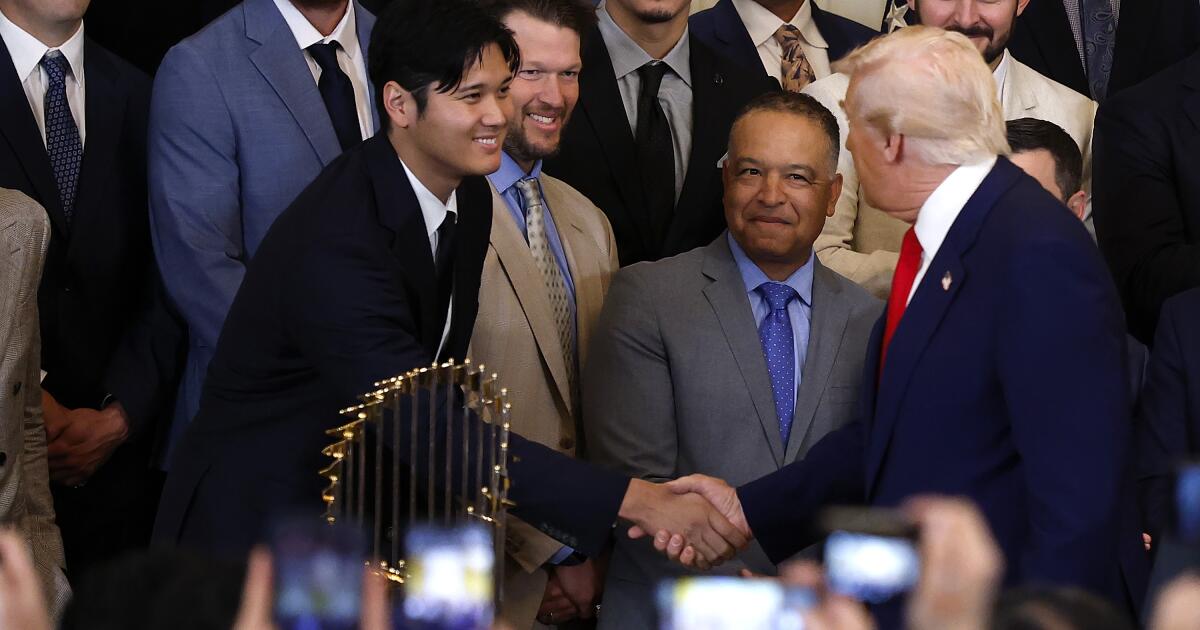
Dodgers scheduled to visit White House in late July to celebrate 2025 World Series win
-

 World42 minutes ago
Former US Olympian pleads not guilty in DC reflecting pool vandalism case


