Pittsburg, PA
Visiting the site of the Pittsburgh synagogue shooting


This article was first published in the State of Faith newsletter. Sign up to receive the newsletter in your inbox each Monday night.
I noticed the colorful drawings first.
They were printed onto pieces of canvas that hung on a long fence. They carried messages like “Rebuild together” and “Be happy,” alongside drawings of rainbows, flowers and trees.
These were the images that welcomed me and others at Religion News Association’s annual conference to the site of the deadliest act of antisemitism in U.S. history.
On Oct. 27, 2018, a man entered a building used by three different Jewish communities and opened fire, killing 11 people and injuring others.
The juxtaposition between cheerful drawings and horrific memories is intentional. Those who oversee the site of the Pittsburgh synagogue shooting told us the images serve as reminders of the good and kind acts that came in response to the shooter’s acts of death and destruction. They were sent in by schoolchildren who wanted to do what they could to help.
Throughout the morning we spent with people affected by the shooting, the same message came up again and again: You must remember the good, as well as the bad.
You must celebrate the kindness and compassion in the world, even as you call out the evil.
You can’t forget how those 11 men and women died, but you also can’t forget how they lived.
Today, the site of the 2018 shooting is being transformed into a unique kind of community center. It will host worship services, as well as lectures on antisemitism and the beauty of Jewish life.
It will serve as a reminder of what’s possible when we pull together instead of pulling apart.
And until construction is complete, those drawings will hang from the fence outside, calling us to remember not just what happened on Oct. 27, 2018, but also what happened next.
Fresh off the press
USC canceled its valedictorian’s remarks. Does that promote public safety — or hurt free speech?
Term of the week: Matzo
Matzo is thin, unleavened bread that plays a special role in Jews’ Passover festivities. Made of just flour and water, it’s baked before it rises, which means it looks more like a cracker than a loaf.
“To be kosher for the Passover holiday, which begins Monday evening, the dough has to be prepared and cooked all within 18 minutes,” according to The Associated Press.
By eating matzo, the modern Jewish community commemorates the experience of Jews who fled Egypt during the Exodus story. Those men, women and children were in such a rush that they couldn’t bake normal bread.
The Jewish speaker on a panel about religion and food at last weekend’s conference described how special matzo is to him despite being essentially tasteless. It symbolizes God’s care for the community, he said.
What I’m reading…
Becoming a parent means reckoning with everything you won’t be able to protect your children from. But in the midst of the unexpected heartbreaks and anxiety, you can choose to create moments of immense joy. “Parents cannot shield their children from the world’s cruelty or our failures, but we can try to counter those things. We can provide moments that may become positive recollections to sit alongside harsher ones,” writes Esau McCaulley for The New York Times.
This fall, Sacred Heart Major Seminary in Detroit is going to get serious about limiting screen time. First-year students, who are on the path to becoming priests, will be asked to be more intentional about their relationship with technology and to spend more time socializing with others and in prayer than buried in their phones, according to Catholic News Agency.
My colleague Jennifer Graham wrote a beautiful profile of writer Nancy French earlier this month. The story explores French’s new memoir, her battle with cancer and her place in the unfolding story of evangelical Christianity.
Odds and ends
I was honored to bring home a second-place award from the RNA conference that recognized my efforts to analyze and explain faith-related Supreme Court cases and policy moves. Here are the three stories that were part of my winning entry:



Last year, Americans received nearly 30 billion scam robocalls and text messages. Now, leaders in Pennsylvania are taking a new approach to try to crack down on them.
“It’s not just certain audiences that are targeted in this space. It’s really everybody,” said Kate Sullivan, CEO of Better Business Bureau of Western Pennsylvania. “Robocalling is just faster and more aggressive than it’s ever been,” Sullivan said.
The prevalence, exacerbated by artificial intelligence, is why 49 attorneys general across the country sent a letter to the Federal Communications Commission to strengthen its rules to prevent scammers from accessing legitimate phone numbers.
“You have individuals that will purchase maybe 100,000 different phone numbers,” Pennsylvania Attorney General Dave Sunday said. “Those numbers will land somewhere where you have a nefarious actor who will use those numbers to do the robocalls.”
Sunday is part of the Anti-Robocall Task Force, along with West Virginia Attorney General JB McCuskey. Last year, the coalition sent warning letters to major phone service providers to stop allowing illegal robocalls to reach consumers. Now they’re building on this by going directly to the FCC.
“The consumer matters, and we want to make sure that our constituents, the consumers that are in our states’ voices, are being heard at the highest level as loudly as they can be,” McCuskey said.
Sunday said they want to put more onus on companies to not sell these numbers, and if they do, to have documentation that can be provided to law enforcement so they can trace back and hold the scammers accountable.
KDKA-TV reached out to the FCC for comment. A spokesperson said in part that they “welcome this input from state leaders.” They also mentioned, “The Commission proposed expanding certification and disclosure requirements to all providers that receive telephone numbering resources… to stop scammers from exploiting gaps in the system.”
“Getting ahead of it and more protections for the consumers, I think, does have quite a bit of value,” Sullivan said.
As for what you can do, the BBB and AGs said it’s better to let a robocall go to voicemail. If you decline it, that indicates you’re a real person and may get more calls. Also, make sure to report robocalls to the BBB or the Federal Trade Commission.

-
 Lifestyle8 minutes ago
‘The Invite’ is a marriage comedy with sex and heart
-

 Technology20 minutes ago
I spent a week using the Trump phone — it sucks
-

 World23 minutes ago
With US unleashing attacks, Iranian official threatens that the Islamic Republic will deliver a ‘hard slap’
-

 Politics29 minutes ago
WATCH: Trump’s Energy chief reveals what escalating Iran tensions could mean for gas prices
-

 Health36 minutes ago
Coffee may have powerful effect on liver health, major study suggests
-

 Sports38 minutes ago
Oba Femi vs Brock Lesnar at SummerSlam is a ‘generational matchup,’ WWE legend JBL says
-
 Business51 minutes ago
Billionaire exodus? California drew 10 times more venture capital than any other state this year
-
 Entertainment53 minutes ago
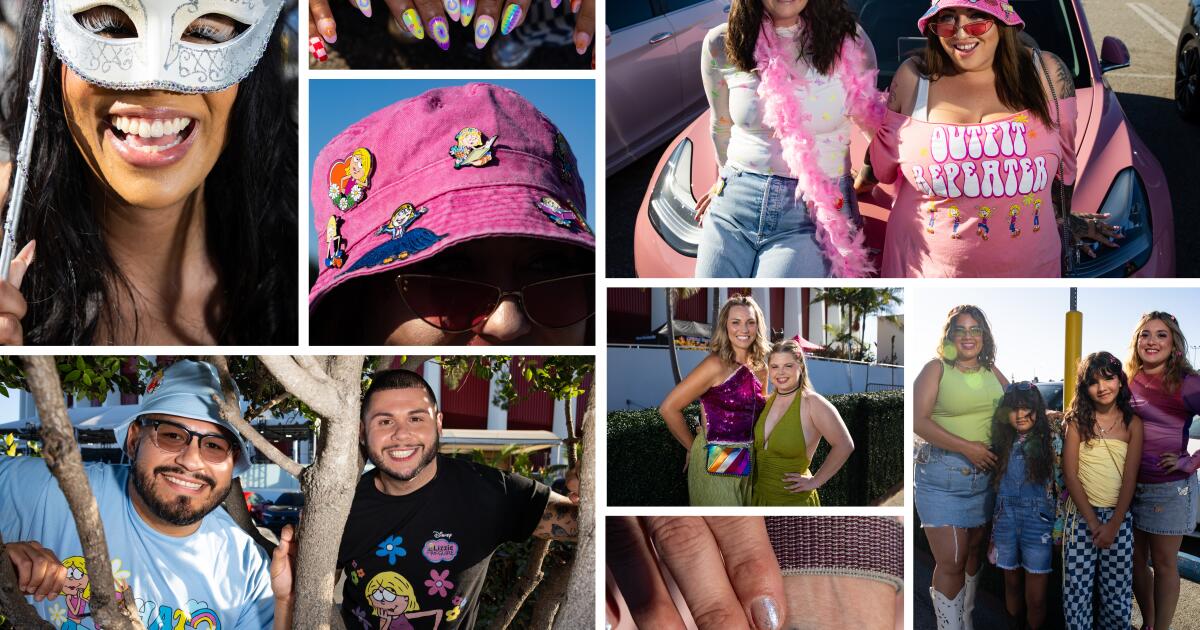
Disney Channel maximalism to pop-star glam: What fans wore to Hilary Duff’s L.A. show

