Northeast
On this day in history, September 13, 1857, milk chocolate magnate Milton Hershey is born


Milton Snavely Hershey, a German-speaking Mennonite farmer who turned his passion for confections into a symbol of American affluence and goodwill, was born in Derry Township, Penn., on this day in history, Sept. 13, 1857.
“Milton Hershey was the rarest of men — both a dreamer and a builder,” notes his biography at the Candy Hall of Fame, into which the chocolatier was inducted in 1972.
He founded both the Hershey Chocolate Co. and the Milton Hershey School.
ON THIS DAY IN HISTORY, SEPTEMBER 12, 2003, AMERICAN MUSIC LEGEND JOHNNY CASH DIES
The school, which he opened in 1910 to educate orphans, thrives today as a prominent free educational institution serving underprivileged students.
“His first two candy companies were met with failure,” the Hershey Company writes in its history of the founder, nothing that by age 26 the entrepreneur was penniless.
Milton Hershey founded Hershey Chocolate as well as built Hershey, Pennsylvania, for his employees. He became a prominent philanthropist and gave his fortune to helping those in need. (Getty Images)
“It wasn’t until his third business that Milton’s hard work and talent paid off. From then on, Milton prospered as a successful businessman and generous humanitarian.”
Hershey had only a fourth-grade education when his father put him to work as a printer’s apprentice.
HERSHEY WARNS IT WON’T ‘FULLY MEET CONSUMER DEMAND’ THIS HALLOWEEN, CHRISTMAS
He then developed a taste for the candy business.
He opened his first candy shop in Philadelphia in 1876. It failed six years later.
Hershey then attempted to become a candy maker in other cities, before returning to Lancaster, Penn.
Hershey Co. chocolate candies are displayed for sale at the Hershey’s Chocolate World store in New York City. (Timothy Fadek/Bloomberg via Getty Images)
He launched the Lancaster Caramel Co in 1886 and then, eight years later, a subsidiary called the Hershey Chocolate Co.
“Caramels are a fad; chocolate is permanent,” Hershey told a colleague, according to official company history.
“I am going to make chocolate.”
“Caramels are a fad; chocolate is permanent.” — Milton Hershey
Chocolate, which comes from the bitter beans of the cacao pod, had been consumed for centuries.
Hershey pioneered a sweeter, more affordable version called milk chocolate.
“Hershey was not the first to make milk chocolate,” reports the Hershey Company, noting that Swiss confectioners made a version with powdered milk.
A French boy eating chocolate, which he was given by some American soldiers in 1944. (Robert Capa/Keystone/Getty Images)
“But he was the first to make it out of fresh milk using mass production techniques.”
This delicious invention changed the way America, and the world, eats candy.
He sold off his caramel company and introduced the first Hershey’s Milk Chocolate bars in 1900. It proved an incredible success.
MEET THE 5 FINALISTS IN SAMUEL ADAMS’ BREWING THE AMERICAN DREAM CRAFT BREWERS COMPETITION
The company town of Hershey, Penn., was established in 1903. Hershey Park opened in 1906. Hershey Kisses were introduced in 1907.
Hershey Chocolate thrived during World War II, when the company controlled the heavily rationed American chocolate market.
An historic marker stands outside the original Hershey Co. chocolate manufacturing plant in Hershey, Pennsylvania. (Bradley C. Bower/Bloomberg via Getty Images)
Its products, easy to carry and filled with energy and calories, became a critical part of the war effort, packed into tens of millions of field rations and Red Cross care packages.
Hershey’s even produced tropical chocolate designed to survive in high-heat combat areas without melting.
Chocolate ration bars became symbols of American goodwill during World War II.
Most U.S. troops carried Hershey’s Chocolate of some kind on them.
Their ration bars became highly coveted symbols of American goodwill.
American GIs handed out chocolate bars by the millions to children and to other war-ravaged citizens as U.S. forces marched across Europe and Asia, liberating one town after another.
World War II, La Haye du Puit, Normandy, France. An American soldier giving chocolate to an elderly couple after the liberation of the town in June 1944. (Photo12/UIG/Getty Images)
A black market for American chocolate developed in the aftermath of the war, most notably in Germany, as people struggled with deprivation.
Hersey continues to thrive today, reporting $8.97 billion in sales in 2021, an increase of more than 10 percent of 2020.
MIlton Hershey “had the genius to develop his chocolate business in the right place at the right time,” proclaims the Candy Hall of Fame.
For more Lifestyle articles, visit www.foxnews/lifestyle
“His personal convictions about the obligations of wealth and the quality of life in the town he founded have made the company, community and school a living legacy.”
Read the full article from Here

Boston, MA
Chickadee, the popular Mediterranean restaurant in Seaport, is shutting down – The Boston Globe

An Instagram post that announced their closure on Tuesday evening did not point to any reason for the closure, and requests for comment were not immediately returned.
“Eight years ago, we opened our doors at the Innovation and Design Building with a simple hope: to bring you honest, delicious food and a warm place to share it,” read the post. “What we found instead was a community – regulars who became friends, first dates that turned into anniversaries, celebrations, quiet lunches, and everything in between. You made this restaurant so much more than a place to eat.”
Globe Food Critic Devra First awarded Chickadee 3.5 stars in October 2018, where she wrote how some meals “are magic, everything cooked perfectly, making you swoon.”
At the time, it was also considered one of the earliest restaurants to have opened in the still-industrial far reaches of the Seaport, which was home to ship-repair facilities and cutting-edge design firms, seafood wholesalers, and biotech companies. In terms of location, some said it was ahead of its time.
DaSilva, a three-time James Beard Best Chef: Northeast semifinalist, has led some of the top restaurants across the Greater Boston area. Aside from Barbara Lynch’s flagship No. 9 Park, he opened Spoke Wine Bar in Somerville in 2013. During his time at Spoke, he received a number of accolades and was named one of Zagat’s “30 Under 30” for Boston and earned the title “Rising Star Chef” from StarChefs.
Kilpatrick, who also left Lynch’s group in 2014, worked for the team behind O Ya to help open restaurants in New York. According to his LinkedIn, he started a new job as a regional operations manager for Lark, a boutique hotel management company, in April.
Alexa Gagosz can be reached at alexa.gagosz@globe.com. Follow her @alexagagosz and on Instagram @AlexaGagosz.
Pittsburg, PA
Parent group claims Pittsburgh Public Schools’ closure plan violates children’s civil rights

The Pittsburgh Public Schools board of education has been under intense scrutiny since its “Future Ready Plan” was first introduced — and then eventually approved — in late May. But a group of parents has filed a complaint with the Pennsylvania Human Rights Commission in an effort to prevent it from being carried out.
Advancement Project, a national civil rights organization, along with 412 Justice and the Education Rights Network, have filed a complaint against the school board on behalf of five PPS students, claiming the plan, which will close or repurpose several district buildings across the city, violates those students’ civil rights.
Those students represented in the complaint attend Miller Pre K-5 in the Hill District, Manchester Pre K-8 on the North Side and Woolslair Pre K-5 in Bloomfield, all of which would close under the plan, with the students relocating.
“This is part of what we’ve seen across the country, this national school closure crisis,” said Adaku Onyeka-Crawford, a staff attorney and director of education justice for Advancement Project. “We’ve seen it play out in urban, suburban and rural communities, affecting Black and brown children, and it has come to Pittsburgh.”
The complaint is calling for an investigation into the plan and for the district and school board to act in good faith during that investigation. They hope it will lead to a preliminary injunction, allowing the commission to get a court order for the district to stop the implementation of the plan.
One of the main claims in the complaint is that the school board “based school closure decisions on utilization (enrollment divided by building capacity), despite being notified that doing so would disproportionately close schools in Black neighborhoods. Black students make up 62% of students that will lose their schools, but only 49% of students district-wide.”
“Utilization has no ties to education quality at all,” said Onyeka-Crawford. “In fact, smaller class sizes are tied to better outcomes for students. Community members had flagged that relying on this metric would disproportionately harm Black students.”
Onyeka-Crawford said alternatives were presented to the school board, some that have had success in other cities, but the district went forward with their own plan instead.
“We need to ask: who is Pittsburgh Public Schools and the board accountable to?” she said. “It’s the parents and families, and if this is what parents and families are asking for, it’s up to them to be accountable to those communities, and give parents and students the education and resources that they need.”
KDKA reached out to the district, but it said it will not comment on pending litigation.

UNCASVILLE, Conn. (WTNH) — Aaliyah Edwards came off the bench to score a game-high 21 points as the Connecticut Sun defeated the Portland Fire, 90-87, during Camp Day on Tuesday morning at Mohegan Sun Arena.
Thousands of kids were in attendance to watch the Sun hold on to a fourth-quarter lead as the Fire attempted to rally. Connecticut led by 10 at halftime and saw its lead cut to one in the final period.
Brittney Griner added 20 points for the Sun, who ended their three-game homestand with a victory. Olivia Nelson-Ododa went 8-for-8 from the foul line en route to 16 points and Leila Lacan chipped in 14.
Carla Leite led the Fire with 18 points.
The Sun visit Phoenix on Friday for the first of two games with the Mercury.
-
 News26 minutes ago
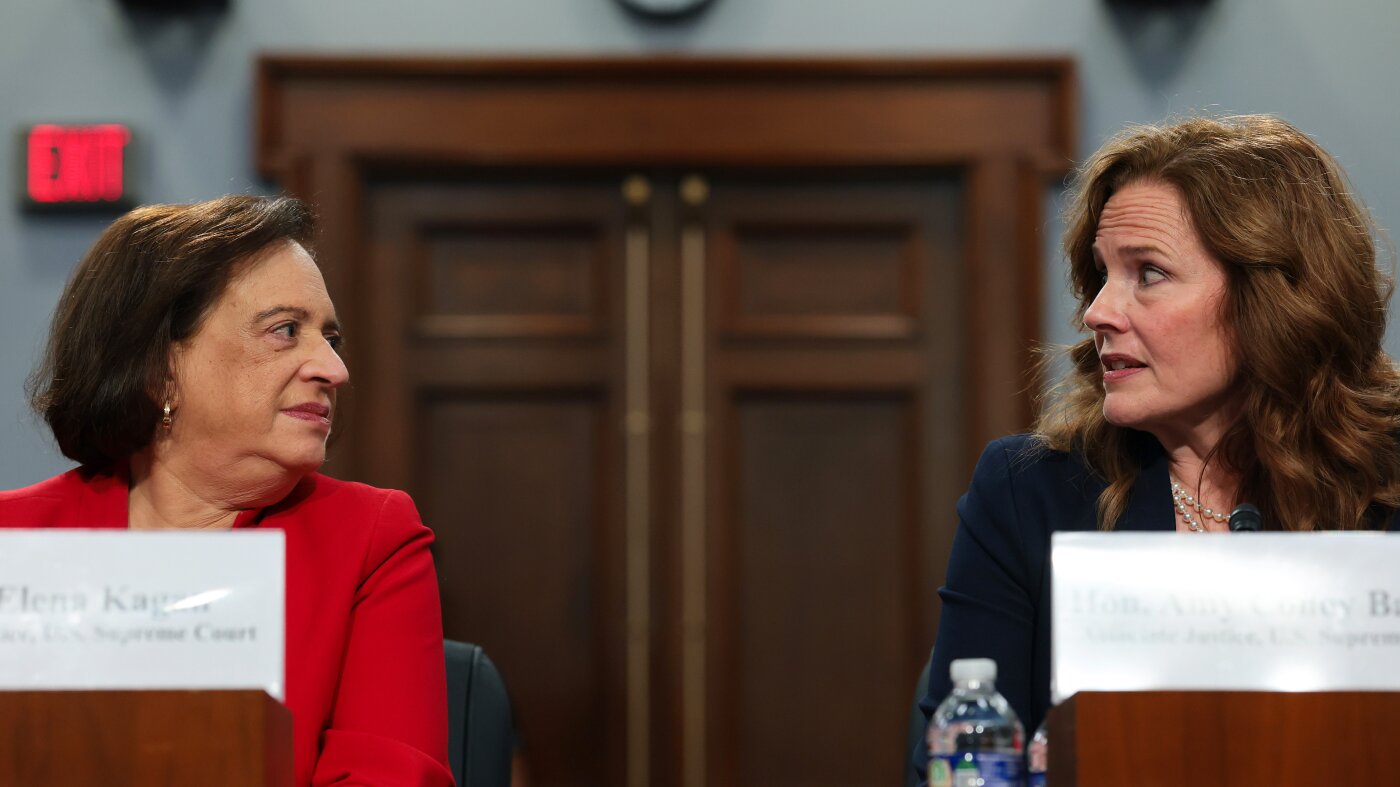
Supreme Court Justices give chilling accounts of threats to their safety
-

 Los Angeles, Ca2 hours ago
Stabbing at Chino Hills liquor store ends in attempted murder arrest
-

 Detroit, MI2 hours ago
A small group of citizens rally for mental health coverage in Detroit
-

 San Francisco, CA3 hours ago
1 dead, 2 missing after boat capsizes near Alcatraz in San Francisco Bay
-

 Dallas, TX3 hours ago
Death penalty off the table for man accused of beheading Dallas motel manager, prosecutors say
-

 Boston, MA3 hours ago
Chickadee, the popular Mediterranean restaurant in Seaport, is shutting down – The Boston Globe
-

 Denver, CO3 hours ago
Denver Nuggets 7-Year NBA Veteran Gets Honest On Peyton Watson
-

 Seattle, WA3 hours ago
Top 25 Seattle Seahawks Going into 2026 NFL Season: #17 Grey Zabel

