Northeast
NY Republican compares sanctuary states to Confederacy: ‘We had a Civil War’ over federal law

New York’s last Republican governor said this week that sanctuary jurisdictions are reminiscent of the Confederate states that balked at federal law and waged war against the Union.
Former Gov. George Pataki was speaking with businessman and 2013 New York City GOP mayoral candidate John Catsimatidis on 77WABC radio when he was asked about the state of the Big Apple in that regard.
“Right now, I’m concerned and people are concerned and rightfully so. But it comes down to leadership. We’ve had worse times in the past. I remember back in the ’60s and then in the early ’80s. And things got infinitely better,” Pataki said.
“And it comes down to having the right people with the right policies running the city, running the state and running the country. I think we’re going to have the right policies in Washington. Now we just need to have the right leadership doing the right thing in Albany and in New York City.”
MAGAVENUE: LAWMAKERS PREP LEGISLATION TO NAME SEVERAL HEARTLAND HIGHWAYS AFTER TRUMP
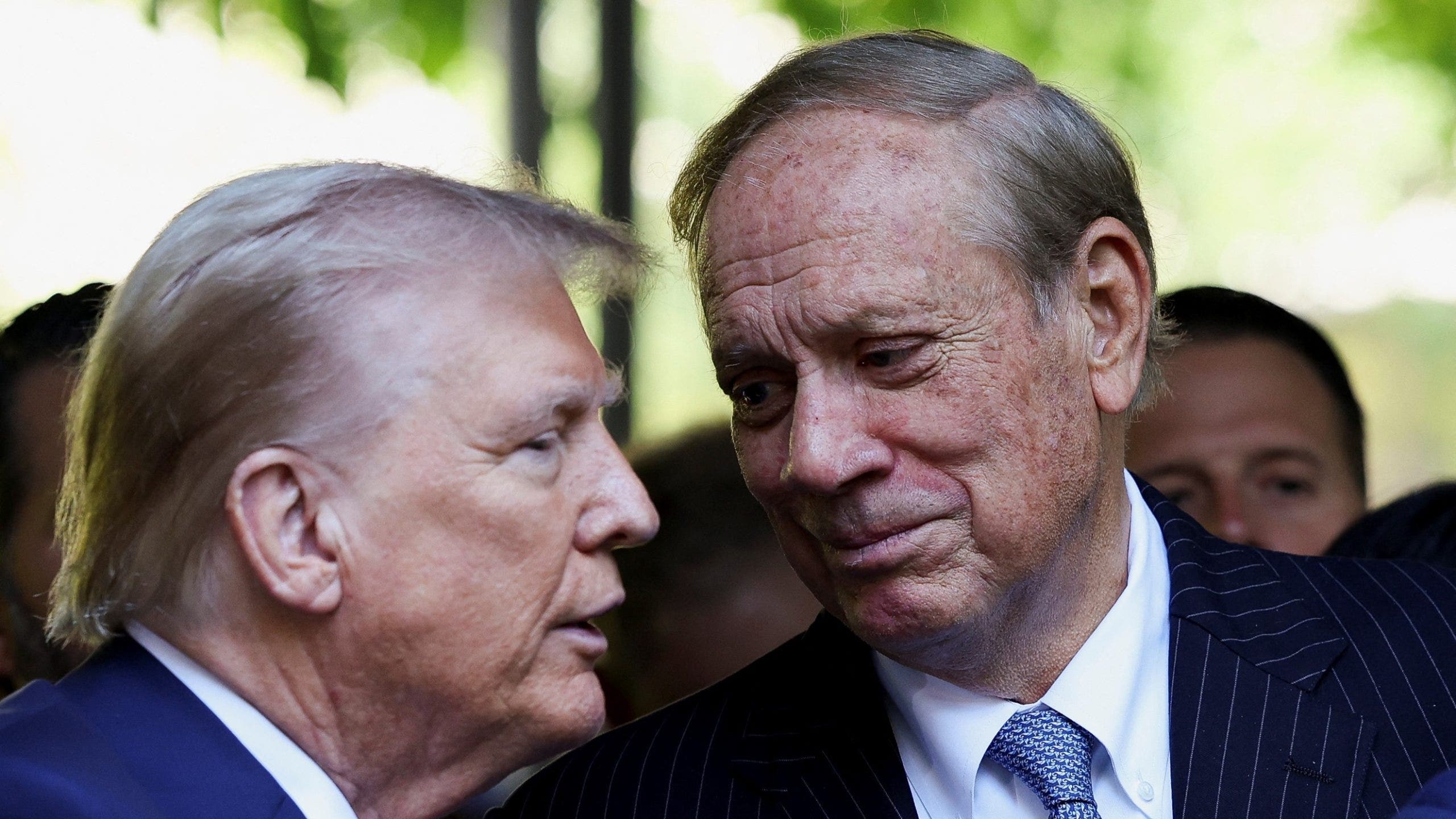
President Trump speaks with former New York GOP Gov. George E. Pataki. (Reuters)
Catismatidis said Trump has “put his foot down” against sanctuary policies, and quipped that he now has a “very large-sized shoe” given his overwhelming electoral victory.
Pataki agreed, adding that if the U.S. is to be based on the rule of law, it should apply equally everywhere.
“Cities or states that can pretend that the federal rules don’t apply to them are just violating the Constitution and violating our freedom… We had a Civil War over this,” he said. “And, it became plain that under the Constitution, every city, every state has to follow the law of this country.”
Prior to the war-triggering attack on Fort Sumter, South Carolina, President James Buchanan, a Pennsylvania Democrat, was critical of Republican abolitionists and lamented his home state’s opposition to the Fugitive Slave Law.
Following Illinois Republican Abraham Lincoln’s 1860 victory, southern states began to secede, which Buchanan opposed, while believing a military response was the wrong option. The election of Lincoln, who opposed the expansion of slavery into federal territories, alarmed Deep South states, with South Carolina leading the way in declaring secession from the Union on Dec. 20, 1860.
Pataki went on to say the nation’s largest city is bucking the feds in that regard, along with Los Angeles and other cities.
NEW YORK’S LAST GOP GOVERNOR CONDEMNS BIDEN’S INACTION AS IRAN STATE TV PLAYS SCENES OF US ‘ANARCHY’
Republican mayoral candidate and billionaire John Catsimatidis speaks at a news conference in 2013. (Getty Images)
“Trump must make them follow the law or cut off all federal funding. And I think that would be a very positive step to bring America together and to bring us forward,” he said.
The two discussed how New York City Council enacted a sanctuary city policy, and whether the state or federal government may step in against it.
“I think [Mayor Eric] Adams may go along with [Trump intervention],” Pataki predicted, as other observers have viewed the mayor as being critical of sanctuary city policy but hamstrung by the 45-6 Democratic-majority city council.
The former governor said he is optimistic about the New Year and that Trump must “dramatically reform” Washington instead of “tinker[ing] around the edges.”
He noted Trump does have limits, in that he cannot statutorily rein in New York County District Attorney Alvin Bragg or other far-left officials.
Current Gov. Kathy Hochul, a Democrat who has clashed with the MAGA wing of the Republican Party at times, once vociferously opposed another predecessor’s successful bid to make illegal immigrants eligible to receive driver’s licenses.
In 2007, Hochul balked at Gov. Eliot Spitzer’s policy while she was serving as clerk of Erie County – which includes Buffalo.
Then-New York Gov. Andrew Cuomo, left, and Lt. Gov. Kathy Hochul during a cabinet meeting at the Capitol. (AP)
However, when she became governor upon the resignation of Andrew Cuomo, she reversed course.
In November, Hochul indicated she would be the “first one” to call Immigration & Customs Enforcement to help the feds capture migrants or illegal immigrants accused of another crime and “get them out of here.”
However, she maintained during her remarks in Queens that she supports helping otherwise law-abiding migrants find work in New York.
Trump’s pick for “border czar,” Tom Homan, notably hails from the Watertown area and has condemned his home state’s current policies.
Read the full article from Here


One day before the Fourth of July, police in Yarmouth, Massachusetts say American flags were “ripped down” from a highway overpass that’s named after a two-time Purple Heart recipient.
Yarmouth police said an officer noticed the vandalism Friday on the Lance Corporal William Joseph Donovan Jr. Memorial Bridge over Route 6.
“The officer found American flags forcefully ripped from the fencing,” police said. “Their grommets had been torn out, and flags were ripped apart at the seams left hanging.”
Lance Cpl. William Joseph Donovan Jr., a Dennis-Yarmouth Regional High School graduate, was awarded the Purple Heart twice for injuries sustained in Operation Enduring Freedom. After returning home, he died in a motorcycle crash at 27 years old.
Yarmouth police are investigating the incident and urge anyone with information to contact them.
This isn’t the first time that flags on the bridge were damaged. Last summer, they were similarly torn down before being replaced in a rededication ceremony.
The community has already stepped up to restore the patriotic display that was vandalized on Friday.
State Rep. Steve Xiarhos of Barnstable, who lost his son Marine Cpl. Nick Xiarhos to a roadside bomb in Afghanistan, said “Cape Cod sent a message tonight.”
“You can tear down flags, but you cannot tear down the spirit of this community. If anything, you made people stronger,” Xiarhos posted to Facebook. “You brought people together from all over Cape Cod, united by love of country and respect for those who have served.”

A Times Square Ball Drop, a rolling series of ball drops, timed to occur at midnight on July 3 in every U.S. time zone from Guam to American Samoa, is part of the “Giving 4th Broadcast Benefit Show,” creating a nearly 24-hour celebration of the 250th anniversary. It’s part of the broader “Giving 4th” initiative that aims to make and establish Independence Day the biggest annual day of giving.
A time capsule will be buried in Philadelphia to be opened in 2276 on July 4. It contains a carefully curated collection of letters and artifacts reflecting the leadership, institutions, and communities that shape the country today. It will include contributions from all three branches of the U.S. federal government and submissions from each of the 50 states, Washington D.C., and five territories.

6-minute read

NJ has had an image problem for 250 years. We love it anyway
New Jersey has always had an image problem. Its residents have access to two world-class cities, mountains, beaches. But the punchlines remain.
New Jersey has always had an image problem.
The state was central to the nation’s founding. Its residents have access to two world-class cities, mountains, beaches, suburbs and farms. And yet, for outsiders, the punchlines often ring loudest.
The malls. The Turnpike. “What exit are you from?”
We know the jokes. The big hair, the attitudes and property taxes.
And yet we defend the Garden State.
“I can talk about my state, but you can’t,” said Ashley Koning, director of the Eagleton Center for Public Interest Polling at Rutgers University.
Its 2015 poll found more than 75% of New Jerseyans took pride in the state, even as 57% said New Jersey had a negative image.
Story continues below photo gallery
Residents polled most often pointed to location, convenience and overall quality of life as reasons New Jersey is a good place to live.
We have a complicated relationship with our state. We’re not blind to its problems, like the cost of living. But we also see its quality of life.
“New Jerseyans have such a wealth of pride,” Koning said. “We’re not afraid to say what we think is wrong with the state and say where we want to see the state improve — but I think we’re also the first ones to defend our state.”
That pride comes with an edge. Jokes about “The Sopranos” still land, but New Jerseyans get the last laugh.
“New Jersey is often a butt of jokes across the country, but I think the real joke is that people don’t get to experience the beauty that is New Jersey,” Koning said. “And I feel like New Jerseyans know that very well.”
That tension may be the best way to understand the state as America approaches its 250th anniversary of independence.
Would Founding Fathers recognize today’s New Jersey?
Would a New Jerseyan from 1776 recognize this place?
“In terms of technology, airplanes, cars, obviously there’s just so much that would be different,” said Maxine Lurie, professor emerita of history at Seton Hall University and chair of the New Jersey Historical Commission.
In the 18th century, a letter crossing the Atlantic could take months.
A person in 1776 might have thought of themselves as a New Jerseyan, but not in the modern sense. They were part of the New Jersey colony, and British subjects.
Local identity was common in the colonies, said Melissa Kozlowski, director of curatorial affairs at the Bruce Springsteen Center for American Music at Monmouth University and director of public history.
“All of the colonies had a very unique identity in the colonial era,” Kozlowski said. “They didn’t feel as if they were one country. That’s why the revolution was such an audacious concept.”
For New Jersey, that local-first identity shows up everywhere today.
The state is built from smaller identities: towns, counties, regions. Whether someone faces New York or Philadelphia affects whether they say Taylor ham or pork roll and what they mean when they say “the city.”
North Jersey vs. South Jersey? Try East Jersey vs. West
That sets up a familiar debate: North Jersey versus South Jersey.
Long before North and South became the dividing line, there was East Jersey and West Jersey.
They were separate colonies before uniting in 1702. The dividing line ran diagonally across the state. People in West Jersey were closer to what we call South Jersey and looked toward Philadelphia. They read Philadelphia newspapers and had business and family connections in Pennsylvania. People in East Jersey looked toward New York.
“So as we look for television stations or for sports teams, we look in those two different directions. In a sense, they did then too,” Lurie said.
Being caught in the shadows of New York and Philadelphia can be a source of pride and irritation at the same time.
“We are caught between two of the most well-known cities in the world,” Koning said.
Rutgers-Eagleton’s polling grew partly out of that problem.
“The Rutgers-Eagleton Poll was meant to bring a voice to the people of New Jersey,” Koning said. “New Jersey feels this identity crisis that that voice often will get lost.”
Central Jersey? For real?
And what about Central Jersey? To northerners and southerners, its very existence is up for debate.
“As a Central Jersey girl, it definitely does exist,” said Koning, who grew up in the region.
Central Jersey generally includes places around Somerset, Middlesex and Mercer counties, with New Brunswick as a kind of middle point, she said. The area has “a little bit of everything,” while also sharing pieces of North Jersey, South Jersey and the Shore.
Identity crisis is nothing new for the Garden State. That nickname, by the way, is credited to Abraham Browning, who coined it in 1876, according to the state library. Browning had been the state attorney general from 1845 to 1850.
During the Revolution, New Jersey produced food both armies needed, and its position between two great cities made it attractive to the British, who — if they could have controlled it — would have divided the colonies, north and south.
They overran the state, but they couldn’t hold it, Lurie said.
British forces held New York for much of the war and they held Philadelphia for about a year. They held New Brunswick for seven months. But the state remained contested thanks to the toughness of New Jerseyans.
600 NJ battles and skirmishes during Revolution
Anytime British and Hessian forces moved into New Jersey, local militias attacked them as they searched for food.
“They couldn’t hold on to it because they were just being picked off,” Lurie said.
There were more than 600 battles and skirmishes in New Jersey during the Revolution, Lurie said. “I’ve always told my students you would not want to have lived here during the Revolution.”
For everyday people, the Revolution was not only about ideals. It was about danger, inflation, raids and not knowing who might appear at the door.
“It affected almost everybody, everywhere in one way or another,” Lurie said.
Well before the New Jersey Turnpike and the Garden State Parkway, New Jersey was already defined by movement. The roads were rougher, but rivers like the Raritan and Passaic helped move goods to hubs like New Brunswick and Newark.
By the 1830s, the Morris Canal helped moved goods east and west across the state between the Delaware River and New York Harbor — an early, watery version of Route 80.
The speed has changed since then. But the state’s role is familiar.
“We are a transitory state,” Koning said.
From taverns to roadside diners
Constant movement helps explain another piece of the identity. A New Jerseyan from 1776 wouldn’t know what to make of a modern roadside diner with its chrome and disco fries. But a roadside stop where people eat and talk would make sense.
“Taverns were really important because that’s where they got news, that’s where they talked to each other,” Lurie said.
Story continues below photo gallery
In a largely agricultural colony with few large buildings, taverns and churches served as gathering places. Elizabethtown, now Elizabeth, was the largest town in the colony, said Lurie. It had about 350 houses.
New Jerseyans still need places to sit and argue about what’s going on. While Lurie thinks the modern idea of an in-your-face New Jersey personality may be more of a 20th-century idea tied to media, Koning sees pushback as part of the culture.
New Jerseyans are fierce defenders of the state because it’s often underestimated.
“Our importance is so undervalued and so understated,” Koning said.
She pointed to New Jersey’s role in the Revolutionary War, the Civil War, invention and entertainment as examples of how much the state has contributed.
New Jersey has produced some of the country’s most famous entertainers. But no single one of them can represent such a diverse state. Bruce Springsteen stands for working class culture. Jon Bon Jovi gives another impression and so did Frank Sinatra.
“You can say Bruce signifies and is emblematic of the hard-working lives within New Jersey and that working culture,” Koning said. “But then at the very same time, in contrast, if we look at Sinatra, this is the smoothness of city-adjacent living and Hoboken.”
No single New Jerseyan
Outsiders may picture “The Sopranos,” “Jersey Shore,” malls and big hair. But New Jersey is too varied to be captured that way, Koning said. “Our uniqueness becomes the stereotype.”
So there’s no single New Jerseyan.
“I think that’s the beauty of our state, much like it’s the beauty of our country and what our country should be about,” Koning said. “The thing that unifies us is our differences bring us together.”
The New Jerseyan of the Revolution would probably flee from the sound of the E Street Band, but they might recognize the geography, the waterways, the pull of the cities and that New Jersey is central to the national story — and still fighting to be seen clearly, and appreciated.
“The historical connections are all around us,” Koning said, “even when we don’t recognize it.”
-

 Maryland2 minutes ago
Maryland Lottery Mega Millions, Pick 3 results for July 3, 2026
-

 Michigan5 minutes ago
What to know about cyclosporiasis as Michigan health officials investigate 300+ cases in outbreak
-

 Massachusetts10 minutes ago
American flags
-

 Minnesota17 minutes ago
New LeBron James Rumors Reveal Wolves Free-Agent Pitch to NBA Icon Amid ‘Ramped Up’ Contract Pursuit
-

 Mississippi20 minutes ago
Mississippi Lottery Mississippi Match 5, Cash 3 results for July 3, 2026
-
Missouri25 minutes ago
Missouri Lottery Mega Millions, Pick 3 winning numbers for July 3, 2026
-
Montana32 minutes ago
Montana Lottery Mega Millions, Big Sky Bonus results for July 3, 2026
-

 Nebraska35 minutes ago
NEBRASKA REACTS Survey Results: Husker Football Plus a Concert? Here’s What You Said

