Northeast
New Jersey Gov. Murphy demands bus companies give notice before sending migrants bound for NYC


New Jersey Gov. Phil Murphy is demanding that nearly two dozen charter bus companies sending New York City-bound migrants to “transit” stops in the Garden State provide advance notice.
Murphy sent a letter Monday in response to charter buses transporting migrants from the southern border to New Jersey “due to the operators’ unwillingness to transport their passengers to New York City,” after Mayor Eric Adams issued a Dec. 27 executive order limiting drop-offs to certain times and locations in the Big Apple.
Since Dec. 31, dozens of charter buses transporting over 1,800 individuals who recently arrived in the U.S. have arrived at transit sites in New Jersey, “with nearly all of the passengers continuing from those locations in New Jersey to their intended destinations in New York City,” Murphy’s letter claimed.
To give officials advance notice and time to properly prepare to assist these migrants, Murphy, a Democrat, has asked for each bus company to give the New Jersey Office of Emergency Management at least 32 hours’ notice before their anticipated date and time of arrival and provide details on the total number of passengers on each bus expected to arrive in New Jersey.
GREG ABBOTT SAYS ERIC ADAMS SHOULD SUE BIDEN INSTEAD OF BUS COMPANIES TO END MIGRATION INFLUX
New Jersey Gov. Phil Murphy asked bus companies for more details on migrants. (Aristide Economopoulos/Bloomberg via Getty Images)
The letter deemed that the migrant buses in New Jersey come “at the apparent instigation” of Republican Texas Gov. Greg Abbott, and tells the companies that in addition to requesting this information, “We reserve all rights to take appropriate action against any person acting in violation of any applicable laws.”
For each migrant bus, Murphy is asking the companies to disclose the number of single adults traveling alone; the number of passengers traveling as part of a family, including the number of families with children under 18; the number of children under 18; and the number of chaperones (other than family members) for otherwise unaccompanied minors.
The governor also asks that the companies provide each location in New Jersey where passengers will be dropped off, along with the estimated time of arrival; the time and city of the bus’s initial departure with its passengers; and a description of the bus, including its license plate number, color, and any identifiable exterior features.
“As we continue to see more migrants arrive to our state at the hands of the Governor of Texas, who is reportedly funding the passengers’ transportation with taxpayer funds, notice to New Jersey officials in advance of these individuals’ anticipated arrival is critical to ensuring the health and safety of passengers once they arrive in New Jersey,” Murphy said in a statement. “Additionally, because we know the vast majority of these individuals are intending to travel to New York City, this information will be shared with our colleagues across the Hudson to ensure the passengers’ health and safety there.”
Meanwhile, Abbott said on Sunday that New York City’s Adams should sue President Biden instead of the bus companies transporting migrants from the southern border to the Big Apple.
In a move Abbott’s office has dismissed as “legally baseless” and a “political statement,” the city filed a $708 million lawsuit against 17 charter bus and transportation companies transporting migrants to New York City from Texas.
Migrants board a bus back to their temporary tent shelters at Floyd Bennett Field, a former airfield in Brooklyn, on Jan. 4, 2024, in New York City. (Spencer Platt/Getty Images)
NYC DEMOCRAT SAYS CARS BELONGING TO MIGRANTS WERE TOWED FROM SHELTER: ‘TAXPAYERS DESERVE ANSWERS’
“He needs to be suing Joe Biden, not these bus companies. Because it’s Joe Biden and Joe Biden’s policies that’s causing the massive multi-million influx into the United States that leads to many of them wanting to go to New York,” Abbott told “Fox News Sunday” host Shannon Bream.
Speaking to the media Monday, Adams decried how more than 164,000 migrants – or 1.5 times the population of the state capital of Albany – have been dropped off in New York City.
“We communicated with the governor last week,” Adams said of New Jersey’s Murphy. “He has shared our outrage on the behavior of the bus companies and Governor Abbott, and he has really, as the … other municipalities in this region have really shown their willingness to really address this issue.”
Deputy Mayor Fabien Levy deemed Murphy a “great partner” in dealing with the migrant influx, while Chief Counsel to the Mayor and City Hall Lisa Zornberg condemned a “deliberate, express plan to flood and overwhelm the social services system of the City of New York and a few other targeted cities.”
“And the bussing plan that Governor Abbott is leading with the full participation of certain bus companies, seeks to punish New York City and certain other cities for political reasons,” Zornberg said.
Mayor Eric Adams’s administration filed a $708 million over migrant buses. (Barry Williams for New York Daily News/Tribune News Service via Getty Images)
Adams also told reporters he was considering installing metal detectors and cameras at migrant shelters after the deadly stabbing of a man at a Randall’s Island facility Saturday.
Read the full article from Here


Noah Kahan is appropriating Will Toledo’s culture. The viral folk star’s eventful Great Divide tour happened to stop by Pittsburgh last night while the furry convention was in town, and he was for some reason very excited about that, welcoming the furries and even trying on the head of an audience member’s furry costume.
“Pittsburgh: if you are caught between attending the worlds largest furry convention or my show tonight then please know you are welcome to combine the two,” Kahan wrote on X before the show. Responding to a poster who asked what his fursona would be, he posted “Squid man.”
“Furries are welcome. All the animal kingdom is welcome tonight,” Kahan then said onstage at PNC Park. “I don’t see any so far but I will be looking and asking a lot of questions after the show.” At the prop payphone booth that’s been a part of his show setup, he took a phone call from the “National Center For Furry Awareness” and learned furries do not necessarily have sex in their suits.
“The National Center For Furry Awareness? Oh, they don’t have sex… not necessarily? Okay, well that’s good to know.”
“If there are any furries in the crowd, say, ‘Hell yeah,’” he added to a mostly furryless crowd. Watch below.

As Hartford celebrated America’s 250th birthday Saturday, one of the city’s oldest attractions welcomed visitors for one of the few days each year when admission is free.
The Bushnell Park Carousel opened its doors at no cost as part of the city’s Independence Day festivities, giving families a chance to experience a piece of Hartford history while escaping the summer heat.
“It’s one of the most incredible pieces that we have here in downtown Hartford,” said Morgan Fippinger, executive director of the Bushnell Park Conservancy.
The carousel itself is older than many visitors realize.
“It is a 1914, so it’s a true antique carousel,” Fippinger said.
For many Hartford residents, the carousel has long been a fixture in Bushnell Park. For others, including newcomers to the city, it offered a chance to experience one of Hartford’s most recognizable landmarks for the first time.
Fippinger said the free ride day is one of the conservancy’s ways of participating in Hartford’s celebration of America’s 250th birthday.
“The free days when we have thousands of people in the park, it can be a lot,” Fippinger said. “It’s a lot of impact on the park and the infrastructure of the park. But also it’s an amazing time for so many people that are not necessarily always from Hartford, get to come in and see the amazing resources that Hartford has.”
While the Bushnell Park Conservancy cares for much more than the carousel, Fippinger said the attraction often serves as an introduction to the city’s rich history.
“There’s an amazing amount of history here, resources here,” Fippinger said. “And, you know, so we are kind of the eyes and ears for the City of Hartford.”
The air-conditioned carousel building also offered visitors a chance to cool off as temperatures climbed during the holiday celebration.
“We do want to make sure that everybody stays hydrated,” Fippinger said. “And the carousel building is air conditioned. So if people are feeling hot or feeling like they need to get cool, they can come in and take a ride. Plus, when you’re on the ride, it feels amazing.”

Content on this page may include affiliate links. If you click and sign up/place a wager, we may receive compensation at no cost to you.
Caesars Entertainment expanded on its partnership with three Wabanaki Nations tribes to launch Maine online casinos when the industry goes live later in 2026.
Following weeks of relative radio silence, some progress has been made regarding the Maine online casino industry, which is expected to launch sometime in 2026. According to a press release, Caesars Entertainment expanded on its existing partnership with three Wabanaki Nations tribes in the state. As a result, when the Maine iGaming market goes live, the state will feature three Caesars online casinos.
Caesars snatches three of four Maine online casino licenses
Under state law that passed earlier this year, there are four licenses up for grabs for incoming iGaming platforms, all of which come via the four Wabanaki Nations tribes.
By expanding its agreement with the Houlton Band of Maliseet Indians, the Mi’kmaq Nation and the Penobscot Nation, Caesars Entertainment will account for three of those Maine online casino licenses.
In an announcement, it opens the door for the rollout of Caesars Sportsbook & Casino, Horseshoe Online Casino and the flagship Caesars Palace Online Casino, which likely will feature a welcome offer via a Caesars Casino bonus code.
The long-term agreement, per the announcement, sets up Caesars to debut those platforms in 2026, pending regulatory approvals.
The expanded partnership comes on the heels of the 2023 introduction of Caesars’ online sportsbook. In addition to a commitment to offer a best-in-class and responsible online gambling experience, Caesars will invest in local workforce development by employing, training and developing members of each tribe to provide “meaningful financial support to help fund tribal community programs and initiatives,” according to a press release.
Caesars expanded partnership ‘a meaningful opportunity’
There has been no update as to if the Passamaquoddy Nation will partner with a legal gambling online casino for that fourth and final license, although it does have DraftKings in its corner for online sports betting.
Until then, it is only Caesars Entertainment platforms that residents can look forward to enjoying when the market launches in 2026.
“Together, we’ve built a strong and responsible sports wagering experience, and this next phase reinforces our commitment to our tribal partners and to delivering a differentiated, localized digital gaming experience for Mainers,” Eric Hession, president of Caesars Digital, said in a statement. “We’re grateful to Gov. Janet Mills, the Maine Legislature and the Maine Gambling Control Unit for their continued leadership and thoughtful approach to gaming in the state.”
Chief Kirk Francis of the Penobscot Nation added that integrating these new online casinos from Caesars “represents a meaningful opportunity to build on that foundation” already in place with Caesars Entertainment.
Lawsuit still pending regarding Maine online casinos
While there has been some movement for the future of legal casino games online in Maine, there remains a lawsuit still pending in the state.
Churchill Downs – which operates Oxford Casino Hotel, one of two commercial land-based casinos in Maine – sued to have the iGaming law invalidated, saying that the state legislature “blessed a race-based monopoly” by awarding online casino licenses to tribal partners only.
Penn Entertainment, which owns Hollywood Casino Hotel & Raceway, is not involved in the litigation, but CEO Jay Snowden criticized Maine’s framework in a Q4 2025 earnings call.
Snowden emphasized how the property has been in operation since 2005, investing hundreds of millions of dollars and being “as involved in the community” as any entity can be. Yet Maine lawmakers chose to “hand a monopoly to a third party that’s never invested a dollar in the industry.”
Responsible Gambling
Bettors must be 21 years or older and otherwise eligible to register and place wagers at online casinos. If you or someone you know has a gambling problem, please seek assistance from trained professionals such as the Problem Gambling Help Network at 1-800-MY-RESET.

-

 Indianapolis, IN4 minutes ago
Evening storms on July 4 could impact Indianapolis fireworks shows
-

 Pittsburg, PA11 minutes ago
Noah Kahan Celebrates Furries At Pittsburgh Show
-

 Augusta, GA14 minutes ago
Augusta Museum of History offers free America 250 exhibits this weekend
-
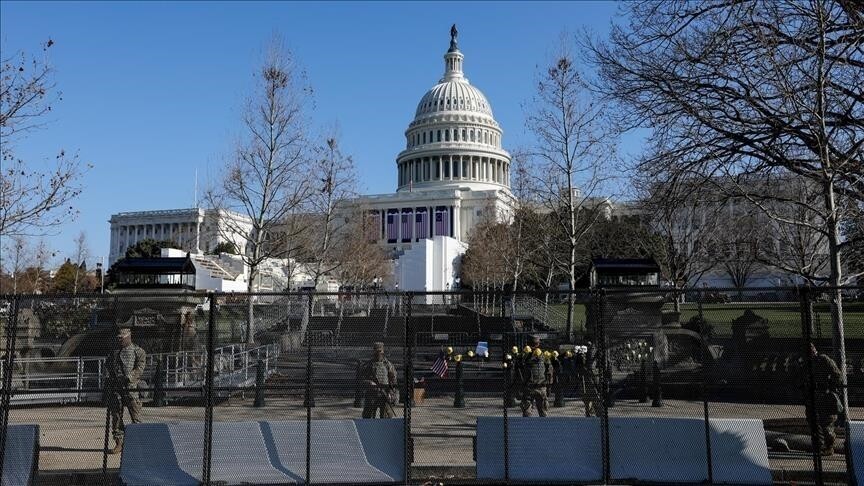 Washington, D.C19 minutes ago
Masked men carrying Confederate flags seen chanting, marching, in Washington DC
-

 Cleveland, OH26 minutes ago
Chicago White Sox vs. Cleveland Guardians prediction, pick for Friday 7/3/26
-

 Austin, TX29 minutes ago
South Texas Health System (@stxhealthsystem)
-
 Alabama34 minutes ago
5-Star OL commits to Texas over Alabama and others
-

 Alaska41 minutes ago
Semi overturns on highway north of Seward, spilling salmon

