New Hampshire
‘It’s very powerful’: New Hampshire ruling protects trans kids from being outed


When Nico Romeri came out as transgender at 14 years old, he first shared the news with his closest friends and a therapist. The private conversations he had outside of the home helped him feel more comfortable to then approach his parents, who supported his transition. If anyone else had revealed his gender identity to his family on his behalf, he said it would have been disruptive to his coming out process.
“I really wanted to have a one-on-one discussion with them, where they knew I trusted them and they trusted me,” Romeri said. “Having that break of trust before you’re confident enough to tell other people is a huge deal.”
A recent ruling helps ensure that other trans students will have the protection to come out to their families when they’re ready. The case came about in May 2022 after a New Hampshire mother inadvertently learned from a teacher that her child used a different name and pronouns in school. The parent argued that the school policy, which advises school personnel not to disclose a student’s transgender status, infringed upon her ability to raise her child as she sees fit. Along with his mother, Heather, Romeri joined an amicus brief in support of the school policy.
In August, the New Hampshire supreme court upheld a lower court’s ruling on the school district policy, affirming trans and gender nonconforming students’ rights to privacy concerning their gender identities and presentation at school. The decision is the first such ruling to come out of a state supreme court, and according to Chris Erchull, senior staff attorney at GLBTQ Legal Advocates & Defenders, the ruling could set guidance for other states and federal courts fighting similar cases.
“When there’s no US supreme court precedent, federal courts have to look around at what other courts are saying for precedent,” said Erchull. “So it is going to be very powerful and persuasive.”
Erchull, who filed an amicus brief in the case, said it was critical for students to have a supportive framework that allows them to explore their gender identity in school.
“It’s not a public school teacher or administrator’s place to make a decision about how and when to talk to families about these really intimate, sensitive matters,” he said. “It is in the best interest of everyone if the information comes from the student when the student is ready, on the student’s own terms.”
Policies on LGBTQ+ students’ right to privacy varies by school district throughout the nation. In 2015, the New Hampshire school board association issued a model policy to protect the privacy of trans students and to prevent discrimination, which was adopted by 48 of 196 school districts and charter schools, according to a 2020 ACLU New Hampshire report.
The policy was rescinded in 2022 due to conservative pushback, but some school districts, including Manchester, the largest in the state, continue to advise school personnel not to share a trans or gender nonconforming student’s identity to others without the child’s consent. In July, California became the first state to ban school district policies that require staff to notify parents when a child changes their name or pronouns.
Revealing a child’s gender identity or sexual orientation to their family when they’re not ready can lead to suicide and the child getting kicked out of their home, he added. LGBTQ+ youth are 120% more likely to experience homelessness than their cisgender and heterosexual counterparts.
after newsletter promotion
For Heather Romeri, it is crucial that students make their own choices about who they disclose their gender identity to and when. “Two of my children are both trans, so they have both been able to come to me at their own time when they were ready to disclose the information they needed to,” she said. “Hearing that from someone else would have been not good for our relationship, not good for … our children [being able to come] out safely and happily.”
Nico Romeri has trans friends who haven’t shared their gender identity with their parents because they fear for their safety, Heather said. “They really believe they will be hurt or they will be kicked out of their house,” she explained. “They have [seen] others who have tried to come out to their parents, and it’s had negative repercussions to them emotionally.” She sees the victory of the New Hampshire ruling as a prime example for other states considering policies for LGBTQ+ students’ rights.
Now 17, Romeri said that he joined the amicus brief to support his friends who don’t have the same supportive environment to transition. “It’s really important to represent the people that can’t voice [their identity fully] and to keep the laws in place.”


New Hampshire
Meditation In Merrimack | Paddle Plunge | Debo Ray Performs | Antiques Road Show: NH Patch Weekender

MERRIMACK, NH — Here is the latest roundup of events around New Hampshire featured on Patch’s news and community websites.
The latest weather can be found here. So, get out.
And do not forget: Event listings are free on one Patch site. You can share your calendar listing on other community sites for a modest fee, starting at 25 cents per day. To get started, visit the Events link on the front page of all Patch sites. Statewide calendar roundups are published on Mondays, Wednesdays, and Fridays.

In a rare move, the New Hampshire House voted to initiate possible disciplinary proceedings against Republican Rep. Travis Corcoran Thursday over a series of inflammatory social media posts. The decision comes as partisan tensions and caustic behavior continue to flare in the House.
At issue for Corcoran — who maintains a busy schedule of social media traffic — are recent posts on X, in which he called for a “final solution” in response to a karaoke night invitation from a Jewish lawmaker, and another in which he talked of deporting a fellow lawmaker who was born in the Philippines: “She has to go back,” he wrote.
House Speaker Sherman Packard had condemned the posts earlier, and on Thursday the full House moved to send Corcoran’s case to the Legislative Administration Committee for what Packard described as “review and report.”
Read more: Why it’s so hard to police bad behavior in the NH House
The referral came at the request of the House’s top Democrat, Rep. Alexis Simpson of Exeter. Such referrals are rare: The Legislative Administration Committee hasn’t been asked to consider sanctioning a lawmaker since 2017.
But Corcoran’s online conduct, which often includes inflammatory and offensive posts, has been under scrutiny in Concord for some time. A letter Packard sent Corcoran this week indicated his office has been receiving complaints about his social media activity for more than a year.
“Your verified public writings are negative, targeted and purposely written to leave a hate-filled interpretation,” Packard wrote Corcoran. “In sum, your statements are disrespectful, inappropriate and unworthy of the dignity of our state legislature.”
The “Letter of Caution” Packard sent Corcoran followed Corcoran’s failure to respond to voice messages left by a bipartisan panel of lawmakers tasked with reviewing public complaints about members of the Legislature.
Records from the House clerk’s office show the group, formed in 2019, has sent nine caution letters to lawmakers over the years, taking up a range of conduct issues.
They include rude behavior by a lawmaker at a state DMV office; another lawmaker telling members of the public to ‘shut up;’ and another being dismissive to people weighing in on legislation who are not from New Hampshire.
But several of the letters involve lawmakers’ behavior on social media. One admonished a lawmaker for posting the address of an antagonistic voter on Facebook. Another letter tells a longtime lawmaker that a bipartisan review panel “was unanimously disappointed that you defended your use of the hashtag ‘NHGOPTaliban.’ ”
According to several advisory group’s members, Corcoran has apologized for being non-responsive to the group’s phone calls, but on Thursday he seemed disinclined to back away from his social media posts, or explain himself.
“My only comment for NPR, is that NPR is regime media, the end,” Corcoran said when asked by an NHPR reporter about the House’s action Thursday.
Precedent would suggest Corcoran’s political future will likely fall to voters in his hometown of Weare to decide, as the Legislature rarely censures its members. Lawmakers facing scandal sometimes choose to resign, but the last time the House voted to expel a member was in 1913 and involved bribery allegations. The House’s top Republican says Corcoran’s case boils down to speech rights.
“We’ll see what happens,” said House Majority Leader Jason Osborne. “I think at the end of the day, everyone realizes that members have free speech, and you might not like all of it.”
Behind the headlines you read on our website, there’s a dedicated team of journalists working hard to bring you local news you can trust. On any given day, that can look like:
- • Reporters hustling to track down sources, get the facts and hold powerful officials accountable
- • Producers coordinating interviews with people who offer perspectives that go beyond soundbites
- • Editors carefully vetting our stories to make sure they’re accurate, fair and easy to follow
I believe that journalists, when we do our jobs well, can play a crucial role in connecting people and making communities stronger. But we can’t do this work without you.
Your donations, in any amount, can help keep independent journalism vibrant in New Hampshire — and accessible to everyone, no paywall required.
Sincerely,
Dan Barrick
News Director

Motorcycle enthusiasts from across New England will hit the roads Saturday, May 2 for a charitable ride supporting women in recovery.
The International Female Ride Day event is organized by the New England Motorcycle Group, according to a community announcement. The ride will start at Big Moose Harley-Davidson in Gorham, Maine, and will end at Seacoast Harley-Davidson in North Hampton, NH, with a stop at Harley-Davidson of Rochester along the way.
The event is open to all riders, regardless of gender, experience level or type of motorcycle, according to the announcement.
Proceeds from the ride will benefit Dismas Home of New Hampshire, a residential treatment and re-entry program for women recovering from incarceration. The organization, based in Manchester, is currently constructing a new, larger campus in Rochester, which is expected to open this summer and serve an additional 20 women at a time.
Registration
Registration for the ride is $45 per person, which includes breakfast, a mid-ride snack, a cookout and one raffle ticket. A $60 option is also available, which includes a commemorative International Female Ride Day 2026 Challenge Coin. Participants are encouraged to register online in advance and arrive with a full tank of gas. Registration can be completed at dismashomenh.org.
Schedule
On-site registration and check-in will take place from 8:30 to 9:30 a.m., with the group ride beginning at 10 a.m. The midpoint stop at Harley-Davidson of Rochester will offer riders a chance to snack, socialize and refuel. The ride will conclude around 2 p.m. with a community cookout, remarks and an opportunity to hear from Dismas Home residents about their journeys. Raffle winners and 50/50 prizes will also be announced.
Last year, more than 150 riders participated in the event.
This story was created by Kimberly Green, KGreen@usatodayco.com, with the assistance of Artificial Intelligence (AI). Journalists were involved in every step of the information gathering, review, editing and publishing process. Learn more at cm.usatoday.com/ethical-conduct.

Review: ‘You, Me & Tuscany’ is an Italian rom-com fantasy, empty carbs but delicious

As we kissed, I realized a surprising truth about my date. We had history

Swalwell accused of sexually assaulting female staff member

Did you feel it? As Artemis II nears reentry, scientists want to know how far the sonic boom travels
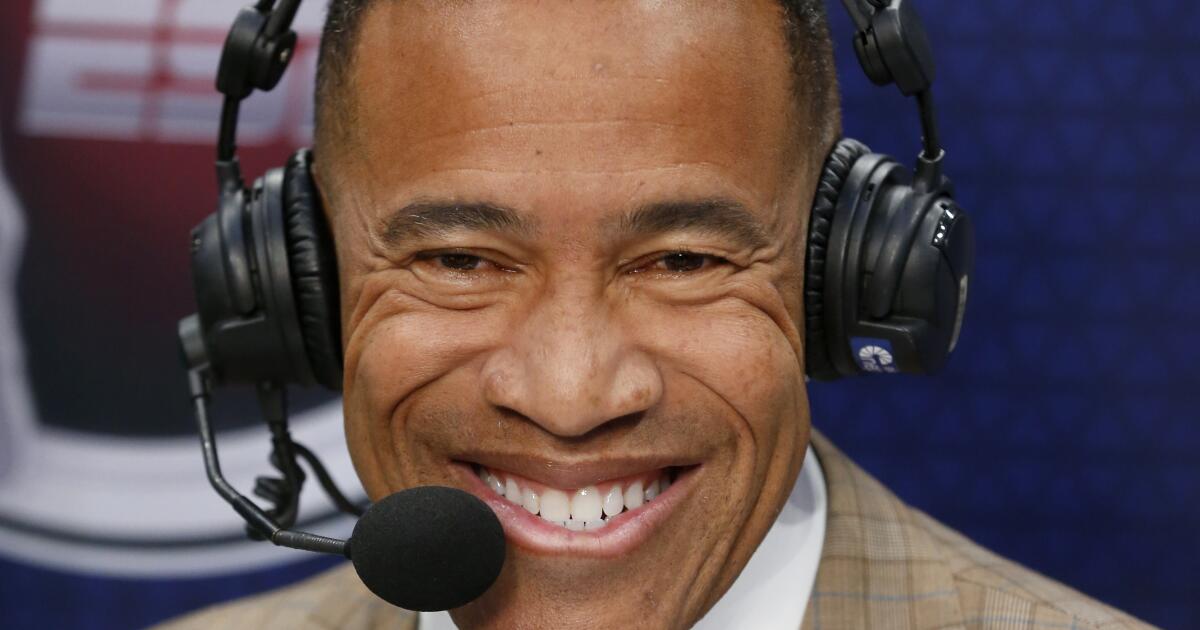
NBA, college football announcer Mark Jones is leaving ESPN after 36 years: ‘Time to move on’

Florida High School Football Rankings: Top 25 teams – Oct. 21

How old is Bo Nix? What to know about Oregon quarterback ahead of 2024 NFL Draft

Cleary's 21 help Le Moyne down Central Connecticut State 69-64 in OT

99th annual Pony Swim held in Virginia

Indiana Members Credit Union announced as new anchor tenant at Bottleworks District

NASA’s Artemis II prepares for splashdown on Earth

Trump proposes painting executive office building white

Rep Randy Fine joins House Freedom Caucus: ‘Strongest group of conservative patriots in Congress’

Trump issues NATO ultimatum to reopen Strait of Hormuz ‘within days’

Women are getting most of the new jobs. What’s going on with men?
-

 Atlanta, GA6 days ago
1 teenage girl killed, another injured in shooting at Piedmont Park, police say
-

 Movie Reviews1 week ago
Vaazha 2 first half review: Hashir anchors a lively, chaos-filled teen tale
-

 Education1 week ago
Video: YouTube’s C.E.O. on the Rise of Video and the Decline of Reading
-

 Georgia3 days ago
Georgia House Special Runoff Election 2026 Live Results
-

 Education1 week ago
Video: Toy Testing with a Discerning Bodega Cat
-

 Pennsylvania4 days ago
Parents charged after toddler injured by wolf at Pennsylvania zoo
-
 Milwaukee, WI4 days ago
Potawatomi Casino Hotel evacuated after fire breaks out in rooftop HVAC system
-
 Entertainment1 week ago
Inside Ye’s first comeback show at SoFi Stadium