Northeast
Mega-yacht with 400 passengers crashes into New York City dock, injuring nearly a dozen


NEWYou can now listen to Fox News articles!
Nearly a dozen people were injured on Saturday after a mega-yacht carrying hundreds of people struck a dock on the Hudson River in Manhattan, New York.
Just after 4:15 p.m., the New York City Fire Department (FDNY) received a call for a yacht with about 400 people on board that struck a dock at 130th Street and the Hudson River, Fox News learned.
The party boat crashed into a dock on June 21, 2025 in the Hudson River. (FNTV)
MASSIVE SAILING VESSEL COLLIDES WITH BROOKLYN BRIDGE IN DRAMATIC NYC CRASH CAUGHT ON CAMERA
Nine people were taken to local hospitals with minor injuries, according to FDNY officials.
No fatalities have been confirmed.
A party boat crashed into a dock on Saturday, June 21, 2025 in Manhattan, New York. (FNTV)
MORE THAN 20 PEOPLE INJURED AFTER BOAT CATCHES FIRE IN NEW YORK; CAPTAIN CHARGED WITH DWI
The fire department towed the party yacht to a southern boat dock at 125th Street, though its current condition is unknown.
NYC Mayor Eric Adams had not yet publicly commented on the incident, as of 6:05 p.m.
The mega-yacht that crashed in Manhattan, New York on June 21, 2025 was carrying about 400 people. (FNTV)
Breaking news. This story will be updated.
Read the full article from Here


Two people are dead after an early morning crash on the Pennsylvania Turnpike.
According to state police, around 2:30 a.m. on Saturday morning, they were called to a single-vehicle crash near Hempfield Township in Westmoreland County.
A vehicle with two people inside reportedly drove onto an embankment, where it lost control. After losing control, it then hit the overpass, causing it to flip, which trapped the two people inside.
State police said that once fire and rescue crews arrived on the scene, both of the occupants of the vehicle were dead, and the coroner was called to the scene.
The Westmoreland County Coroner’s Office identified the driver as Hunter Fronius of Connellsville and the passenger as Raymond Foster, also of Connellsville.
According to the coroner’s report, the cause of death for both of the deceased was blunt force injuries, and the manner of death was ruled to be accidental.
The coroner’s report also stated that neither of the men in the vehicle was wearing a seatbelt at the time of the crash.
Pennsylvania State Police are investigating the crash.


Powerball, Mega Millions jackpots: What to know in case you win
Here’s what to know in case you win the Powerball or Mega Millions jackpot.
Just the FAQs, USA TODAY
The Connecticut Lottery offers several draw games for those willing to make a bet to win big.
Those who want to play in Connecticut can enter the CT Lotto, Millionaire for Life and Cash 5 games as well as play the national Powerball and Mega Millions games. There are also two drawings a day for the Play 3 with Wild Ball and Play 4 with Wild Ball games.
Drawings are held at regular days and times, check the end of this story to see the schedule.
Here’s a look at Saturday, June 27, 2026 results for each game:
Winning Powerball numbers from June 27 drawing
03-16-28-30-59, Powerball: 11, Power Play: 2
Check Powerball payouts and previous drawings here.
Winning Cash 5 numbers from June 27 drawing
06-07-16-19-31
Check Cash 5 payouts and previous drawings here.
Winning Play3 numbers from June 27 drawing
Day: 4-1-6, WB: 2
Night: 0-5-7, WB: 5
Check Play3 payouts and previous drawings here.
Winning Play4 numbers from June 27 drawing
Day: 9-4-8-9, WB: 8
Night: 0-7-0-4, WB: 7
Check Play4 payouts and previous drawings here.
Winning Millionaire for Life numbers from June 27 drawing
26-32-38-51-52, Bonus: 05
Check Millionaire for Life payouts and previous drawings here.
Feeling lucky? Explore the latest lottery news & results
Are you a winner? Here’s how to claim your lottery prize
Connecticut Lottery prizes up to $599 can be easily claimed at any authorized CT Lottery Retailer without additional forms or documentation or by mail. For prizes between $600 and $5,000, winners have the option to claim by mail or in person at any CT Lottery High-Tier Claim Center or CT Lottery Headquarters. For prizes between $5,001 and $49,999, winnings must be claimed in person at the Connecticut Lottery headquarters or by mail. All prizes over $50,000 must be claimed in person at CT Lottery Headquarters. Winners are required to bring a government-issued photo ID and their Social Security card.
CT Lottery Claims Dept.
15 Sterling Drive
Wallingford, CT 06492
For additional details, including locations of High-Tier Claim Centers, visit the Connecticut Lottery’s claim information page.
When are the Connecticut Lottery drawings held?
- Powerball: 10:59 p.m. on Monday, Wednesday, and Saturday.
- Mega Millions: 11 p.m. on Tuesday and Friday.
- Lucky for Life: 10:30 p.m. daily.
- Lotto: 10:38 p.m. on Tuesday and Friday.
- Cash 5: 10:29 p.m. daily.
- Play3 Day: 1:57 p.m. daily.
- Play3 Night: 10:29 p.m. daily.
- Play4 Day: 1:57 p.m. daily.
- Play4 Night: 10:29 p.m. daily.
- Millionaire for Life: 11:15 p.m. daily.
This results page was generated automatically using information from TinBu and a template written and reviewed by a Connecticut editor. You can send feedback using this form.

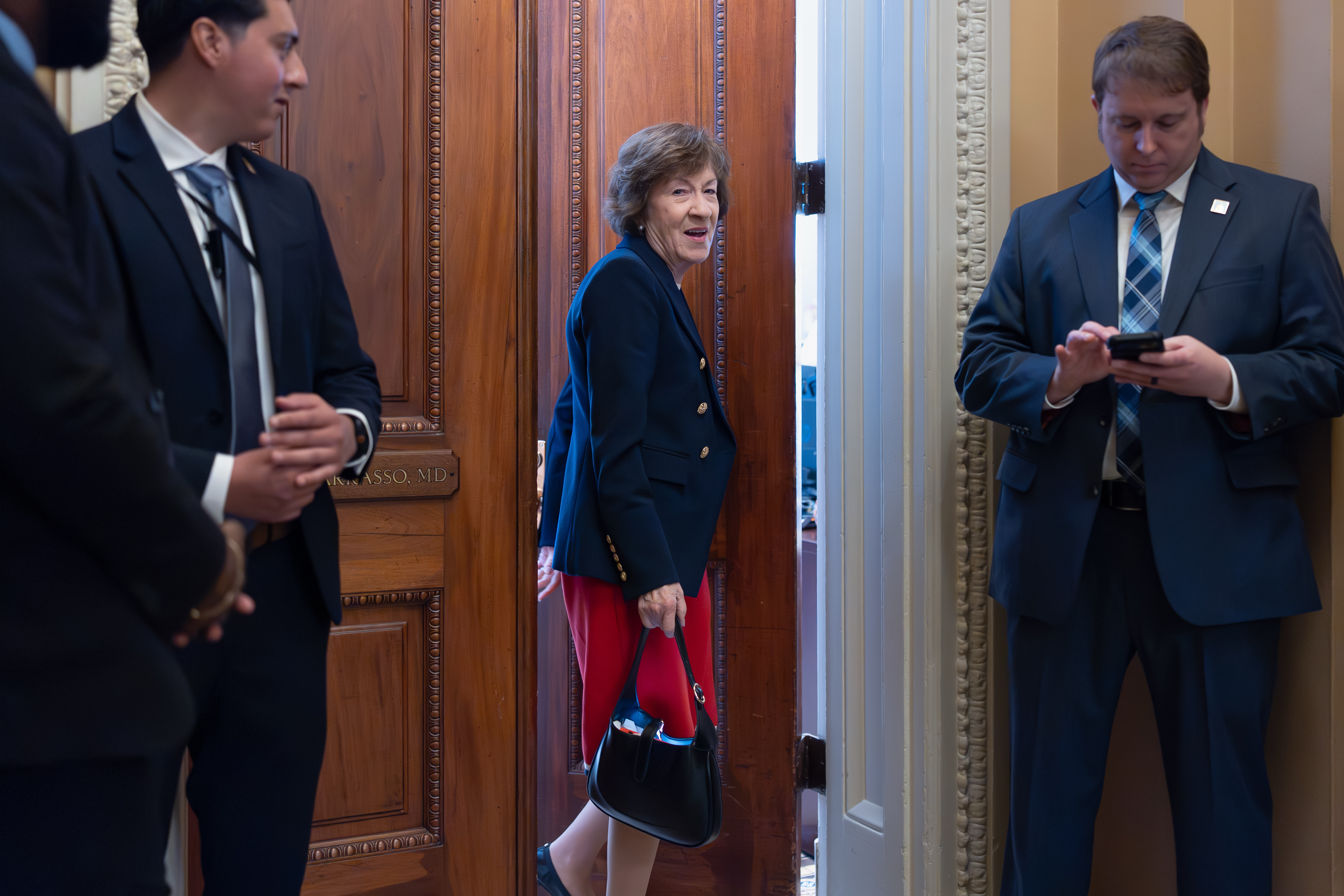
Sen. Susan Collins had just finished taking photos in front of a new fire station in the town of Sweden when a television reporter asked her about Graham Platner.
Four days earlier, on June 9, the political newcomer secured the Democratic nomination to take on Collins. Instead of addressing his victory, Collins pivoted to talk about her position on the Senate Appropriations Committee, a leadership role that in many ways is the culmination of her three decades in office.
The fire station, she said, was an example of what she has been able to do as chair “of the most powerful committee in the Senate.”
“These communities cannot, on their own, build a new fire station,” Collins said in an interview with the Portland Press Herald/Maine Sunday Telegram after the event. “They just don’t have the tax revenue.”
Maine’s top ranking Republican worked for years to get to the position of influence so she can make more fire stations like this a reality. As appropriator-in-chief, she directs earmark spending to cities, towns, hospitals, organizations and universities; influences selections for competitive grants for things like transportation infrastructure; and inserts programs and rules into congressional bills that specifically benefit Maine and its industries.
She’s running for reelection to her sixth term largely on these hard-won abilities. At every opportunity, she talks about the approximately $1.5 billion in earmarks she has brought to Maine since her last election. One of the major questions facing voters this year will be just how much that matters.
Collins’ federal earmarks since her last election have supported the construction or renovation of 45 firehouses in Maine, a Press Herald review shows, as well as 43 wastewater treatment facilities, at least 31 state road improvements, 17 childcare centers, six YMCAs and hundreds of other beneficiaries from affordable housing to historic preservation.
“The amount of funding she has secured for Maine is astonishing,” said Heideh Shahmoradi, an appropriations expert who worked for the Senate Appropriations Committee and is now a bipartisan consultant in Washington.
While all senators can bring money to their states, there is ample evidence that Collins’ success couldn’t be replicated by a freshman.
It’s attributable to more than her seniority, though. Collins has broken with the Republican Party to support programs that create pots of funding that could benefit Maine; and she’s having to defend Congress’ spending power against a Trump administration that wants to take some of it away.

But Platner argues that the money Collins has brought home has failed to address the underlying issues that have made Maine less affordable for many, which is a key motivating issue in this election.
As a senator, Platner says he would work to massively expand the country’s social safety net.
“For all of the money that Susan Collins brags about earmarking for Maine, the reason we’re still seeing housing become unaffordable, we are still seeing our healthcare system collapse, we’re still seeing our wages collapse while the price of goods and services go up,” he said at a May event in Phippsburg, “is that she never did a thing to change the structures.”
Platner’s ambitious policy talk would be difficult to achieve: Medicare for All would likely need 60 votes in the closely divided Senate to become law. Collins’ earmarks, officially known as Congressionally Directed Spending, and grant awards regularly get approved within a year.
Some voters, including people who supported Collins in the past, said in interviews that they don’t plan to vote for her this year, despite the funding she brings home.
On primary election day, outside a Sanford library that was recently expanded with a $3 million congressional earmark from Collins, Mallory Mulrath said she uses the library three or four days a week as part of her work with children.
“I love this library,” she said. “(But) I do feel like there’s more important things. The old library needed updates, but not to this extent.”
This November, Mulrath said she is voting on economic issues and does not plan to vote for Collins. She’s paying more for gas, groceries and car insurance.
“No one can afford to pay bills, let alone actually live and have fun,” she said.
PRIORITY ON APPROPRIATIONS
Earlier in her Senate tenure, Collins chaired the Homeland Security and Aging committees. She felt like she did important work, but said it became increasingly evident that, “You can pass the best legislation imaginable, but if it’s not funded by the Appropriations Committee, you can’t accomplish the goals.”
That’s one reason why she made it her focus to get on the committee.
She also noted that Maine is what she calls a “low-income state” that needs federal support, and that she could use her position to benefit the state’s defense and biomedical research industries.
Appropriators are able to go through each federal spending bill and write amendments to help their states. Collins was appointed to the committee in 2009, and in 2015 became chair of the subcommittee on transportation, housing and urban development. She was a leader of the subcommittee on defense, and became chair of the full committee in 2025.
Former staffers say Collins stands out for her attention to detail and passion for following Senate rules and that, as an appropriator, she makes sure she understands each budget request.
Shahmoradi, who was clerk and staff director of the subcommittee Collins chaired, said one of the questions Collins asked about each item in front of her was, “What are the benefits to Maine?”
Of the five senators she worked with, she said Collins was the most strategic about bringing money to her state.
One way she does that is by putting language directly into spending bills to solve a specific Maine problem or support an industry. Since the Appropriations Committee touches each obscure part of the federal government, the possibilities are vast.
For example, logging industry leader Dana Doran said Collins funded a grant program to support biomass for wood energy in 2018; and she incorporated language in appropriations bills starting in 2016 that classify wood biomass as a carbon-neutral fuel source.

Purchase this image
In another instance, starting in 2009, trucking business owner Brian Bouchard said his industry and big companies like Irving, Dead River and Poland Spring told Collins they were frustrated with a federal rule that prohibited them from driving 100,000-pound loads on interstates. It was causing safety issues on local roads, and made trucking less efficient.
Collins was able to use an appropriations bill to increase the weight limit along Maine’s section of Interstate-95.
“Senator Collins just bulldogged this thing,” said Brian Parke, president of the Maine Motor Carriers Association.
The longtime head of the construction industry group in Maine, Matt Marks, said infrastructure upgrades have been sorely needed in Maine and while he’s grateful for the entire congressional delegation, Collins in particular has become like the third leg of the stool to get any project done. (He counts the industry as one leg, and state and local governments as another.)
There is evidence that appropriators like Collins also help steer money to their states through competitive grants. For example, she was one of three members of her party who voted for the Obama-era stimulus package after the 2008 financial crisis (former Maine Sen. Olympia Snowe was another), which created a pool of money for states to compete to fund transportation projects.
The federal transportation department chose recipients for the so-called TIGER grants, but in Collins’ first campaign ad released this spring, she made clear that she had input on who got selected.
The ad shows a flash of light and rows of boats bobbing in the ocean when a breakwater collapsed in Eastport on the northeastern tip of the state in 2014. A local official in the ad thanks Collins for bringing $6 million to help restore the breakwater. According to a news release from Collins’ office sent when the rebuild was complete, the money was secured a year before the breakwater’s collapse through a TIGER grant, when it was already clear the breakwater was in bad shape.
Members of Congress routinely write letters of support for applications from their home states and try to help them get approved. Though Shahmoradi, who had previously worked at the federal transportation department and reviewed TIGER applications in years prior to the Eastport project, said there was not enough money to fund all the worthy applications.
During her time on staff, when the department needed a secondary way to choose among the high-scoring applications, it would look to politics.
“That’s the reality in making these selections,” she said.
Smaller states and projects would not have prevailed without the kind of influence members like Collins had, Shahmoradi believes. The nonprofit news outlet APM Reports came to a similar conclusion when it analyzed TIGER grantees and found that all of Maine’s 13 applications got funded.
Molly Reynolds, vice president of the centrist Brookings Institution, said that kind of power can extend across the federal government. “If you know that Sen. Collins has a lot of power in the appropriations process, you’re more likely to want to say yes to things she wants to see in other legislation.”
Collins’ office said since she joined the Appropriations Committee, she’s helped Maine win more than $1 billion in competitive transportation grants, including through a rural bridge program she helped create.
If she were voted out, said Daniel Schuman of the American Governance Institute, “You’re not going from all to nothing. You’re going from all to less.”
EARMARKS GALORE
Competitive grants gave appropriators a way to get money for their home states during a decade-long period in which Congress suspended direct earmarks. Since 2022, when Congress restarted them, senators can make an unlimited number of requests for specific projects, although members have to compete to get their requests funded.
“It truly is your seniority on the committee, your seniority in the Senate, that determines how much money you’re going to get,” Shahmoradi said.
Collins’ success in bringing money home increased as she moved her way up the committee’s ranks. In 2024, she had the most in earmarks of any member of Congress: $577 million. The only state that got more per capita was Alaska, according to the independent watchdog Citizens Against Government Waste.
Some of the requests go to tiny places, like the $1.15 million to support the fire station in Sweden, which has a population of about 450. Penobscot, Collins’ home county of Aroostook, and Washington have drawn the most funding from Collins per capita. All three lean significantly more conservative than southern parts of the state.
Maine’s most populous and most liberal county — Cumberland — has drawn 7% of Collins’ earmarks but has 22% of the state’s population. Collins said that’s in part because some places make fewer requests, and because when she’s selecting projects she considers an area’s ability to pay its own way.
At times that’s left communities off of Collins’ funding list even when their projects match the kinds of things she regularly touts. For example, Falmouth asked for funding for a new fire station this year, and South Portland is about to borrow $58 million to upgrade its wastewater infrastructure.
Both are on the request list submitted by Sen. Angus King, an independent who caucuses with Democrats, but his success rate has been much lower than Collins’: She gets nearly 100% of her requests funded, while King was at about 50% in 2024 and 26% in 2026 (though King asked for nearly twice as much funding).
“I very much value her position and what she brings to the table,” South Portland Economic Development Director Lea Duffy said of Collins. But Duffy is disappointed not to have Collins’ financial support to lessen the rate increases for residents and companies.
“We have some really important industries that happen to be located in South Portland,” she said, like technology companies she said keep the state relevant in the 21st century. They’ll see big increases in their sewer costs to pay for the upgrades.
In response to any suspicion that her selections are political, Collins pointed to several earmarks she’s directed to places that didn’t vote for her, like drinking water infrastructure in Brunswick and mental illness treatment in Rockland.
“If I made political assessments, Portland would not be getting any money,” she said. Instead, she pulled out a printed book to show where Portland has gotten funds for a food bank, teen shelter, a residential treatment center and more.
Some cities have had repeated success. Auburn has gotten an earmark from Collins each year since 2022, for a public safety center, a youth community center, a riverwalk expansion and utilities for housing. (Auburn is a politically purple city; voters supported both Collins and Democrat Joe Biden in 2020.)
VOTERS WEIGH IN
Collins hopes these community investments are persuasive in an election when the economy will drive decisionmaking, according to University of Massachusetts Lowell pollster John Cluverius. He said it’s the most important issue for the narrow slice of voters whose choices will determine the outcome of the election.
In Auburn in May, voter and retiree Mike Heon was asked about the Senate race. “Why would you want to give up Susan Collins? Are you kidding me?” he said.
If other voters disagree and replace her with a freshman senator, Mainers can expect its share of federal earmarks to drop. When Vermont Sen. Patrick Leahy left Congress, and his post as Appropriations chair, his successor brought in just 20% of Leahy’s total.
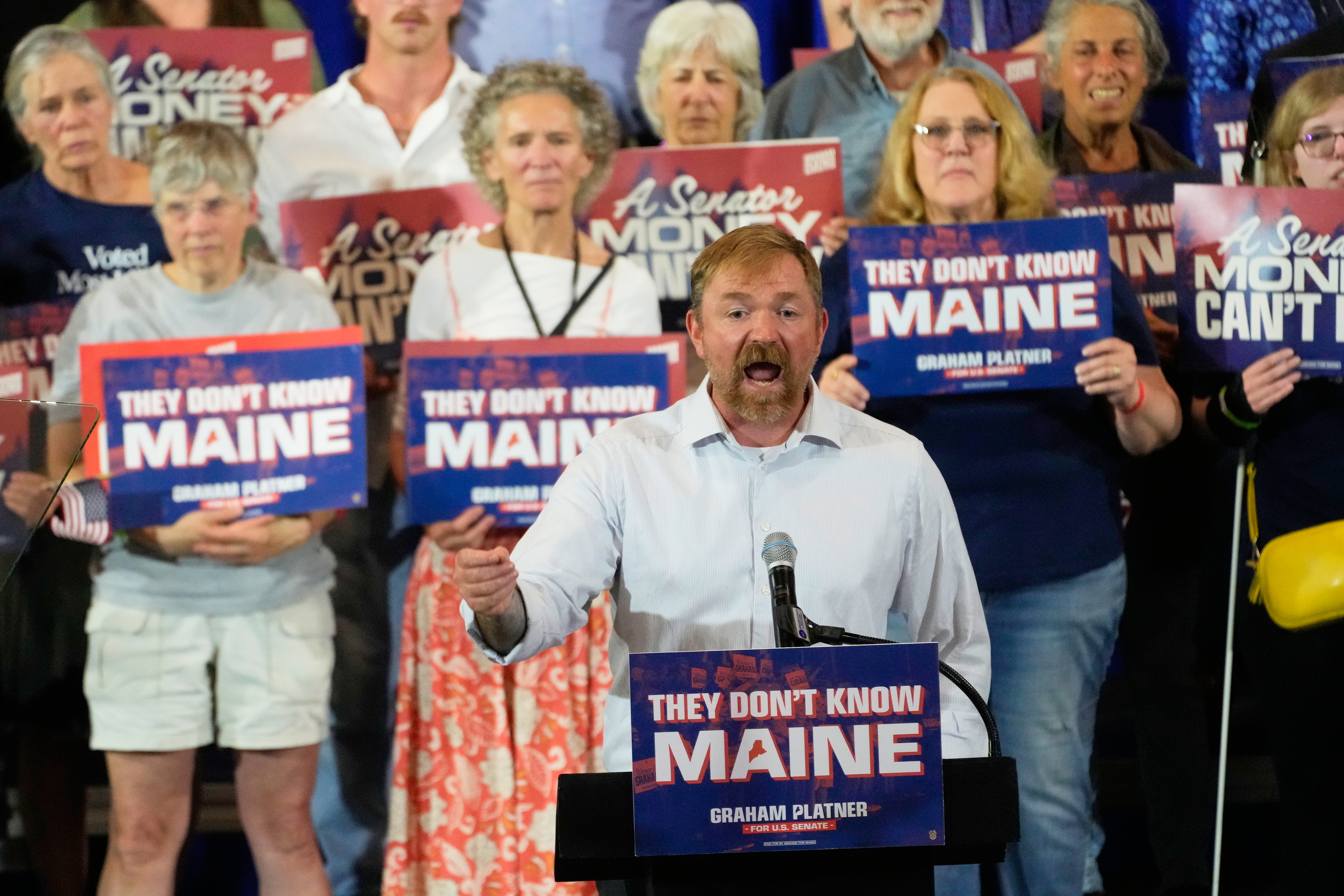
Platner said in Phippsburg that if he joins the Senate, he’ll have the time to rebuild the power she has, while also advocating for systemic changes.
Mainers could hope Platner follows in the footsteps of Georgia Sen. Jon Ossoff, who was appointed to the Appropriations Committee by party leaders just a few years into his first term.
Platner’s earmarks could differ from Collins’ ideologically, as well. Researchers at the University of Texas and the University of Illinois Chicago found liberal Democrats have used earmarks to accomplish their core policy goals, while moderate Democrats and Republicans spread them out on other issues, when they analyzed House appropriations requests from 2022.
While Maine’s members of Congress have largely used earmarks to support infrastructure, there are also some that reflect ideological priorities. Rep. Chellie Pingree’s lists include a couple of items to support clean energy and environmental sustainability, for example.
But no one, not even Collins, got earmarks in 2025, when Congress couldn’t agree on spending bills and decided to continue its prior year budget instead of passing new ones. That kind of gridlock resulted in three distinct federal shutdowns in just the last year. It makes Collins’ job much harder, and means she may not get to use all the power her position traditionally afforded, experts said.
She has also contended with a Trump administration that has tried to make big cuts to priorities she likes to fund, like the low-income energy program.
Bath resident Margaret Allen said on primary day this month that she’s voted for Collins five times before. “She’s done good things,” Allen said. But she doesn’t plan to vote for Collins again. This time around, she doesn’t care about the money Collins has brought home.
“The national issues are way more important than anything Susan Collins is going to do for fire stations,” she said.
Allen is a retired data researcher and said she worries about Social Security, America’s place in the world, the environment and what will happen when the One Big Beautiful Bill Act’s health insurance cuts take full effect.
Maine is expected to lose billions of dollars, not all of which will be replaced by a rural hospital fund Collins championed — one indication that while she has brought money home to Maine, money has also been taken away on her watch.
“I’m not OK with what the Republicans are getting away with,” Allen said.
In Sanford, voter Kevin Mulherin, who works in IT for an engineering firm, said he voted for Collins in 2020 but doesn’t plan to in November.
He said her ability to bring funding to Maine has favored some businesses and industries.
“That’s great for those people that’ll benefit, but at the end of the day I’m still working with less money,” he said.
Not all moderate voters agree. Also voting in Sanford during the primary, Bill Frederick said the cost of living matters to him quite a bit, and he doesn’t think the Trump administration is doing good things, but he plans to vote for Collins.
He said she keeps money coming to Bath Iron Works, which builds naval ships, and Pratt & Whitney in North Berwick, which manufactures aircraft engines, as well as the nearby Portsmouth Naval Shipyard.
That money could go elsewhere, Frederick said, but Collins makes sure it comes to Maine.
Coming soon: How Collins and the Trump administration are jockeying for control of the federal budget, and what it means for Maine.
-
Denver, CO1 minute ago
Even without extension talks, Nikola Jokic has reiterated his desire to stay long-term in Denver
-

 Seattle, WA8 minutes ago
WEST. SEATTLE COYOTES: Three sightings
-

 San Diego, CA9 minutes ago
We mapped San Diego County’s voter registration, turnout and governor election results from the June primary
-

 Milwaukee, WI11 minutes ago
After Another Unsuccessful Opportunity, Craig Yoho’s Time In Milwaukee Could Be Nearing Its End
-

 Atlanta, GA16 minutes ago
Would you work here? Georgia’s top office has been revealed
-

 Minneapolis, MN23 minutes ago
Minneapolis shooting leaves 1 injured near Penn Avenue
-

 Indianapolis, IN26 minutes ago
Storms fade with dangerous heat building through midweek | June 27, 2026
-

 Pittsburg, PA31 minutes ago
Two dead in early morning crash on Pennsylvania Turnpike

