Massachusetts
Confronting Trump’s second term, Healey says she asks, ‘How the hell did we get here?’ – The Boston Globe


Since returning to the White House, the Republican Trump has targeted Democratic governors, including Janet Mills of Maine. His threats to withhold federal funding from states demonstrate the potential stakes Democratic leaders face if they run afoul of Trump.
Healey described witnessing Trump’s attack last month on Mills over his executive order banning transgender athletes from competing in women’s and girl’s sports.
Addressing Mills at a White House event, Trump threatened to withhold federal funding from Maine unless the state abides by the order. Mills responded that Maine would follow state and federal laws, which Healey called the “right answer.”
“What I saw as so upsetting in that exchange was when he looked at her, and I was sitting at the table, and he leered at her, and he said, ‘We are the federal law,’” Healey told the Times. “I heard somebody who thinks he’s king.”
A day after the confrontation with Mills, the Trump administration’s “border czar” accused Boston Police Commissioner Michael Cox of failing to target criminals who are in the country illegally. Tom Homan vowed to visit the city and to bring “hell with me.”
Healey told the Times she doesn’t know what Homan was talking about, but said she would meet with him if he visits Boston.
Healey said Homan’s threat to bring “hell” to Boston is counterproductive.
“You should come here with support and resources, to help us address any public-safety issues we’re experiencing,” she said. “It sounds like I might need to explain a few things to him as somebody who investigated and prosecuted crimes.”
Homan’s remarks appear to reference a television interview in which Cox discussed a 2017 Massachusetts Supreme Judicial Court ruling that prohibits state and local law enforcement officers from detaining people solely on the basis of a civil immigration detainer.
Garcia-Navarro asked Healey about how her administration has handled an influx of migrants, citing a poll from University of Masschusetts-Amherst/WCVB in which a majority of respondents expressed dissatisfaction with her performance.
Healey said she pushed to reshape the state’s emergency shelter system, the only statewide program in the nation that mandates shelter for homeless families. The effort is expected to cost taxpayers more than $1 billion this fiscal year.
On Friday, Healey signed a bill that reduces the amount of time families can stay in the system and caps the number of families allowed in
The federal government must reform the nation’s immigration system, Healey said, and she described telling former president Joe Biden to “be more active on the border.”
“I knew that as an attorney general, and as a former prosecutor, that there were things that could have been done, and I wish that he had done that,” Healey said.
Healey was the first Democratic governor to publicly urge Biden to reconsider running for re-election after his poor debate performance last June.
She said she empathizes with Democratic voters who blame the party for allowing Trump to recapture the White House, but rejects placing all the responsibility on Biden and his vice president, Kamala Harris, who was defeated in November.
Ultimately, the economy “ended up doing Biden and Kamala Harris in,” she told the Times.
“There are things that could have happened that should have happened that didn’t happen, and here we are,” Healey said. “It’s upsetting to be here having this conversation with you at this moment. And I, too, ask, how the hell did we get here?”
Healey criticized Trump for executive orders aimed at dismantling initiatives for diversity, equity, and inclusion, saying the policies shouldn’t be abandoned. She also expressed concern about the authority Trump has given billionaire Elon Musk to reshape the federal government.
“It’s interesting at a time when the co-president, Elon Musk, is giving us Hitler salutes, and espousing anti-Semitic things, I just find it ironic that we’re going to have this debate over D.E.I. and whether it’s effective,” she told the Times.
Healey, the first woman and openly-gay governor in Massachusetts, said she worries about potential challenges to the Supreme Court case that made gay marriage legal nationwide. As a civil rights lawyer with the state attorney general’s office, Healey successfully challenged the Defense of Marriage Act.
She also told the Times she worries that Trump might seek a third presidential term.
“You asked me that question, and my legit, genuine answer is, yeah, I’m worried about that,” Healey said.
Laura Crimaldi can be reached at laura.crimaldi@globe.com. Follow her @lauracrimaldi.



Massachusetts
Gas prices in Massachusetts surge 12 cents since Monday, drivers look for ways to save

Gas prices continue to rise in Massachusetts and commuters are working out ways to cut back on spending.
AAA said that the average price of gasoline in the U.S. is nearing $4 a gallon, up $1.30 since the war in Iran began. The average price in Massachusetts sits at $3.67, up 12 cents from Monday.
“It’s been climbing pretty steadily day after day,” AAA spokesperson Mark Schieldrop said.
Leslie Welch from Framingham said she tries to find a shorter route to work every day to save money.
“Of course, I am worried about them going up; in fact, I am thinking of getting a different vehicle,” Welch said. “It impacts it quite a bit. Trying to think of being able to work from home for a couple of days.”
But some drivers said there is no way for them to cut down on gas.
“Costing more to make deliveries, and I am not making more, so hopefully it will start going down soon,” courier Eric Howland said.
“Yes, I’ve been concerned, it already changes how I spend. I’d say I fill up once every other week,” said John Curtis, who uses diesel fuel. Curtis has been trying to drive even less to save at the pump.
AAA said that commuters should shop around for the lowest price at gas stations and make an effort to head to the lowest in their area.
“The service stations are also feeling the pinch a little bit. They get a lot of heat for raising those prices, but the cost of fuel that they are buying from their suppliers has skyrocketed as well,” Schieldrop said.
Should the gas tax be suspended?
WBZ-TV’s Jon Keller spoke with Governor Maura Healey on Friday and asked whether or not the gas tax should be suspended amid the ongoing spike in price.
The governor said, “I just don’t think it’s going to get us very far right now in the overall picture.”
The gas tax in Massachusetts is 24 cents for every gallon. The federal tax is 18 cents per gallon.
Massachusetts
Maura Healey looks to cut $15M to Massachusetts jail diversion program: ‘Utterly ridiculous’

Massachusetts police chiefs are in familiar territory as they fight for funding for a mental health program that seeks to divert individuals in crisis from arrest, as Gov. Maura Healey looks to slash roughly $15 million from the initiative.
The Massachusetts Chiefs of Police Association is leading the call for Beacon Hill lawmakers to restore full funding for the so-called jail and arrest diversion program in the governor’s budget proposal for next fiscal year.
Healey has requested $63.4 billion for next year’s budget, a proposal that would raise current spending by 3.8% but lower funding for jail diversion programs from $19.1 million to $4 million.
A spokesperson for the state Department of Mental Health says the proposed allotment matches funding levels from before the pandemic, when the state did not have one-time federal American Rescue Plan Act dollars.
Michael Bradley, who leads the Chiefs of Police Association, looks at jail diversion programs as an effective collaboration between law enforcement and behavioral health providers that helps de-escalate mental health crises through specialized training and clinical partnerships.
More than 150 clinicians are embedded in police departments serving over 250 communities across the state, Bradley highlighted in a letter to lawmakers earlier this month.
Bradley provided numbers from the Department of Mental Health that showed the state’s $17.2 million investment in the program in Fiscal Year ’25 “supported more than 29,000 documented crisis interventions, diverted over 3,300 individuals from arrest, and prevented more than 6,500 emergency department visits.”
Overall, the program helped save the state an “estimated $42.8 million” that fiscal year, Bradley stated.
Under Healey’s $4 million request, Bradley fears the program would suffer from limited training capacity and fewer available clinicians and diversion options across Massachusetts.
“The need for crisis response will not diminish,” Bradley stated in his letter to lawmakers. “Instead, the burden will shift back to patrol officers without adequate clinical support, leading to increased emergency department utilization, unnecessary arrests, greater correctional involvement, and higher long-term state costs.”
Police chiefs had to fight for funding for the program last year, when Healey looked to restore spending on the initiative to pre-pandemic levels.
In response to a LinkedIn post that Bradley made highlighting this year’s proposed spending reduction, Mansfield Police Chief Ron Sellon commented, “It’s utterly ridiculous that we have to fight for this over and over.”
At the local level, the Watertown Police Department deployed 401 co-response interventions in 2025, diverting 30 individuals from arrest and 129 individuals from “unnecessary hospitalizations,” according to a department Facebook post in February.
Those diversions led to a total cost savings of $497,322, the department added.
The Department of Mental Health has highlighted that the program received a $15.1M expansion through the legislative budget process. A spokesperson added that it is “encouraged” to see more police departments participating in the program.
“The Department of Mental Health is committed to working with law enforcement to help make sure people in need of mental health or substance use treatment get the care they need as an alternative to incarceration,” the spokesperson told the Herald Friday evening.

NORTH ATTLEBOROUGH, Mass. (WJAR) — Changes could be on the way in Massachusetts when it comes to where you buy ‘Buddy’ or ‘Rocky’ as the Senate passes legislation banning pet stores from selling dogs and cats.
It’s part of the ‘PETS Act’, which still needs approval from the House of Representatives and Gov. Maura Healey.
Several municipalities including Attleboro have already adopted similar regulations at a local level, with the goal being to prevent a puppy mill to pet shop pipeline.
Alisa Clements, the Director of Government Affairs for the Pet Advocacy Network spoke with NBC 10’s Devin Bates about the bill. (WJAR)
“If it will help stop puppy mills and maybe help put a crimp in that distribution and force people to think of other ways to acquire pets, especially rescues, that would be great,” said dog owner Linda Taylor.
However, those against the legislation claimed it would hurt small businesses who rely on pet sales. The non-profit Pet Advocacy Network believes it could even end up shifting demand to shady online sellers or out-of-state dealers.
“New York’s ban went into effect a little over a year ago, and we’re already seeing folks selling dogs out of their cars in Manhattan and importing dogs from Taiwan to apartments in Queens and selling them,” said Alisa Clements, the Director of Government Affairs for the Pet Advocacy Network.
Clements said these sellers are not inspected or regulated.
“All the things that our pet stores do, because they are the most highly regulated and inspected place to get a dog in this country,” she said.
The MSPCA has voiced its support for the PETS Act, adding that state and federal records show dogs from, “some of the worst puppy mills in the country have been sold to Massachusetts consumers at pet shops.”
The Pet Advocacy Network, while agreeing with some other measures of the sweeping PETS Act, like allowing seniors in state-funded housing to have a companion animal of their choosing, was disappointed the ban on dog and cat sales was included in the package.
A dog running inside a park in North Attleborough. (WJAR)
Instead, the organization is throwing its support behind another bill under consideration, H.2256, which would essentially require pet stores to source their dogs and cats from U.S.D.A-licensed breeders while tightening up inspection requirements.
“They’re going to have to be licensed, inspected and transparent about the health and origins of every animal that they sell, so it’s really this great, comprehensive bill that will strengthen the regulations,” Clements said. “This is actually something that will help increase protections, would do something for animal welfare and help combat that problem we’re seeing of bad actors.”
If the PETS Act does pass, store owners who sell a dog or a cat could face a $1,000 fine, with repeat offenders risking losing their shop’s license altogether.

UCLA opens its NCAA tournament title bid with dominant win over California Baptist

Macron pushes tougher EU digital action ahead of key votes
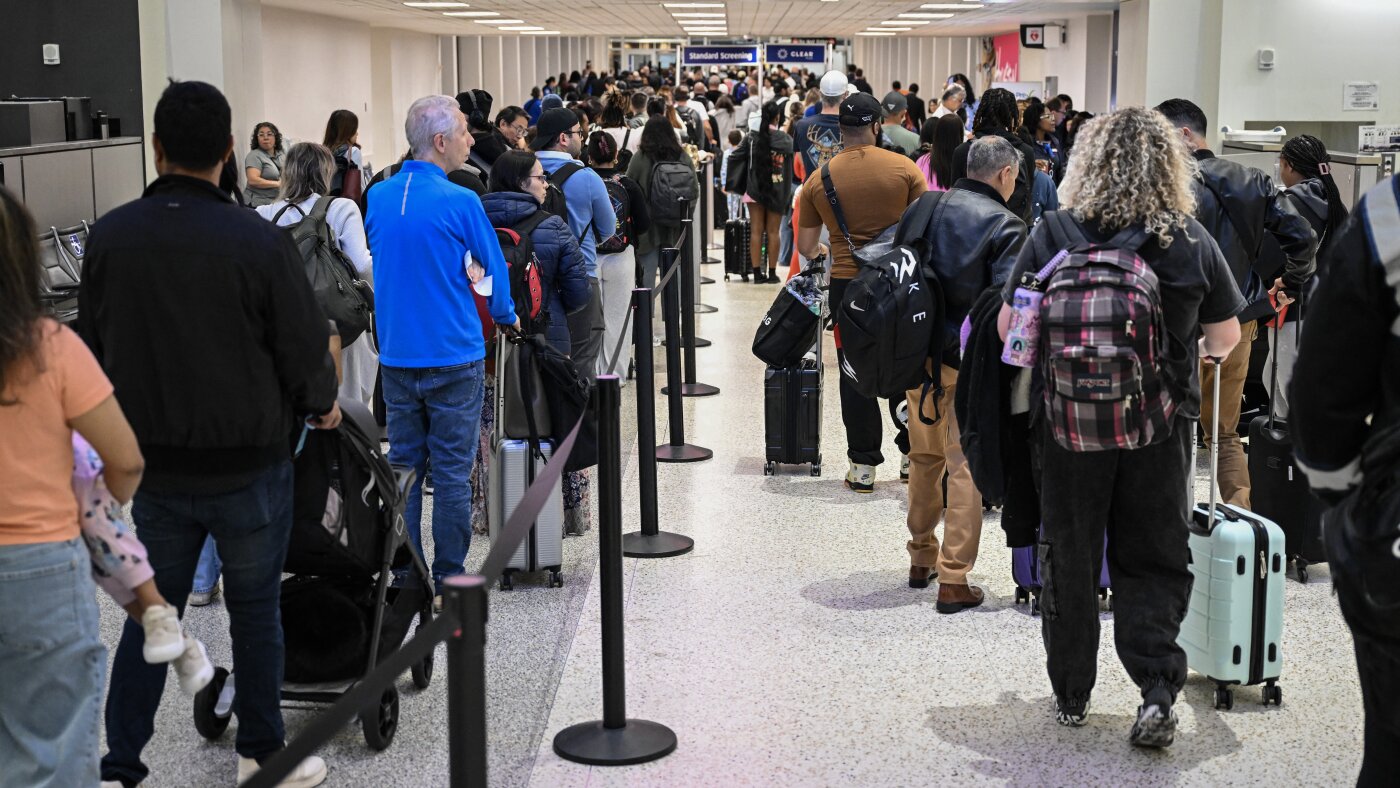
Airport security lines are long. Here’s what to know if you’re flying

Video: Video of Justin Timberlake’s Traffic Stop in 2024 Released

Detroit killer-for-hire becomes convicted liar-for-hire

Florida High School Football Rankings: Top 25 teams – Oct. 21

How old is Bo Nix? What to know about Oregon quarterback ahead of 2024 NFL Draft

Cleary's 21 help Le Moyne down Central Connecticut State 69-64 in OT

99th annual Pony Swim held in Virginia

Indiana Members Credit Union announced as new anchor tenant at Bottleworks District
Macron pushes tougher EU digital action ahead of key votes
Airport security lines are long. Here’s what to know if you’re flying

Schumer gambit fails as DHS shutdown hits 36 days and airport lines grow

Iranian ballistic missile explodes near Israeli nuclear plant

Trump threatens to deploy ICE to airports amid Homeland Security shutdown
-

 Detroit, MI3 days ago
Drummer Brian Pastoria, longtime Detroit music advocate, dies at 68
-

 Oklahoma1 week ago
Family rallies around Oklahoma father after head-on crash
-

 Nebraska1 week ago
Wildfire forces immediate evacuation order for Farnam residents
-

 Georgia6 days ago
How ICE plans for a detention warehouse pushed a Georgia town to fight back | CNN Politics
-

 Alaska7 days ago
Police looking for man considered ‘armed and dangerous’
-

 Minnesota1 week ago
Many with Minnesota ties make Forbes list of world’s richest people
-
 Science1 week ago
Federal EPA moves to roll back recent limits on ethylene oxide, a carcinogen
-
 Science1 week ago
H5N1 bird flu spreads to sea otters and sea lions along San Mateo coast, wildlife experts say