Sign up for the Today newsletter
Get everything you need to know to start your day, delivered right to your inbox every morning.

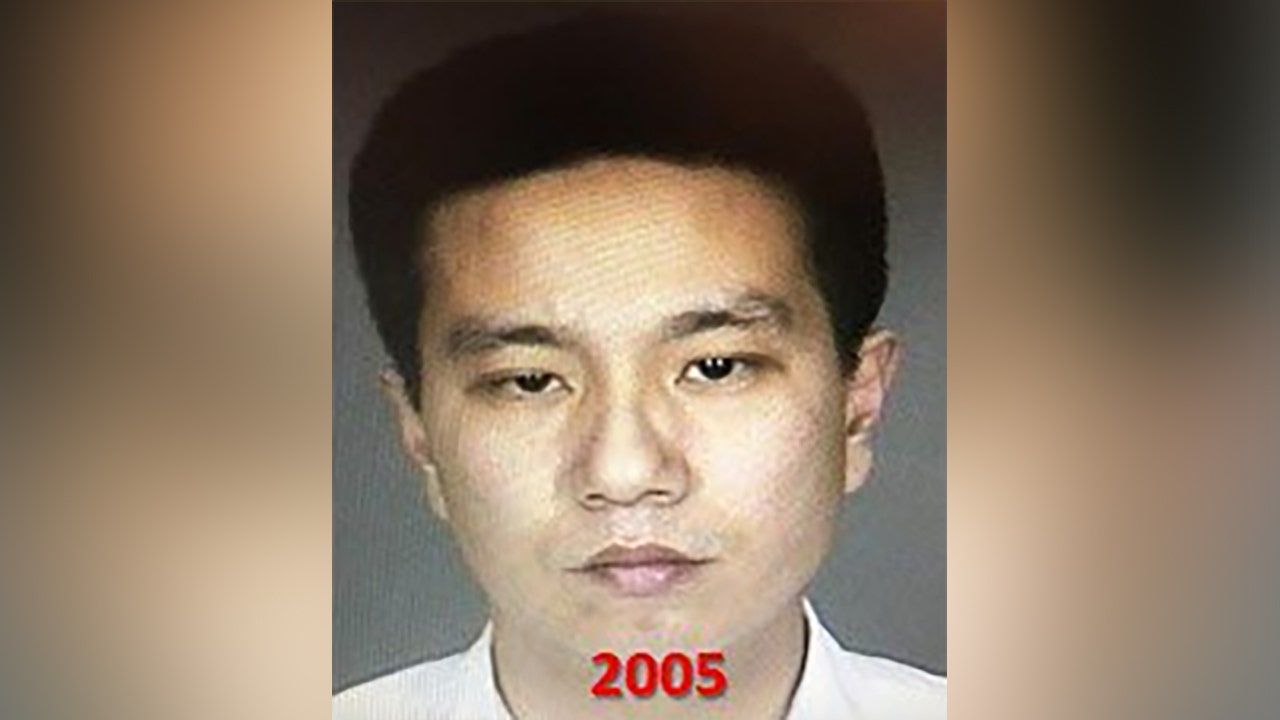
A Massachusetts fugitive who gained notoriety as the “Bad Breath Rapist,” was apprehended by U.S. Marshals and other law enforcement officials in California on Tuesday, after nearly 17 years on the run.
Marshals announced on Tuesday that the agency’s Pacific Southwest Regional Fugitive Task Force (PSWRFTF) in Northern California and the Massachusetts Fugitive Task Force arrested Tuen Kit Lee, 55, with the help of the Massachusetts State Police and Quincy Police Department.
Lee is accused of fleeing his trial in September 2007. A jury found him guilty of kidnapping and raping a woman in 2005, when he fled before sentencing.
Boston 25 News reported that authorities claim Lee’s family owned a restaurant in Quincy, and he raped a waitress from the restaurant at her home after breaking in on Feb. 2, 2005.
During the crime, Lee wore a mask and held the victim at knife point before zip-tying her to the bed and sexually assaulting her, investigators alleged.
MASSACHUSETTS STABBING SPREE SUSPECT JARED RAVIZZA PLEADS NOT GUILTY IN PLYMOUTH REST STOP ATTACK
Tuen Kit Lee booking photo (Massachusetts State Police)
The victim was found by her boyfriend several hours later, bound to the bed. The boyfriend told investigators he went to the home after he was unable to reach his girlfriend by phone.
The victim identified Lee as the perpetrator after she identified him by his bad breath, which led to media outlets calling him the “Bad Breath Rapist.”
After Lee was found guilty of kidnapping and rape, he was believed to have fled the state and could not be located until recently.
MASSACHUSETTS STABBING SPREE SUSPECT JARED RAVIZZA WAS ‘LAUGHING’ DURING MOVIE THEATER ATTACK, MOTHER SAYS
The U.S. marshals apprehended Tuen Kit Lee in California. (File )
Marshals said the Massachusetts State Police received a tip that Lee was possibly living in Diablo, California.
State police contacted U.S. marshals in northern California to investigate the tip and were able to verify he was in fact in the area. Lee was taken into custody on Tuesday morning, bringing a 16-year search to a close.
“There are violent offenders out there who believe they can commit crimes and not be held accountable for their actions,” Chief Inspector Sean LoPiccolo, acting PSWRFTF commander, said. “Tuen Lee was on the run for more than 16 years and the unwavering dedication by law enforcement to locate and arrest him hopefully brings peace of mind to the victim and her family.”
Read the full article from Here



Local News
A Rhode Island husband and wife in their 50s were identified as the two people killed in a Swansea car crash Friday night.
Carlolyn Carcasi, 54, and James Carcasi, 53, of Bristol, Rhode Island, were killed in the Feb. 27 crash, the office of Bristol County District Attorney Thomas Quinn said in a press release Monday.
The crash occurred at the intersection of Route 136 and Route 6 in Swansea, Quinn’s office said.
Police in Cranston, Rhode Island identified the driver who allegedly hit the couple as Demitri Sousa, 28. Sousa allegedly shot and killed a man in Rhode Island nearly four hours before the crash, Cranston police said.
At around 12:18 a.m. Friday, Swansea police spotted Sousa’s Infiniti barreling down Route 6, Swansea officials said previously.
The couple was driving southbound on Route 136 when the Sousa crashed into the side of a Subaru Ascent. Both cars had “catastrophic damage,” and the Subaru was engulfed in flames, Swansea fire and police officials said.
Both occupants of the Subaru were declared dead at the scene, Swansea officials said.
Sousa was transported to a local hospital, where he is being treated for serious injuries. He is expected to live and will be held in Cranston police custody until he is medically cleared, police said Sunday.
Get everything you need to know to start your day, delivered right to your inbox every morning.

Tuesday is town meeting day in Vermont. Municipalities in New England and elsewhere are increasingly grappling with major national and international issues at the local level.
JOSEPH PREZIOSO/Getty Images
hide caption
toggle caption
JOSEPH PREZIOSO/Getty Images
If you haven’t lived in certain New England towns, it can be hard to fathom their centuries-old direct democracy-style Town Meetings, where everyday residents vote on mundane town business such as funding for schools, snow plows and road repairs.
These days, voters are also being asked to weigh in on national and international issues, for example, demanding the de-funding of ICE, and condemning “the unprovoked attack and start of an illegal and immoral war against Iran.” It’s all fueling a separate – and fierce– debate on what towns ought to be debating.
“When you have people sleepwalking into an authoritarian regime, it’s up to us to sound the alarm,” insists Dan Dewalt, an activist in Newfane, Vermont, one of several communities where residents scrambled to draft a resolution against the Iran war in time for their annual Town Meeting on Tuesday.
Local resolutions are a uniquely effective tactic, activists and experts say, and they’re being used increasingly around New England and beyond, especially as national politics have become so polarized.
“People feel isolated, helpless and hopeless. And when you hear about other people who are just like you taking a stand and representing something that you believe, that gives you not only hope, but it gives you power,” said Dewalt.
Several other Vermont towns will be considering resolutions Tuesday calling for the removal of the president and vice president “for crimes against the U.S. Constitution,” while many others will vote on a pledge to ” to end all support of Israel’s apartheid policies, settler colonialism, and military occupation and aggression.”
A similar divestment resolution passed 46 -15 in Newfane last year, following hours of heated argument over the plight of Palestinians, the security of Israelis, the “inflammatory” language of the resolution – and whether such problems half-a-world away even belong on the agenda of the tiny town of just about 1,650.
“It’s a Town Meeting for town issues,” Newfane resident Walter Hagadorn declared at a recent Select Board meeting, where residents pressed board members to block any future resolutions not directly related to town business.
“You shouldn’t be subject to hours and hours of people virtue signaling” and trying to “hijack Town Meeting,” Hagadorn said.
Others agreed, suggesting activists host a debate on their issues at another time and place, or stage a rally or protest instead.
But Select Board member Katy Johnson-Aplin pushed back, saying that would not have the same impact.
“It doesn’t work the same way,” Johnson-Aplin said. It’s only when the issue is formally taken up at a Town Meeting that “it goes in the newspaper and it’s recorded that the town of Newfane has agreed to have this conversation.”
University of Pennsylvania political science professor Daniel Hopkins has been watching the growing movement of local communities taking a stand on issues far beyond town lines.
“This is a trend we’re seeing increasingly across the 50 states and in a variety of ways but I think it has taken on a new and potentially more concerning edge,” Hopkins said. “I worry that we are in an attention-grabbing, sensation-rewarding media environment in which the kinds of issues that engage us at a national level may further polarize states and localities and make it harder for them to build meaningful coalitions on other issues.”
Indeed, in Newfane, the resolution regarding Israel became so divisive that some residents decided not to even come to last year’s Town Meeting, according to Select Board vice-chair Marion Dowling.
In Burlington, where a similar resolution was proposed, City Council President Ben Traverse says things got so heated, he and his family were getting harassing phone calls and even death threats. Burlington city councilors voted in January to block the question from going to a popular vote.Vermont has a history of “big issue” resolutions, from the push for a Nuclear Arms Freeze in the 1980’s, to calls to ban genetically modified foods in 2003. Dewalt, the Newfane activist, was behind several of them, including calls to impeach then-president George W. Bush in 2006, which got him invited to talk about it on network TV shows, and quoted in The New York Times.
“I can guarantee you if I stood up on my soap box and made a declaration of the exact same wording, I wouldn’t have had anybody asking me questions about it, he said. “We’re not pie-in-the-sky here about the power of our Newfane Town Meetings, but our actions have consistently had an impact.”
But opponents say activists overstate the impact of their resolutions, and their victory. They say it’s disingenuous, for example, to claim the town of Newfane supported the resolution against Israel, when the winning majority of 46 people was less than 3% of town residents.
“I feel like they’re using the town as a vehicle for their personal messages and that bothers me,” says Newfane resident Cris White. “It’s so junior high.”
Traverse, the Burlington City Council president, also takes issue with what he calls the “inflammatory” language of that resolution.
“The question, as presented, approaches this issue in a one-sided and leading way,” Traverse says.
In Vermont, any registered voter can get a resolution on the Town Meeting agenda by collecting signatures from 5% of their town’s voters. While elected city or town officials have the authority to allow or block the resolution, there is no process in place to vet or edit language.
Traverse says it would behoove city leaders and voters to require an official review to ensure that language is fair and neutral, just as many states do with ballot questions. Traverse says he’s not opposed to contentious, big issue resolutions being put to local voters, but the language must be clear and even-handed.





Exclusive: DeepSeek withholds latest AI model from US chipmakers including Nvidia, sources say


Mother and daughter injured in Taunton house explosion


10 acres charred, 5 injured in Thornton grass fire, evacuation orders lifted


Wildfire near Gum Swamp Road in Livingston Parish now under control; more than 200 acres burned


YouTube TV billing scam emails are hitting inboxes


OpenAI didn’t contact police despite employees flagging mass shooter’s concerning chatbot interactions: REPORT


Stellantis is in a crisis of its own making


2026 OSAA Oregon Wrestling State Championship Results And Brackets – FloWrestling