Northeast
Johns Hopkins DEI boss won’t face discipline for comments condemned by school brass

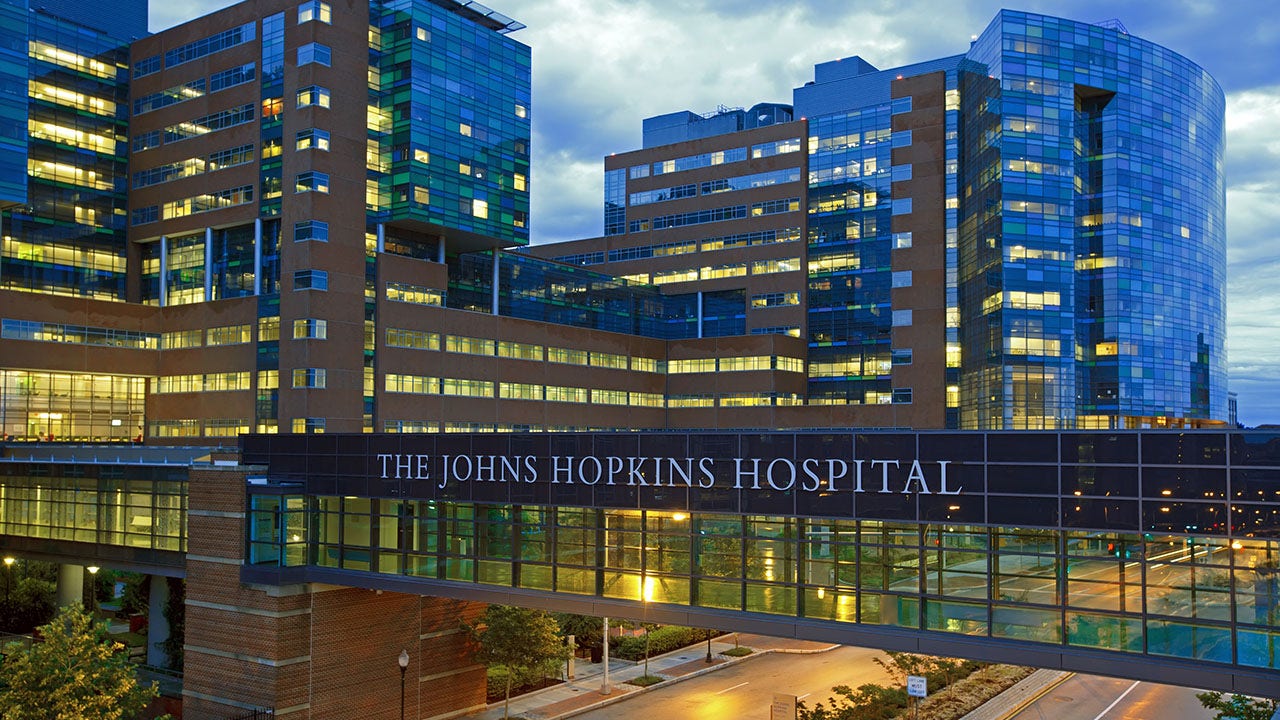
Dr. Sherita H. Golden, chief diversity officer at Johns Hopkins Medicine, does not appear to be facing discipline over her definition of “privilege” that was published in the school’s newsletter, despite intense backlash that forced the institution’s leaders to “repudiate” the language.
When Fox News Digital asked the school on Sunday whether Golden would face disciplinary action, a spokesperson doubled down on Golden’s apology, saying in an emailed statement that Golden has “sincerely acknowledged” the mistake.
“The January edition of the monthly newsletter from the Johns Hopkins Medicine Office of Diversity, Inclusion and Health Equity used language that contradicts the values of Johns Hopkins as an institution,” a Johns Hopkins Medicine spokesperson told Fox News Digital. “Dr. Sherita Golden, Johns Hopkins Medicine’s Chief Diversity Officer, has sincerely acknowledged this mistake and retracted the language used in the message.”
The original newsletter claimed that “males,” “White people,” “middle-aged people” and “able-bodied people,” among other groups, benefit from “privilege,” which was the “Diversity Word of the Month” for the January 2024 issue of its Monthly Diversity Digest.
TOP HOSPITAL TRIGGERS BACKLASH WITH DIVERSITY OFFICER’S ‘PRIVILEGE’ LIST: ‘PISSES ME OFF’
Johns Hopkins faced a backlash over a diversity newsletter that offered a definition of “privilege.” (iStock)
“Privilege is an unearned benefit given to people who are in a specific social group. Privilege operates on personal, interpersonal, cultural and institutional levels, and it provides advantages and favors to members of dominant groups at the expense of members of other groups,” the newsletter read.
UK POLITICIAN SAYS ‘WHITE PRIVILEGE’ DIVISIVE, UNHELPFUL TERM: REPORT
On Thursday, Golden apologized and said she “deeply” regretted the “overly simplistic and poorly worded” newsletter, which she said “had the opposite effect of being exclusionary and hurtful to members of our community.”
CLICK TO GET THE FOX NEWS APP
Leaders at the institution wrote in a letter to the community last week that they fully supported Golden’s apology and her decision to retract the definition, adding that they also “repudiate this language.”
Fox News’ Brie Stimson contributed to this report.
Read the full article from Here



Here are five ways how you can save some money when food shopping.
Here are five ways how you can save some money when food shopping.
Your household can earn more than $160,000 a year and still be considered part of the “middle class” in Rhode Island, according to a recent study by SmartAsset.
Rhode Island is the state with the 17th-highest income range for households to be considered middle class, based on SmartAsset’s analysis using 2024 income data from the U.S. Census Bureau. The Pew Research Center defines the middle class as households earning roughly two-thirds to twice the national median household income.
According to a 2022 Gallup survey, about half of U.S. adults consider themselves middle class, with 38% identifying as “middle class” and 14% as “upper-middle class.” Higher-income Americans and college graduates were most likely to identify with the “middle class” or “upper-middle class,” while lower-income Americans and those without a college education generally identified as “working class” or “lower class.”
Here’s how much money your household would need to bring in annually to be considered middle class in Rhode Island.
How much money would you need to make to be considered middle class in RI?
In Rhode Island, households would need to earn between $55,669 and $167,008 annually to be considered middle class, according to SmartAsset. The Ocean State has the 17th-highest income range in the country for middle-class households.
The state’s median household income is $83,504.
How do other New England states compare?
Rhode Island has the fourth-highest income range for middle-class households in New England. Here’s what households would have to earn in neighboring states:
- Massachusetts (#1 nationally) – $69,885 to $209,656 annually; median household income of $104,828
- New Hampshire (#6 nationally) – $66,521 to $199,564 annually; median household income of $99,782
- Connecticut (#10 nationally) – $64,033 to $192,098 annually; median household income of $96,049
- Rhode Island (#17 nationally) – $55,669 to $167,008 annually; median household income of $83,504
- Vermont (#19 nationally) – $55,153 to $165,460 annually; median household income of $82,730
- Maine (#30 nationally) – $50,961 to $152,884 annually; median household income of $76,442
Which state has the highest middle-class income range?
Massachusetts ranks as the state with the highest income range to be considered middle class, according to SmartAsset. Households there would need to earn between $69,900 and $209,656 annually. The state’s median household income is $104,828.
Which state has the lowest middle-class income range?
Mississippi ranks last for the income range needed to be considered middle class, according to SmartAsset. Households there would need to earn between $39,418 and $118,254 annually. The state’s median household income is $59,127.
Powerball, Mega Millions jackpots: What to know in case you win
Here’s what to know in case you win the Powerball or Mega Millions jackpot.
Just the FAQs, USA TODAY
The Vermont Lottery offers several draw games for those willing to make a bet to win big.
Those who want to play can enter the MegaBucks and Lucky for Life games as well as the national Powerball and Mega Millions games. Vermont also partners with New Hampshire and Maine for the Tri-State Lottery, which includes the Mega Bucks, Gimme 5 as well as the Pick 3 and Pick 4.
Drawings are held at regular days and times, check the end of this story to see the schedule.
Here’s a look at March 27, 2026, results for each game:
Winning Vermont Mega Millions numbers from March 27 drawing
13-27-28-41-62, Mega Ball: 16
Check Vermont Mega Millions payouts and previous drawings here.
Winning Gimme 5 numbers from March 27 drawing
05-10-18-38-39
Check Gimme 5 payouts and previous drawings here.
Winning Pick 3 numbers from March 27 drawing
Day: 0-0-8
Evening: 7-6-3
Check Pick 3 payouts and previous drawings here.
Winning Pick 4 numbers from March 27 drawing
Day: 3-5-4-1
Evening: 9-5-7-6
Check Pick 4 payouts and previous drawings here.
Winning Millionaire for Life numbers from March 27 drawing
06-09-28-33-46, Bonus: 04
Check Millionaire for Life payouts and previous drawings here.
Feeling lucky? Explore the latest lottery news & results
Are you a winner? Here’s how to claim your lottery prize
For Vermont Lottery prizes up to $499, winners can claim their prize at any authorized Vermont Lottery retailer or at the Vermont Lottery Headquarters by presenting the signed winning ticket for validation. Prizes between $500 and $5,000 can be claimed at any M&T Bank location in Vermont during the Vermont Lottery Office’s business hours, which are 8a.m.-4p.m. Monday through Friday, except state holidays.
For prizes over $5,000, claims must be made in person at the Vermont Lottery headquarters. In addition to signing your ticket, you will need to bring a government-issued photo ID, and a completed claim form.
All prize claims must be submitted within one year of the drawing date. For more information on prize claims or to download a Vermont Lottery Claim Form, visit the Vermont Lottery’s FAQ page or contact their customer service line at (802) 479-5686.
Vermont Lottery Headquarters
1311 US Route 302, Suite 100
Barre, VT
05641
When are the Vermont Lottery drawings held?
- Powerball: 10:59 p.m. Monday, Wednesday, and Saturday.
- Mega Millions: 11 p.m. Tuesday and Friday.
- Gimme 5: 6:55 p.m. Monday through Friday.
- Lucky for Life: 10:38 p.m. daily.
- Pick 3 Day: 1:10 p.m. daily.
- Pick 4 Day: 1:10 p.m. daily.
- Pick 3 Evening: 6:55 p.m. daily.
- Pick 4 Evening: 6:55 p.m. daily.
- Megabucks: 7:59 p.m. Monday, Wednesday and Saturday.
- Millionaire for Life: 11:15 p.m. daily
What is Vermont Lottery Second Chance?
Vermont’s 2nd Chance lottery lets players enter eligible non-winning instant scratch tickets into a drawing to win cash and/or other prizes. Players must register through the state’s official Lottery website or app. The drawings are held quarterly or are part of an additional promotion, and are done at Pollard Banknote Limited in Winnipeg, MB, Canada.
This results page was generated automatically using information from TinBu and a template written and reviewed by a Vermont editor. You can send feedback using this form.

new video loaded: We Analyzed the Deadly Crash at LaGuardia

By Lazaro Gamio, Coleman Lowndes and James Surdam
March 27, 2026

Think you’re middle class in Rhode Island? Here’s the income range

Where to watch South Carolina vs. Oklahoma in March Madness Sweet 16: Time, TV Channel

Coaches select all-state boys basketball players from Class AA, A & B

What are the Titans’ top remaining needs ahead of 2026 NFL Draft?

Texas’ Justice Carlton has turned baking passion into full-fledged business

Florida High School Football Rankings: Top 25 teams – Oct. 21

How old is Bo Nix? What to know about Oregon quarterback ahead of 2024 NFL Draft

Cleary's 21 help Le Moyne down Central Connecticut State 69-64 in OT

99th annual Pony Swim held in Virginia

Indiana Members Credit Union announced as new anchor tenant at Bottleworks District

Dem senators dodge crucial question on illegal alien accused of killing Chicago college student

EU Parliament unblocks key political hurdle in digital euro talks

Man arrested in plot to firebomb Palestinian activist’s home after undercover op

WATCH: Senate hearing goes silent after Angel Father confronts top Dem over daughter’s death

US diplomat Marco Rubio denounces settler violence, tolls in Hormuz strait
-

 Detroit, MI1 week ago
Drummer Brian Pastoria, longtime Detroit music advocate, dies at 68
-

 Movie Reviews1 week ago
‘Youth’ Twitter review: Ken Karunaas impresses audiences; Suraj Venjaramoodu adds charm; music wins praise | – The Times of India
-

 Sports7 days ago
IOC addresses execution of 19-year-old Iranian wrestler Saleh Mohammadi
-

 New Mexico6 days ago
Clovis shooting leaves one dead, four injured
-
 Business1 week ago
Disney’s new CEO says his focus is on storytelling and creativity
-

 Tennessee5 days ago
Tennessee Police Investigating Alleged Assault Involving ‘Reacher’ Star Alan Ritchson
-

 Technology6 days ago
YouTube job scam text: How to spot it fast
-

 Texas1 week ago
How to buy Houston vs. Texas A&M 2026 March Madness tickets