Northeast
Exclusive: FBI captures longtime fugitive in Honduras in connection with 2000 killing of Philadelphia girl

NEWYou can now listen to Fox News articles!
EXCLUSIVE: A fugitive previously on the FBI’s Most Wanted list for the kidnapping and murder of a 5-year-old Philadelphia girl has been arrested in Honduras.
Alexis Flores was taken into custody on Wednesday, the FBI told Fox News Digital. He was wanted for unlawful flight to avoid prosecution (UFAP) in relation to the killing, the FBI said.
“After more than 25 years on the run, this arrest shows that time and distance do not shield violent offenders from justice,” FBI Director Kash Patel said in a statement to Fox News Digital. “Thanks to relentless work by our international partners and FBI personnel, a fugitive accused of an unthinkable crime against a child is now in custody and on a path back to the United States.”
MEXICAN AUTHORITIES SEIZE $40M IN MOTORCYCLES FROM OLYMPIC SNOWBOARDER TURNED FUGITIVE, FBI SAYS
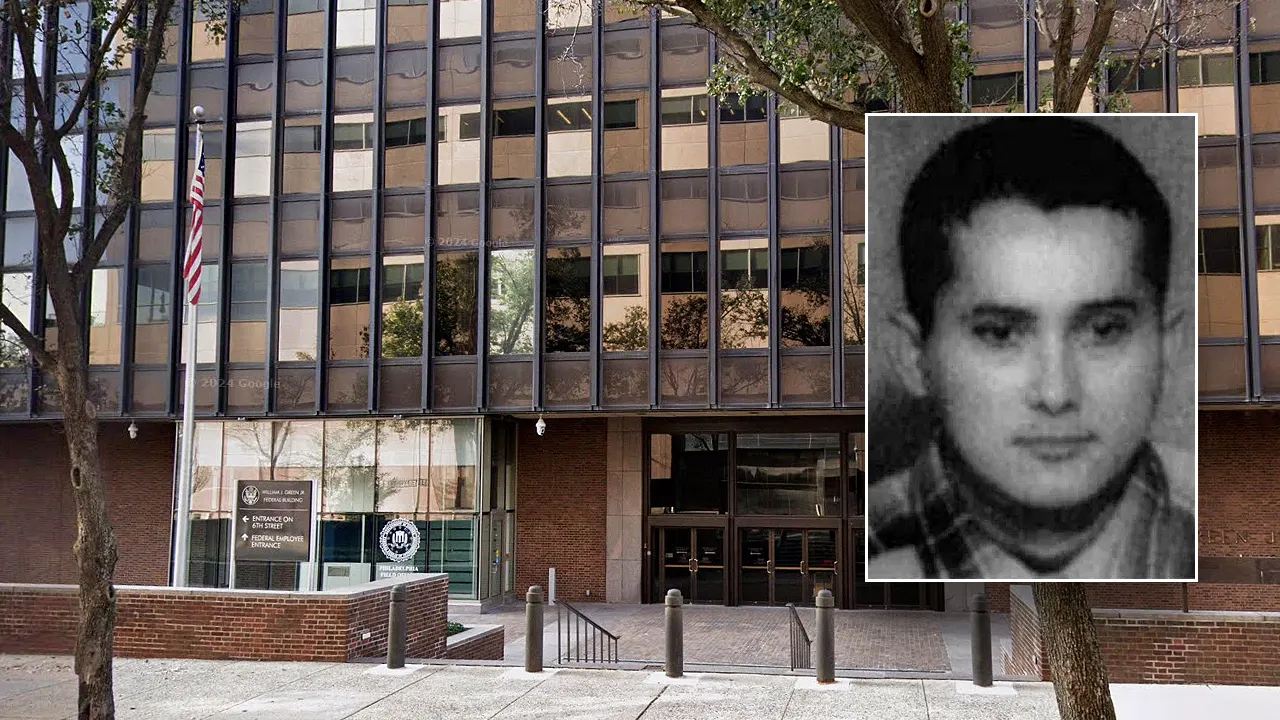
Alexis Flores was previously a top 10 FBI fugitive, according to officials. He was arrested Wednesday in Honduras in connection with the 2000 murder of a young girl in Philadelphia. (FBI and Google Maps)
The girl was reported missing on July 29, 2000, and was later found strangled to death in a nearby apartment days later.
On March 22, 2007, an arrest warrant was obtained by authorities after Flores was charged with murder and other felonies. On the same date, a federal arrest warrant was issued after Flores was charged with UFAP.
Flores was listed on the FBI’s Most Wanted list from 2007 through March 2025. He was removed based on overall program review by the bureau’s Criminal Investigative Division in an ongoing process to ensure the list remains agile and current.
FUGITIVE OLYMPIC SNOWBOARDER FACES NEW ACCUSATIONS AS FEDS RAISE REWARD FOR HIS CAPTURE TO $15M
Alexis Flores was a previously listed as a top 10 FBI fugitive, according to officials. (FBI)
The FBI has made a series of arrests of fugitives on its Most Wanted list in recent months.
In January, the agency announced the arrest of Alejandro Rosales Castillo, who had been among the Top Ten Most Wanted Fugitives since 2017. He had been wanted in the 2016 murder of his former co-worker, 23-year-old “Sandy” Ly Le, in Charlotte, North Carolina.
Also in January, former Canadian Olympic snowboarder and FBI Ten Most Wanted fugitive Ryan Wedding was captured in Mexico.
Wedding, who was suspected of drug trafficking, is believed to have been hiding in Mexico for more than a decade in an effort to elude U.S. authorities.
Ryan Wedding, wanted by the FBI, was seen taking a practice run for the men’s parallel giant slalom of the Salt Lake 2002 Winter Olympic Games in Park City, Feb. 13, 2002. (FBI | REUTERS/Jeff J Mitchell)
CLICK HERE TO DOWNLOAD THE FOX NEWS APP
Since the start of the Trump administration, the FBI has captured six of the bureau’s most-wanted fugitives, Patel said last week.
“We will continue to pursue those who harm our most vulnerable, no matter where they hide,” he said.
Read the full article from Here



Pennsylvania was recognized as one of the top state pavilions at America’s 250th birthday celebration, receiving one of the event’s “Best in Show” honors during the closing ceremony at the Great American State Fair on the National Mall.
The recognition comes just weeks after Senators Dave McCormick (R-PA) and John Fetterman (D-PA) partnered with U.S. Secretary of Agriculture Brooke Rollins and a coalition of 55 Pennsylvania organizations, businesses, and industry partners to ensure the Commonwealth had a pavilion at the Great American State Fair. The bipartisan effort was made possible entirely through private partnerships without the use of a single taxpayer dollar.
Joining Senators McCormick and Fetterman in this effort were the Pennsylvania Chamber of Business and Industry, PennAg Industries Association, and the Pennsylvania Manufacturers’ Association (PMA), alongside more than 50 additional Pennsylvania organizations, businesses, and industry partners whose support helped bring the Commonwealth’s exhibit to life.
“Pennsylvania’s story is America’s story, and this recognition is a tribute to everyone who helped bring that story to life,” said Senator McCormick. “From Independence Hall and Valley Forge to our farms, factories, and innovators, the Commonwealth has shaped our nation for 250 years. I’m grateful to Senator Fetterman, Secretary Rollins, and our outstanding Pennsylvania partners for ensuring Pennsylvania had a presence worthy of our history.”
“I’m incredibly proud of all the Pennsylvanians that showed up to make sure our Commonwealth had the spotlight it deserved right there on the National Mall during America’s 250th birthday. It earned this recognition,” said Senator Fetterman. “What makes Pennsylvania truly awesome are the men, women, and children who call it home. Our farmers, steelworkers, small business owners, and so many more. Those who visited the pavilion got to see a glimpse of some of the very best of us and our history, and I’m grateful to Senator McCormick, Secretary Rollins, and all who made this a massive success.”
The Pennsylvania pavilion highlights the Commonwealth’s central role in America’s story — from the signing of the Declaration of Independence and the sacrifices at Valley Forge to Gettysburg, the Arsenal of Democracy, and the Commonwealth’s continued leadership in agriculture, manufacturing, energy, innovation, and small business. Visitors also explored exhibits featuring many of Pennsylvania’s iconic companies and products, spotlighting the industries and communities driving the Commonwealth’s economy today.
During the closing ceremony, Freedom 250 recognized several outstanding state pavilions from across the country. Pennsylvania received one of the event’s “Best in Show” honors, recognizing the Commonwealth’s exhibit as one of the premier state pavilions at the Great American State Fair.
Representatives from Senator McCormick’s office accepted the Best in Show award during a recognition ceremony on the Freedom Stage Friday afternoon at the Great American State Fair.


RI’s best Italian restaurants: Federal Hill to South County our favorites
From Federal Hill to South County, the best Italian restaurants across Rhode Island.
Journal Staff
How did Federal Hill gain its reputation for Italian food?
Start with a look at a timeline of restaurants and markets in Providence and you’ll get it.
1914: Camille’s is opened at 174 Atwells Ave. by Pasquale Parolisi as Marconi’s Restaurant. It moves to its current space in a small part of a mansion on Bradford Street in 1919. In 1952, it is renamed Camille’s Roman Gardens by Jack Parolisi in honor of his wife.
1916: Brothers Luigi and Gaetano open Scialo Bros. Bakery on Federal Hill. Gaetano returned to Italy in 1925, and Luigi ran it until his death at 103 in 1993 when daughters Carol Gaeta and Lois Ellis began to run the bakery. New owners took over in 2021.
1922: Giuseppe DeGiulio and his wife, Maria, open Joe’s Acorn Market on Atwells Avenue. Their sons, Joseph, Gerald and John DeGiulio, retired the business in 2002.
1924: Angelo Mastrodicasa opens Angelo’s Civita Farnese on Federal Hill. Angelo’s begins as a lunchroom frequented by men who immigrated from Italy and are working to earn enough to bring their families over. The restaurant is now operated by Jamie Antignano, fourth generation.
1952: Tony’s Colonial begins selling imported and domestic Italian foods on Federal Hill in Providence. Tony and Elina “Gina” DiCicco have been running it since 1969.
1953: Caserta’s Pizza opens on Spruce Street. They made a name with the “Wimpy Skippy,” more than a spinach pie.
1955: Joe Marzilli’s Old Canteen opens on Federal Hill. It’s run by Joe and then son Sal Marzilli until 2025.
1972: Alan Costantino buys Venda Ravioli. It quadruples in size as a food emporium when it moves to its current location at 275 Atwells Ave. in 2001.
Antonelli’s Poultry on DePasquale Plaza is said to have opened in the late 19th century. What’s certain is that Christopher Morris ran Antonelli’s beginning in 1969 until his death in 2024.
Historic Federal Hill
It’s hard to believe that Federal Hill was used mainly for grazing cattle until the 1820s. But that’s the history. It was only in the mid-1800s that it became home to many of Providence’s artisans and working class. A wave of Irish immigrants moved into Federal Hill in the 1840s.
But as Italian immigrants began to arrive in large numbers in the 1880s, the neighborhood took on a different flavor.
All things Italian became the main attraction.
Federal Hill attracts shoppers from all over the state
Joan Nathan is a Providence native and a groundbreaking writer who links food with culture and has won the biggest prizes for culinary writing, especially about Jewish foods. She recounted the appeal of Federal Hill from her youth.
Nathan, 82, recalls her father taking her shopping on Federal Hill, where the foods were exotic to her. Stores sold freshly made mozzarella, homemade clam sauces, linguine and cookies. Sausage would hang from the rafters and olives were sold out of barrels.
People came from all over the state to shop on Federal Hill, she said.
Years later, in 1984, Nathan wrote “An American Folklife Cookbook” and returned to Federal Hill for research. One chapter featured the DeGiulio family, who were the owners of Joe’s Acorn Market in Providence. Their family history as butchers went back 700 years in Italy. They brought that to Providence.
They weren’t alone.
Many Italian immigrants arriving in the late 1800s and early 1900s, brought their skills as bakers and their cooking skills along with their favorite foods. Most came from Campania, the region that includes Naples. They brought their local Italian cooking, mostly Neapolitan, with accents from Sicily, Calabria, Puglia and Abruzzi.
As they settled on Federal Hill, they opened cafés and markets. Maybe they started with a pushcart. Eventually, restaurants followed, many of them.
A wave of them opened in the 1980s, building on a 20-year period of growth. They included The Grotto Azzura, later the Blue Grotto (1980); Roma (1983); Plaza Grille (1987); Cassarino’s (1988); Andino’s (1989); and L’Epicureo, which added table service to Joe’s Quality Market (1991).
In the news
The world noticed. Mary Ann Esposito filmed segments of her long-running “Ciao Italia” on Federal Hill in 1989. Bobby Flay arrived in 2001 to film “FoodNation” for the Food Network.
National Geographic just named Federal Hill as one of the eight best Little Italy neighborhoods in the United States, along with those in Boston, New York, Chicago, San Francisco, San Diego, Philadelphia and Cleveland.
Two years ago, Travel & Leisure reported on the most authentic Little Italys, placing Federal Hill at No. 3 behind Boston’s North End and San Diego.
Spoiler: It’s all about the food.
Editor’s note: This story was first published in June 2025.
Powerball, Mega Millions jackpots: What to know in case you win
Here’s what to know in case you win the Powerball or Mega Millions jackpot.
Just the FAQs, USA TODAY
The Vermont Lottery offers several draw games for those willing to make a bet to win big.
Those who want to play can enter the MegaBucks and Lucky for Life games as well as the national Powerball and Mega Millions games. Vermont also partners with New Hampshire and Maine for the Tri-State Lottery, which includes the Mega Bucks, Gimme 5 as well as the Pick 3 and Pick 4.
Drawings are held at regular days and times, check the end of this story to see the schedule.
Here’s a look at July 10, 2026, results for each game:
Winning Vermont Mega Millions numbers from July 10 drawing
02-39-44-46-56, Mega Ball: 23
Check Vermont Mega Millions payouts and previous drawings here.
Winning Gimme 5 numbers from July 10 drawing
03-13-17-34-35
Check Gimme 5 payouts and previous drawings here.
Winning Pick 3 numbers from July 10 drawing
Day: 1-7-5
Evening: 0-6-8
Check Pick 3 payouts and previous drawings here.
Winning Pick 4 numbers from July 10 drawing
Day: 8-2-6-4
Evening: 7-4-8-8
Check Pick 4 payouts and previous drawings here.
Winning Millionaire for Life numbers from July 10 drawing
14-42-46-47-57, Bonus: 05
Check Millionaire for Life payouts and previous drawings here.
Feeling lucky? Explore the latest lottery news & results
Are you a winner? Here’s how to claim your lottery prize
For Vermont Lottery prizes up to $499, winners can claim their prize at any authorized Vermont Lottery retailer or at the Vermont Lottery Headquarters by presenting the signed winning ticket for validation. Prizes between $500 and $5,000 can be claimed at any M&T Bank location in Vermont during the Vermont Lottery Office’s business hours, which are 8a.m.-4p.m. Monday through Friday, except state holidays.
For prizes over $5,000, claims must be made in person at the Vermont Lottery headquarters. In addition to signing your ticket, you will need to bring a government-issued photo ID, and a completed claim form.
All prize claims must be submitted within one year of the drawing date. For more information on prize claims or to download a Vermont Lottery Claim Form, visit the Vermont Lottery’s FAQ page or contact their customer service line at (802) 479-5686.
Vermont Lottery Headquarters
1311 US Route 302, Suite 100
Barre, VT
05641
When are the Vermont Lottery drawings held?
- Powerball: 10:59 p.m. Monday, Wednesday, and Saturday.
- Mega Millions: 11 p.m. Tuesday and Friday.
- Gimme 5: 6:55 p.m. Monday through Friday.
- Lucky for Life: 10:38 p.m. daily.
- Pick 3 Day: 1:10 p.m. daily.
- Pick 4 Day: 1:10 p.m. daily.
- Pick 3 Evening: 6:55 p.m. daily.
- Pick 4 Evening: 6:55 p.m. daily.
- Megabucks: 7:59 p.m. Monday, Wednesday and Saturday.
- Millionaire for Life: 11:15 p.m. daily
What is Vermont Lottery Second Chance?
Vermont’s 2nd Chance lottery lets players enter eligible non-winning instant scratch tickets into a drawing to win cash and/or other prizes. Players must register through the state’s official Lottery website or app. The drawings are held quarterly or are part of an additional promotion, and are done at Pollard Banknote Limited in Winnipeg, MB, Canada.
This results page was generated automatically using information from TinBu and a template written and reviewed by a Vermont editor. You can send feedback using this form.
-

 North Dakota4 minutes ago
North Dakota State looks awesome on College Football 27
-

 Ohio11 minutes ago
Has there been an explosion of chipmunks this year? Yes. Here’s why
-

 Oklahoma14 minutes ago
How Will Oklahoma Softball Benefit From SEC Revenue Distribution?
-

 Oregon19 minutes ago
Razor clam harvesting set to close soon on north Oregon Coast
-

 Pennsylvania26 minutes ago
Pennsylvania Wins “Best in Show” at The Great American State Fair – Tri-State Alert
-

 Rhode Island29 minutes ago
How Federal Hill became Rhode Island’s iconic Little Italy food hub
-

 South-Carolina34 minutes ago
Editorial: SC Legislature left DUI and THC bills for dead; DUI restrictions can be revived
-

 South Dakota41 minutes ago
South Dakota GFP Commission Holds July Meeting

