Northeast
DOJ concealing info on probe into whether Hunter Biden violated 'debauchery' law, watchdog says

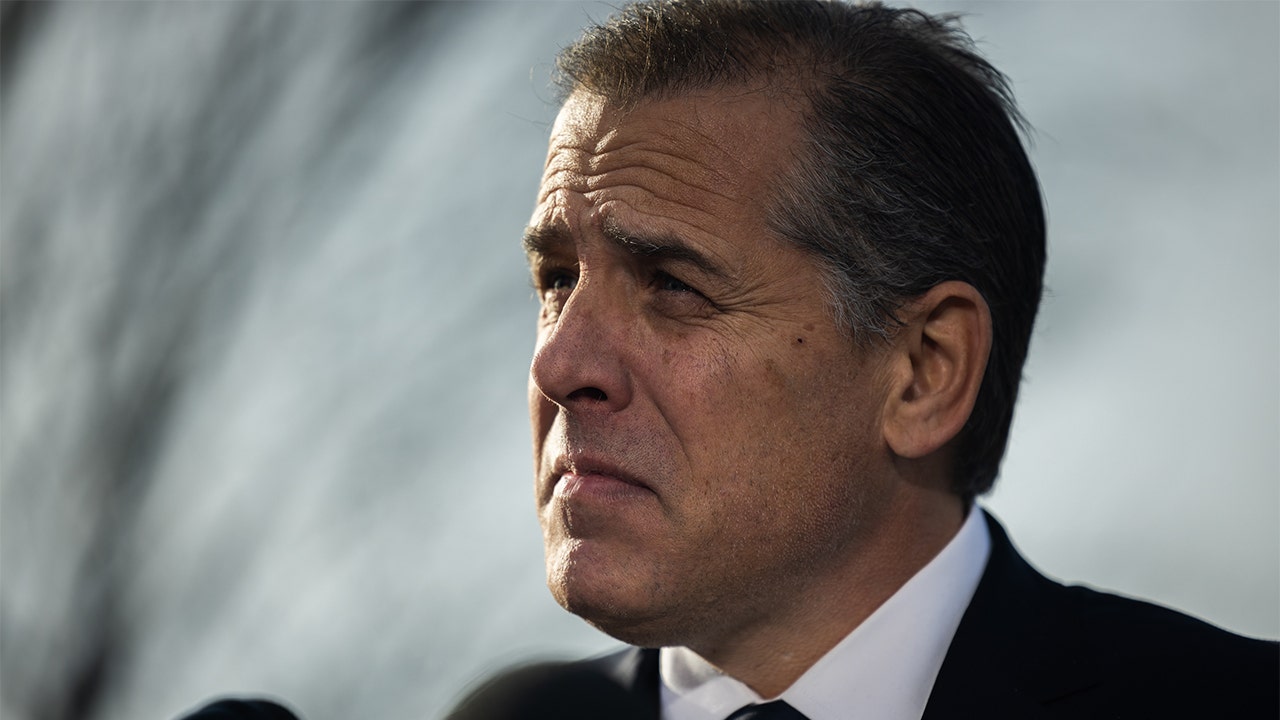
A government watchdog group filed suit in Delaware federal court this week, seeking to compel the Justice Department to produce records that may determine whether Hunter Biden should be further investigated under a 1910 law relating to “prostitution or debauchery.”
The Heritage Foundation’s Oversight Project petitioned the same Wilmington bench where Biden was found guilty on gun charges this month, contending that there is a significant amount of evidence the first son was being probed on Mann Act grounds.
The law, stemming from a time when prostitution was more prevalent in urban areas, states it is a felony to “knowingly transport… in interstate or foreign commerce… any woman or girl for the purpose of prostitution or debauchery.”
The legal brief, obtained by Fox News Digital, includes part of a 2023 interview transcript from IRS whistleblower Joseph Ziegler before the House Ways & Means Committee.
Ziegler recounted efforts by the Justice Department to assess potential Mann Act violations, speaking of a “West Coast assistant” of Biden’s, whom “we knew … to also be in the prostitution world or believed to be in the prostitution world – and he deducted expenses related to her.”
An unnamed lawmaker then asks about Biden “paying for the travel of an individual to fly out to California or wherever,” to which Ziegler responds, “Or Boston or wherever he was at. [Washington, D.C.] I think one of them – he flew someone for the night.”
Ziegler said he understood the Justice Department to be “compiling” potential violation allegations that had been referred to them but that he did not know the ultimate outcome.
Oversight Project attorney Kyle Brosnan told Fox News Digital in a Thursday interview he believes the Justice Department, therefore, has the information and that it should be made publicly available.
Brosnan said the Oversight Project seeks records relating to Ziegler’s testimony, any communications with the probation office regarding the Mann Act, as well as “victim”-related inquiries.
“If you sort of peel back the layers of the onion, it’s absurd, because there is an overwhelming amount of information that already shows these records exist. [They’re] found on the Hunter Biden laptop, which was entered into evidence in his criminal case in Delaware,” Brosnan said.
The Justice Department instead issued a “Glomar response” to inquiries for information on the matter – a legal maneuver that provides for a justified exception to the rule that parties must confirm or deny the existence of information sought through legal requests.
In September, Reps. Marjorie Taylor Greene, R-Ga., and James Comer, R-Ky., wrote a letter to the Justice Department after IRS whistleblowers’ testimony, saying the witnesses indicated the agency “compiled a list of potential victims” in relation to a Mann Act probe into the first son.
“These women may be victims under the Crime Victims’ Rights Act and may also be afforded mandatory restitution pursuant to the Mandatory Victim Restitution Act,” Greene and Comer wrote.
In light of the laptop’s contents and Congress’ findings, Brosnan said, the Justice Department’s Glomar response was “completely inappropriate” and that it could give credence to claims the department “pulled punches” in Biden’s prosecution.
Mike Howell, executive director of the Oversight Project, told Fox News Digital in a statement that while “you shouldn’t transport prostitutes within state lines, it is clearly a federal offense to transport them across state lines.”
“This is another criminal offense that Hunter has not been charged for – one that we are forcing the Department of Justice to admit that they are tracking as well as refusing to prosecute.”
The Justice Department, White House and the office of Biden attorney Abbe Lowell did not respond to requests for comment.
Read the full article from Here

Boston, MA
‘More than just a cyclist’: Hundreds mourn Boston transit planner killed while biking – The Boston Globe

“She’s more than just a cyclist and an advocate,” Rose Frank, 36, who became friends with Gag in seventh grade, said. “Those were parts of her identity, but she’s such an amazing person in so many other ways, and we want to celebrate all of those ways.”
Gag, who grew up in Roslindale just minutes from the park, was a joyful and energetic child, said Mark Smith, 66, a neighbor who spoke at the event.
“She was the sweetest little girl with a big wide smile,” Smith said. “Whenever you were in her presence, you felt somehow special.”
Smith said Gag’s passion for giving back to her community likely came from her parents, Steve Gag and Laura Gang, longtime Roslindale residents who contributed greatly to developing the neighborhood. Steve Gag helped bring a farmers market to Adams Park, while Laura Gang was involved in the public library.
Gag’s loved ones said she grew up to become a generous person who cared deeply about her family and friends.
“Louisa showed up for people,” Molly Goodkind, 36, a childhood friend of Gag’s said during Sunday’s event. “We’ll never understand how she had time to be everyone’s go-to person.”
Gag, she said, would eagerly volunteer to cat-sit, even though she didn’t like cats. Another friend said she kept a spreadsheet of the birthdays of all the babies she knew.
“She was the person outside of my biological family who, if I needed something, she would be there in an instant,” Goodkind, who has known Gag since they were 2-years-old, said.
Gag’s friends said she was curious and remained open-minded, even though she held firm beliefs.
“Who do you know that was a vegetarian except for when it inconvenienced others? And of course, except for hot dogs, because according to Louisa, you can’t not have a hot dog at a barbecue,” Gag’s friend Danielle Shaked said, drawing laughs from the crowd, including Laura Gang, who dabbed at her eyes with a crumpled tissue.
Gag also found time for many hobbies, and was always trying new ones, her friends said. Beyond loving outdoor activities such as biking and hiking, she was passionate about sustainability and shopped secondhand or sewed her own clothes. She dabbled in photography, painting, and cooking.

Urban planning was one of Gag’s enduring passions, Goodkind said.
“In college, she created her own major,” she said. “I don’t remember exactly what she called it, but it was something like city and people.”
Gag attended college at the University of Rochester and later earned a master’s degree in urban and environmental planning and policy from Tufts University, according to her LinkedIn.
Before joining the city in 2022, Gag worked for LivableStreets Alliance, a Boston-based nonprofit that advocates for increased safety, equity, and affordability. She also interned for Mayor Michelle Wu when Wu was a city councilor.
Wu attended Sunday’s event, but did not speak. Like many other attendees, she held a yellow sunflower, one of Gag’s favorites, as she tearfully listened to the tributes.
While Gag didn’t like being the center of attention, her friends said she would have been grateful for Sunday’s event.
“She would be completely honored to know that she has impacted so many people,” Frank said, her gaze drifting over the people gathered in the park.
Under a small tent nearby, attendees crowded around a folding table, filling out remembrance cards. Dozens of bikes leaned against the park’s fences while more lay scattered in the grass.
Allyson Chiu can be reached at allyson.chiu@globe.com. Follow her on X @_allysonchiu.
Pittsburg, PA
Pittsburgh Pirates Select Incoming Tennessee Baseball Transfer Outfielder In MLB Draft | Rocky Top Insider

The Pittsburgh Pirates selected Tennessee baseball transfer commit Andrew Duncan with the 558th pick (19th round) in the 2026 MLB Draft on Sunday afternoon. A Wright State outfielder, Duncan committed to Tennessee out of the transfer portal last month.
Duncan is coming off a breakout junior season at Wright State where he slashed .367/.436/.577 with six home runs, 11 doubles, eight triples and 36 RBIs. As the eight triples indicate, speed is a key part of Duncan’s game with the outfielder stealing 19 bases on just 22 attempts.
The Dunedin, Florida native spent his freshman season at Florida State where he played in just 13 games before transferring to Wright State for his sophomore season. Duncan transferred to Tallahassee State College for his sophomore season before moving back up to the division one level at Wright State last season.
More From RTI: Elite Tennessee Baseball Catcher Signee Withdraws From MLB Draft, Will Play for Vols
Duncan played centerfield for the Raiders last season and will likely slide into that same spot at Tennessee next season if he does not sign with Pittsburgh. Outfield was a major point of emphasis for the Vols this offseason after losing Reese Chapman to graduation, Garrett Wright to the MLB Draft and both Jay Abernathy and Nate Eisfelder to the transfer portal.
Losing Duncan would be a real blow because of Tennessee’s need in centerfield for next season. A number of other Vols including Levi Clark, Blake Grimmer and Mercer transfer Braydon Kersey are capable of playing in the outfield but likely could not play centerfield at a high level defensively.
Duncan is one of 11 transfers to commit to Tennessee this offseason along with Air Force infielder Wyatt Hanoian, Cal Baptist shortstop Chris Ramirez, Baylor infielder Travis Sanders, FIU infielder Mario Trivella, Clemson right-handed pitcher Hayden Simmerson, Louisville right-handed pitcher Parker Detmers, South Carolina left-handed pitcher Jake McCoy, Northwestern State left-handed pitcher Brody Trosclair, UC Irvine left-handed pitcher Ricky Ojeda and Mercer two-way Braydon Kersey.

ROCKY HILL, Conn. (WFSB) – People like Dena Pizzoferrato are changing what they put in their grocery carts after hearing about a cyclosporiasis outbreak.
“I’m kind of a little nervous so I’m looking to see what I buy right now,” Pizzoferrato said. “Today I didn’t buy any lettuce. I said I’m OK for now.”
Doctors say the illness is spread through parasites that make their way onto fresh produce. There have been 23 reported cases in Connecticut since May, but the CDC says the number is likely higher. Across the country, more than 840 cases and 86 hospitalizations have been reported in 31 states.
Symptoms include diarrhea and nausea that can last days to weeks. Doctors have not identified a source for the outbreak.
Dr. Ulysses Wu, chief epidemiologist at Hartford HealthCare, said a range of produce could be contaminated.
“Typical things you would think are vegetables or fruits. In the past, it’s been raspberries, basil, cilantro. You may find it in lettuces, bagged salads. So it’s a variety of things that can be contaminated, but they have not found it at this time,” said Wu.
Wu said residents should take precautions with their produce. “Take precautions with your fruit and your produce. We give the same advice when people go overseas that you should always peel something. You should always boil something,” he said.
Doctors also recommend washing produce thoroughly if boiling is not an option, and washing hands regularly.
Copyright 2026 WFSB. All rights reserved.
-

 World3 minutes ago
Four Americans caught in horrific Mexico highway pileup that killed at least 10
-

 Politics9 minutes ago
Medical examiner releases preliminary findings in Lindsey Graham’s death as death certificate remains pending
-

 Health15 minutes ago
Terminally ill man marries longtime love in hospital as final wish comes true
-

 Sports21 minutes ago
Stefon Diggs, still seeking new NFL home, insists no team has a better No 2 receiver ‘than me’
-

 Technology27 minutes ago
Google may use your photos and voice to train AI
-
 Business33 minutes ago
‘Moana’ loses its way at the box office with a $43-million domestic opening
-
 Entertainment39 minutes ago
Academy Award-winning special effects pioneer Don Iwerks dies at 96
-
 Lifestyle45 minutes ago
Burbank’s airport to get new $1.3-billion terminal soon (but you’ll still walk on tarmac)

