Northeast
Delaware woman fatally shot after crime spree entails interstate police chase, 2 shootouts


A police pursuit through two states that involved two separate shootouts with law enforcement officers and several crashes ended with the death of the woman being sought, authorities said.
Wilmington police began their pursuit of the 23-year-old woman shortly before noon Tuesday at a Delaware residence, seeking to arrest her on a warrant stemming from a December 2023 shooting. She fled the home in a vehicle and rammed multiple police vehicles before driving along I-95 northbound into Pennsylvania, as Wilmington officers and Delaware state police troopers followed her.
DELAWARE MAN LEADS POLICE ON MULTISTATE CHASE AFTER BEING SHOT
Shortly after entering Pennsylvania, the woman crashed her vehicle and started firing at the officers, and two troopers returned fire, authorities said. It’s not known if the woman was struck by any shots at that time, authorities said.
A Delaware woman was shot dead by police after a crime spree that led them on a multistate chase.
The woman then carjacked another vehicle and drove to Chester, where she crashed into a structure. She then entered a home where she was confronted by a mother with her baby before she took another car and tried to flee again, authorities said.
However, several officers — including three from Wilmington, five Delaware state troopers and individual officers from Trainer and Chester in Pennsylvania — started shooting at the vehicle, and the woman soon succumbed to her injuries at the scene.
The woman’s name has not been released pending notification of relatives.
One Wilmington officer was treated at a hospital for an undisclosed minor injury. No other injuries were reported in the chase or related incidents.
The Wilmington officers who fired their weapons have been placed on administrative duty pending an investigation, which is standard policy in police-related shootings. Authorities have not released the names of the law enforcement officers involved in the pursuit or the shootings.
Read the full article from Here


Massachusetts
Massachusetts dad on ‘adventure of a lifetime’ left fighting for his life in Fiji after noticing bug bite

A trip of a lifetime quickly turned into an unimaginable nightmare for a Massachusetts father who is fighting for his life halfway across the world after being bitten by a bug.
Scott and Claire Winslow always dreamt of sailing across the South Pacific with their family — and in April, they were finally able to turn their dream into a reality when they embarked on an “adventure of a lifetime” to enjoy their retirement, according to an online fundraiser.
But just weeks into the three-month sailing voyage, Scott noticed what appeared to be a bug bite and his health rapidly deteriorated, WBZ-TV reported.
His condition worsened for nearly two weeks while at sea alongside his nephew, and by the time their ship made it to land in Fiji, he was so weak that he was unable to walk.
The father-of-three was rushed to a local hospital, where doctors discovered the severity of his infection.
“By the time they got to a doctor, he was so sick,” Scott’s daughter Lisa Babbin told the outlet.
Scott was then transferred from a private hospital to the Intensive Care Unit at Lautoka Hospital on Vitu Levu, the main island of Fiji, where his wife Claire was heartbreakingly told to “prepare for the worst.”
The retiree remains critically ill on a ventilator, battling septic shock and organ failure.
The infection has spread to Scott’s lungs and gallbladder and his kidneys are functioning at “a fraction of their normal capacity,” the GoFundMe page says.
It’s still unclear how the infection started — whether by the insect bite, an infected wound or something else, according to the dad’s family.
While doctors are doing everything they can, Scott’s critical condition requires greater care than the local hospital can manage, according to his daughter.
“Every hour counts for my father,” Babbin said.
The family has secured a bed for the critically ill father at the Newton-Wellesley Hospital in Mass., but doesn’t know if they will be able to afford to fly him back to the United States for better care.
“All we need is a medflight, that’s the only thing we need to get him home,” Babbin said. “Medflights are not cheap.”
A special medical flight from Fiji to Boston — which is over 8,000 miles in distance — could set the family back a staggering $250,000, according to the outlet.
In addition to the fundraiser, the Winslow family has applied for a US government loan to help with the astronomical costs of flying Scott home as well as the foreign medical bills that are adding up without medical insurance coverage.
Scott is a “hardworking, loyal, generous” man, “always willing to lend a hand,” relatives wrote on the fundraising page.
“He has spent a lifetime helping others, supporting his family, and being there whenever someone needed him.”
While Scott’s family “remain hopeful and continue to pray” for his recovery, “they are also facing the overwhelming financial burden that comes with a catastrophic medical emergency overseas,” the fundraiser says.
New Hampshire
This NH Short Film Festival Returns in July, and Every Film Clocks in at 15 Minutes or Less

Independent filmmaking isn’t just alive; it’s helping shape the future of storytelling.
As technology continues to level the playing field, passionate creators have more opportunities than ever to tell meaningful stories outside the traditional Hollywood system. That’s exactly why events like the Creative Guts Short Film Festival deserve our support.
“The spirit of this festival is to celebrate the creativity, voice, and collaboration of filmmakers.” Now in its third year, The Creative Guts Short Film Festival gives a platform for filmmakers from all genres and different levels of experience to showcase their 15-minute pieces. The films selected this year were based upon a jury panel and even have a chance at the opportunity to screen at Red River Theatres on a limited run after the festival.
How cool is that!?
Awards in different categories will also be given to chosen filmmakers at the end of the event.
The evolution of cinema:
According to one of the UK’s biggest film festivals (Raindance), “The old model of filmmaking was built around gatekeepers.”
“Studios controlled production. Distributors controlled access. Television networks controlled visibility. Film festivals controlled discovery. Audiences arrived at the end of the pipeline. That structure shaped the kind of stories that could exist.”
Today, that model is rapidly changing. Raindance explains, “That pipeline is collapsing in real time. A filmmaker with a phone, editing software, and a direct audience relationship can now build attention faster than institutions that once controlled the entire ecosystem. That changes everything.”
As someone who has spent years in the filmmaking world, I know firsthand that audiences don’t always see the countless late nights, rewrites, equipment hiccups, and endless problem-solving that happen long before a film ever reaches the screen.
Every finished project represents months (or even years) of hard work, creativity, and determination.
A reason to support:
That’s one of the reasons I love short film festivals. Instead of committing to one feature-length movie, you get to experience a wide range of storytelling styles, genres, and perspectives all in one afternoon.
The best films don’t just entertain you, they linger long after the credits. They spark conversations on the drive home, challenge the way you see the world, or introduce you to a filmmaker whose work you’ll be eager to follow.

If you’re looking to experience something different while supporting New Hampshire’s creative community, this festival is a great place to start. You may discover your next favorite filmmaker before everyone else does!
2026 Creative Guts Short Film Festival
READ MORE: This Small New England Bakery Is Winning Hearts With Biscuit Flights
Date: Thursday, July 30, 2026
Time: 6:00PM
Location: Red River Theatres, Concord, NH
Early bird price: $15 (June 15th to June 30th)
Regular price: $20 (July 1st to July 30th)
These 11 Drive-In Theaters in NH, ME, and MA Are Still Operational
Gallery Credit: Meg
Movies Set in New Hampshire
-
 Florida1 minute ago
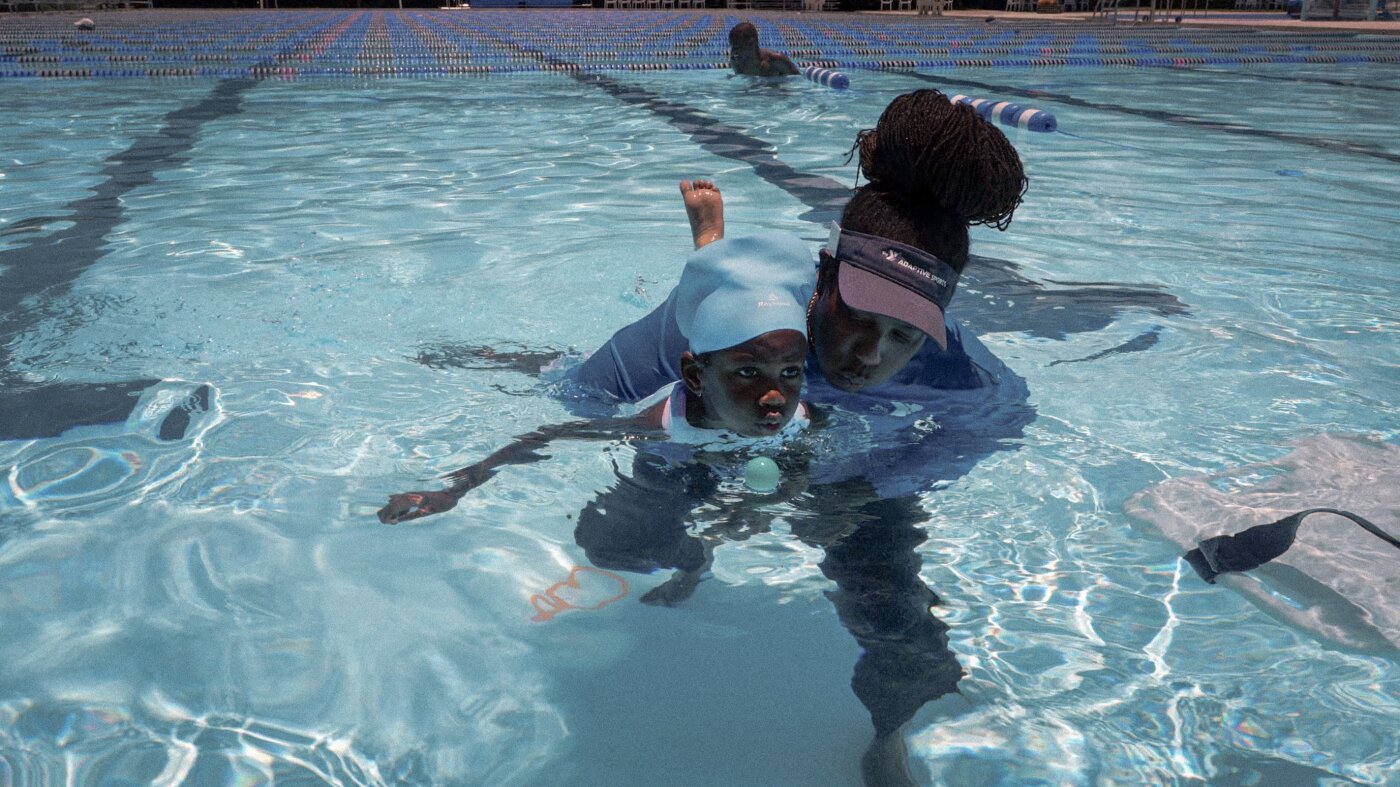
Kids with autism are prone to drowning. Florida is trying to prevent that
-

 Georgia4 minutes ago
Bradenton man wanted for murder is found hiding in Georgia
-

 Hawaii9 minutes ago
Few state bills this year face potential veto – West Hawaii Today
-

 Illinois19 minutes ago
West Suburban hospital sends permanent layoff notices to about 500 furloughed employees
-

 Indiana24 minutes ago
Extreme heat peaks before holiday weekend storms | July 1, 2026
-

 Iowa31 minutes ago
New York Times/Siena Polls in Alaska, Iowa, North Carolina, and Ohio – Siena Research Institute
-

 Kansas34 minutes ago
Kansas State Fair announces Rock Fest with three-band lineup
-

 Kentucky34 minutes ago
Looking for the best hot dog in Louisville? Try these 15 spots

