Boston, MA
Patriots mailbag: Is Justin Fields an option at quarterback?


The NFL offseason is moving quickly, and under new leadership, the Patriots will need to make a decision at quarterback soon.
The NFL scouting combine is a week away, and in three weeks, the Patriots will be allowed to speak to impending free agents. The team must have a plan on how they’ll approach their biggest need at quarterback and whether they plan to add that player via free agency, a trade or the draft, before the new NFL year begins on March 13.
Let’s dive into some potential options in this week’s mailbag.
@ZackFitzNFL
Are the Patriots around in the Justin Fields talks?
I’ve been told not to rule out anything at quarterback. If the Patriots would rather take an offensive lineman, wide receiver or a player at another position at No. 3 overall (or trade down), then making a deal with the Bears for Justin Fields seemingly would be an option.
That being said, Fields’ team needs to decide on his fifth-year option this offseason. He’s proven he can be a starter, but he’s in the lower tier among NFL quarterbacks. The Patriots need someone better than that to compete now and in the future. It seems to make more sense to swing for the fences and take Caleb Williams, Drake Maye or Jayden Daniels.
An acquiring team would take on $3.2 million by trading for Fields, so he is a bargain. He ranked 23rd among 32 quarterbacks with a -0.009 expected points added (EPA) per play. He was 21st in PFF grade, 23rd in PFF passing grade and 23rd in QBR.
Fields experienced his best season in 2023, but he’s been in the NFL for three seasons now. How much more will or can he improve?
If Fields is the option, then the Patriots would need to decide between a wide receiver like Marvin Harrison Jr. or an offensive tackle like Joe Alt at No. 3 overall. They need both, but that’s not really an option.
@Deeep_Blue
How active are patriots going to be in the free agent market? Top targets?
They pretty much have to be active in free agency. Not to get too into the nitty gritty, but the Patriots need to spend 90% of the salary cap in cash over the next three seasons. They’re only set to spend $216.2 million in cash over that span. The 2024 salary cap is projected to be $240 million. Even if the cap didn’t rise in 2025 and 2026 (it will), the Patriots are only set to spend 30% of the cap in cash from 2024 to 2026.
So, they need to spend a lot of money over the next three offseasons, and they need better talent.
I’d start with trying to bring back safety Kyle Dugger and offensive lineman Mike Onwenu. From there, I’d try to add a top-flight wide receiver.
@KleaverBlock
Watching the impact that having a 1-2 combo (Mahomes/Kelce) can have, what’s the QB/Receiver combo you’d like after the offseason?
Williams and free-agent wide receiver Tee Higgins.
But Williams seems destined to go in the top two picks, and there’s no guarantee that Higgins will make it to free agency.
Maye and someone like Mike Evans would be more realistic and would still help.
@DomDoesNFL
Do we see a Gilly Lock reunion this offseason?
That depends on what Stephon Gilmore is looking for this offseason. If he wants to win, then New England isn’t the best place to do it. If he wants to earn top dollar, then maybe the Patriots would be a good destination.
@PatsSTH1969
Thoughts on the New Pats ponying up market value + Cash for Baker and taking the draft haul that will come after the Drake Maye and Jaylen Daniels Pro Days? If no Baker take 1 of the 2?
It makes the most sense for Baker Mayfield to return to the Buccaneers.
@boston_fan73
Welcome back, Doug. There has been some talk of the Pats trading down & drafting an OT or WR. If they don’t draft a QB at 3.
What draft classes are deeper for QB, WR, and OL, this year’s class, or next year’s?
Could this push them to take a QB at 3 regardless of player?
It’s too early to assess next year’s draft, but this year’s class has three quarterbacks, three wide receivers and three offensive tackles listed in the top 15 of The Athletic’s draft prospects. It’s tough to do better than that.
All three positions are pretty deep in this year’s class, as well.
@llsoxfans
No question, just hoping you’re doing okay given the circumstances. Good to see you on the Twittersphere. My thoughts remain with your family. I appreciate you!
Thank you. Very much appreciated.
@GoldEP_
Non patriot question will you be watching the ufl
I’ll be monitoring it. Not sure how much I’ll actually be watching, however.
@RickLawsonEP
Do the o-linemen we currently have n the roster fit the new offensive scheme? Based on the new scheme would you keep Onwenu?
The team is still working through whether the coaching changes alter what they look for in offensive linemen. I would still keep Onwenu. You can find a fit for him at guard or tackle.
@Curmudgeon_Mike
With Pats looking at 2-3 years before being relevant should they trade Judon? The “D” wasn’t terrible without him. And they could use more draft capital for the rebuild!
#MailDoug
I’ve mentioned this before, but something will need to be done with Matthew Judon this offseason. The Patriots borrowed from his 2024 salary to give him a raise last offseason. So, they either need to give him a real raise this offseason, an extension or move on from him.
Judon is a team leader, and the Patriots have money to spend. The best option would be to try to make something work to keep him.



Boston, MA
Where to watch Boston Red Sox vs Chicago White Sox: TV channel, start time, streaming for July 7


What to know about MLB’s ABS robot umpire strike zone system
MLB launches ABS challenge system as players test robot umpire calls in a groundbreaking season.
The 2026 MLB season has surpassed the quarter mark, and after each team’s first 40 games, there’s plenty of reasons to tune in all summer long.
Chicago White Sox slugger Munetaka Murakami has already proven doubters wrong by launching 17 home runs, Pittsburgh’s Paul Skenes consistently looks like the best version of himself on the mound and Milwaukee ace Jacob Misiorowski is throwing harder than any starter in the majors.
The MLB action continues on Tuesday as the Boston Red Sox visit the Chicago White Sox.
Here’s everything you need to know to tune in for the first pitch.
See USA TODAY’s sortable MLB schedule to filter by team or division.
What time is Boston Red Sox vs Chicago White Sox?
First pitch between the Chicago White Sox and Boston Red Sox is scheduled for 7:40 p.m. (ET) on Tuesday, July 7.
How to watch Boston Red Sox vs Chicago White Sox on Tuesday
All times Eastern and accurate as of Tuesday, July 7, 2026, at 6:36 a.m.
- Matchup: BOS at CWS
- Date: Tuesday, July 7
- Time: 7:40 p.m. (ET)
- Venue: Rate Field
- Location: Chicago, Illinois
- TV: NESN and Chicago Sports Network
- Streaming: MLB.TV on Fubo
Watch MLB all season long with Fubo
MLB regional blackout restrictions apply
MLB scores, results
MLB scores for July 7 games are available on usatoday.com . Here’s how to access today’s results:
See scores, results for all of today’s games.
Boston, MA
‘Enough is enough’: Weekend violence in Boston sparks calls for change, from more police to community investment – The Boston Globe

“We are all saying today, enough is enough,” City Councilor Brian Worrell said Monday at a news conference in Roxbury. “We are calling for everyone to put down the guns, stop the community violence.”
He joined City Councilor Miniard Culpepper and others in calling for more resources to support grassroots organizations that work to reduce violence across Boston’s most historically underserved neighborhoods.
Culpepper said police are part of the solution, but real change comes from within impacted communities, and it doesn’t happen overnight.
Instead of taking a reactive approach, “we have to be consistent out there in the streets, promoting a culture of peace among our young people,” said Randy Muhammad, founder of 10,000 Fearless Peacemakers, a Dorchester-based group. “We need to be proactively in the community, building those relationships.”
Meanwhile, leadership of Boston’s largest police union decried a staffing crisis that has left the department lacking the manpower to properly respond to calls, especially on a busy weekend like July 4.
“Until we take back our streets, enforce the law, and have enough officers to do so, we’re just gambling that somebody won’t lose their life or get hurt,” said Larry Calderone, president of the Boston Police Patrolmen’s Association. “That should be an embarrassment to the city of Boston elected officials and the leadership of this department.”
Calderone described an incident early Sunday in Dorchester when disorderly revelers threw fireworks at the police. A crowd of several hundred people was effectively blocking traffic at the intersection of Franklin Hill Avenue and Shandon Road.
“While officers were attempting to gain control of the crowd and restore order, numerous individuals threw beverages, miscellaneous objects, and ignited fireworks in the direction of responding officers,” according to a police report provided by the department.
Calderone said three injured officers were sent to the hospital for treatment.
He argued that reductions in overtime spending have exacerbated the problem.
The department’s massive overtime budget, long a point of contention among police reform advocates, regularly places officers among the city’s highest-paid employees. Department officials said during a City Council hearing in May that they were working to minimize overtime shifts without letting staffing drop below necessary levels.
A Roxbury resident told the Globe on Sunday that she had called the police multiple times about noise complaints as a raucous block party continued into the early morning hours, but a dispatcher responded that officers were busy. Gunshots broke out around 3:15 a.m. in the area, killing one person and injuring several others, according to police.
“We’re woefully understaffed. We’re outnumbered on the street,” Calderone said in an interview Monday.
However, Police Commissioner Michael Cox refuted the union’s complaints. He said there were many factors that contributed to the recent violence.
“The lawless behavior of this weekend is a combination of large crowds, alcohol, illegal fireworks and firearms, and we will hold those responsible accountable,” he said in a statement Monday evening. “There is no correlation between overtime and crime.”
Cox said his department remains focused on strengthening relationships with the community, ongoing efforts that help prevent crime. He also said they’re continually adding new officers to the force and rising to the challenge amid a slew of major events this summer, including World Cup games, the country’s 250th anniversary and an upcoming Tall Ships festival.
“Thanks to the work of our officers and partnership with the public, crime is heading in the right direction,” he said. “As we work through the duration of an incredibly busy summer, public safety and officer wellness are our priorities.”
Overall, gun violence in Boston is rare and homicides are down compared to this time last year. But the numbers lose meaning when residents feel unsafe, said Steve Wilson of the Ella J. Baker House Violence Reduction Taskforce.
“Right now, to people that look like me, it doesn’t feel like the safest city in America,” he said. “So the work’s being done, and we’re going to continue the work.”
City officials often tout a holistic approach to crime-fighting, which means addressing the root causes of violence and investing in impacted neighborhoods. Mayor Michelle Wu recently announced her latest summer safety plan, offering paid summer jobs to Boston Public Schools students.
In a statement Monday, City Councilor Erin Murphy said she’s requesting a hearing on the safety plan. She also joined Councilor Ed Flynn in calling for a public safety summit.
Officials have not yet identified either of the weekend homicide victims. No arrests have been announced in the shootings.
“This weekend’s violence is a heartbreaking reminder that every life lost leaves behind families and communities who are forever changed,” said Clementina Chery, president and CEO of the Louis D. Brown Peace Institute. “Every homicide creates a ripple that extends far beyond the crime scene, and adds another family to a club that no one wants to join.”
Lea Skene can be reached at lea.skene@globe.com. Follow her on X @lea_skene.

Clarity hasn’t exactly defined Jaylen Brown’s career.
There were boos on draft night, but not because people hated that he was picked. It was widely reported that if the Boston Celtics picked Kris Dunn that night, they’d include Dunn in a trade for Jimmy Butler, which is what fans wanted. When Brown was picked, the boos were more for Danny Ainge not making the deal.
In January of 2022, Brown tweeted “the energy is about to shift.” The Celtics went on a nine-game winning streak and everyone pounced on that tweet as something prescient, but Brown himself said it had nothing to do with basketball. He was tweeting about Mercury being in retrograde.
The energy is about to shift
— Jaylen Brown (@FCHWPO) January 31, 2022
Brown is even confused about his own history, like in 2018 when he was moved to the bench. Brown said on a podcast earlier this year that then coach Brad Stevens benched Brown for Gordon Hayward, when Hayward was actually benched too. He claims a fan petition forced the team to reconsider, but it was really a Marcus Smart injury and that petition had barely a dozen signatures.
Now, on his way out of Boston, we can’t even come to a consensus on how good he really is. Did Boston just inexplicably trade a superstar to a rival, or are the Sixers picking up a good player who’s just being paid like a superstar?
We’ve had 10 years to figure him out, and we still can’t do it.
That’s actually a compliment to Brown, who has spent his decade as a pro smashing through perceptions. His early years were spent mainly as a straight-line driver who simply preferred to challenge athleticism with athleticism and see who came out on top. He spent time as a cutter and a corner specialist, leading some to believe that his basketball life would be spent as an elite three-and-D kind of guy who dunked on people on fast breaks.
But every time someone put Brown in a box, he would bust out of it by adding something new to his game. I can speak from personal experience that any conclusions drawn about Brown in the early days were simply opportunities to be embarrassed later. He figured out how to change his pace, how to dribble more effectively, how to create space to launch open jumpers. He learned how to attack double teams, how to facilitate, and yes, how to drive and finish with his left.
If there’s one thing to point to as a hallmark of Brown’s time on the parquet in Boston, it’s that he found room to improve every summer. He found ways to challenge himself, find a limit, and bust through it. Brown has been on a constant quest for self-improvement since he got into the league, and he has been rewarded with accomplishments that will certainly lead to a number retirement and a Hall of Fame induction some day.
Through it all, Brown seemed to simply want more credit for what he was accomplishing. There always seemed to be a “yeah, but” to his big moments. There has always been a mitigating factor or a comparison to make when it was Brown’s turn to step into the spotlight. He’d bristle at questions that framed Jayson Tatum as above him in any way, insisting that they shared the same responsibilities. He was noticeably shocked when he was named Eastern Conference Finals MVP in 2024, noting later that “I don’t never win sh–.”
He carried that on to win Finals MVP and a championship, which normally erases a lot of the criticism of a player, but Brown has never been able to shake the negative comments. Boston’s flameout in the second round against the Knicks in 2025 could easily be attributed to Kristaps Porzingis’ illness and Mitchell Robinson’s return changing the matchups, but Brown took a lot of the blame. Even after this past season’s vast overachievements, Brown is taking it on the chin on the way out the door for how they lost.
The criticisms can be harsh, and they often go overboard, but they aren’t fabricated. He has been prone to fits of trying to do too much; the confidence that has become such a strength has led him astray a little too often. There have been tough turnovers and forced shots mixed in with the great finds and clutch makes. Brown has seemingly been on a lifelong quest to prove people wrong, going back to the teacher who told him she’d visit him in jail. It has, indeed, sometimes gotten the best of him. But it has more often brought out the best in him.
And he has consistently brought his best for the city of Boston. Even the most ardent Brown detractor has to admit that he has changed so many young lives for the better. He has spent countless hours in the community, going well beyond the team-mandated appearances. Brown has been present in the communities who need the most hope, and he’s delivered on a promise to uplift them. While the debate rages about whether Boston’s basketball team will ultimately be better without Brown, the Boston’s communities are unquestionably worse off.
There’s still so much confusion surrounding the Brown trade. Everyone is still trying to parse out why it happened and guess why it happned so frantically. Brown himself still isn’t sure how things took such a hard turn. The only thing that’s clear is that he’s going to play for someone else after ten years in Boston. He leaves just high enough on all-time lists to be called a Celtics legend, but low enough where people will debate it.
We may never settle on a clear definition of what Brown’s time in Boston was, but it brought more success than most teams enjoy. The NBA is full of franchises that would eagerly sign up for the same 10 years Boston just got with Brown, warts and all. For all the ups and downs, successes and failures, and debate around Jaylen Brown in Boston, it should be clear to everyone on his way out of town that he was one of the best to wear a Celtics uniform.
Follow
-

 Lifestyle1 minute ago
Jessica McCormack: How a Challenger Is Seizing the Jewellery Opportunity
-
 Politics4 minutes ago
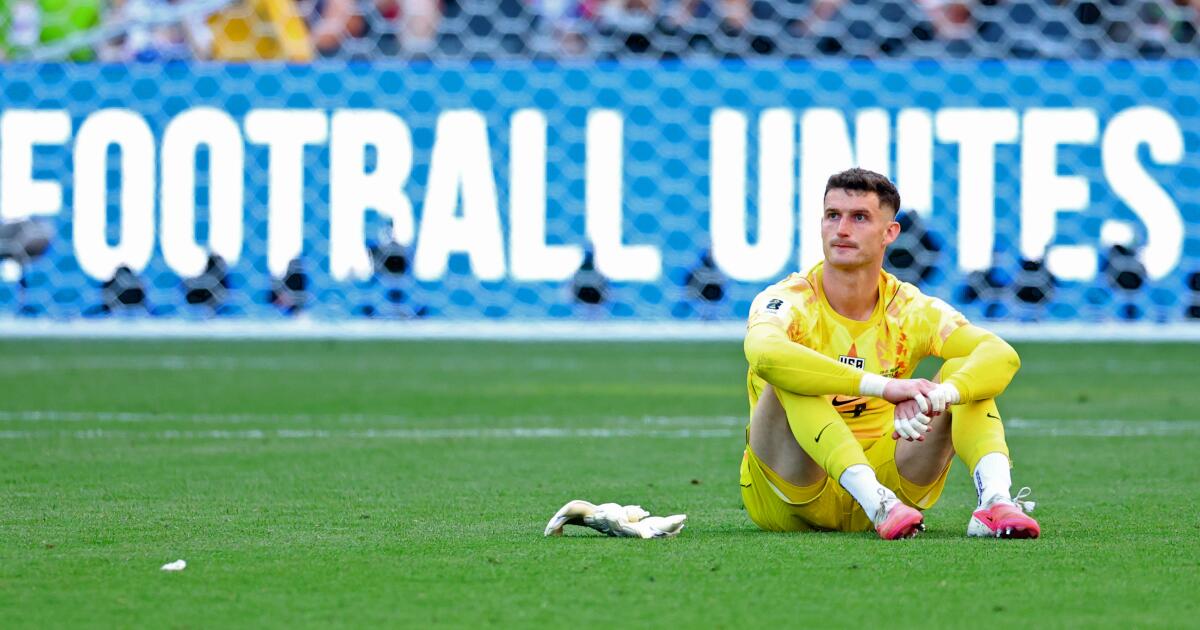
Commentary: Trump’s World Cup meddling only made matters worse for rattled U.S. squad
-
 Sports16 minutes ago
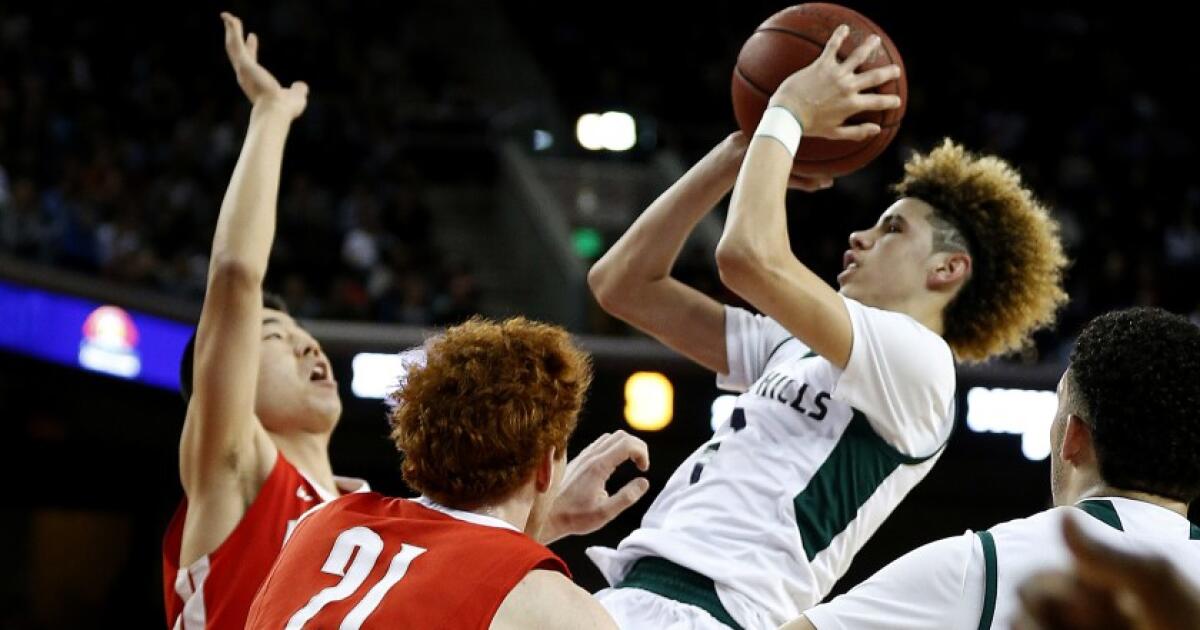
Looking back at the greatest high school basketball doubleheader in 2017
-

 World24 minutes ago
NATO must become more European, von der Leyen and Rutte say
-

 News49 minutes ago
Top Senate Democrats push Trump-affiliated companies for answers about IRS settlement
-

 Los Angeles, Ca2 hours ago
Missing 13-year-old with autism last seen at Los Angeles beach
-

 Videos2 hours ago
Charlie Kirk’s alleged killer appears in court
-
Detroit, MI3 hours ago
GET TO KNOW: Wide receiver Kendrick Law


