


Sign up for the Today newsletter
Get everything you need to know to start your day, delivered right to your inbox every morning.


For the first time since the epic 2019 campaign, Virginia football is 4-1 overall and 2-0 in ACC play. The Cavaliers posted their second-straight ACC victory, something they haven’t done since 2021, by coming back from down 14 points with a big fourth quarter rally to defeat Boston College 24-14 on Saturday afternoon in Charlottesville.
That marked the second time Virginia has come back to win after trailing by more than 14 points, as the Cavaliers also overcame a 14-point deficit in their big win at Wake Forest in week 2. Saturday was the first time UVA has erased a two-touchdown deficit at home since coming back from down 17-0 to beat Old Dominion in 2019.
The Hoos have fashioned themselves as comeback kids so far this season, boasting a 2-0 record when trailing after the first quarter and 2-0 when trailing at the half. While the UVA offense put together some big scoring drives to fuel the rally at Wake Forest, the Virginia defense was the key this time around, holding Thomas Castellanos and the Eagles scoreless for the final 43 minutes (and change) of the game, allowing the Cavaliers to score the final 24 points of the contest.
18 of those points came in the fourth quarter, the most Virginia has scored in the fourth quarter since the win at Louisville in 2021. The UVA defense forced three turnovers in the fourth quarter, including a fumble recovery and 40-yard return for a touchdown by Jonas Sanker. And while their overall offensive numbers seem pedestrian, the Cavaliers kept themselves in the game offensively by not turning the ball over for the second-straight game, the first time UVA has accomplished that feat since 2019.
See the chart below for a breakdown of the stats from Virginia’s win over Boston College:
|
Virginia |
Stat |
Boston College |
|---|---|---|
|
339 |
Total Offense |
319 |
|
121 |
Rushing Offense |
65 |
|
3.3 |
Yards Per Rush |
2.2 |
|
218 |
Passing Offense |
254 |
|
61 |
Completion % |
73 |
|
12.8 |
Yards Per Completion |
11.5 |
|
3/5 |
Red Zone Attempts |
1/1 |
|
9 |
Red Zone Points |
7 |
|
7/16 |
3rd Downs |
6/13 |
|
1/2 |
4th Downs |
1/2 |
|
29:32 |
Possession Time |
30:28 |
|
5-28 |
Penalties-Yards |
8-85 |
|
0 |
Turnovers |
3 |
|
3 |
Sacks By |
2 |
|
5 |
Tackles For Loss |
6 |
|
4 |
Big Plays (20+ Yards) |
5 |
Here are some key individual stats from the game along with some more notes:
We usually start with the offense in this section, but this time it seems fitting to begin with the defense.
Jonas Sanker found the end zone for his first-career touchdown, returning a fumble 40 yards to the house to give UVA the 24-14 lead late in the fourth. That marked the first time the Cavaliers have had a fumble recovery go for a touchdown since Eli Hanback jumped on a fumble in the end zone to all but secure Virginia’s win over Virginia Tech in the 2019 regular season finale.
Chico Bennett Jr. posted his first career interception and became the first Cavalier defensive linemen with a pick since David Dean did so against Virginia Tech in 2014. Bennett caught a pass that was initially tipped by Anthony Britton, who was making his first career start.
Kendren Smith made his third-career interception and first in a Virginia uniform. Kam Robinson led the Cavaliers with eight total tackles, marking the first time this season that someone other than Antonio Clary (seven tackles) led Virginia in tackles. Robinson was one of three Virginia players to record sacks in the game, joining James Jackson and Kam Butler.
Three different Virginia players completed a pass in the game. Anthony Colandrea went 15/26 (58%) for 179 yards and a touchdown. When Colandrea left the field for one play after taking a big hit, Tony Muskett came in and completed his only pass, a 10-yard strike to JR Wilson. Malachi Fields also completed a 29-yard pass to Kobe Pace on a trick play, the longest completed pass by a non-quarterback since Perry Jones threw a 36-yard completion to Tim Smith vs. Louisiana Tech in 2012.
Fields was Virginia’s leading receiver, tallying four catches for 63 yards and the go-ahead 30-yard touchdown from Colandrea in the fourth quarter. Fields has recorded at least one reception in his last 20 games. Andre Greene Jr. had four catches for 25 yards and JR Wilson, who made his season debut after missing the first four games with an injury, had four receptions for 44 yards.
VIDEO: Sanker, Colandrea, Pace & More React to UVA’s Win Over Boston College
UVA Football: Five Takeaways From Virginia’s 24-14 Win Over Boston College
Defensive Takeaways Spark Virginia to Comeback 24-14 Win Over Boston College
Virginia vs. Boston College Live Score Updates | NCAA Football


Stay up to date with everything Boston. Receive the latest news and breaking updates, straight from our newsroom to your inbox.

Local News
A Boston nightclub where a woman collapsed on the dance floor and died last month will have its entertainment license reinstated after the Boston Licensing Board found no violations Thursday.
Anastaiya Colon, 27, was at ICON, a nightclub in Boston’s Theater District, in the early hours of Dec. 21 when she suffered a fatal medical episode. Following the incident, her loved ones insisted that the club’s staff did not respond professionally and failed to control crowds.
City regulators suspended ICON’s entertainment license pending an assessment of any potential violations. During a hearing Tuesday, they heard from attorneys representing the club and people who were with Colon the night she died.

As EMTs attempted to respond, crowds inside the club failed to comply with demands to give them space, prompting police to shut down the club, according to a police report of the incident. However, the club and its representatives were adamant that staff handled their response and crowd control efforts properly.
Kevin Montgomery, the club’s head of security, testified that the crowd did not impede police or EMTs and that he waited to evacuate the club because doing so would have created a bottleneck at the entrance. Additionally, a bouncer and a bartender both testified that they interacted with Colon, who ordered one drink before collapsing, and did not see any signs of intoxication.
Angelica Morales, Colon’s sister, submitted a video taken on her phone to the board for them to review. Morales testified Tuesday that the video disproves some of the board’s claims and shows that ICON did not immediately respond to the emergency.
“I ran to the DJ booth, literally bombarded everybody that was in my way to get to the DJ booth, told them to cut the music off,” Morales said. “On my way back, the music was cut off for a minute or two, maybe less, and they cut the music back on.”
Shanice Monteiro, a friend who was with Colon and Morales, said she went outside to flag down police officers. She testified that their response, along with the crowd’s, was inadequate.
“I struggled to get outside,” Monteiro said. “Once I got outside, everybody was still partying, there was no type of urgency. Nobody stopped.”
These factors, along with video evidence provided by ICON, did not substantiate any violations on the club’s part, prompting the licensing board to reinstate their entertainment license at a subsequent hearing Thursday.
“Based on the evidence presented at the hearing from the licensed premise and the spoken testimony and video evidence shared with us from Ms. Colon’s family, I’m not able to find a violation in this case,” Kathleen Joyce, the board’s chairwoman, said at the hearing.
However, Joyce further stated that she “was not able to resolve certain questions” about exactly when or why the club turned off the music or turned on the lights. As a result, the board will require ICON to submit an emergency management plan to prevent future incidents and put organized safety measures in place.
“This plan should outline detailed operational procedures in the event of a medical or any other emergency, including protocols for police and ambulance notification, crowd control and dispersal, and procedures regarding lighting and music during an emergency response,” Joyce said.
Though the club will reopen without facing any violations, Joyce noted that there were “lessons left to be learned” from the incident.
“This tragedy has shaken the public confidence in nightlife in this area, and restoring that confidence is a shared obligation,” she said. “People should feel safe going out at night. They should feel safe going to a club in this area, and they should feel safe getting home.”
Keeana Saxon, one of three commissioners on the licensing board, further emphasized the distinction Joyce made between entertainment-related matters and those that pertained to licensing. Essentially, the deciding factor in the board’s decision was the separation of the club’s response from any accountability they may have had by serving Colon liquor.
“I hope that the family does understand that there are separate procedures for both the entertainment and the licensing, just to make sure that on the licensing side, that we understand that she was only served one drink and that it was absolutely unforeseeable for that one drink to then lead to some kind of emergency such as this one,” Saxon said.
Get everything you need to know to start your day, delivered right to your inbox every morning.

In the middle of Michelle Wu’s orchestrated inaugural celebration, prosecutors described a senseless hospital horror that unfolded at Boston Medical Center – a rape of a partially paralyzed patient allegedly by a mentally ill man allowed to freely roam the hospital’s hallways.
It happened in September in what is supposed to be a safe haven but too often is a dangerous campus. Drug addicts with needles frequently openly camp in front of the hospital, and in early December a security guard suffered serious injuries in a stabbing on the BMC campus. The alleged assailant was finally subdued by other security guards after a struggle.
In the September incident, prosecutors described in court this week how the 55-year-old alleged rapist Barry Howze worked his way under the terrified victim’s bed in the BMC emergency room and sexually assaulted her.
“This assault was brutal and brazen, and occurred in a place where people go for help,” Suffolk County prosecutor Kate Fraiman said. “Due to her partial paralysis, she could not reach her phone, which was under her body at the time.”
Howze, who reportedly has a history of violent offenses and mental illness, was able to flee the scene but was arrested two days later at the hospital when he tried to obtain a visitor’s pass and was recognized by security. Howze’s attorney blamed hospital staff for allowing him the opportunity to commit the crime and some city councilors are demanding answers.
“This was a horrific and violent sexual assault on a defenseless patient,” Councilor Ed Flynn said. “The safety and security of patients and staff at the hospital can’t be ignored any longer. The hospital leadership must make immediate and major changes and upgrades to their security department.”
Flynn also sent a letter to BMC CEO Alastair Bell questioning how the assailant was allowed to commit the rape.
Where is Wu? She was too busy celebrating herself with a weeklong inaugural of her second term to deal with the rape at the medical center, which is near the center of drug-ravaged Mass and Cass.
If the rape had happened at a suburban hospital, people would be demanding investigations and accountability.
But in Boston, Wu takes credit for running the “safest major city in the country” while often ignoring crimes.
Wu should intervene and demand better security and safety for the staff and patients at BMC.
Although the hospital is no longer run by the city, it has a historic connection with City Hall. It is used by Boston residents, many of them poor and disabled or from marginalized communities. She should be out front like Flynn demanding accountability from the hospital.
Boston Medical Center, located in the city’s South End, is the largest “safety-net” hospital in New England. It is partially overseen by the Boston Public Health Commission, whose members are appointed by the mayor.
BMC was formed in 1996 by the Thomas Menino administration as a merger between the city-owned Boston City Hospital, which first opened in 1864, and Boston University Medical Center.
Menino called the merger “the most important thing I will do as mayor.”
When he was appointed CEO by the hospital board of trustees in 2023, Bell offered recycled Wu-speak to talk about how BMC was trying to “reshape” how the hospital delivers health care.
“The way we think about the health of our patients and members extends beyond traditional medicine to environmental sustainability and issues such as housing, food insecurity, and economic mobility, as we study the root causes of health inequities and empower all of our patients and communities to thrive,” Bell said.
But the hospital has been plagued by security issues in the last few years, and a contract dispute with the nurses’ union. The nurses at BMC’s Brighton campus authorized a three-day strike late last year over management demands to cut staffing and retirement benefits.
Kirsten Ransom, BMC Brighton RN and Massachusetts Nurses Association co-chair, said, “This vote sends a clear message that our members are united in our commitment to make a stand for our patients, our community and our professional integrity in the wake of this blatant effort to balance BMC’s budget on the backs of those who have the greatest impact on the safety of the patients and the future success of this facility.”


2 hospitalized after shooting on Lodge Freeway in Detroit


Power bank feature creep is out of control


Defensive coordinator candidates who could improve Cowboys’ brutal secondary in 2026


Viral New Year reset routine is helping people adopt healthier habits


Pat McAfee praises Audi Crooks, plays hype song for Iowa State star


Oregon State LB transfer Dexter Foster commits to Nebraska

Nebraska-based pizza chain Godfather’s Pizza is set to open a new location in Queen Creek
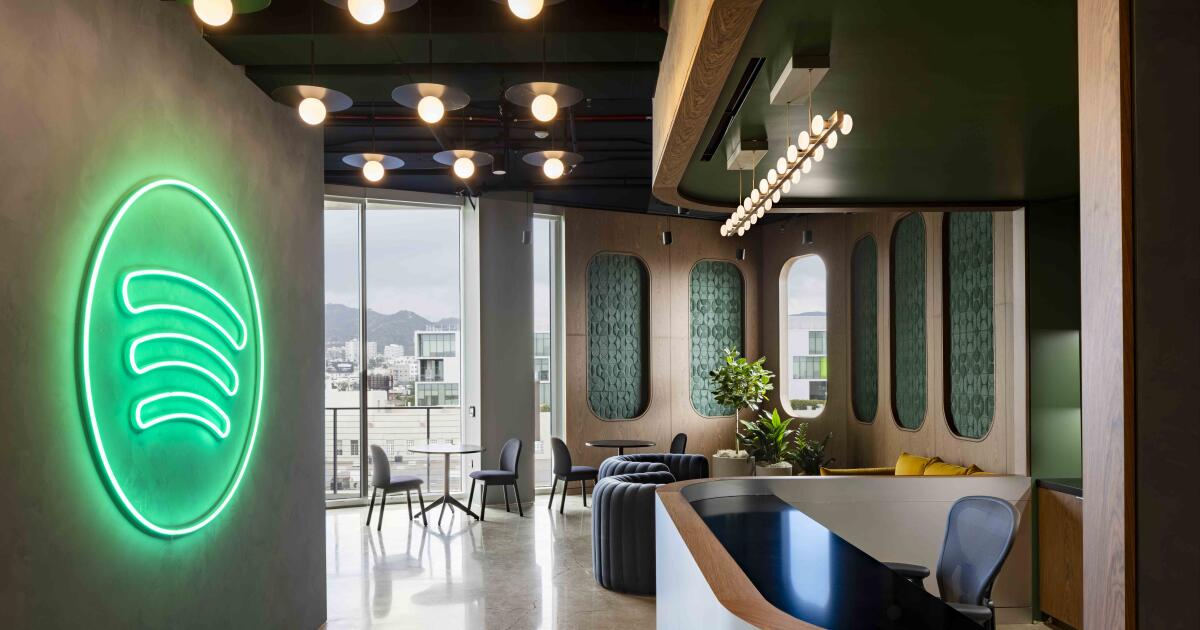
Spotify digs in on podcasts with new Hollywood studios