News
Trump's lawyers seek post-Election Day delay for court fight over immunity decision fallout in interference case


WASHINGTON — Former President Donald Trump’s legal team on Friday proposed a court schedule in his federal election interference case that would delay a court fight over whether his charges are covered by immunity until after the election — and push the start of a potential trial until well after the next inauguration.
Special counsel Jack Smith argued for a vastly different approach to the trial’s scheduling, saying the court should begin considering arguments immediately as to whether Trump’s actions are covered by presidential immunity, a process his office said will include revealing new evidence.
“The Government is prepared to file its opening immunity brief promptly at any time the Court deems appropriate,” senior assistant special counsel Molly Gaston writes for the government.
But Trump’s legal team wants to hash out other points before getting into the question of whether the Supreme Court’s decision earlier this year makes moot some of the charges that have been brought against him.
U.S. District Judge Tanya Chutkan has set a hearing for Thursday to discuss the future schedule of the case, which was originally supposed to go to trial in March 2024.
While Trump’s lawyers never explicitly invoked the pending election, the schedule outlined in the new filing would allow for no new substantive arguments from the special counsel until after voting is complete. Trump is accused of trying to defraud the American public and disenfranchise voters across several states, in charges that are related to his multi-pronged effort to overturn the results of the 2020 election by falsely claiming it had been stolen, which culminated in the attack on the U.S. Capitol on Jan. 6. Trump has pleaded not guilty and denied all wrongdoing. He has continued to falsely insist the election was stolen and begun to suggest that the coming election could also be subject to fraud that would deny him the presidency.
If Trump wins the November election, he would likely be able to end the case against him before a trial could be held once his appointees took over the Justice Department in January.
Trump’s lawyers indicated they were “considering several challenges” to the superseding indictment returned by a federal grand jury earlier this week, arguing that their challenges “should be resolved in his favor as a matter of law and would obviate the need for further proceedings.” One of their challenges will be questioning the legality of the appointment of Smith, repeating an argument that helped them successfully get separate charges in a Florida federal court tossed out — but a point his lawyers opted not to previously make in the election interference case.
Attorney General Merrick Garland told NBC News last month that he disagreed with a decision made by Trump-appointed U.S. District Judge Aileen Cannon in Florida in July that Smith’s appointment was unlawful.
“Do I look like somebody who would make that basic mistake about the law?” asked Garland, who former president Barack Obama had nominated to the Supreme Court towards the end of Obama’s second term. “I don’t think so.”
Trump’s team also said they strongly maintained that the Supreme Court’s decision means the new indictment should be dismissed entirely because some of the actions described in it, “including, but not limited to, Tweets and public statements about the federal 2020 Presidential election, communications with state officials about the federal election, and allegations relating to alternate slates of electors,” should be shielded from prosecution. Trump’s lawyers said they may also file a motion seeking to have the indictment dismissed because former Vice President Mike Pence was mentioned to the grand jury.
Trump’s team proposed a trial schedule that would have the first hearing on their motions held the week of Jan. 27, which would be one week after the next president is sworn into office. The spring and fall of 2025 would be time for “Additional proceedings, if necessary,” Trump’s lawyers proposed.
The positions of both the government and Trump’s defense team are laid out in a joint motion filed late Friday evening.
Trump was first indicted on the charges in August 2023 and was originally scheduled to go to trial in March 2024, meaning that there likely would have been a verdict in the case before Election Day and, if convicted, Trump would have already been sentenced or had a sentencing date on the books. But the strategy adopted by his legal team paid off, with their appeal significantly delaying the case.
The Supreme Court’s immunity decision, which gave wide protection to the former president to prevent him from being prosecuted for official actions he took as president, weakened the special counsel’s case. In an effort to simplify the issues raised by the Supreme Court’s ruling, the new indictment — returned by an entirely different federal grand jury earlier this week — does not include any of the allegations about Trump’s attempts to weaponize the Justice Department by installing Jeffrey Clark — an environmental lawyer with no criminal prosecutorial experience who believed the election may have been stolen via smart thermostat — as the acting attorney general of the United States just hours before the Jan. 6 attack.
While many Jan. 6 defendants have now conceded that they were tricked by Trump’s 2020 election lies and told judges they regret that they were gullible enough to fall for them in the first place, Trump’s team has attempted to give an intellectual spit-shine to his election conspiracy theories. In court, they’ve claimed that those election conspiracy theories — aired by the same man who rose to political prominence by falsely claiming that America’s first Black president had a fake birth certificate and was actually born in Kenya — “were plausible and maintained in good faith.”
Jack Smith’s team has said explicitly that they believe that Trump didn’t actually believe the lies he was spreading about the election, and that in fact he knew they were false.
“These claims were unsupported, objectively unreasonable, and ever-changing, and the Defendant and his co-conspirators repeated them even after they were publicly disproven,” the new indictment stated.




The Supreme Court
Win McNamee/Getty Images
hide caption
toggle caption
Win McNamee/Getty Images
The Supreme Court on Monday intervened in New York’s redistricting process, blocking a lower court decision that would likely have flipped a Republican congressional district into a Democratic district.
At issue is the midterm redrawing of New York’s 11th congressional district, including Staten Island and a small part of Brooklyn. The district is currently held by a Republican, but on Jan. 21, a state Supreme Court judge ruled that the current district dilutes the power of Black and Latino voters in violation of the state constitution.
GOP Rep. Nicole Malliotakis, who represents the district, and the Republican co-chair of the state Board of Elections promptly appealed to the U.S. Supreme Court, asking the justices to block the redrawing as an unconstitutional “racial gerrymander.” New York’s congressional election cycle was set to officially begin Feb. 24, the opening day for candidates to seek placement on the ballot.
As in this year’s prior mid-decade redistricting fights — in Texas and California — the Trump administration backed the Republicans.
Voters and the State of New York contended it’s too soon for the Supreme Court to wade into this dispute. New York’s highest state court has not issued a final judgment, so the voters asserted that if the Supreme Court grants relief now “future stay applicants will see little purpose in waiting for state court rulings before coming to this Court” and “be rewarded for such gamesmanship.” The state argues this is an issue for “New York courts, not federal courts” to resolve, and there is sufficient time for the dispute to be resolved on the merits.
The court majority explained the decision to intervene in 101 words, which the three dissenting liberal justices summarized as “Rules for thee, but not for me.”
The unsigned majority order does not explain the Court’s rationale. It says only how long the stay will last, until the case moves through the New York State appeals courts. If, however, the losing party petitions and the court agrees to hear the challenge, the stay extends until the final opinion is announced.
Dissenting from the decision were Justices Sonia Sotomayor, Elena Kagan, and Ketanji Brown Jackson. Writing for the three, Sotomayor said that if nonfinal decisions of a state trial court can be brought to highest court, “then every decision from any court is now fair game.” More immediately, she noted, “By granting these applications, the Court thrusts itself into the middle of every election-law dispute around the country, even as many States redraw their congressional maps ahead of the 2026 election.”
Monday’s Supreme Court action deviates from the court’s hands-off pattern in these mid-term redistricting fights this year. In two previous cases — from Texas and California — the court refused to intervene, allowing newly drawn maps to stay in effect.
Requests for Supreme Court intervention on redistricting issues has been a recurring theme this term, a trend that is likely to grow. Earlier last month the high court allowed California to use a voter-approved, Democratic-friendly map. California’s redistricting came in response to a GOP-friendly redistricting plan in Texas that the Supreme Court also permitted to move forward. These redistricting efforts are expected to offset one another.
But the high court itself has yet to rule on a challenge to Louisiana’s voting map, which was drawn by the state legislature after the decennial census in order to create a second majority-Black district. Since the drawing of that second majority-black district, the state has backed away from that map, hoping to return to a plan that provides for only one majority-minority district.
The Supreme Court’s consideration of the Louisiana case has stretched across two terms. The justices failed to resolve the case last term and chose to order a second round of arguments this term adding a new question: Does the state’s intentional creation of a second majority-minority district violate the constitution’s Fourteenth and Fifteenth Amendments’ guarantee of the right to vote and the authority of Congress to enforce that mandate?
Following the addition of the new question, the state of Louisiana flipped positions to oppose the map it had just drawn and defended in court. Whether the Supreme Court follows suit remains to be seen. But the tone of the October argument suggested that the court’s conservative supermajority is likely to continue undercutting the 1965 Voting Rights Act.

Note: Map shows the area with a shake intensity of 3 or greater, which U.S.G.S. defines as “weak,” though the earthquake may be felt outside the areas shown. The New York Times
A minor earthquake with a preliminary magnitude of 3.5 struck in Central California on Monday, according to the United States Geological Survey.
The temblor happened at 7:17 a.m. Pacific time about 6 miles northwest of Pinnacles, Calif., data from the agency shows.
As seismologists review available data, they may revise the earthquake’s reported magnitude. Additional information collected about the earthquake may also prompt U.S.G.S. scientists to update the shake-severity map.
Source: United States Geological Survey | Notes: Shaking categories are based on the Modified Mercalli Intensity scale. When aftershock data is available, the corresponding maps and charts include earthquakes within 100 miles and seven days of the initial quake. All times above are Pacific time. Shake data is as of Monday, March 2 at 10:20 a.m. Eastern. Aftershocks data is as of Monday, March 2 at 11:18 a.m. Eastern.

The U.S. and Israel have been conducting strikes against targets in Iran since Saturday morning, with the aim of toppling Tehran’s clerical regime. Iran has fired back, with retaliatory assaults featuring missiles and drones targeting several Gulf countries and American bases in the Middle East.
“All six aircrew ejected safely, have been safely recovered, and are in stable condition. Kuwait has acknowledged this incident, and we are grateful for the efforts of the Kuwaiti defense forces and their support in this ongoing operation,” Central Command said.
“The cause of the incident is under investigation. Additional information will be released as it becomes available,” it added.
In a separate statement later Monday, Central Command said that American forces had been killed during combat since the strikes began.
“As of 7:30 am ET, March 2, four U.S. service members have been killed in action. The fourth service member, who was seriously wounded during Iran’s initial attacks, eventually succumbed to their injuries,” it said.
Major combat operations continue and our response effort is ongoing. The identities of the fallen are being withheld until 24 hours after next of kin notification,” Central Command added.
This story has been updated.

Trump sends official notification to Congress on strikes against Iran

Punch the monkey, viral star, experiences dramatic breakthrough among zoo mates

NBA player calls for Hawks to cancel their ‘Magic City’ strip club promotional night out of respect for women

Why the Microsoft 365 Copilot bug matters for data security
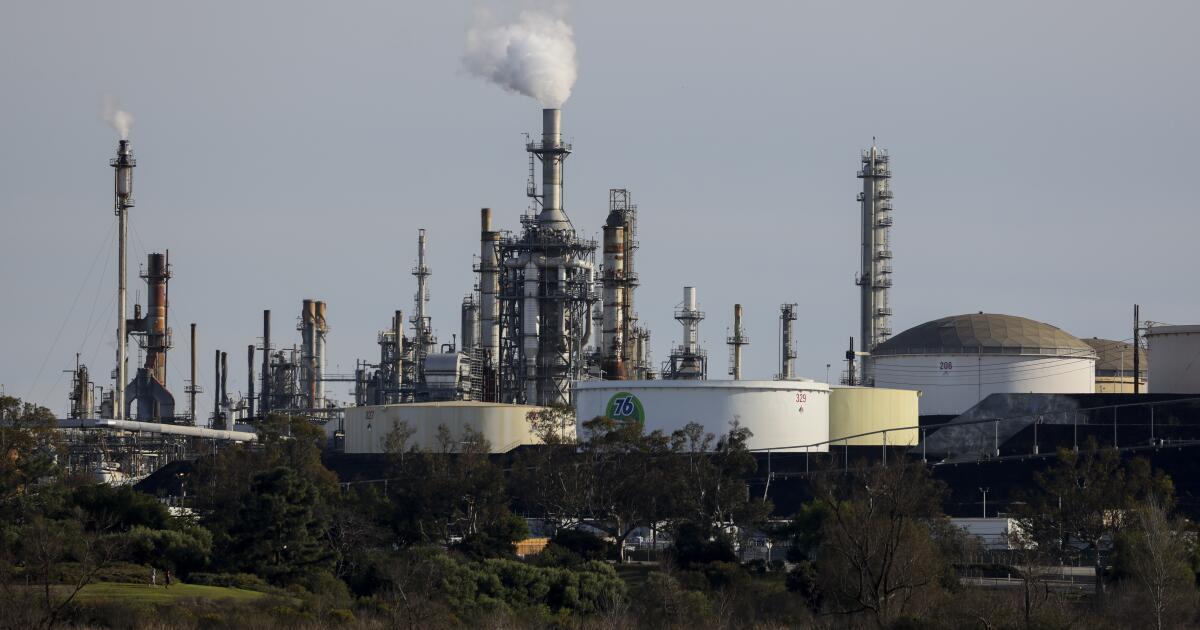
California gas is pricey already. The Iran war could cost you even more

Florida High School Football Rankings: Top 25 teams – Oct. 21

Cleary's 21 help Le Moyne down Central Connecticut State 69-64 in OT

How old is Bo Nix? What to know about Oregon quarterback ahead of 2024 NFL Draft

99th annual Pony Swim held in Virginia

Indiana Members Credit Union announced as new anchor tenant at Bottleworks District
Trump sends official notification to Congress on strikes against Iran

Unexpected birth brings hope to near-extinct Amazon tribe
Supreme Court blocks redrawing of New York congressional map, dealing a win for GOP

Map: Earthquake Shakes Central California

Gas prices could jump as Middle East tensions threaten global oil supply
-

 World5 days ago
Exclusive: DeepSeek withholds latest AI model from US chipmakers including Nvidia, sources say
-

 Massachusetts5 days ago
Mother and daughter injured in Taunton house explosion
-

 Denver, CO5 days ago
10 acres charred, 5 injured in Thornton grass fire, evacuation orders lifted
-

 Louisiana1 week ago
Wildfire near Gum Swamp Road in Livingston Parish now under control; more than 200 acres burned
-

 Technology1 week ago
YouTube TV billing scam emails are hitting inboxes
-

 Politics1 week ago
OpenAI didn’t contact police despite employees flagging mass shooter’s concerning chatbot interactions: REPORT
-

 Technology1 week ago
Stellantis is in a crisis of its own making
-

 News1 week ago
World reacts as US top court limits Trump’s tariff powers