News
Toplines: June 2024 Times/Siena Poll of Registered Voters Nationwide


How This Poll Was Conducted
Here are the key things to know about this Times/Siena poll:
• We spoke with 1,226 registered voters from June 20 to 25, 2024.
• Our polls are conducted by telephone, using live interviewers, in both English and Spanish. More than 90 percent of respondents were contacted on a cellphone for this poll.
• Voters are selected for the survey from a list of registered voters. The list contains information on the demographic characteristics of every registered voter, allowing us to make sure we reach the right number of voters of each party, race and region. For this poll, we placed nearly 150,000 calls to more than 100,000 voters.
• To further ensure that the results reflect the entire voting population, not just those willing to take a poll, we give more weight to respondents from demographic groups that are underrepresented among survey respondents, like people without a college degree. You can see more information about the characteristics of our respondents and the weighted sample at the bottom of the page, under “Composition of the Sample.”
• The poll’s margin of sampling error among registered voters is plus or minus three percentage points. In theory, this means that the results should reflect the views of the overall population most of the time, though many other challenges create additional sources of error. When computing the difference between two values — such as a candidate’s lead in a race — the margin of error is twice as large.
If you want to read more about how and why we conduct our polls, you can see answers to frequently asked questions and submit your own questions here.
Full Methodology
The New York Times/Siena College poll of 1,226 registered voters nationwide, including 991 who completed the full survey, was conducted in English and Spanish on cellular and landline telephones from June 20 to 25, 2024. The margin of sampling error is plus or minus three percentage points for registered voters and plus or minus 3.2 percentage points for the likely electorate. Among those who completed the full survey, the margin of sampling error is plus or minus 3.5 percentage points for registered voters and plus or minus 3.6 percentage points for the likely electorate.
Sample
The survey is a response rate-adjusted stratified sample of registered voters on the L2 voter file. The sample was selected by The New York Times in multiple steps to account for differential telephone coverage, nonresponse and significant variation in the productivity of telephone numbers by state.
First, records were selected by state. To adjust for noncoverage bias, the L2 voter file was stratified by statehouse district, party, race, gender, marital status, household size, turnout history, age and home ownership. The proportion of registrants with a telephone number and the mean expected response rate were calculated for each stratum. The mean expected response rate was based on a model of unit nonresponse in prior Times/Siena surveys. The initial selection weight was equal to the reciprocal of a stratum’s mean telephone coverage and modeled response rate. For respondents with multiple telephone numbers on the L2 file, the number with the highest modeled response rate was selected.
Second, state records were selected for the national sample. The number of records selected by state was based on a model of unit nonresponse in prior Times/Siena national surveys as a function of state, telephone number quality and other demographic and political characteristics. The state’s share of records was equal to the reciprocal of the mean response rate of the state’s records, divided by the national sum of the weights.
Fielding
The sample was stratified according to political party, race and region and fielded by the Siena College Research Institute, with additional field work by ReconMR, the Public Opinion Research Laboratory at the University of North Florida, the Institute of Policy and Opinion Research at Roanoke College, and the Center for Public Opinion and Policy Research at Winthrop University in South Carolina. Interviewers asked for the person named on the voter file and ended the interview if the intended respondent was not available. Overall, 91 percent of respondents were reached on a cellular telephone.
The instrument was translated into Spanish by ReconMR. Bilingual interviewers began the interview in English and were instructed to follow the lead of the respondent in determining whether to conduct the survey in English or Spanish. Monolingual Spanish-speaking respondents who were initially contacted by English-speaking interviewers were recontacted by Spanish-speaking interviewers. Overall, 13 percent of interviews among self-reported Hispanics were conducted in Spanish, including 17 percent of weighted interviews.
An interview was determined to be complete for the purposes of inclusion in the ballot test question if the respondent did not drop out of the survey by the end of the two self-reported variables used in weighting — age and education — and answered at least one of the age, education, race or presidential election ballot test questions.
Weighting — registered voters
The survey was weighted by The Times using the R survey package in multiple steps.
First, the sample was adjusted for unequal probability of selection by stratum.
Second, the sample was weighted to match voter file-based parameters for the characteristics of registered voters.
The following targets were used:
• Party (party registration if available, or else classification based on a model of vote choice in prior Times/Siena polls) by whether the respondent’s race is modeled as white or nonwhite (L2 model)
• Age (Self-reported age, or voter file age if the respondent refuses) by gender (L2)
• Race or ethnicity (L2 model)
• Education (four categories of self-reported education level, weighted to match NYT-based targets derived from Times/Siena polls, census data and the L2 voter file)
• White/non-white race by college or non-college educational attainment (L2 model of race weighted to match NYT-based targets for self-reported education)
• Marital status (L2 model)
• Home ownership (L2 model)
• National region (NYT classifications by state)
• Turnout history (NYT classifications based on L2 data)
• Method of voting in the 2020 elections (NYT classifications based on L2 data)
• Metropolitan status (2013 NCHS Urban-Rural Classification Scheme for Counties)
• Census tract educational attainment
Finally, the sample of respondents who completed all questions in the survey was weighted identically, as well as to the result for the general election horse race question (including leaners) on the full sample.
Weighting — likely electorate
The survey was weighted by The Times using the R survey package in multiple steps.
First, the samples were adjusted for unequal probability of selection by stratum.
Second, the first-stage weight was adjusted to account for the probability that a registrant would vote in the 2024 election, based on a model of turnout in the 2020 election.
Third, the sample was weighted to match targets for the composition of the likely electorate. The targets for the composition of the likely electorate were derived by aggregating the individual-level turnout estimates described in the previous step for registrants on the L2 voter file. The categories used in weighting were the same as those previously mentioned for registered voters.
Fourth, the initial likely electorate weight was adjusted to incorporate self-reported intention to vote intention. The final probability that a registrant would vote in the 2024 election was four-fifths based on their ex ante modeled turnout score and one-fifth based on their self-reported intentions, based on prior Times/Siena polls, including a penalty to account for the tendency of survey respondents to turn out at higher rates than nonrespondents. The final likely electorate weight was equal to the modeled electorate rake weight, multiplied by the final turnout probability and divided by the ex ante modeled turnout probability.
Finally, the sample of respondents who completed all questions in the survey was weighted identically, as well as to the result for the general election horse race question (including leaners) on the full sample.
The margin of error accounts for the survey’s design effect, a measure of the loss of statistical power due to survey design and weighting. The design effect for the full sample is 1.21 for registered voters and 1.33 for the likely electorate. The design effect for the sample of completed interviews is 1.24 for registered voters and 1.33 for the likely electorate.
Historically, The Times/Siena Poll’s error at the 95th percentile has been plus or minus 5.1 percentage points in surveys taken over the final three weeks before an election. Real-world error includes sources of error beyond sampling error, such as nonresponse bias, coverage error, late shifts among undecided voters and error in estimating the composition of the electorate.


EPISODE 2: In the summer of 2020, protests are happening all across the country. But Seattle is different. A confrontation between protestors and police outside a precinct leads to the birth of CHOP. A thousand miles away, Antonio Mays Jr. hears about what’s happening in Seattle. He was shot and killed there three weeks later.
Listen to Embedded wherever you get your podcasts, including NPR App, Apple Podcasts, Pocket Casts, Spotify, and RSS.
Support journalism like this by signing up for NPR+ at plus.npr.org
Additional reporting by David Gutman. Produced by Dan Girma, with Adelina Lancianese and Abby Wendle. Edited by Luis Trelles, Laura Greanias and Katie Simon. Fact checking and research by Dania Suleman and Miyoko Wolf. Mastering by Jimmy Keeley.

new video loaded: Trump Says He ‘Loves the Inflation’ Amid War With Iran
transcript
transcript
Trump Says He ‘Loves the Inflation’ Amid War With Iran
President Trump dismissed the newest inflation report on Wednesday, marking the third-straight month of high prices for consumers. The war in Iran has snarled the world’s energy supply, resulting in high oil and gas prices.
-
Reporter: “Are you concerned, Mr. President, about the latest inflation number which came out this morning? Could that be a —” “No, I love it. The numbers were great. You know what I really love. I love the inflation.” “Inflation to come down between now and —” “When the war is over?” “Yes.” “It’s coming down.” “I know you can’t —” “It’s going to come down like a rock.”
By Jorge Mitssunaga
June 10, 2026

Iran has again claimed attacks on United States military bases in Bahrain, Kuwait and Jordan, and targeted two vessels in the Strait of Hormuz in retaliation for renewed waves of US attacks on the country.
The Islamic Revolutionary Guard Corps (IRGC) said it launched drone strikes on Bahrain’s Sheikh Isa airbase and Kuwait’s Ali Al Salem and Ahmad Al-Jaber airbases early on Thursday.
list of 4 itemsend of listRecommended Stories
The Al-Azraq airbase in Jordan was also targeted with 12 ballistic missiles, it said, while two oil tankers that attempted “to illegally pass through” the Strait of Hormuz were also hit.
Bahrain activated air raid sirens twice, while Kuwait said its air defence systems were “intercepting hostile aerial targets”.
The IRGC said the strikes were in response to the US’s “repeated violations” of an April ceasefire and declared the Strait of Hormuz “closed until further notice”.
All traffic in the waterway, including oil tankers and commercial vessels, would be shot at, it said.
The attacks came after the US’s Central Command announced renewed strikes on “multiple targets” inside Iran. The military said the strikes were at President Donald Trump’s “direction” and “in response to Iran’s unwarranted and continued aggression”.
Tit-for-tat exchanges
Al Jazeera’s Mohamed Vall, reporting from Tehran, said about a dozen places were hit in three waves of attacks by the US, including in the city of Karaj, west of the Iranian capital, and in the central Abyek county.
Iranian state media reported multiple explosions on the islands of Qeshm and Kish and in the cities of Bandar Abbas and Sirik along the Strait of Hormuz.
Blasts also hit the southern city of Kargan, wounding at least two people.
The US Central Command, which announced an end to the strikes four hours after they began at 22:15 GMT on Wednesday, said it hit “military surveillance capabilities, communication systems, and air defense sites across Iran”.
The latest exchange came a day after the two sides traded tit-for-tat strikes, triggered by the downing of a US Apache helicopter in the Strait of Hormuz. Washington blamed Tehran for the incident and said the two pilots were rescued uninjured.
Iran said it targeted the US Fifth Fleet in Bahrain, the Ali Al Salem airbase in Kuwait, as well as an airbase in Azraq, Jordan, on Wednesday. The US, meanwhile, bombed Qeshm Island as well as the ports of Sirik, Jask and Bandar Abbas.
Tehran said the US attacks destroyed two water reservoirs and damaged a telecommunications tower.
Al Jazeera’s Vall said many of the locations hit on Thursday “were similar to those hit during the previous night”. He said that “the Americans are betting on force as the only means for them to force the Iranians to sign a deal, but the Iranians are saying that the result will be the contrary”.
Trump threatens Iran
At the White House on Wednesday, Trump accused Iran of stalling negotiations for a peace deal and threatened to hit the country “very hard”.
“We’ll see what happens with the deal. We were really close to a deal. But they keep tapping us along. They keep playing us for suckers,” he told reporters.
Earlier in the day, the US president wrote on his Truth Social platform that Iran had taken too long to negotiate a peace deal and “now they will have to pay the price”.
In a subsequent interview with Fox News, he also threatened to strike power plants and bridges in Iran if it was unwilling to sign an agreement.
Iran’s President Masoud Pezeshkian hit back in a post on X.
“Critical infrastructures are the lifeblood of the people. Threats to target them – from transportation networks to the electricity and water industries – are not a show of strength but a sign of desperation in the face of a nation’s will,” he wrote.
“Iran, relying on the knowledge and capabilities of its specialists, national unity, and solidarity, will stand firm against any pressure or threat,” he added.
The US-Iran escalation comes days after Israel and Iran traded fire in their most serious clash since the April ceasefire, which ended weeks of devastating US-Israeli strikes on Iran and Iranian retaliatory attacks across the Gulf.
Traffic through the Strait of Hormuz has remained severely limited ever since, driving up oil and food prices worldwide.
Progress towards a peace deal also remains slow.
The two sides are engaged in indirect talks aimed at securing an interim agreement that would halt hostilities, while deferring Iran’s nuclear programme to future negotiations.
But sticking points remain, with Iran demanding the release of frozen assets and relief from sanctions. Complicating matters further is Israel’s intensifying campaign in Lebanon against the Iranian-backed Hezbollah.
-

 Technology24 seconds ago
12 biggest Apple WWDC 2026 takeaways you need to know
-
 Business5 minutes ago
Commentary: The right-wing attack on science reaches a nadir, but it could get worse
-
 Entertainment12 minutes ago
UFC Freedom 250: What to know about the White House bout, Paramount and the lawsuit
-
 Lifestyle15 minutes ago
Skip $300 parking. How to get to the World Cup at SoFi Stadium on $1.75 Metro shuttles
-
 Politics20 minutes ago
Who will be the new ’60 Minutes’ correspondents?
-
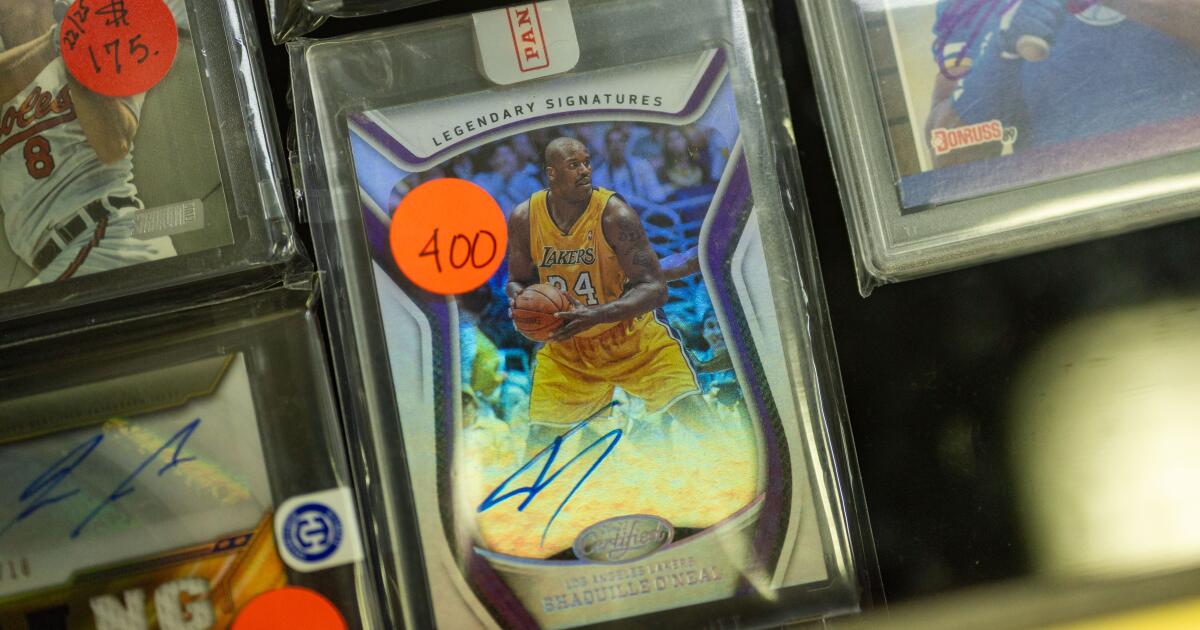 Sports30 minutes ago
LA Card Show! Everything you need to know to make the best of the event this weekend
-

 World42 minutes ago
Trump says US will ‘be taking’ Kharg Island in latest Iran war threat
-
News1 hour ago
We Keep Us Safe: The Standoff : Embedded

