News
Students and civil rights groups blast police response to campus protests


Police face off with pro-Palestinian students after dismantling part of the encampment barricade on the campus of the University of California, Los Angeles, early on May 2.
Etienne Laurent/AFP via Getty Images
hide caption
toggle caption
Etienne Laurent/AFP via Getty Images

Police face off with pro-Palestinian students after dismantling part of the encampment barricade on the campus of the University of California, Los Angeles, early on May 2.
Etienne Laurent/AFP via Getty Images
A broken ankle.
Concussions.
Tasered.
Pepper sprayed.
These are some of the claims of injuries stemming from police conduct — and inaction — from students and university faculty involved in pro-Palestinian demonstrations on university campuses in New York and Los Angeles.
Aidan Doyle, a 21-year-old junior at the University of California, Los Angeles, told NPR that the slow response from police, decisions made by university officials and the violence from counterprotesters would be things he’s unlikely to ever forget.
“The treatment of the protesters by the cops was horrible and unforgivable. But it was nothing compared to what the counterprotesters did assaulting 80, 90, 100 of us,” said Doyle, a member of the school’s pro-Palestinian encampment.
The students, like Doyle, and some faculty at universities across the country have spent the past few months protesting for Palestinian freedom. They’ve called on their universities to divest from companies that have businesses or investments in Israel because of the country’s military operation in Gaza.
These demonstrations have ramped up in recent weeks as students began erecting encampments on their school campuses, even taking over a school building to bring awareness to their cause.
University and police officials repeatedly demanded students disperse and take down their encampments, but protesters refused, arguing a right to free speech, and maintained that their demonstrations were peaceful. Some protesters at demonstrations, including at the University of California, Los Angeles, fought with counterprotesters.
Students and faculty, alumni, civil rights groups and some politicians allege that universities endangered public safety by calling in police in response to the protesters’ refusal to disperse. Some have said law enforcement used excessive, military-like force in their effort to clear some of the biggest student-run pro-Palestinian demonstrations and encampments in New York City and Los Angeles.
Days after police broke up the encampment and takeover of Columbia University’s Hamilton Hall, the New York City Police Department admitted that an officer accidentally fired his gun while inside the building. No one was hit by the bullet in that incident.
Isabelle Leyva, a senior organizer with the New York Civil Liberties Union, described “a consistent pattern of NYPD escalation at pro-Palestine protests” over the past few months. The organization is an affiliate of the American Civil Liberties Union.
The NYPD has responded to more than 2,400 protests and demonstrations since Oct. 7, and nearly half of them were related to the conflict between Israel and the Palestinians, Police Commissioner Edward Caban said during a press conference last week.
“And every one, we’ve worked to keep protesters safe and protect their First Amendment rights,” he said.
But Leyva said that last week’s protests in New York City were unlike anything she’s seen before. She worked with several monitors, including students, that observed the demonstrations at Columbia University and The City College of the City University of New York where police were called in to disperse student encampments on April 30.
“We saw, in my personal experience, the largest deployment of the NYPD that I’ve ever seen at a protest,” Leyva said. She saw violence during the arrests of people outside of campus that were protesting during the NYPD’s raid on Columbia’s Hamilton Hall.
In Los Angeles, students at UCLA reported being struck by rubber bullets fired by a massive police response to the demonstration at the school while also witnessing officers reportedly delaying their response as counterprotesters rained sticks, fists and rocks onto their encampment.
More than 2,100 people have been arrested on college campuses across the country over the previous two weeks on universities across the U.S, according to a tally from the Associated Press.
On Monday, tense interactions between protesters and police were still being reported. Columbia leadership requested a police presence through May 17, until commencement activities for the school were over.
UCLA’s chapter of the Students for Justice in Palestine reported more than 45 students, other members of the university, members of the press and lawyers were arrested at 6 a.m. Monday by the members of the Los Angeles Sheriff’s Department and the Los Angeles Police Department. At the time, UCLA SJP said, no students were protesting. The group also alleges that police kept these students on the ground in handcuffs for hours.
In New York protests, police used a controversial specialty unit
Russ Hicks, a longtime police academy trainer in Washington state, told NPR’s Martin Kaste that to have a larger response from law enforcement is safer, both for officers and for the protesters.
“What you don’t want is a handful of five officers managing a large crowd because that’s when things get out of control,” Hicks said. Officers may end up “using too much force because they don’t have enough people,” he said.
But Molly Biklen, the NYCLU’s associate legal director, argues that police arriving in such large numbers, as was the case at Columbia and City College, “often leads to escalation rather than de-escalation.”
The NYPD’s controversial Strategic Response Group (SRG) was brought in to break up the student encampments on the night of April 30. The SRG “responds to citywide mobilizations, civil disorders, and major events with highly trained personnel and specialized equipment,” according to the NYPD’s website.
The NYCLU has long called for the dissolution of the SRG, saying it is “a violent, overfunded, and unaccountable unit of the NYPD notorious for its abuse of protesters, particularly those standing up for racial justice.” The SRG has also drawn condemnation from Human Rights Watch.
The NYCLU filed a lawsuit over alleged aggressive over-policing from the NYPD during Black Lives Matter protests in 2020. Last September, a settlement was reached that mandates the NYPD will only be allowed to deploy the SRG under certain conditions. Not all provisions have been fully implemented, Biklen said.
The New York Police Benevolent Association, the police union, said it intends to appeal the settlement, calling it “misguided” and dangerous to the lives of frontline officers.
Biklen said other universities have responded “with dialogue” and in other ways.
“There’s a number of ways to respond,” Biklen said, “that just don’t involve throwing hundreds of cops at problems. That has been a way in which society has tried to respond to every single problem that we have in a city. And, I think we’ve seen that that is not the answer.”
Officials claim some protesters weren’t students and that they threatened safety
Pro-Palestinian supporters confront police during demonstrations at The City College of New York as the NYPD cracks down on protest camps at both Columbia University and CCNY on April 30, in New York City.
Spencer Platt/Getty Images
hide caption
toggle caption
Spencer Platt/Getty Images
Pro-Palestinian supporters confront police during demonstrations at The City College of New York as the NYPD cracks down on protest camps at both Columbia University and CCNY on April 30, in New York City.
Spencer Platt/Getty Images
Police in New York City and the Mayor Eric Adams have repeatedly said that about half of the people arrested at Columbia and City College are not currently affiliated with either school — allegations the schools are repeating.
City officials said 29% of the 112 people arrested at a protest at Columbia last week were not affiliated with the school. At the City College protest, 60% of the 170 arrested were not affiliated with the school, according to the city’s press release.
The NYPD has not directly responded to NPR’s repeated requests to get clarification on how the department and Adams have made that determination.
Police said school officials have said they made the decision to call in extra security measures in response to “violence and vandalism” — not because the students were holding peaceful protests.
Since October, “there has been a pattern of demonizing protesters specifically that are protesting in support of Palestinian Liberation,” said the NYCLU’s Leyva. “When we start to paint protesters as outside agitators, as terrorists, as people who want to harm the city, etc. in the public’s mind, that allows people to justify mass police presence, including police violence and mass arrests.”
NPR has submitted a Freedom of Information Act request for police body camera footage from law enforcement agencies in New York and Los Angeles.
In response to the encampment at UCLA, officers from multiple units arrived including the Los Angeles County Sheriff’s Department, the California Highway Patrol, the Los Angeles Police Department, and the UCLA Police Department.
“The Sheriff’s Department is committed to protecting people’s constitutional rights and their right to exercise free speech,” the agency said in a statement to NPR on Monday. “However, when actions turn violent and cross the line into criminal misconduct the Department will intervene and enforce the laws appropriately. We encourage the public to protest peacefully and listen to law enforcement instructions.”
The California Highway Patrol confirmed to NPR that officers responding to the demonstrations “utilized aerial distraction devices” that didn’t come into physical contact with anyone. When certain demonstrators threatened officers by throwing objects and weapons, the CHP said “sponge rounds and bean bag rounds were used on a limited basis in response. The CHP did not deploy any chemical agents during this incident.”
The LAPD referred NPR to UCLA police, which didn’t respond to a request for comment.
A student says he will never forget what happened at UCLA
Police face off with pro-Palestinian students after dismantling part of the encampment barricade on the UCLA campus in Los Angeles early on May 2.
Etienne Laurent/AFP via Getty Images
hide caption
toggle caption
Etienne Laurent/AFP via Getty Images
Police face off with pro-Palestinian students after dismantling part of the encampment barricade on the UCLA campus in Los Angeles early on May 2.
Etienne Laurent/AFP via Getty Images
A large number of police arrived at schools in New York City and Los Angeles, dressed in riot gear, some holding shields and batons.
Graphic videos and images have emerged of violent clashes on the night of April 30 and May 1 between pro-Palestinian student demonstrators and counterprotesters on the UCLA campus. Videos on social media showed law enforcement standing off to the side during the fighting and shooting rubber bullets into the melee.
Doyle, the UCLA junior, said he joined the encampment on the school’s Royce Quad the week before arrests were made calling it peaceful.
He allowed NPR to use videos he shared of his experience at the encampment on Instagram.
On Sunday, April 28, a pro-Israeli rally started near the encampment. Nothing violent happened, but tension was brewing, Doyle said. Pressure continued to mount when on Tuesday, April 30, things erupted. That’s when a large group of counterprotesters surrounded the encampment, hurling fireworks, sticks and other items.
Doyle said he was hit in the face with a rock and a plastic traffic cone.
A student at UCLA shares how he was attacked at the Palestine Solidarity Encampment.
He received 12 staples to the back of his head. pic.twitter.com/DJfZclZ7zc
— Sulaiman Ahmed (@ShaykhSulaiman) May 4, 2024
Counterprotesters continued to attack the encampment throughout the night, including hitting students with pepper spray and other chemicals, he said.
“I saw a girl probably 20 years old, being struck in the face by men who are counterprotesting. It was one of the most disturbing things I’ve ever seen,” Doyle said.
At around 2 a.m., Los Angeles Mayor Karen Bass tweeted that LAPD officers were responding to the violence and said that the “violence unfolding this evening at UCLA is absolutely abhorrent and inexcusable.”
Police arrived at around midnight or 1 a.m., from Doyle’s recollection.
“We watched as they lined up on the hill alongside the counterprotesters, and they stood there and did nothing,” he said.
The LAPD confirmed that its officers, along with other state and local law enforcement agencies responded.
“Once mutual aid resources were formed and coordinated, they separated the two groups. No arrest were made, no force was used, and no officers were injured,” the LAPD wrote on X.
A California Highway Patrol (CHP) officer fires a flash-bang while clearing a pro-Palestinian encampment after dispersal orders were given at the University of California, Los Angeles (UCLA) campus, on May 2, 2024 in Los Angeles, California.
Mario Tama/Getty Images
hide caption
toggle caption
Mario Tama/Getty Images
A California Highway Patrol (CHP) officer fires a flash-bang while clearing a pro-Palestinian encampment after dispersal orders were given at the University of California, Los Angeles (UCLA) campus, on May 2, 2024 in Los Angeles, California.
Mario Tama/Getty Images
Students, including Doyle, returned to the encampment the next night, on May 1, despite the attacks from the night before.
That’s when more than 200 pro-Palestinian protesters were surrounded by Los Angeles police and were arrested. LAPD Chief Dominic Choi said 210 arrests were made by the UCLA Police Department for failure to disperse and that he was “thankful there were no serious injuries to officers or protestors.”
But the UCLA Palestine Solidarity Encampment said police “tore students from our human chain and shot rubber bullets at close range. Many were rushed to the ER after the bullets connected with heads and hands.”
Doyle said he and hundreds of other protesters were handcuffed and bundled into buses where they stayed for hours before getting to the police station.
“We were in the bus for something like 4 1/2 hours,” he said. One of his fellow demonstrators requested a trip to the bathroom, which was ignored, Doyle said. Eventually, Doyle said, that person defecated on himself.
UCLA Chancellor Gene Block issued a statement defending the decision to call in law enforcement.
“Several days of violent clashes between demonstrators and counter-demonstrators put too many Bruins in harm’s way and created an environment that was completely unsafe for learning,” Block wrote. “In the end, the encampment on Royce Quad was both unlawful and a breach of policy. It led to unsafe conditions on our campus and it damaged our ability to carry out our mission.”
Block has said the attack on the encampment from counterprotesters will be investigated and “may lead to arrests, expulsions and dismissals.”
City College violence was “more aggressive” than Columbia’s, civil rights group says
Police arrest protesters during pro-Palestinian demonstrations at The City College Of New York as the NYPD cracks down on protest camps at both Columbia University and CCNY on April 30, in New York City.
Spencer Platt/Getty Images
hide caption
toggle caption
Spencer Platt/Getty Images
Police arrest protesters during pro-Palestinian demonstrations at The City College Of New York as the NYPD cracks down on protest camps at both Columbia University and CCNY on April 30, in New York City.
Spencer Platt/Getty Images
The images that emerged from the NYPD’s response at Ivy League Columbia University were striking.
As media attention was trained on Columbia, students at City College faced violence “even more aggressive than what we saw outside of Columbia,” Leyva said.
This kind of response is even more striking and layered because City College has more students of color “who are already impacted disproportionately by policing and police violence,” Leyva said.
NYCLU’s protest monitors saw pepper spray and tasers being deployed, students being beaten and sustaining injuries, she said. Arrests continued well into the early hours at City College.
“Around campus is where we documented the bulk of the violence. So that was six or seven police on top of one person for arrest, pushing people onto the sidewalk, using barricades that were lifted and then arresting those people on the sidewalk, despite the fact that the orders to avoid arrest was to go onto the sidewalk,” Leyva said. “This was all in an effort to keep people as far away from campus and being able to see what was going on.”
In a recent statement, the CUNY Gaza Solidarity Encampment said, “We reject the claim that there was violence against any officer from a member of the encampment or a supporter since their injuries were a consequence of their own pepper spray,”
Corinna Mullin, an adjunct assistant professor in the Department of Political Science at John Jay College, said the police raid on the City College encampment “was a horrifying experience.” Mullin supported the students’ cause and stood alongside other faculty members. She spoke last week at a press conference organized by student protesters.
“We were surrounded on all sides by hundreds of police officers. It felt like a military invasion. It was terrifying — terrifying. I’ve never experienced anything like it before. There was an unnecessary and excessive use of force,” Mullin said.
She detailed witnessing police batons pressed against protesters’ necks and chests. Once in jail, people were left standing, denied water and access to a bathroom for hours, she said. She also witnessed a Muslim woman’s hijab being removed from her head.



Smoke rises over Konarak naval base in southern Iran on Sunday. The base was one of hundreds of targets of U.S. and Israeli forces throughout the country.
Planet Labs PBC
hide caption
toggle caption
Planet Labs PBC
Commercial satellite images are providing a unique look at the extent of damage being done to Iran’s military facilities across the country.
The U.S. and Israeli military campaign opened with a daytime attack that struck Iranian leadership in central Tehran. Smoke was still visible rising from Ayatollah Ali Khamenei’s compound following the attack that killed the supreme leader.

An image by the company Airbus taken on Saturday shows the aftermath of an Israeli strike on Iran’s Leadership House in central Tehran. Iran’s Supreme Leader Ayatollah Ali Khamenei was killed in the opening wave of attacks.
Pléiades Neo (c) Airbus DS 2026
hide caption
toggle caption
Pléiades Neo (c) Airbus DS 2026
Israel and the U.S. have gone on to strike targets across the country. Reports on social media indicate that there have been numerous military bases and compounds attacked all over Iran, and Iran has responded with attacks throughout the Middle East.
U.S. forces have also been striking at Iran’s navy. In a post on his social media platform, President Trump said that he had been briefed that U.S. forces had sunk nine Iranian naval vessels. U.S. Central Command did not immediately confirm that number but it did say it had struck an Iranian warship in port.

An image captured on Saturday shows a ship burning at Iran’s naval base at Konarak.
Satellite image ©2026 Vantor
hide caption
toggle caption
Satellite image ©2026 Vantor
Numerous satellite images show burning vessels at Konarak naval base in southern Iran. Images also show damage to a nearby airbase where hardened hangers were struck by precision munitions.

Hardened aircraft shelters at Konarak airbase were struck with precision munitions.
Satellite image ©2026 Vantor
hide caption
toggle caption
Satellite image ©2026 Vantor
And there was extensive damage at a drone base in the same area. Iran has launched numerous drones and missiles toward Israel and U.S. military installations in Bahrain, Kuwait and Qatar. Many drones have been intercepted but videos on social media show that some have evaded air defenses and caused damage in nearby Gulf countries. In Dubai, debris from an Iranian drone damaged the iconic Burj Al Arab, according to a statement from Dubai’s government.

Buildings at an Iranian drone base at Konarak were destroyed in the strikes.
Satellite image ©2026 Vantor
hide caption
toggle caption
Satellite image ©2026 Vantor
Iran’s most powerful weapons are its long-range missiles. The Iranian Revolutionary Guards have hidden the missiles deep inside mountain tunnels. Images taken Sunday in the mountains of northern Iran indicate that some of those tunnels were hit in a wave of strikes.
Following Khamenei’s death, Iran declared 40 days of mourning. Satellite images showed mourners gathering in Tehran’s Enghelab square on Sunday.
Iranian Foreign Ministry Spokesperson Esmail Baghaei told NPR on Sunday that Iran will continue to fight “foreign aggression, foreign domination.”
A White House official told NPR that Trump plans to talk to Iran’s interim leadership “eventually,” but that for now, U.S. operations continue in the region “unabated.”

A large crowd of mourners fill Enghelab Square in Tehran on Sunday, following the death of Iran’s Supreme Leader Ayatollah Ali Khamenei, who was killed in an Israeli airstrike.
Satellite image ©2026 Vantor
hide caption
toggle caption
Satellite image ©2026 Vantor

new video loaded: What the Texas Primary Battle Means for the Midterms
By J. David Goodman, Alexandra Ostasiewicz, June Kim and Luke Piotrowski
March 1, 2026

Gunfire rang out at a bar in Austin, Texas, early Sunday and at least three people were killed, the city’s police chief said.
Austin Police Chief Lisa Davis told reporters the shooter was killed by officers at the scene.
Fourteen others were hospitalized and three were in critical condition, Austin-Travis County EMS Chief Robert Luckritz said.
“We received a call at 1:39 a.m. and within 57 seconds, the first paramedics and officers were on scene actively treating the patients,” Luckritz said.
There was no initial word on the shooter’s identity or motive.
Davis noted how fortunate it was that there was a heavy police presence in Austin’s entertainment district at the time, enabling officers to respond quickly as bars were closing.
“Officers immediately transitioned … and were faced with the individual with a gun,” Davis said. “Three of our officers returned fire, killing the suspect.”
She called the shooting a “tragic, tragic” incident.

Austin Mayor Kirk Watson said his heart goes out to the victims, and he praised the swift response of first responders.
“They definitely saved lives,” he said.
Davis said federal law enforcement is aiding the investigation.

Kentucky Lottery Cash Ball, Pick 3 Evening winning numbers for March 1, 2026

Jury selection begins Monday in one of Louisiana’s largest auto insurance fraud cases
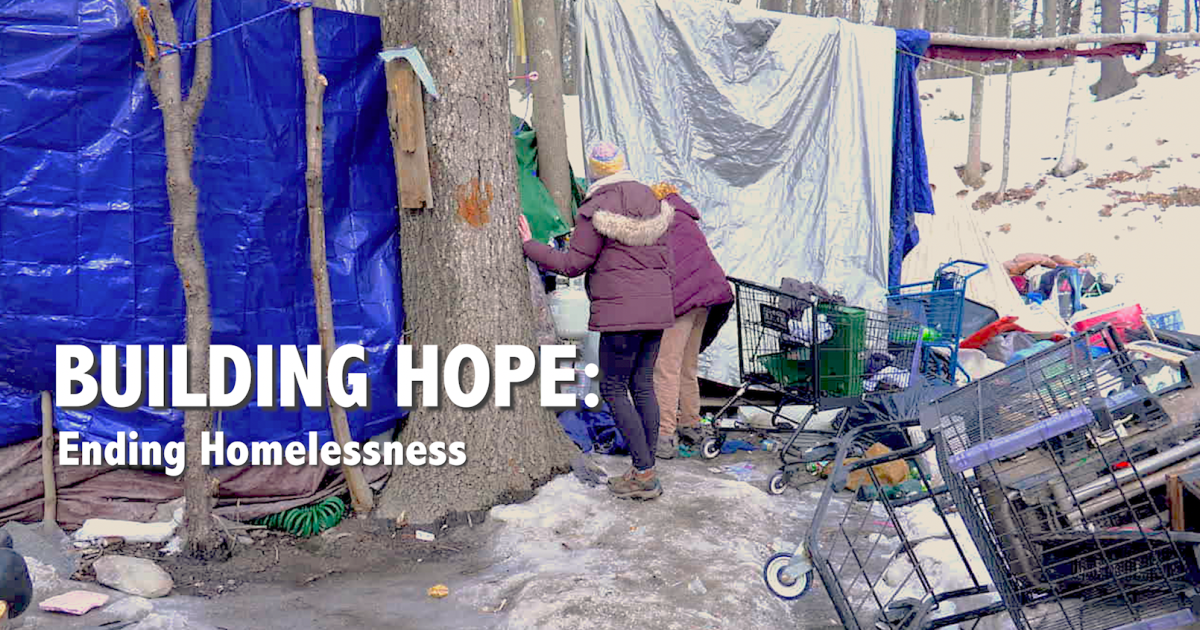
Building Hope: A Community Film Event to End Homelessness

SUN: Dozens of vehicles moved to planned Maryland ICE facility; advocates concerned

Michigan State Police patrol car damaged in hit-and-run on Lodge Freeway in Detroit

Florida High School Football Rankings: Top 25 teams – Oct. 21

Cleary's 21 help Le Moyne down Central Connecticut State 69-64 in OT

How old is Bo Nix? What to know about Oregon quarterback ahead of 2024 NFL Draft

99th annual Pony Swim held in Virginia

Indiana Members Credit Union announced as new anchor tenant at Bottleworks District

House Republicans push Johnson to go to war with Senate over SAVE Act

Israel FM says Europe too divided, slams Spanish PM
Satellite images provide view inside Iran at war

Video: What the Texas Primary Battle Means for the Midterms

Dems’ potential 2028 hopefuls come out against US strikes on Iran
-

 World4 days ago
Exclusive: DeepSeek withholds latest AI model from US chipmakers including Nvidia, sources say
-

 Massachusetts5 days ago
Mother and daughter injured in Taunton house explosion
-

 Denver, CO4 days ago
10 acres charred, 5 injured in Thornton grass fire, evacuation orders lifted
-

 Louisiana1 week ago
Wildfire near Gum Swamp Road in Livingston Parish now under control; more than 200 acres burned
-

 Technology1 week ago
YouTube TV billing scam emails are hitting inboxes
-

 Politics1 week ago
OpenAI didn’t contact police despite employees flagging mass shooter’s concerning chatbot interactions: REPORT
-

 Technology1 week ago
Stellantis is in a crisis of its own making
-

 News1 week ago
World reacts as US top court limits Trump’s tariff powers