News
Justice Dept. to Review Election Tampering Conviction of Pro-Trump Clerk
The Justice Department said on Monday that it would review the conviction of the former clerk of Mesa County, Colo., who was found guilty of state charges last summer of tampering with voting machines under her control in a failed attempt to prove that they had been used to rig the 2020 election against President Trump.
The decision was the latest example of the Justice Department under Mr. Trump’s control seeking to use its powers to support those who have acted on his behalf and to go after those who have criticized or opposed him. It also played into the president’s effort to rewrite the history of his efforts to overturn the results of the election.
Three weeks ago, the former clerk, Tina Peters, who was sentenced to nine years in prison on the state election tampering charges, filed a long-shot motion in Federal District Court in Denver effectively challenging the guilty verdict she received in August at the end of a trial in Grand Junction.
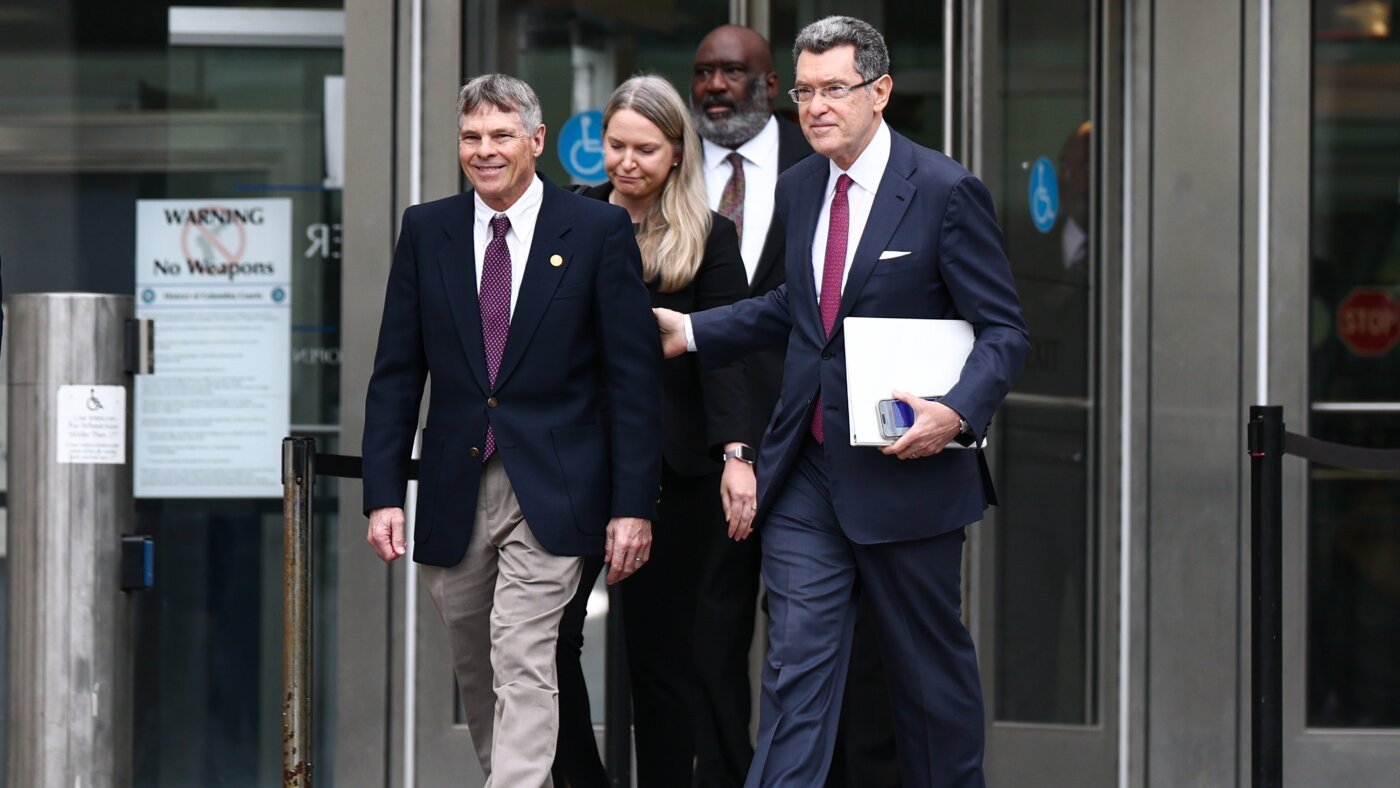
But, in a surprise move, Yaakov M. Roth, the acting assistant attorney general for the Justice Department’s civil division, filed a court brief known as a statement of interest on Monday, declaring that “reasonable concerns have been raised about various aspects of Ms. Peters’s case.” In the filing, Mr. Roth said the federal judge who received Ms. Peters’s petition this month should give it “prompt and careful consideration.”
Mr. Roth said that the Justice Department was concerned, among other things, about “the exceptionally lengthy sentence” imposed on Ms. Peters by the judge in Grand Junction. He also questioned a decision by state prosecutors to deny her bail as she appeals her conviction as “arbitrary or unreasonable.”
The review of Ms. Peters’s case was part of a larger examination of cases “across the nation for abuses of the criminal justice process,” Mr. Roth wrote. The scrutiny of Peters case, he added, was being conducted under the aegis of an executive order that Mr. Trump issued seeking to end the “weaponization of the federal government.”
It remains unclear what lasting effect the Justice Department’s review of Ms. Peters’s case might have on the proceeding. But Mr. Roth made clear in his court papers that the evaluation was taking place to determine whether the prosecution was “oriented more toward inflicting political pain than toward pursuing actual justice.”
The Justice Department has no power to directly overturn the state conviction. But its filing lobbying a federal court to intercede in the case was nonetheless a remarkable intervention in the matter.
Dan Rubinstein, the Mesa County district attorney who secured the conviction against Ms. Peters, said on Monday evening that, until Mr. Roth’s court papers were filed, he had had no idea that the Justice Department was thinking of scrutinizing Ms. Peters’s case for alleged political bias.
Moreover, he said, no one from the department had reached out to him before the filing to express concern about the case.
“I am happy to have a conversation with anybody in the administration as to the motivations and expectations that our community had when they overwhelmingly wanted me to bring this criminal action,” Mr. Rubinstein said.
A jury in Grand Junction found Ms. Peters guilty of seven charges stemming from her efforts to breach a voting machine manufactured by Dominion Voting Systems in the months after Mr. Trump lost the election to Joseph R. Biden Jr.
The jury determined that Ms. Peters had helped an outsider gain unauthorized access to the machine in May 2021 and to obtain information that was later made public at a conspiratorial event held to undermine trust in Mr. Trump’s defeat.
At a sentencing hearing in October, Judge Matthew D. Barrett scolded Ms. Peters from the bench, telling her that he was imposing a stiff penalty on her because she had repeatedly advanced false claims about Mr. Trump’s defeat, and that, in so doing, she had become a celebrity among those who denied that he lost the race.
“You are no hero. You abused your position, and you are a charlatan,” Judge Barrett said, adding, “You cannot help but lie as easy as you breathe.”
Since Mr. Trump’s re-election, the Justice Department has faced criticism for its conduct in a number of cases, several of which have resulted in the abrupt resignations of federal prosecutors.
Top prosecutors in New York and Washington stepped down this month in response to the department’s efforts to dismiss the corruption case against Mayor Eric Adams of New York.
In a similar fashion, the chief of the criminal division in the U.S. attorney’s office in Washington recently resigned after she declined a request from her boss, Ed Martin, to freeze the assets of a government contractor, saying she had insufficient evidence to do so.
Mr. Martin has also been quietly pushing to present evidence against Senator Chuck Schumer of New York, the Democratic leader, to a federal grand jury over comments he made about Supreme Court justices in 2020, according to people with knowledge of the situation. Justice Department officials have thus far rebuffed the request, one of those people said.
News
Which first lady feared her husband might be having a stroke? The quiz knows
From left: Jeff Bezos, Roland Garros, Jill Biden.
Marco Bertorello/AFP via Getty Images; Branger/Getty Images/Hulton Archive; Anna Moneymaker/Getty Images
hide caption
toggle caption
Marco Bertorello/AFP via Getty Images; Branger/Getty Images/Hulton Archive; Anna Moneymaker/Getty Images
This week, the pope took a stand on artificial intelligence in an encyclical Google Gemini called “historic and highly ambitious” and an “aggressive, uncompromising critique.” Thanks, Gemini! Enjoy the quiz, y’all.
News
Becerra leads governor’s race, with Hilton and Steyer in tight contest for second spot, poll finds
On the cusp of California’s gubernatorial June 2 primary, a poll shows voters are closely divided among three candidates vying to succeed Gov. Gavin Newsom at a perilous moment in history for the state and the nation.
Among likely California voters, 25% support Xavier Becerra, a Democrat and former Biden Cabinet secretary, according to the survey by UC Berkeley’s Institute of Governmental Studies that was co-sponsored by the Los Angeles Times and released Thursday. Republican Steve Hilton, a former Fox News commentator and British political strategist, has the backing of 21%, while 19% backed billionaire hedge fund founder turned environmental activist Tom Steyer, a Democrat.
California gubernatorial candidate Xavier Becerra takes a selfie while campaigning Tuesday at an event in San Francisco.
(Benjamin Fanjoy / Getty Images)
The survey provided the clearest indication yet that the three have separated themselves from the rest of the field. Support increased for Becerra, Hilton and Steyer since the last Berkeley IGS poll in March. Becerra leapfrogged everyone. In early March, he wallowed near the bottom of the pack at just 5% support among likely voters, and now is the front-runner.
The other candidates floundered. Support for Riverside County Sheriff Chad Bianco, a Republican, dropped 5%, and he now finds himself in a distant fourth place. Former Democratic Rep. Katie Porter of Irvine dropped by almost half to 7%. San Jose Mayor Matt Mahan, former Los Angeles Mayor Antonio Villaraigosa and state Supt. of Public Instruction Tony Thurmond — all Democrats — remained mired in the single digits.
Poll director Mark DiCamillo cautioned that it remains unclear which candidates will finish in first and second place in the June 2 primary, a pivotal question since only the top two finishers will advance to the November general election regardless of party affiliation. The low voter turnout thus far makes predicting the outcome especially difficult.
Although every registered voter in California was sent a mail-in ballot, many have not returned them or dropped them off at voting locations — a telltale sign of the uncertain nature of this year’s governor’s race. The survey, which included all 61 of the gubernatorial candidates on the ballot, found that Democratic turnout thus far is noticeably lower compared with past primary elections, DiCamillo said.
Steve Hilton arrives for a news conference at the San Jose Diridon rail station on Tuesday.
(Jason Henry/Bloomberg via Getty Images)
“We’re assuming that … the Democrats will in fact turn out in the final week after we had concluded our poll and begin to make up ground on what looks like an early lead for Hilton, and those voters favor Becerra,” DiCamillo said.
The survey, conducted between May 19 and 24, found that likely Democratic voters favored Becerra over Steyer by 11 percentage points. Voters registered as “no party preference” were evenly divided among Becerra, Steyer and Hilton. Among likely Republican voters, Hilton led Bianco by almost 2 to 1.
Becerra also had a notable edge over Steyer among women and Latino voters, while Steyer had an advantage among Black voters. Hilton was favored over the two Democrats among self-identified libertarians and among voters in Orange County, the Central Valley and northern coast and Sierra region.
The poll found that 7% of voters remained undecided.
For the first time in more than a quarter of a century, the contest to lead the nation’s most populous state and the world’s fourth-largest economy has consistently lacked a front-runner despite a plethora of candidates.
Two of California’s best-known Democrats, former Vice President Kamala Harris and U.S. Sen. Alex Padilla, both toyed with a run for governor before deciding not to run, which contributed to the sluggishness of the race. The 2026 campaign for governor also languished in the shadow of the mayhem stirred up by President Trump, including his immigration raids throughout Southern California, and the devastation wrought by the 2025 Pacific Palisades and Altadena wildfires.
But a whirlwind of recent developments has drawn attention to the race.
Former Rep. Eric Swalwell (D-Dublin), once a front-runner in the contest, withdrew from the race and resigned from Congress in the aftermath of multiple allegations of sexual misconduct and assault that he denies.
Tom Steyer takes part in a campaign event in Santa Rosa on Wednesday.
(David Paul Morris / Bloomberg via Getty Images)
Additionally, record-breaking amounts of money have flowed into the race. Steyer has smashed state self-funding records by contributing $212 million to his campaign as of Tuesday, according to the California secretary of state’s office. Nearly $85 million has been donated to independent expenditure committees by corporations, labor unions, tech titans, Native American tribes and other special interests, most of which will have policy interests that will be in front of the next governor.
Although the 2026 California governor’s race lacks the allure of recent contests that featured candidates such as global movie star Arnold Schwarzenegger, political scion Jerry Brown and former San Francisco mayor and likely 2028 presidential candidate Gavin Newsom, it is unfolding at a crucial time for Californians.
The state’s most vulnerable residents are facing severe reductions to medical care because of looming federal healthcare funding cuts, and California’s budget, already volatile because of its reliance on the state’s wealthiest residents, may grow more unpredictable. California’s highest-in-the-nation gas prices increased even more because of the U.S.-Iran war, adding to the state’s entrenched affordability crisis, which has driven many residents out of the state.
The cost of living, homelessness and public safety were among the top concerns expressed by voters, according to the poll. Protecting voting rights was also supported by most voters, though their underlying concerns could be starkly different based on their political views.
Democrats have been focused on the disenfranchisement of voters, a fear that has heightened in the aftermath of a recent Supreme Court decision that gutted a section of the Voting Rights Act that forced states to draw voting districts to help elect Black or Latino representatives to Congress. Republicans echo President Trump’s claims of elections being rigged.
Chad Bianco is interviewed May 6 after the gubernatorial debate at the Skirball Cultural Center in Los Angeles.
(Jason Armond / Los Angeles Times)
Voters split largely along party lines about issues such as Trump’s policies about climate change, immigration and taxes.
Voters’ uncertainty in the governor’s race is partly driven by California’s unique, voter-approved “jungle” primary system, in which the two candidates who win the most votes in the June 2 primary advance to the November general election, regardless of party affiliation.
Although the state’s voters are largely registered Democrats, the party’s leaders feared earlier this year that they would splinter among the multiple Democrats on the ballot, leading to Hilton and Bianco advancing to the November general election and ensuring that a Republican would be elected governor. Bianco had the backing of 11% in the new Berkeley survey.
The Republicans were once roughly tied in polls, until Trump endorsed Hilton in April. More than one-third of likely Republican voters said Trump’s endorsement of Hilton made them more likely to support him. Among voters who identified with the “Make America Great Again” movement, nearly two-thirds supported Hilton while less than 3 in 10 backed Bianco.
Though Bianco’s followers seem to be more passionate, “Hilton has got the much broader base of support, and then he got Trump’s endorsement,” DiCamillo said.
He added that Hilton’s rise is unusual in California, where statewide candidates typically spend enormous sums of money to raise their visibility among the state’s 23.1 million registered voters.
“What’s interesting about Hilton is that he hasn’t really done much of his campaigning in the traditional way. He hasn’t run huge amounts of television advertising, you don’t see his name out there in the traditional media, other than in free media,” DiCamillo said. “You can see that in the data, because almost a third of voters still have no opinion of Hilton … about what it was back in March, which is startling for a candidate who is among the leaders.”
Democrats’ fear of being locked out of the November general election led party leaders and allies to effectively urge low-polling candidates to drop out of the race in remarkable public statements in March.
The tables have since turned — the prospect of two Republicans winning the top spots in the June primary appear nonexistent, while polling shows a small possibility of two Democrats advancing to the general election.
“I’m not saying it’s likely, but it’s possible that two Democrats could emerge, and that would have huge implications on turnout in the [November] election,” DiCamillo said, pointing to California congressional races that could shape control of the U.S. House of Representatives. “If you don’t have a Republican at the top of the ticket, it would be dismal for the Republicans’ chances.”
The poll of 8,578 registered California voters was conducted online in English and Spanish and has a margin of error of about 2 percentage points in either direction.
News
Former senior CIA officer took home gold bars and millions in cash, FBI says
Authorities allege that David J. Rush took home tens of millions of dollars worth of gold bars from his job at the CIA and fabricated key parts of his education and military history. He’s seen here in a photo supplied by the Alexandria Sheriff’s Office.
Alexandria Sheriff’s Office
hide caption
toggle caption
Alexandria Sheriff’s Office
Many people in the workplace struggle with expense reports and imposter syndrome. And then, according to the FBI, there is David J. Rush — a former CIA official who is accused of taking gold bars and bulk cash to his Virginia home while also allegedly lying about his education and military service, according to federal court records.
Rush, a former senior executive service-level CIA employee in Virginia, was arrested on May 19, after FBI agents searching his home seized more than 300 1-kilogram gold bars valued at more than $40 million, according to an affidavit from FBI Special Agent Matthew T. Johnson, who works in the counterintelligence division of the FBI’s Washington field office.
“FBI agents also seized approximately $2 million in United States currency,” the document states. “Finally, FBI agents seized approximately 35 luxury watches, many of which were Rolex brand.”
Rush, who is listed as living in Ashburn, Va., is charged with a felony count of theft of public money, according to court documents. He remains in the custody of the U.S. Marshals Service after his request to be released on bond was denied.
Requests for comment from Rush’s defense attorney were not immediately returned. Federal court records show that he waived a preliminary hearing and was scheduled for a detention hearing in Alexandria, Va., on Friday. But Magistrate Judge William E. Fitzpatrick agreed to a request from both sides of the case to postpone that hearing to the morning of June 5.
The CIA says it informed the FBI of its suspicions about Rush, who apparently fell under scrutiny after he began asking for gold bars last November. That’s when he began making “several requests … to obtain a significant quantity of foreign currency and tens of millions of dollars in gold bars for work-related expenses,” according to the affidavit.
“After a CIA internal investigation identified potential violations of the law, CIA Director John Ratcliffe referred the information to the FBI for a law enforcement investigation,” a CIA spokesperson told NPR via email, in a statement jointly issued with the FBI.
A review of a storage space Rush used at the CIA found that only part of the cash was there. The agency’s inquiry into the matter is ongoing, but it has not yet found any record of why Rush said he needed the massive amount of money.
The FBI affidavit accuses Rush of taking gold bars and currency, making false statements to the agency and on national security background forms, and filing fraudulent timecards.
Rush holds a Top Secret/Secure Compartmented Information clearance, according to the FBI affidavit. But the agency alleges that beginning with Rush’s successful 2009 CIA job application, he fabricated academic and military achievements that helped him attain that status and, as a result, earn higher wages.
Rush enlisted in the U.S. Navy in 1997, and was later commissioned as an ensign in the U.S. Navy Reserves after providing a transcript showing he earned an undergraduate degree from Clemson University, the affidavit states. In three different applications to join the CIA, he claimed to have attained an undergraduate degree from Clemson, along with a master’s degree from Rensselaer Polytechnic Institute, or RPI, and other credentials.
But this spring, registrar offices at both Clemson and RPI told the FBI that their institutions have no record of Rush ever attending classes there.
Similarly, Rush’s alleged claims that he was a military pilot and served in prominent related roles were undermined by records showing he never underwent any evaluations as a pilot and does not hold a pilot’s license, according to the affidavit.
Explaining the allegation of timecard fraud, the FBI says that while military records show Rush was honorably discharged from the Navy Reserves as a lieutenant in 2015, he continued to claim military leave on his timesheets for the next 10 years, and allegedly told the CIA that he had risen to the rank of captain in the Navy Reserves.
-
Technology5 minutes agoAcer’s launching a Linux handheld for streaming your PC games
-
World11 minutes agoPentagon hosts first-ever Israeli–Lebanese military talks aimed at curbing Hezbollah
-
Politics17 minutes agoFederal judge orders Trump’s name removed from Kennedy Center, says only Congress can rename it
-
Health23 minutes agoSingle infusion of controversial drug changed severe depression symptoms within hours, study finds
-
Sports29 minutes ago2026 World Cup Odds: Spain Narrowly Favored Over France
-
Technology35 minutes agoFake grant email promises $4.5 Million but could steal your identity
-
Business41 minutes agoAnother tech company says it will cut hundreds of jobs amid pivot to AI
-
Entertainment47 minutes agoThis Puerto Rican filmmaker honored his family with an unconventional movie called ‘TheyDream’