Connect with us

News

Israel-Hamas ‘breakthrough’ raises hopes of Gaza ceasefire deal

Published

on

Israel-Hamas ‘breakthrough’ raises hopes of Gaza ceasefire deal

Unlock the Editor’s Digest for free

US-led mediators have sent the final draft of a ceasefire proposal to Israel and Hamas after a “breakthrough” in talks over a deal to end the war in Gaza and secure the release of hostages.

People familiar with the matter said it left the warring parties the closest they have been to ending the 15-month conflict since at least July, when an earlier push to secure an agreement broke down.

“The final deal is now with all sides for approval,” a diplomat briefed on the Doha-based talks said, adding a “breakthrough” had been made around midnight on Monday. “The next 24 hours will be pivotal to reaching the deal.”

Advertisement

It came after a flurry of diplomacy involving US president-elect Donald Trump’s Middle East envoy Steve Witkoff, Israeli spy chief David Barnea and Qatari prime minister Sheikh Mohammed bin Abdulrahman al-Thani.

The US, Qatar and Egypt have struggled for months to broker a deal to end the conflict and secure the release of about 100 hostages held by Hamas in the besieged strip, over a third of whom are no longer believed to be alive.

But the talks gathered momentum after the election of Trump, who has repeatedly demanded all hostages be released before his inauguration on January 20. He has warned that otherwise there will be “all hell to pay”.

A person familiar with the latest talks said: “We are 98 per cent close.”

Mediators have previously expressed hopes they were closing in on a deal, only to have them dashed by Israel and Hamas refusing to make the necessary concessions to push an agreement over the line. 

Advertisement

But US President Joe Biden said on Monday “we’re at the brink” of a ceasefire for hostage deal “finally coming to fruition”. 

US national security adviser Jake Sullivan said it was a “pivotal point in the negotiations”, adding: “We are close to a deal and it can get done this week.”

The mediators now have to wait for responses from Israeli Prime Minister Benjamin Netanyahu’s government and Hamas’s leadership. 

In a statement, senior Hamas officials said they stressed the Palestinian militant group’s “keenness to reach an agreement to stop the war on Gaza” in discussions with a senior Turkish official. 

A second person familiar with the talks said Israel was waiting for Hamas’s leadership to approve the latest proposal, before the parties “go into closing negotiations”.

Advertisement

A shift in Netanyahu’s position came down to the fact that ending the war had become a priority for Trump, the person added, saying “the only difference is Trump. Netanyahu does want to align with Trump” and get a deal.

Mediators have been seeking to broker a multiphase agreement to end the conflict that erupted after Hamas militants rampaged through southern Israel, killing 1,200 people and seizing 250 hostages, according to Israeli officials.

Israel’s thunderous retaliatory offensive in Gaza has killed more than 46,000 people, Palestinian officials said, and reduced much of the besieged strip to wasteland. 

Disagreements between the two sides have included where Israeli troops redeploy, the return of displaced Palestinians to the strip’s north, and how many and what category of Palestinian prisoners would be released in exchange for hostages.

Israel has also demanded that Hamas identify which hostages are still alive.

Advertisement

Hamas has insisted any deal end with a permanent ceasefire and Israeli troops fully withdrawing from Gaza, something Netanyahu has repeatedly rejected.

The latest talks have been based on the multiphase proposal, which would lead to an initial six-to-eight week truce, during which about 34 hostages, including women, the elderly and wounded would be released.  

Several hundred Palestinian prisoners would be released from Israeli jails in return.

Netanyahu is expected to face resistance from far-right allies in his ruling coalition who are opposed to halting the war and releasing Palestinians convicted of terrorism offences. Analysts expect the premier to have the votes to approve a deal. 

Far-right ministers Itamar Ben-Gvir and Bezalel Smotrich have previously threatened to topple Netanyahu’s government if an agreement was finalised.

Advertisement

Their opposition is believed to have been decisive in scuttling past rounds of talks, according to people familiar with the matter.

Smotrich, Israel’s finance minister, said on Monday an impending deal was a “catastrophe” and “surrender”.

He urged Israel to “conquer and cleanse the entire strip” and “open the gates of hell on Gaza” until Hamas capitulated and released the hostages. 

Netanyahu met with both Ben-Gvir and Smotrich on Sunday in an effort to persuade them not to leave the government over a ceasefire agreement.

Advertisement

News

Waymo called the cops on teen riders, raising privacy concerns

Published

on

Waymo called the cops on teen riders, raising privacy concerns

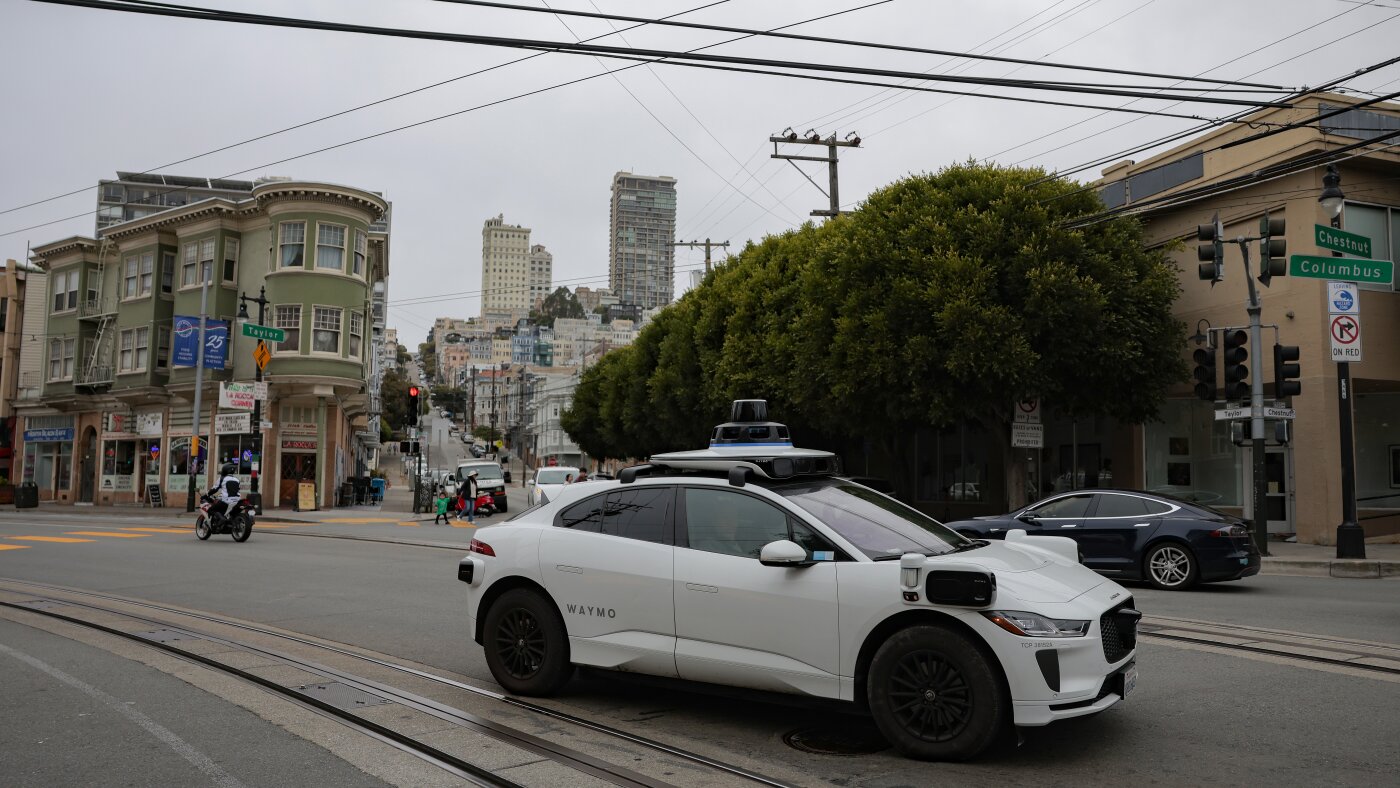
A Waymo robotaxi drives in San Francisco’s North Beach neighborhood this week.

Heather Diehl/Getty Images


hide caption


toggle caption

Advertisement

Heather Diehl/Getty Images

Police in San Mateo, Calif., posted Monday on social media that they had apprehended a pair of teenagers from a Waymo driverless robotaxi after the company alerted authorities to suspected criminal activity. It’s the latest incident involving video surveillance of passengers and others by autonomous vehicles — raising questions about the limits of privacy in such vehicles.

The Facebook post by the San Mateo County Police said: “Parents do you know where your teens are? @waymo does!”

The 15-year-olds were allegedly drinking alcohol and shooting toy guns from the car, according to the police. They said Waymo’s systems detected behavior that then triggered a safety response, after which the company disabled the vehicle and contacted police.

Advertisement

Waymo’s cars, equipped with an array of cameras, microphones and other sensors to monitor passengers and other nearby vehicles, are becoming more common in cities across the United States. Experts say the detention of the two teens in San Mateo highlights a potential — but not inevitable — trade-off between privacy and convenience. It also questions the extent to which companies similar to Waymo are required to hand over private data, including audio and video of passengers, in situations where a crime is suspected.

NPR reached out to Waymo, which is owned by Alphabet, the parent company of Google, for comment on the details of the San Mateo incident and how the company responded, but did not hear back. But on its website, the company says that as many as 29 cameras in its autonomous cars provide an all-around view and “are designed with high dynamic range and thermal stability, to see in both daylight and low-light conditions, and tackle more complex environments.”

“There already exist laws that govern duty to report or even duty to protect” for carriers such as Waymo, according to Alessandro Acquisti, a professor of information technology at the MIT Sloan School of Management. “The privacy problems arise when and if driverless carrier companies used such laws or ethical obligations as a pretext for blanket, indiscriminate accumulation of identifiable data for unspecified future purposes.”

That includes not just monitoring people inside the cars, but outside too. Take, for example, a hit-and-run investigation last year in Los Angeles. Media reported that the police inquiry was aided by video captured by a Waymo taxi that had a clear view of the crime. Critics suggested at the time that authorities were using the company’s vehicles as a mobile surveillance platform. And during 2025 protests in Los Angeles against Immigration and Customs Enforcement crackdowns, demonstrators vandalized Waymos, apparently angry that video recorded by the vehicles could be used by police, although there is no evidence that happened.

Continue Reading

News

Trump fires last members of election commission, inciting fears of midterm ‘chaos’

Published

on

Trump fires last members of election commission, inciting fears of midterm ‘chaos’

Donald Trump has terminated the remaining members of the independent, federal commission that assists election administration officials nationwide just a few months before the midterm elections, multiple outlets reported Thursday.

The remaining three commissioners of the four-member bipartisan commission ⁠were forced out on Thursday in different ways. The one Republican appointee resigned and the other ⁠two, Democratic appointees were notified of their terminations via email from ​the White House presidential personnel office.

“On ‌behalf of President ‌Donald J Trump, I am writing to inform you that your position ‌as Commissioner of the Election Assistance Commission is terminated, effective immediately. Thank you for your service,” the email, seen by Reuters, said.

The White House did not immediately respond to a request for comment.

The Election Assistance Commission serves as a “national clearinghouse of information on election ‌administration”, accredits testing laboratories and certifies voting systems, and maintains the national mail-voter registration form developed by the National ​Voter Registration Act of 1993, according to the commission’s website. The terminations follow Trump and top administration officials’ advocacy to change vote-by-mail requirements and investigations into the 2020 election outcome, which Trump lost to Democrat Joe Biden.

Advertisement

“It is ⁠irresponsible and dangerous that this Administration remains dead set on ​causing chaos for ​our election officials across this ​country,” Arizona secretary of state Adrian Fontes said in a ​Thursday statement. “This ‌move undermines the integrity ​of nonpartisan ​election administration.”

The 2002 law that established the commission, the Help America Vote Act, states the president can appoint replacements to the commission.

It is unclear how Trump will move ahead with the commission.

Reuters contributed reporting

Advertisement
Continue Reading

News

Former Olympian pleads not guilty in reflecting pool vandalism charges

Published

on

Former Olympian pleads not guilty in reflecting pool vandalism charges

Former U.S. Olympian David Hearn (left) walks with his attorney Norman Eisen to speak to reporters and protesters gathered after his arraignment at the Superior Court of the District of Columbia in Washington, D.C. on Thursday.

Finn Gomez/Getty Images


hide caption


toggle caption

Advertisement

Finn Gomez/Getty Images

Former U.S. Olympic canoeist David Hearn pleaded not guilty to damaging the Lincoln Memorial Reflecting Pool in D.C. Superior Court Thursday morning.

Federal prosecutors charged Hearn with a single count of destruction of property causing more than $1,000 in damage to the pool.

Hearn has previously claimed, which his attorneys repeated during a short press conference outside the court, that he simply touched the water in the pool out of curiosity.

Advertisement

The Trump administration had just completed a $14 million renovation of the pool.

But shortly after the work finished, peeling paint and algae gathered in the water. The remodel has been largely criticized as a massive failure and waste of taxpayer dollars.

Superior Court Judge Carmen McLean released Hearn on his own recognizance. His next hearing is scheduled for Aug. 5.

Norm Eisen, one of Hearn’s attorneys, spoke to reporters outside of court following the hearing. He said the administration is using Hearn as a “scapegoat … for their own failures.”

“It is not a crime to touch the reflecting pool, to touch water in the United States of America,” he said.

Advertisement

Prosecutors say there is a host of evidence against Hearn.

This is a developing story.

Continue Reading
Advertisement

Trending