Connect with us

News

German insolvencies set to rise as Covid aid ends and economy stagnates

Published

on

German insolvencies set to rise as Covid aid ends and economy stagnates

German companies are expected to go bust at a higher rate this year following a sharp increase in insolvencies in 2023, as businesses hit by high energy costs and the end of pandemic aid throw in the towel.

Restructuring experts warn that many “zombie” companies kept afloat after the coronavirus pandemic by generous government aid and a suspension of the obligation to file for bankruptcy — which caused insolvencies to drop to unusually low levels — are now collapsing.

Since the start of this year, several well-known German companies — including the department store chain Galeria Karstadt Kaufhof and Hamburg-based bag maker Bree, whose customers include Chancellor Olaf Scholz — have filed for insolvency.

The ranks of struggling companies have been swelling because of Germany’s economic stagnation, combined with high interest rates, rising wages, elevated energy prices and a government budget squeeze. This is expected to push insolvencies up by between 10 per cent and 30 per cent this year, experts warn, taking them above pre-pandemic levels.

One such company is 85-year-old wooden toymaker Haba. Delivery failures caused by “wrong decisions” on IT systems at Haba’s online children’s clothing operation compounded the “heavy burden” the company was already enduring from the soaring cost of energy and wood, according to spokesperson Ilka Kunzelmann. 

Advertisement

Ultimately, it was too much for the family-owned business based in Bad Rodach, a spa town in central Germany. Haba was granted insolvency by a court in December and expects to emerge in March after it has shed about a third of its 1,500 employees, shut its online clothing arm and sold a school furniture factory.

Haba, a wooden toymaker in Bad Rodach, central Germany, was granted insolvency by a court in December, and expects to emerge in March after shedding about a third of its 1,500 employees © Dreamstime

Steffen Müller, head of bankruptcy research at the Halle Institute for Economic Research, said the monthly rate of German insolvencies it tracks, which excludes unregistered companies that have few employees, has risen since last summer above the pre-pandemic average for the first time. In December, it hit its highest level for at least seven years.

“For the next two to three months we will definitely see higher insolvency numbers, you can see that from the early filing numbers,” said Müller. “The government gave a lot of aid to firms that had low productivity before the pandemic. That prolonged their lives. But now they have to repay the aid and many are struggling to do so.”

Figures released last week by the federal statistics agency showed the number of companies filing for bankruptcy in district courts had increased more than 24 per cent in the 10 months to October, compared with the same period of 2022. 

You are seeing a snapshot of an interactive graphic. This is most likely due to being offline or JavaScript being disabled in your browser.

Advertisement

Germany’s economics ministry said the business environment was “challenging” but played down the scale of the problem, saying: “In the longer-term perspective, and in comparison to the period before the pandemic, corporate insolvencies are currently not at a noticeably high level.”

Wolfgang Steiger, head of the opposition CDU party’s economic council, blamed the government’s “disastrous economic policy” for causing Germany’s insolvency rate to rise faster than many other countries. “High costs for energy and labour, which are a home-made problem, combined with the skills shortage, are causing financial distress for an increasing number of companies in Germany.”

The German economy contracted 0.4 per cent in the third quarter compared with the same period a year earlier after sharp falls in retail sales, exports and industrial production. 

Growth in the country is expected to pick up to 0.6 per cent this year, according to the OECD. But it would still be one of the world’s weakest large economies and several analysts have cut their forecasts since the government slashed spending plans to fill a €60bn hole in its budget left by a constitutional court ruling against off-balance sheet funds.

As part of the budget cuts, Berlin this month ended the temporary low rate of VAT on restaurant meals it introduced during the pandemic, prompting warnings that thousands of eateries would go out of business. More than 15,000 restaurants, snack bars and cafés in Germany are at risk, according to data provider Crif, which estimated that insolvencies in the sector would rise again this year after jumping 36.5 per cent to 1,600 last year.

Hackescher Market in Berlin
Hackescher Market in Berlin: Berlin has now ended the temporary low rate of VAT on restaurant meals it brought in during the Covid-19 pandemic © Carsten Koall/Getty Images

The German insurance association recently warned of a “massive increase in payment defaults” after credit insurers paid out more than €1.2bn in 2023, up 44 per cent on 2022. “We see significantly more and greater damage from insolvencies and delayed payments than in the previous year,” said the GDV’s Thomas Langen, who predicted German insolvencies would rise 10 per cent this year.

Jonas Eckhardt, specialist at restructuring advisers Falkensteg, said the weak economy was making it harder for companies to pass on higher energy, labour and raw material costs via higher prices. “The big question is — how much of this can I offload on my customers?”

Advertisement

He is predicting that insolvencies will rise more than 30 per cent in 2024 among companies with annual revenues in excess of €10mn.

The sharp rise in interest rates by the European Central Bank to tackle inflation has also made it harder for companies to emerge from insolvency by finding new investors, Eckhardt added. Only 52 per cent of companies could be saved through insolvency at the end of last year, down from 62 per cent two years ago, according to data from Falkensteg.

“Investors have become more risk-averse, and are holding back,” he said. “Those that still want to [take over an insolvent company] face higher financing costs. So it’s a high-risk transaction.”

This drying-up of investment and financing has hit younger, more vulnerable companies. Almost 300 German start-ups filed for insolvency last year, a 65 per cent increase from 2022, according to data provider Startupdetector. Among them was solar-powered car company Sono Motors, online trader Social Chain and anti-fraud software maker Fraugster. 

Many of the bigger companies going bust last year were fashion retailers, transport providers, real estate companies and auto suppliers. There were also high numbers of collapses among German care homes and clinics as they struggled to pass on higher wage and energy costs to the health insurance system. 

Advertisement
Bar chart of Insolvencies expected in 2024 (% change from 2019) showing Some countries have bankruptcies rising far above pre-Covid levels

Bankruptcies have been rising across much of the world, according to German insurer Allianz, which forecast a 6 per cent increase in global insolvency numbers last year and a 10 per cent rise this year.

“Germany was lagging behind other countries, such as France, the Nordic countries and the Netherlands,” said Maxime Lemerle, lead adviser on insolvency research at Allianz. “But it is catching up with the trend definitely to the upside.”

While it is yet to match the high levels of corporate distress after the 2008 financial crisis, Lemerle said the recent rise of bankruptcies in Germany and elsewhere was now “more than a normalisation, but not yet a tsunami”.

News

Paul Pelosi in hit-and-run in California, car left with major damage, authorities say

Published

on

Paul Pelosi in hit-and-run in California, car left with major damage, authorities say

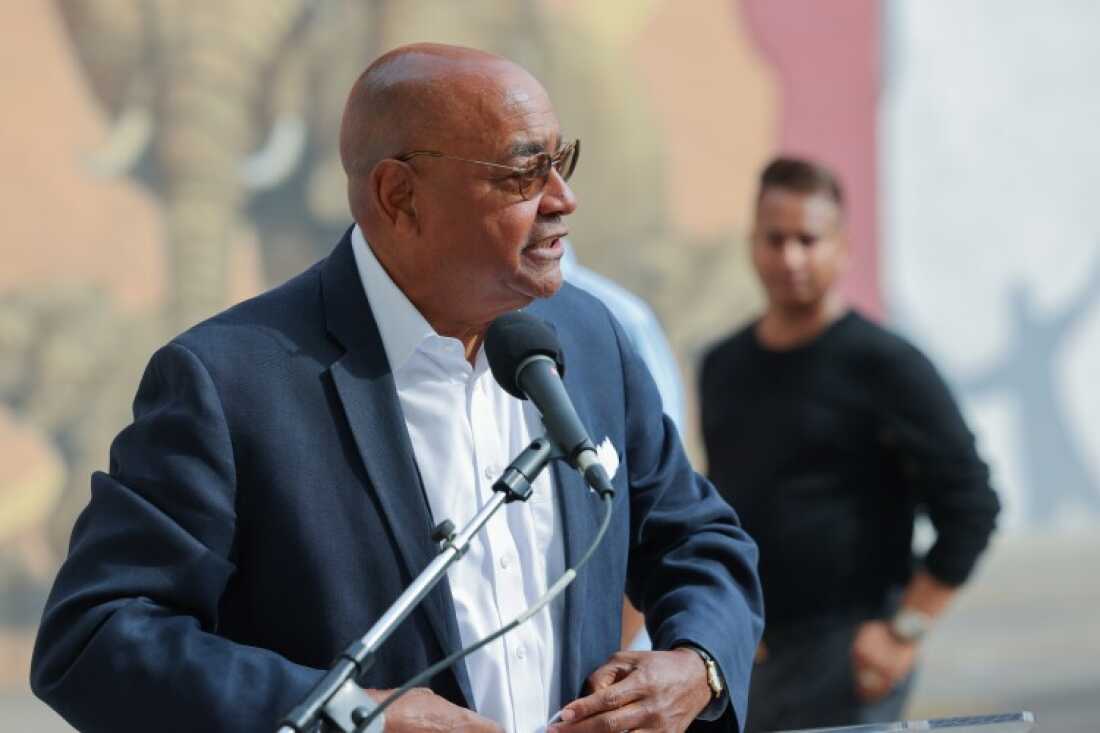
Rep. Nancy Pelosi, D-Calif., and her husband Paul arrive at the funeral services for Clive Davis at Central Synagogue in New York, Monday, June 29, 2026.

Adam Gray/AP


hide caption

toggle caption

Advertisement

Adam Gray/AP

LOS ANGELES — The husband of former House Speaker Nancy Pelosi was involved in a hit-and-run in California that left a parked car with “major” damage authorities said Saturday, and he could face misdemeanor charges.

Paul Pelosi was driving his brown convertible Friday in Yountville, a town in the heart of wine country, when he struck a legally parked car on the side of the road, briefly stopped and then drove away, the Napa County Sheriff’s Office said in a statement. No injuries were reported.

A witness saw the collision and called 911. Shortly afterward sheriff’s deputies found Pelosi with damage to the front of his car on a road roughly a quarter of a mile away. He reportedly told officers he knew he hit something but was not sure when or what caused the damage.

Advertisement

Pelosi, 86, did not have any alcohol in his system, according to the statement. The sheriff’s office referred him to the Department of Motor Vehicles for a process to determine whether he may continue to drive — something that officials say is common for older drivers.

Pelosi was not arrested, and because no one was injured, the sheriff’s office recommended a misdemeanor charge for fleeing the scene of an accident.

A staffer for Nancy Pelosi did not immediately respond to an email seeking comment.

Paul Pelosi pleaded guilty in 2022 to misdemeanor charges of driving under the influence in Napa County and was sentenced to five days in jail and three years of probation. However, he served only two days in jail and received good conduct credit for two other days, leaving just one day to serve in a work program at the courthouse.

As part of his probation, Pelosi was required to attend a three-month drinking driver class and install an ignition interlock device, which forces drivers to provide a breath sample to prove sobriety before the engine will start. He also was ordered to pay about $5,000 in victim restitution for medical bills and lost wages, along with nearly $2,000 in fines.

Advertisement
Continue Reading

News

Crowds ordered to evacuate National Mall area as stormy weather slams DC

Published

on

Crowds ordered to evacuate National Mall area as stormy weather slams DC

The thousands of people attending the Great American State Fair and other areas around the National Mall are being ordered to evacuate as stormy weather approaches.

The National Weather Service previously announced a Severe Thunderstorm Warning in the District. Officials are asking attendees to seek shelter.

SEE ALSO: Historic Fourth of July fireworks to light up National Mall: How to watch live

The DC Homeland Security & Emergency Management released a list of places where the crowds can go to get out of the weather:

Federal Buildings:

Advertisement
  • Ronald Reagan Building – 100 Pennsylvania Ave NW
  • Dept. of Commerce – 1401 Constitution Ave NW
  • Dept. of Agriculture – 1400 Independence Dr SW
  • Dept. of Education – 400 Maryland Ave SW
  • Internal Revenue Service – 1111 Constitution Ave NW
  • Voice of America – 330 Independence Ave SW
  • Thomas Jefferson Memorial – 16 E Basin Dr SW

Museums:

  • National Museum of American History – 1300 Constitution Ave NW
  • National Museum of Natural History – 1000 Constitution Ave NW
  • National Museum of African American History and Culture – 1400 Constitution Ave NW

Freedom 250 organizers released this statement:

“The safety of our guests, performers, and staff is our top priority. Due to approaching severe storms, Freedom 250, United States Secret Service, United States Park Police, National Park Service, the Federal Emergency Management Agency, and all public safety partners are asking all guests to evacuate event grounds and seek temporary shelter in a nearby building. Available shelter locations include the Department of Commerce, Department of Education, Department of Agriculture, Internal Revenue Service, VOA Building, Thomas Jefferson Memorial, National Museum of American History, National Museum of Natural History, the African American Museum, and the Ronald Reagan Building. Please remain calm, follow the directions of law enforcement and event staff, and stay tuned to Freedom 250’s official channels for updates. Freedom 250 will share updates on programming and doors reopening — please stay close to our official channels for updates.”

The Secret Service said they have suspended screening on the National Mall.

“Security screening on the National Mall has been suspended due to dangerous storms,” the Secret Service said. “If you are already on the grounds, follow directions from officers and event staff and move to shelter immediately. Do not shelter under trees.”

Comment with Bubbles

BE THE FIRST TO COMMENT

Advertisement

Metro riders are also asked to seek shelter. Commuters should expect heavy crowds at stations near the National Mall and are asked to consider using L’Enfant Plaza, Metro Center, Archives, Federal Triangle or Federal Center SW stations to avoid congestion.

Continue Reading

News

Reflections on America’s 250th birthday

Published

on

Reflections on America’s 250th birthday

The nation’s capital may be the focal point of the 250th Independence Day celebration, but people all across America have plans to mark the occasion, from boisterous public parades to quiet personal reflections on history.

Julia Demaree Nikhinson/AP


hide caption

toggle caption

Advertisement

Julia Demaree Nikhinson/AP

As the United States turns 250 years old, Americans across the country are spending the holiday thinking about what the big birthday means to them, with reflections and celebrations as diverse as the nation itself.

NPR’s member station reporters fanned out to collect snapshots of the occasion from sea to shining sea.

In one ‘City of Presidents,’ Main Street is decorated for a party

At least two cities in the U.S.call themselves the “City of Presidents” and Cuba City, in Wisconsin, is one of them, largely due to its patriotic Main Street decorations. Every year from Memorial Day through Veteran’s Day, red, white, and blue shields, one for each U.S. president, are prominently displayed high up on the light poles lining Main Street.

Advertisement

It’s a tradition that began in 1976 to commemorate the country’s bicentennial, says Donna Rogers, who is president of the ongoing project but admitted that when it first started, she wasn’t particularly tuned-in to the display.

“I was raising three little boys and working at John Deere, so I didn’t really pay too much attention to community service at that time,” she said.

Donna Rogers shows off one of Cuba City's presidential lampposts.

Donna Rogers shows off one of Cuba City’s presidential lampposts.

Susan Bence/WUWM


hide caption

Advertisement

toggle caption

Susan Bence/WUWM

A few years later, she was tapped to help keep the initiative alive.

When she thinks of the country’s history, she says the signing of the Declaration of Independence and abolition of slavery top her list, plus a current event–

Advertisement

“Of course, now, our nation’s 250th birthday. I think those three would be the three most important things in history to me,” she said, quickly adding “[the] right for women to vote, don’t forget that, right?”

Rogers and Cuba City are pulling out all the stops for the 250th, with a parade and a mac-and-cheese festival, because “that was some of our founding fathers favorite foods, along with turkey and cranberries and other items.”

She laughed and admitted she googled that. True or not, Rogers says they’ll go all-out to celebrate the 250th in her “City of Presidents”.

Advertisement
Continue Reading
Advertisement

Trending