News
Farewell, fair penny. You are finished, but never forgotten


Farewell, sweet penny. The last of you was minted last week, but you will never stray far from our thoughts and aphorisms.
Matthew Hatcher/Getty Images
hide caption
toggle caption
Matthew Hatcher/Getty Images
Alas, dear penny, you served us well.
We picked you up, you gave us luck.
We gave you to others in exchange for their thoughts.
And remember when we pondered whether dropping you from the Empire State Building could kill a pedestrian? That was fun. (More on that later.)
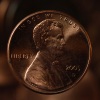
Now you are dead — but not gone (more on that later, too) — at the wizened age of 232. When polished, you look as young as when you were first minted, but you are worth less to us now, and we’ve moved on to greater expenses. The nation once used you to pay Union soldiers in the Civil War; now, you barely buy a gumball (and only in bulk!).
Like nearly all Americans, you descended from an immigrant, the British penny. Those coins were once so valuable that they were split into halves and even quarters — your late British cousins, the halfpenny and the farthing. In Britain, the coin’s history goes back to the time when kings and queens had names like Offa and Cynethryth and Aethelred the Unready, and your name likely traces its lineage from the German for pan — pfanne, for pan, which evolved to pfennig, for penny.
The first one-cent coin in the United States rolled off a private mint in 1787 and wasn’t called a penny. It was the fugio cent — fugio for “fly away” in Latin, signifying time flies. The 100% copper coin was inscribed with the surprising words, “mind your business,” more a take on “penny wise, pound foolish” than an admonition against nosiness.

A child could buy bubble gum for a penny in 1975. You’d have to buy in bulk to get that rate today.
Peter Keegan/Keystone/Getty Images
hide caption
toggle caption
Peter Keegan/Keystone/Getty Images
The U.S. minted its first official penny in 1793. Abraham Lincoln was pictured on the coin starting in 1909, to honor the centennial of his birth, the first time a president’s image graced U.S. currency. The words “In God We Trust” were added at the same time. Ever the trailblazer, you, the humble penny, were the first to carry those words before Congress added it to all currency and made it the national motto almost a half-century later.
Now, at just 2.5% copper and the rest zinc, you can’t even beat the cost of your own production, according to the U.S. Mint, which says it took 3.69 of you to make only one more in 2024.
Although we shall not meet any new pennies, we know you will hang around for another 30 years or so, because that’s the typical lifespan of a coin, according to the U.S. Treasury.
So, luckily for us, we’ll still have the perfect coins to put in our penny loafers in the 2050s, when we can expect them to cycle back in style. (In the 1930s, young people put money in their shoes for emergency pay phone calls, and thus the Weejun was born. Maybe someone will design a stylish cellphone shoe before the penny disappears?)
Meanwhile, you live on in other ways. We will most certainly celebrate you aphoristically, and this is where the penny drops. We will always be in for a penny, in for a pound. We will proudly trade pennies for thoughts while continuing to give our own two cents’ worth. We will still pinch you, because a penny saved is, as ever, a penny earned. We will put a shiny penny in a bride’s shoe for luck.

James Geary, author of The World in a Phrase: A Brief History of the Aphorism, says the penny is the perfect coin for these little pearls of wisdom.
“The penny lends itself to aphorisms because they are both small — the aphorism is the shortest form of literature, and the penny is the smallest monetary denomination,” Geary says.
Yes, you are small but mighty. Yet we will never kill anything with you, from the Empire State or any other tall building. Your dimensions — three-quarters of an inch thick and weighing less than a tenth of an ounce — are better suited to flipping and fluttering in the air than reaching fatal velocity.
As the Mythbusters demonstrated, the penny-drop myth isn’t worth a dime. But, at 10 cents, the dime is at least profitable to mint.
Along with the dime, your survivors include the nickel and the quarter.
Rest well, sweet penny.









The U.S. and Israel have been conducting strikes against targets in Iran since Saturday morning, with the aim of toppling Tehran’s clerical regime. Iran has fired back, with retaliatory assaults featuring missiles and drones targeting several Gulf countries and American bases in the Middle East.
“All six aircrew ejected safely, have been safely recovered, and are in stable condition. Kuwait has acknowledged this incident, and we are grateful for the efforts of the Kuwaiti defense forces and their support in this ongoing operation,” Central Command said.
“The cause of the incident is under investigation. Additional information will be released as it becomes available,” it added.
In a separate statement later Monday, Central Command said that American forces had been killed during combat since the strikes began.
“As of 7:30 am ET, March 2, four U.S. service members have been killed in action. The fourth service member, who was seriously wounded during Iran’s initial attacks, eventually succumbed to their injuries,” it said.
Major combat operations continue and our response effort is ongoing. The identities of the fallen are being withheld until 24 hours after next of kin notification,” Central Command added.
This story has been updated.

Smoke rises over Konarak naval base in southern Iran on Sunday. The base was one of hundreds of targets of U.S. and Israeli forces throughout the country.
Planet Labs PBC
hide caption
toggle caption
Planet Labs PBC
Commercial satellite images are providing a unique look at the extent of damage being done to Iran’s military facilities across the country.
The U.S. and Israeli military campaign opened with a daytime attack that struck Iranian leadership in central Tehran. Smoke was still visible rising from Ayatollah Ali Khamenei’s compound following the attack that killed the supreme leader.

An image by the company Airbus taken on Saturday shows the aftermath of an Israeli strike on Iran’s Leadership House in central Tehran. Iran’s Supreme Leader Ayatollah Ali Khamenei was killed in the opening wave of attacks.
Pléiades Neo (c) Airbus DS 2026
hide caption
toggle caption
Pléiades Neo (c) Airbus DS 2026
Israel and the U.S. have gone on to strike targets across the country. Reports on social media indicate that there have been numerous military bases and compounds attacked all over Iran, and Iran has responded with attacks throughout the Middle East.
U.S. forces have also been striking at Iran’s navy. In a post on his social media platform, President Trump said that he had been briefed that U.S. forces had sunk nine Iranian naval vessels. U.S. Central Command did not immediately confirm that number but it did say it had struck an Iranian warship in port.

An image captured on Saturday shows a ship burning at Iran’s naval base at Konarak.
Satellite image ©2026 Vantor
hide caption
toggle caption
Satellite image ©2026 Vantor
Numerous satellite images show burning vessels at Konarak naval base in southern Iran. Images also show damage to a nearby airbase where hardened hangers were struck by precision munitions.

Hardened aircraft shelters at Konarak airbase were struck with precision munitions.
Satellite image ©2026 Vantor
hide caption
toggle caption
Satellite image ©2026 Vantor
And there was extensive damage at a drone base in the same area. Iran has launched numerous drones and missiles toward Israel and U.S. military installations in Bahrain, Kuwait and Qatar. Many drones have been intercepted but videos on social media show that some have evaded air defenses and caused damage in nearby Gulf countries. In Dubai, debris from an Iranian drone damaged the iconic Burj Al Arab, according to a statement from Dubai’s government.

Buildings at an Iranian drone base at Konarak were destroyed in the strikes.
Satellite image ©2026 Vantor
hide caption
toggle caption
Satellite image ©2026 Vantor
Iran’s most powerful weapons are its long-range missiles. The Iranian Revolutionary Guards have hidden the missiles deep inside mountain tunnels. Images taken Sunday in the mountains of northern Iran indicate that some of those tunnels were hit in a wave of strikes.
Following Khamenei’s death, Iran declared 40 days of mourning. Satellite images showed mourners gathering in Tehran’s Enghelab square on Sunday.
Iranian Foreign Ministry Spokesperson Esmail Baghaei told NPR on Sunday that Iran will continue to fight “foreign aggression, foreign domination.”
A White House official told NPR that Trump plans to talk to Iran’s interim leadership “eventually,” but that for now, U.S. operations continue in the region “unabated.”

A large crowd of mourners fill Enghelab Square in Tehran on Sunday, following the death of Iran’s Supreme Leader Ayatollah Ali Khamenei, who was killed in an Israeli airstrike.
Satellite image ©2026 Vantor
hide caption
toggle caption
Satellite image ©2026 Vantor

new video loaded: What the Texas Primary Battle Means for the Midterms
By J. David Goodman, Alexandra Ostasiewicz, June Kim and Luke Piotrowski
March 1, 2026

US says Kuwait accidentally shot down 3 American jets

Utah mom in upscale ski community killed husband to fund romance and lavish lifestyle, DA says

Ilhan Omar doesn’t have any regrets for her ‘unavoidable’ outburst at State of the Union

FAA restricts Texas airspace after Pentagon reportedly strikes down Customs and Border Protection drone

Federal prosecutor admits ‘extraordinary’ timing in Abrego Garcia smuggling case charges

Florida High School Football Rankings: Top 25 teams – Oct. 21

Cleary's 21 help Le Moyne down Central Connecticut State 69-64 in OT

How old is Bo Nix? What to know about Oregon quarterback ahead of 2024 NFL Draft

99th annual Pony Swim held in Virginia

Indiana Members Credit Union announced as new anchor tenant at Bottleworks District
US says Kuwait accidentally shot down 3 American jets

House Republicans push Johnson to go to war with Senate over SAVE Act

Israel FM says Europe too divided, slams Spanish PM
Satellite images provide view inside Iran at war

Video: What the Texas Primary Battle Means for the Midterms
-

 World4 days ago
Exclusive: DeepSeek withholds latest AI model from US chipmakers including Nvidia, sources say
-

 Massachusetts5 days ago
Mother and daughter injured in Taunton house explosion
-

 Denver, CO5 days ago
10 acres charred, 5 injured in Thornton grass fire, evacuation orders lifted
-

 Louisiana1 week ago
Wildfire near Gum Swamp Road in Livingston Parish now under control; more than 200 acres burned
-

 Technology1 week ago
YouTube TV billing scam emails are hitting inboxes
-

 Politics1 week ago
OpenAI didn’t contact police despite employees flagging mass shooter’s concerning chatbot interactions: REPORT
-

 Technology1 week ago
Stellantis is in a crisis of its own making
-

 News1 week ago
World reacts as US top court limits Trump’s tariff powers