South Dakota
What South Dakotans need to know about the ‘Border Bill Showdown’


SIOUX FALLS, S.D. (Dakota News Now) – The division surrounding a bi-partisan immigration bill is growing after former president Donald Trump came out in opposition, calling it a “bad” bill.
South Dakota Governor Kristi Noem, as well as House Speaker Mike Johnson, have both sided with Trump.
To get a better understanding of the political gamesmanship being played we sat down with a political science expert. He breaks down what we as South Dakotans need to know.
“We haven’t seen this much try (for an immigration bill) for both Republicans and Democrats since the George Bush administration,” Michael Card said, professor emeritus of political science at the University of South Dakota.
Card pointed out how over the past 25 years the border has been used as a tool by both sides of the political aisle.
”We have motivated interest telling us that there’s nothing happening at the border and motivated interest telling us that it’s a warzone,” Card said.
Governor Noem visited the border last week. She has recently repeatedly referred to it as a warzone.
Specifically four times in a press release sent on Friday, and again during an interview on CNN’s ‘State of the Union’
“It is a dangerous situation and it is a warzone at our southern border,” Governor Noem said.
“Certainly the use of any inflammatory language such as warzone isn’t helping us reach a calm solution. A warzone is clearly in Ukraine, a warzone is clearly in Gaza. I don’t know if we would describe a warzone along the Rio Grande River,” Card said.
Another important consideration with this border battle is the political chess that is being played during an election year.
“They were getting ready to pass a very bad bill. I tell you what, I’d rather have no bill than a bad bill,” Former President Donald Trump said.
Trump has stated he wishes to use the border crisis as a campaign point, and Governor Noem has sided with him against the bill.
“To say that we have to accept this poison pill of a bill, it essentially codifies illegal immigration,” Noem said. “It is just a terrible bill. I think President Trump is exactly right it should not pass.”
For most people visiting the border to determine what is actually happening is not a viable option. Which is why Card encourages Americans to try and remain neutral.
“There’s just no room for compromise if we take an extreme position, and we’ll end up just using this for political bargaining points. I don’t think that’s what Americans really want out of our government,” Card said.
We reached out to Governor Noem’s office to ask why she uses the term warzone when describing conditions at the southern border.
Her office told us our question would be answered during an upcoming address to South Dakota legislators on Wednesday. Also adding quote:
Governor Noem has consistently called the situation at the Southern Border a warzone since 2021. What do South Dakotans need to know about the border that their Governor can share with them? That’s the question that you should be asking.
Copyright 2024 KSFY. All rights reserved.

The South Dakota Lottery offers multiple draw games for those aiming to win big.
Here’s a look at June 29, 2026, results for each game:
Winning Powerball numbers from June 29 drawing
10-14-41-53-59, Powerball: 03, Power Play: 2
Check Powerball payouts and previous drawings here.
Winning Lotto America numbers from June 29 drawing
08-13-29-30-31, Star Ball: 04, ASB: 03
Check Lotto America payouts and previous drawings here.
Winning Millionaire for Life numbers from June 29 drawing
04-25-26-31-36, Bonus: 04
Check Millionaire for Life payouts and previous drawings here.
Feeling lucky? Explore the latest lottery news & results
Are you a winner? Here’s how to claim your prize
- Prizes of $100 or less: Can be claimed at any South Dakota Lottery retailer.
- Prizes of $101 or more: Must be claimed from the Lottery. By mail, send a claim form and a signed winning ticket to the Lottery at 711 E. Wells Avenue, Pierre, SD 57501.
- Any jackpot-winning ticket for Dakota Cash or Lotto America, top prize-winning ticket for Lucky for Life, or for the second prizes for Powerball and Mega Millions must be presented in person at a Lottery office. A jackpot-winning Powerball or Mega Millions ticket must be presented in person at the Lottery office in Pierre.
When are the South Dakota Lottery drawings held?
- Powerball: 9:59 p.m. CT on Monday, Wednesday, and Saturday.
- Mega Millions: 10 p.m. CT on Tuesday and Friday.
- Lucky for Life: 9:38 p.m. CT daily.
- Lotto America: 9:15 p.m. CT on Monday, Wednesday and Saturday.
- Dakota Cash: 9 p.m. CT on Wednesday and Saturday.
- Millionaire for Life: 10:15 p.m. CT daily.
This results page was generated automatically using information from TinBu and a template written and reviewed by a South Dakota editor. You can send feedback using this form.


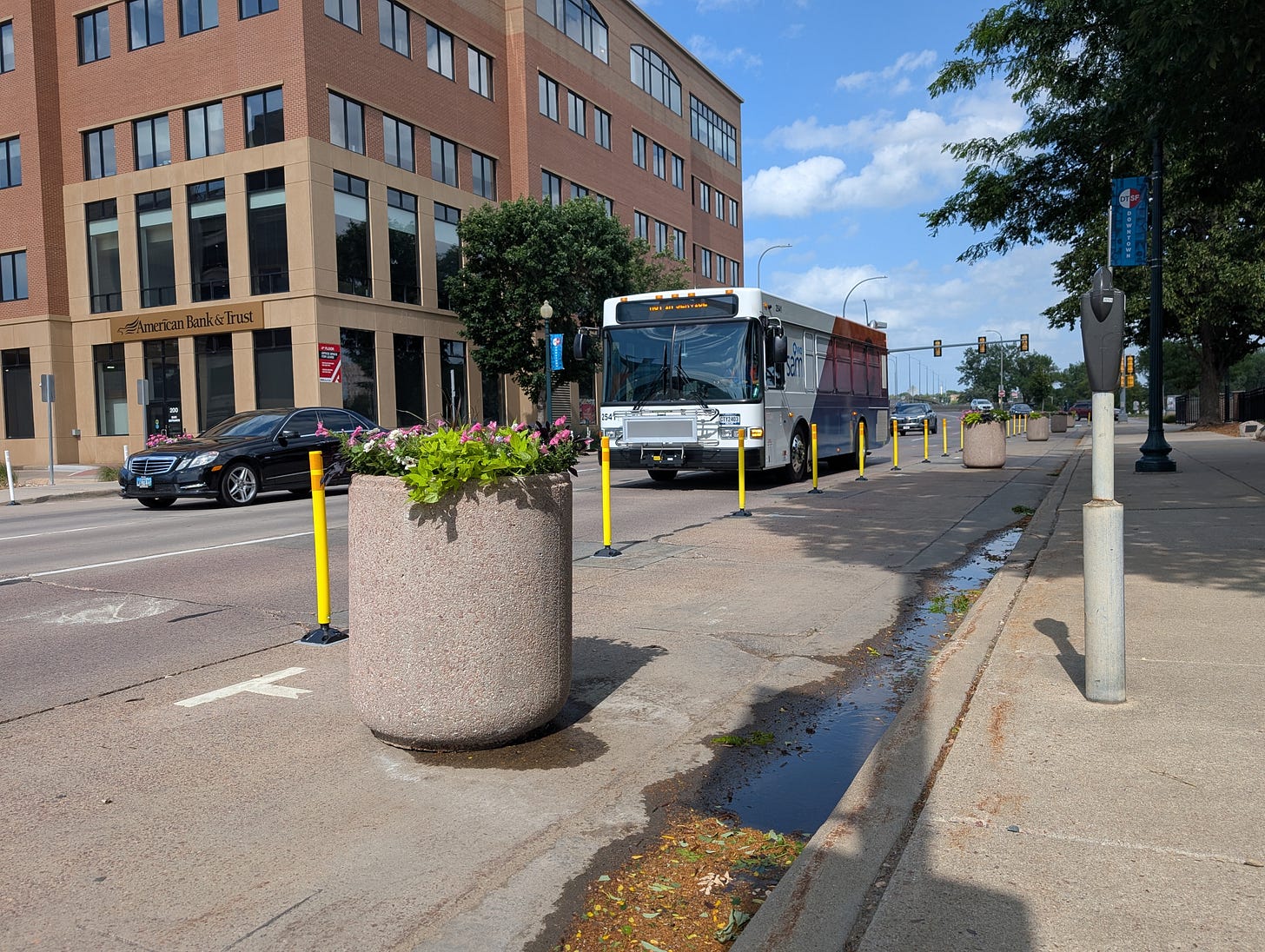
Deliberately slowed rush-hour traffic in downtown Sioux Falls is serving as a preview for commuters ahead of a major, yearslong overhaul of the city’s aging viaduct overpasses.
And Downtown Sioux Falls Inc. is using the opportunity to study traffic patterns in advance of the reconstruction of the 10th and 11th street overpasses on the east end of the core commercial district. Though the state-led project is still years away, the temporary traffic-calming measures are helping engineers gather data on vehicle speeds, volumes and behaviors.

2026 general election ballot set after referral effort falls short




Norma Lindell, 93, of Mitchell, SD, passed away Tuesday, March 31, 2026, at Avera Brady Health and Rehab in Mitchell. Visitation will be Saturday, July 18, from 1-4:00 PM at Bittner Funeral Chapel. Burial will be at St. John’s Lutheran Cemetery in Howard, SD.
NormaJean Marie (Callies) Lindell was born in Mitchell, SD, on April 18, 1932, to Peter C. and Norma A. (Killeaney) Christensen. She was the oldest daughter, along with her younger brother James N. Christensen. She lost her mother when she was eleven and helped her father raise her 2-year younger brother, Jimmy. Her grandmother also helped her dad raise her and her brother. Norma grew up in Howard, SD, and married Ira Callies. To this union were born four sons.
Norma liked working with people and eventually owned her own restaurant business in Howard. Previous to that, she worked for many years in the Black Hills area, where she managed a campground and worked at the well-known Chute Rooster in Hill City. After returning to Howard, she met and married Clyde Lindell of Milaca, Minnesota. Following his death in 1986, she moved back to South Dakota and lived in Centerville, Madison, and finally Mitchell until her death.
She was proud of her children, grandchildren, great-grandchildren, and great-great-grandchildren. She loved music and dancing. Her father taught her how to dance, and they attended many dances throughout the area.
Norma is survived by her sons: Byron (Kaelyn) Callies of Watertown, SD, Lonnie (Susan) Callies of Mitchell, SD, and Dana (Deb) Callies of South Venice, Florida, along with many generations of grandchildren.
She was preceded in death by her mother, father, brother Jimmy, and son Dale.
Celebrate a life with the whole community in The Dakota Scout. Contact obits@thedakotascout.com to have your loved one remembered today.
-

 Movie Reviews7 minutes ago
Young Washington (Christian Movie Review) – The Collision
-

 World17 minutes ago
Neon Closing in on Luca Guadagnino’s Sam Altman Open AI Movie ‘Artificial’ After Amazon Drops Controversial Film
-
 Lifestyle59 minutes ago
‘Dead but Dreaming of Electric Sheep’ is full of beautifully written grotesqueries
-

 Technology1 hour ago
Google’s NotebookLM can sum up your research in a TikTok-style clip
-

 World1 hour ago
Trump admin backs Bolivia state of emergency as leftist ex-leader’s loyalists fracture nation
-

 Politics1 hour ago
Congress eyes rare bipartisan housing win with or without Trump’s help
-

 Health1 hour ago
America’s national parks could add years to your life — here’s how they boost health
-

 Sports1 hour ago
LeBron James Next Team Odds: Warriors, Cavaliers, Heat In Mix

