South Dakota
South Dakota football rolls past Drake, 42-3, in final non-conference game


South Dakota Coyotes head coach Bob Nielson discusses win over Drake
South Dakota Coyotes head coach Bob Nielson breaks down win over Drake
This story was updated to add new information
VERMILLION, S.D. — South Dakota football closed out its non-conference schedule with a bang on Saturday afternoon, defeating Drake 42-3.
The Coyotes (2-1) took control of the game almost immediately as Keyondray Jones-Logan ran the opening kickoff back for a touchdown. It marked his second score from a kickoff return in three games.
“It was pretty electric,” South Dakota football coach Bob Nielson said. “I’m not sure how many teams are going to kick the ball to us from here on after those two returns.”
After that first touchdown, USD never looked back, scoring another touchdown before Drake (1-1) scored its only points of the game, a field goal. South Dakota added 28 unanswered after that to effectively end the game.
“From the opening kickoff, our guys showed that they were ready to go. After last week, you get concerned about getting out of routine and the frustration of not playing,” Nielson said. “And as I said after last Saturday, our guys handled the announcement with maturity, and I thought they played hungry today.”
The Coyotes’ offense looked solid in this one, amassing 219 passing yards and 192 rushing yards. On defense, USD didn’t allow a single touchdown and helped the offense outgain the Bulldogs by 200 total yards.
South Dakota quarterback Aidan Bouman completed 18 of his 24 pass attempts for 219 passing yards and a touchdown while Travis Theis paced the Coyotes in rushing yards with 94 and also had a pair of touchdown runs.
Here are a few takeaways from South Dakota’s second win of the season.
Knocking off the rust
This was South Dakota’s first game since the Portland State fiasco last weekend. Last Saturday’s football game between the Coyotes and Portland State was called off due to illness within the Portland State football program.
A case of pertussis (whooping cough) got into the Viking team, according to a release. Pertussis is a highly contagious respiratory infection that affects the lungs, and many members of the Viking football program had been exposed to the disease which led to the cancellation.
“Going into this year, we had 12 guaranteed opportunities, and that got shrunk down to 11,” South Dakota quarterback Aidan Bouman said. “I’d be lying if I said it didn’t piss us off that we missed an opportunity. So you know, we prepared that much harder.”
South Dakota didn’t look like they had much rust to knock off, scoring 42 points and amassing a total of 413 yards on offense while also holding Drake to zero touchdowns. The only aspect of this game they will want to clean up is their penalties. USD had a total of 14 penalties called against them, which could cost them against better teams.
Keyondray Jones-Logan has been a game-changer for USD
Keyondray Jones-Logan wasn’t surprised to see Drake kicking to him to open the game.
“I think some people kind of think the first time was just luck,” he said postgame.
Well, if they thought it was luck they won’t think that after tonight. Jones-Logan returned the opening kickoff 99 yards for a touchdown, the second time he’s done that through three games this season.
His first came in South Dakota’s season opener against Northern State when the sophomore returned the kickoff 97 yards for the Coyotes’ first touchdown of the season. And on Saturday he actually outdid that return, running back the opening kickoff for a total of 99 yards.
Nielson and Jones-Logan both attributed the touchdown returns to the blocking on the play, but the sophomore has made USD a significantly more dangerous team on special teams.
This is a solid confidence booster for USD ahead of their Valley opener
This wasn’t expected to be a very close game, and to its credit, South Dakota held up its side of the bargain. Although they were expected to win this game pretty easily, the Coyotes can leave tonight pleased with their performance. They looked as good as they have all year on both sides of the ball. Their performance in the passing game was especially encouraging.
“Getting the pass game going is going to be a big area of focus for us,” Bouman said. “And I think we did a decent job of that today.”
This is as good as South Dakota could’ve hoped to play heading into what’s likely to be a highly competitive matchup against a ranked team in Southern Illinois next weekend.
Up next
South Dakota will host Southern Illinois in their conference opener next Saturday, Sept. 28 at 1 p.m.
Jonathan Fernandez covers high school and college sports for the Argus Leader. Contact him at jfernandez1@argusleader.com. Follow him on Twitter at@JFERN31



Iverson Ford now offers the 2027 Ford Expedition, giving families throughout Huron, Mitchell, Aberdeen, Watertown, Brookings, De Smet, Redfield, Miller, and surrounding South Dakota communities access to a full-size SUV with advanced technology, impressive capability, and spacious three-row comfort.
— Iverson Ford is proud to offer the 2027 Ford Expedition, providing drivers throughout Eastern South Dakota with Ford’s latest full-size SUV engineered for growing families, outdoor adventures, towing capability, and everyday versatility. The newest Expedition combines three-row comfort, advanced driver-assist technologies, modern connectivity, and confident performance for today’s active lifestyles.
Located at 2500 Dakota Avenue South in Huron, Iverson Ford serves customers from Huron, Mitchell, Aberdeen, Watertown, Brookings, De Smet, Redfield, Miller, Woonsocket, and surrounding South Dakota communities. As part of the Iverson Auto Group, the dealership offers an extensive selection of new Ford vehicles supported by experienced product specialists, financing professionals, and certified Ford service technicians.
The 2027 Ford Expedition continues Ford’s commitment to delivering capability and comfort in one versatile SUV. Designed for families who need generous passenger space and flexible cargo capacity, the Expedition is well suited for daily commuting, weekend road trips, towing recreational equipment, and exploring South Dakota’s parks, lakes, and outdoor destinations.
“Our team enjoys helping customers find an SUV that fits both their lifestyle and long-term transportation needs,” said a representative of Iverson Ford. “The 2027 Ford Expedition offers the capability, technology, and versatility that many South Dakota families value, whether they’re traveling across town or across the state.”
Demand for full-size SUVs continues to grow as drivers seek vehicles that balance passenger comfort with towing capability and advanced safety features. Iverson Ford helps customers compare Expedition trim levels, explore available technologies, and select the model that best matches their family’s needs while providing continued support through financing, certified maintenance, and genuine Ford parts.
Drivers interested in the 2027 Ford Expedition are encouraged to browse available inventory online or visit Iverson Ford in Huron to experience the SUV firsthand.
About Iverson Ford
Iverson Ford is a full-service Ford dealership located in Huron, South Dakota. Serving drivers throughout Huron, Mitchell, Aberdeen, Watertown, Brookings, De Smet, Redfield, Miller, and surrounding communities, the dealership offers new Ford vehicles, quality pre-owned vehicles, financing, certified Ford service, genuine OEM Ford parts, and customer-focused automotive solutions backed by more than 75 years of service through the Iverson Auto Group.
Contact Info:
Name: Iverson Ford
Email: Send Email
Organization: Iverson Ford
Address: 2500 Dakota Ave S, Huron, SD 57350
Phone: +16053526464
Website: https://www.iversonford.com/
Release ID: 89197473
In case of identifying any problems, concerns, or inaccuracies in the content shared in this press release, or if a press release needs to be taken down, we urge you to notify us immediately by contacting error@releasecontact.com (it is important to note that this email is the authorized channel for such matters, sending multiple emails to multiple addresses does not necessarily help expedite your request). Our dedicated team will be readily accessible to address your concerns and take swift action within 8 hours to rectify any issues identified or assist with the removal process. We are committed to delivering high-quality content and ensuring accuracy for our valued readers.

Under state law, any “interested person” can petition state boards to change administrative rules.
But South Dakota citizens and organizations don’t qualify as “persons” under that chapter of state law. The existence of that limitation surprised some members of the state Board of Elections on Wednesday during a meeting called for the express purpose of voting to advance or defeat a rules package the body spent two hours pondering last week.
The League of Women Voters leaned on what it believed to be its right to petition state board earlier this month when it offered the board a series of rule changes the group argued were necessary to standardize the administration of a new state law that requires first-time voter registrants to provide proof of U.S. citizenship.
The board dismissed the petition in a 5-2 vote on Wednesday after one of the board members told the group that the advocacy nonprofit lacks the legal standing to ask for the changes.
Last minute check of statutes calls petitioners’ status into question
The definition of a “person” able to petition a state board for a rule change only includes political subdivisions or agencies of the state, board member and retired Rapid City attorney Scott McGregor said.
McGregor did not attend the initial board meeting last week when the petition was presented, but he reviewed the matter over the weekend, he told South Dakota Searchlight after the meeting. With a 40-year career “making legal arguments based on statutory interpretations,” McGregor also reviewed relevant laws regarding the petition process.
McGregor said he wanted to see if “interested person” had a broad enough definition to include organizations such as the League of Women Voters.
“‘Person’ in various contexts has an awful lot of definitions,” McGregor said. “It depends on the section of the law you’re dealing with and the level of government you’re dealing with.”
McGregor spoke with the Secretary of State’s Office and its legal counsel earlier this week to confirm his interpretation. Deputy Secretary Tom Deadrick told McGregor that other agencies have accepted rule petitions from individuals.
“Even if other agencies have done it,” McGregor told Searchlight,” that doesn’t change the law.”
McGregor told board members he was “shocked” by the limitations.
“That may be an oversight, but that’s all that’s in there,” McGregor said during the meeting.
Board member Kent Alberty said he was “disappointed” that the law’s restrictions on petitioners wasn’t shared with board members earlier. Alberty, during last week’s meeting, said that he saw a need for at least some standardization in procedures in the administration of the citizenship requirement.
Alberty voted against the dismissal on Wednesday, as did Dewey County Auditor Jamalia Franzen.
McGregor told South Dakota Searchlight that the law should be reviewed legislatively.
“There is a certain unfairness to it,” McGregor said.
Acceptable documents for proving one’s citizenship under the new law in question on Wednesday include a birth certificate, passport, driver’s license, non-driver’s identification card or tribal identification card, or “any other type of acceptable documentation” under federal law. Photocopies of most of those documents are acceptable, but registrants using state- or tribally issued identification cards must have the physical cards with them.
If a voter does not provide necessary documentation, they are registered as federal-only voters and cannot participate in local or state elections.
The League of Women Voters proposals included:
- Allowing photocopies of identification cards, such as tribal IDs and driver’s licenses, to be used as proof of citizenship.
- Recognizing tribal identification cards from any federally recognized tribe, rather than just the nine tribes in South Dakota.
- Allowing voters designated as federal-only an opportunity to cast provisional ballots for local elections while appealing their eligibility.
- Adding specific language to the state’s voter registration form to explain that not offering a physical South Dakota address would cause them to be designated as federal-only voters.
- Adding language to notifications confirming a voter’s registration clearly saying if the registrant is a federal-only voter, as well as language explaining how to remedy the situation.
South Dakota Secretary of State Monae Johnson was ill during last week’s board meeting, at which the group took testimony from supporters of each rule. No one from her office was on hand to rebut the supporters, but her staff did file written responses in opposition.
On Wednesday, Johnson told the board that the new law, as written, does not allow photocopies of driver’s licenses, only the original card. She added that while no formal appeal process exists for voters registered as federal-only, they can remedy their status by resubmitting their registration with proper documentation.
“The League of Women Voters and other concerned organizations could look at amending the current law in the 2027 legislative session, if that is their wish,” Johnson said.
Johnson will not be seeking re-election for secretary of state in November. She lost the Republican nomination at last month’s state party convention to state Rep. Heather Baxter, who supported the bill that created the new law during the legislative session and will oversee its administration if elected. Baxter will face Democratic nominee Terrence Davis in the general election.
Baxter submitted public comment ahead of Wednesday’s meeting and compared the proposed changes to presenting a photocopy of identification to get through security at the airport or purchase alcohol. The state Department of Public Safety does not accept photocopies of identification documents, Baxter said.
“So why allow the League to make such changes to what law already clearly states as well as other state departments?!” Baxter wrote.
Amy Scott-Stoltz, president of the League of Women Voters of South Dakota, said the organization is “disappointed” in the board’s decision and “reviewing our options” regarding advancing its proposals and challenging the board’s dismissal.
The group’s petition was meant to make sure the new law is “uniformly implemented across the state and that voters and county auditors alike would have clear guidance about their obligations under the law in advance of the November election,” Scott-Stoltz said.
“We intend to continue our work in South Dakota to ensure that every American citizen can access the ballot box,” Scott-Stoltz said.
— This story was originally published on southdakotasearchlight.com.
The South Dakota Lottery offers multiple draw games for those aiming to win big.
Here’s a look at July 8, 2026, results for each game:
Winning Powerball numbers from July 8 drawing
12-29-37-43-55, Powerball: 18, Power Play: 4
Check Powerball payouts and previous drawings here.
Winning Lotto America numbers from July 8 drawing
17-26-31-32-37, Star Ball: 01, ASB: 02
Check Lotto America payouts and previous drawings here.
Winning Dakota Cash numbers from July 8 drawing
07-11-18-31-33
Check Dakota Cash payouts and previous drawings here.
Winning Millionaire for Life numbers from July 8 drawing
16-18-43-48-50, Bonus: 01
Check Millionaire for Life payouts and previous drawings here.
Feeling lucky? Explore the latest lottery news & results
Are you a winner? Here’s how to claim your prize
- Prizes of $100 or less: Can be claimed at any South Dakota Lottery retailer.
- Prizes of $101 or more: Must be claimed from the Lottery. By mail, send a claim form and a signed winning ticket to the Lottery at 711 E. Wells Avenue, Pierre, SD 57501.
- Any jackpot-winning ticket for Dakota Cash or Lotto America, top prize-winning ticket for Lucky for Life, or for the second prizes for Powerball and Mega Millions must be presented in person at a Lottery office. A jackpot-winning Powerball or Mega Millions ticket must be presented in person at the Lottery office in Pierre.
When are the South Dakota Lottery drawings held?
- Powerball: 9:59 p.m. CT on Monday, Wednesday, and Saturday.
- Mega Millions: 10 p.m. CT on Tuesday and Friday.
- Lucky for Life: 9:38 p.m. CT daily.
- Lotto America: 9:15 p.m. CT on Monday, Wednesday and Saturday.
- Dakota Cash: 9 p.m. CT on Wednesday and Saturday.
- Millionaire for Life: 10:15 p.m. CT daily.
This results page was generated automatically using information from TinBu and a template written and reviewed by a South Dakota editor. You can send feedback using this form.
-

 Politics4 minutes ago
WATCH: Trump’s Energy chief reveals what escalating Iran tensions could mean for gas prices
-

 Health10 minutes ago
Coffee may have powerful effect on liver health, major study suggests
-

 Sports13 minutes ago
Oba Femi vs Brock Lesnar at SummerSlam is a ‘generational matchup,’ WWE legend JBL says
-
 Business25 minutes ago
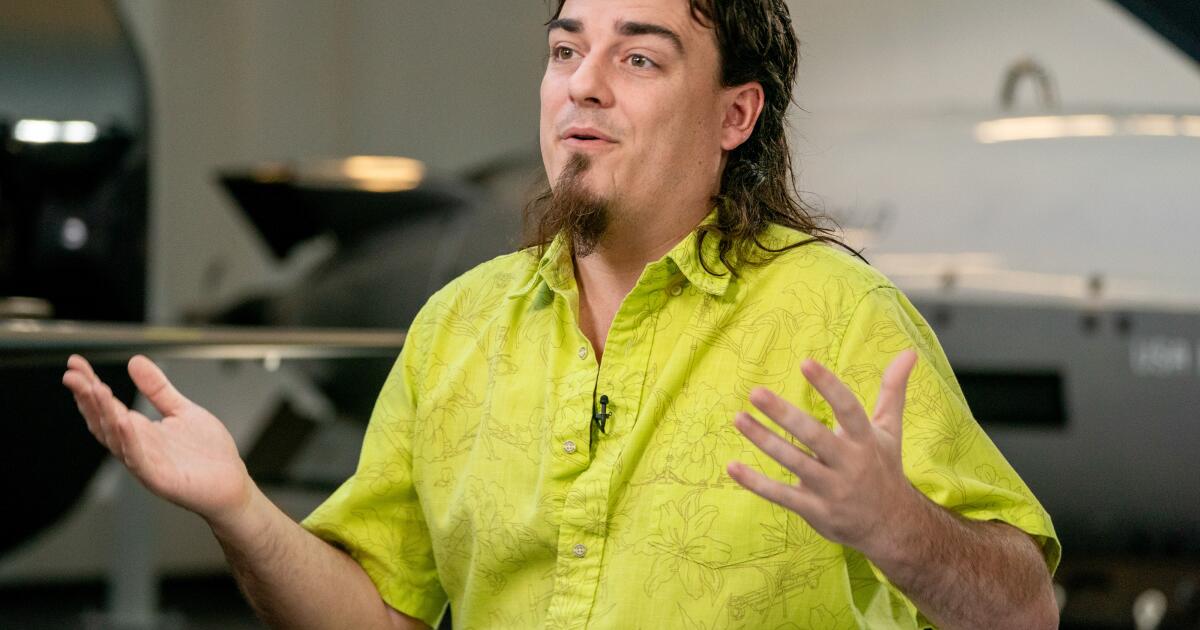
Billionaire exodus? California drew 10 times more venture capital than any other state this year
-
 Entertainment28 minutes ago
Disney Channel maximalism to pop-star glam: What fans wore to Hilary Duff’s L.A. show
-
 Lifestyle33 minutes ago
L.A. Affairs: It’s hot when a man drives to me. But would this new guy make the trek from the Valley?
-
Politics40 minutes ago
Black mold and $1 wages: Settlement forces immigrant detention centers to protect workers
-
 Science43 minutes ago
Trump administration seeks to limit federal funding that doesn’t ‘advance’ presidential policies


