South Dakota
Recreational marijuana is on the South Dakota ballot this November. What to know:


Next month, South Dakota voters will once again determine the state’s fate of recreational marijuana with Initiated Measure 29.
If passed, the measure would allow those aged 21 and older to “possess, grow, ingest and distribute marijuana or marijuana paraphernalia,” according to Attorney General Marty Jackley’s explanation.
Proponents say IM-29 is a “common-sense policy” that would boost the state’s revenue with licensed businesses as opposed to black market sales and allow law enforcement to eliminate prosecuting non-violent marijuana offenses to focus on “real crime.”
Voters originally opted for and passed the legalization of marijuana in 2020. However, the measure was challenged by Gov. Kristi Noem and two law enforcement officers. Ultimately, it was extinguished in 2021 by the South Dakota Supreme Court, citing the ballot measure at the time violated the state Constitution’s requirement that amendments do not encompass more than one subject, according to previous Argus Leader reporting.
Opponents argue that voting Yes on IM-29 could lead to increased public health risks, especially among teens, as well as impaired driving. The measure would also allegedly “open the door for increased crime, suicide rates… and mental health problems.”
What would IM-29 do for South Dakota?
If passed, the debated initiated measure would add four new sections to Title 34 of the state’s codified laws, which covers public health and safety.
IM-29 would legalize recreational marijuana for adults aged 21 and older in South Dakota, allowing for possession of up to 2 ounces. Residents would also be able to grow up to six marijuana plants with no more than 12 per household.
It would still remain illegal to drive under the influence, and the measure would restrict where it is contained or consumed, including schools, certain properties depending on the property owner, places of employment according to the employer, and any other locations where tobacco is prohibited.
A fiscal note on the measure says it would “not decriminalize the sale of cannabis but would decriminalize the sale of cannabis accessories.” In other words, marijuana-derived substances would be allowed but marijuana would remain illegal under federal law.
IM-29 also discloses that South Dakota counties may see incarceration expenses reduced by $581,556 per year.
No changes would be made to the medical marijuana program.
What proponents are saying:
IM-29 sponsor, and Executive Director for South Dakotans for Better Marijuana Law, Matthew Schweich says voting yes on IM-29 would protect personal freedom and restore the will of the people of South Dakota, referring to the outcome of the 2020 election on the matter.
“Whether we pass measure 29 or not, cannabis already exists in South Dakota. The question is, are we going to be pragmatic and take a common sense approach or are we going to stick with an obsolete failed policy prohibition that has done nothing for us for a century?” he stated during a Sept. 19 South Dakota Public Broadcasting debate against former state lawmaker and Protecting South Dakota Kids Executive Director Rhonda Milstead.
During that debate, Schweich also said he supports “strong labeling and packaging” as well as THC caps on marijuana products.
Proponents for IM-29 said if passed, the measure would help create new South Dakota jobs, reduce spending on incarceration and generate millions in new tax revenue.
This time, they say, the measure is shorter and simpler compared to previous attempts to legalize recreational marijuana in the state.
What opponents are saying:
During the SDPB debate last month, Milstead said she thinks no amount of THC will be safe for people.
“So why invite trouble into our state in the form of a drug that is not safe, not responsible and will never be regulated?” she said during the debate.
According to the 2024 Ballot Question Pamphlet, opponents of IM-29 also say the measure will harm South Dakota children, families and communities, going as far as to say that a research report on child abuse said marijuana is often actively used the most by perpetrators of child abuse and neglect.
“I have been diagnosed for years with something called Cannabinoid hyperemesis syndrome,” Kylee Hanson said. “That’s where the puking, it just comes in cycles for days on end. It’s like you develop some kind of allergy, I guess they would say, for a daily smoker of marijuana, a…
— Paul TenHaken (@paultenhaken) September 30, 2024
Mayor Paul TenHaken has also shown opposition to marijuana use and possession for both medical and recreational use. In 2021, TenHaken proposed a cap on the number of medical marijuana dispensaries in Sioux Falls.
On Sept. 30, TenHaken posted on X, formerly known as Twitter, that he is encouraging others to vote No on IM-29, saying he “believes adding another legally addictive vice would not have positive community benefits at this time.”
This article originally appeared on Sioux Falls Argus Leader: IM-29, legalizing recreational marijuana, on the ballot in South Dakota



Oklahoma didn’t suffer any strong wind damage this week, but wind farms in South Dakota certainly did.
Several wind turbines were toppled by the 130 MPH winds that hit the central part of the state Monday morning. They were described as straight line winds and not tornadoes. But the winds compared to those recorded in some tornadoes.
The 131-mph wind was recorded at Holabird in Hyde County at 6:15 a.m. local time.
A picture of the extensive damage showed at least 7 of the wind towers were bent over by the powerful Mother Nature.
According to a report by Energy News Beat, storm chaser Jakob McMillin documented the scene in a widely shared post on X (formerly Twitter), showing multiple wind turbine towers collapsed or heavily damaged, with blades and structural debris scattered across the prairie. In replies to his post, McMillin stated he observed “over 20” turbines destroyed or critically damaged.
The Affected Wind Farm
The damaged facility is the South Dakota Wind Energy Center (also known as the Highmore Wind Energy Project or Highmore Wind Farm), located approximately 10 miles south of Highmore.
- Number of turbines: 27
- Turbine model: GE Vernova 1.5s (1.5 MW each)
- Total nameplate capacity: 40.5 MW
- Commissioning year: 2003 (South Dakota’s first major wind farm)
- Owner/Operator: NextEra Energy Resources (formerly FPL Energy)
- Power purchaser: Basin Electric Power Cooperative
The South Dakota Lottery offers multiple draw games for those aiming to win big.
Here’s a look at June 29, 2026, results for each game:
Winning Powerball numbers from June 29 drawing
10-14-41-53-59, Powerball: 03, Power Play: 2
Check Powerball payouts and previous drawings here.
Winning Lotto America numbers from June 29 drawing
08-13-29-30-31, Star Ball: 04, ASB: 03
Check Lotto America payouts and previous drawings here.
Winning Millionaire for Life numbers from June 29 drawing
04-25-26-31-36, Bonus: 04
Check Millionaire for Life payouts and previous drawings here.
Feeling lucky? Explore the latest lottery news & results
Are you a winner? Here’s how to claim your prize
- Prizes of $100 or less: Can be claimed at any South Dakota Lottery retailer.
- Prizes of $101 or more: Must be claimed from the Lottery. By mail, send a claim form and a signed winning ticket to the Lottery at 711 E. Wells Avenue, Pierre, SD 57501.
- Any jackpot-winning ticket for Dakota Cash or Lotto America, top prize-winning ticket for Lucky for Life, or for the second prizes for Powerball and Mega Millions must be presented in person at a Lottery office. A jackpot-winning Powerball or Mega Millions ticket must be presented in person at the Lottery office in Pierre.
When are the South Dakota Lottery drawings held?
- Powerball: 9:59 p.m. CT on Monday, Wednesday, and Saturday.
- Mega Millions: 10 p.m. CT on Tuesday and Friday.
- Lucky for Life: 9:38 p.m. CT daily.
- Lotto America: 9:15 p.m. CT on Monday, Wednesday and Saturday.
- Dakota Cash: 9 p.m. CT on Wednesday and Saturday.
- Millionaire for Life: 10:15 p.m. CT daily.
This results page was generated automatically using information from TinBu and a template written and reviewed by a South Dakota editor. You can send feedback using this form.


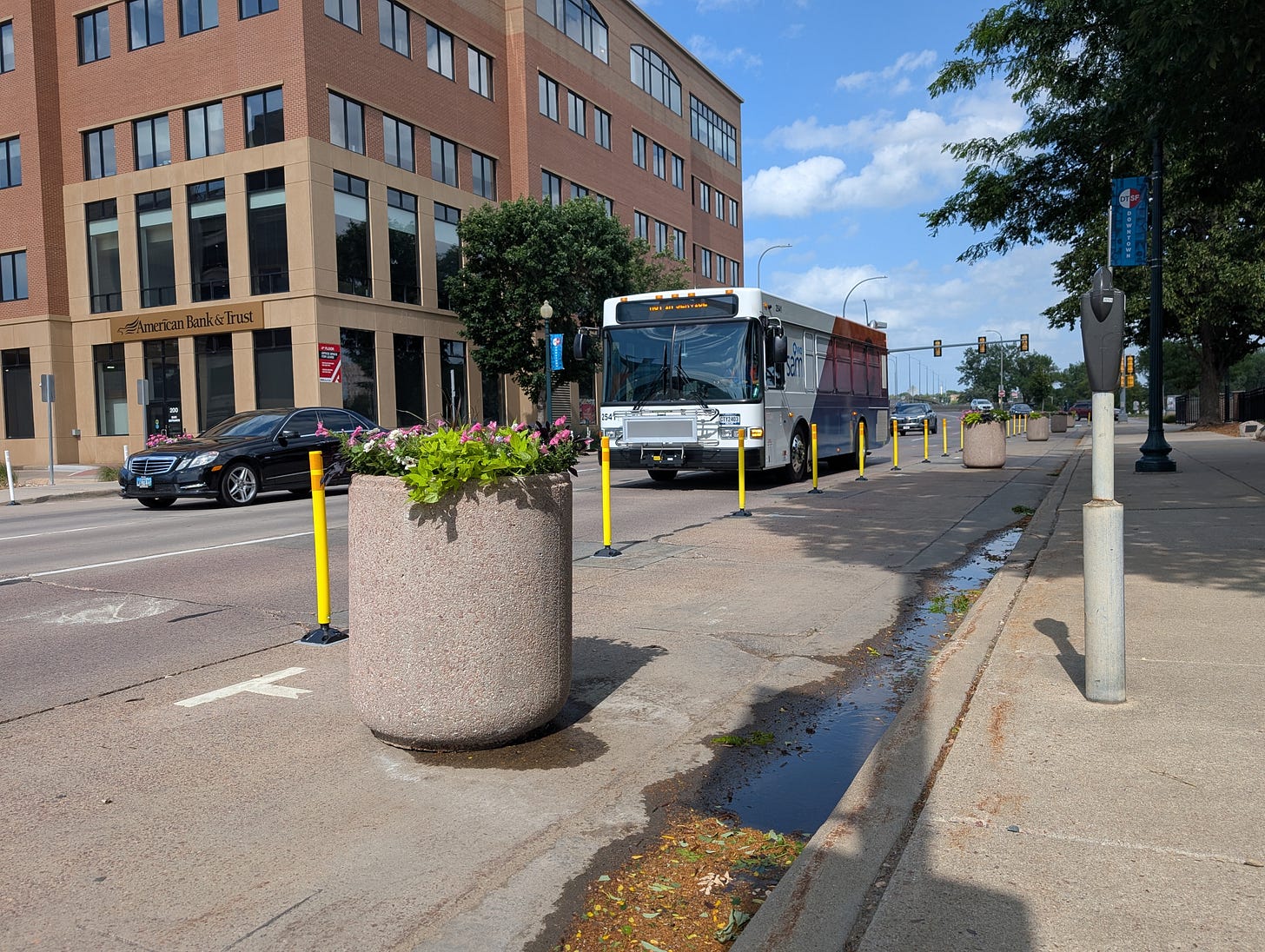
Deliberately slowed rush-hour traffic in downtown Sioux Falls is serving as a preview for commuters ahead of a major, yearslong overhaul of the city’s aging viaduct overpasses.
And Downtown Sioux Falls Inc. is using the opportunity to study traffic patterns in advance of the reconstruction of the 10th and 11th street overpasses on the east end of the core commercial district. Though the state-led project is still years away, the temporary traffic-calming measures are helping engineers gather data on vehicle speeds, volumes and behaviors.

2026 general election ballot set after referral effort falls short



-
 Sports1 minute ago
Walter Alston, Dave Roberts and everyone in between: The 10 managers in L.A. Dodgers history
-

 World11 minutes ago
World’s oceans experience hottest June ever, scientists say more heat ahead
-
 News38 minutes ago
What the Supreme Court did on the final day of its term
-

 Los Angeles, Ca2 hours ago
Los Angeles County man convicted of sex trafficking, abusing woman he was dating
-

 Detroit, MI2 hours ago
Detroit Tigers tee off on New York Yankees with 5 homers in win
-

 San Francisco, CA2 hours ago
Popular brewery shutters San Francisco location amid industry woes
-

 Dallas, TX3 hours ago
Eight arrested after repeated attempts to enter World Cup matches without tickets
-

 Miami, FL3 hours ago
Reports: Heat add potent bench scorer in Tim Hardaway Jr.

