South Dakota
‘Puts accountability in place’: Bill tying teacher pay to state funding passes House – South Dakota Searchlight


A bill tying teacher pay to annual increases in state funding passed the state House of Representatives with a 58-9 vote Tuesday.
The bill, which now heads to a Senate committee, is a result of South Dakota drifting back down near the bottom in average teacher salary compared to the rest of the United States. The bill also aims to follow through on promises made to teachers when the Legislature passed a half-percentage-point increase in the state sales tax rate in 2016 to raise teacher salaries. Last year, legislators and Gov. Kristi Noem reduced the state sales tax rate from 4.5% to 4.2%.
Rep. Kristin Conzet, the newly appointed Republican lawmaker from Rapid City, served in the Legislature in the years leading up to the sales tax increase and supported the effort.
“Careers ended over that tax increase. People weren’t voted back in. We did what was best for our teachers,” Conzet said Tuesday on the House floor. “What did not happen and what the intent was of raising that sales tax was to go directly to teachers. It wasn’t to go to the administration; it wasn’t to backfill student losses. … This puts accountability in place. This puts teeth in what was supposed to be taken care of in that all-out battle six, seven years ago.”
The legislation would set a statewide minimum teacher salary of $45,000, beginning July 1, 2026. That minimum standard would increase each year by a percentage equal to the annual increase in state education funding approved by the Legislature and governor.
The bill would also require schools to raise their average teacher compensation — including pay and benefits — by percentages equal to annual increases in state funding. That requirement would begin with the 2025 fiscal year.
Beyond the regular annual increases in state education funding, schools would not receive additional state funding to comply with the mandates. Noem has recommended a 4% increase in state funding for the next state budget.
While nobody testified against the legislation during its committee hearing last week, several lobbyists representing the education community called it a work in progress.
Some lawmakers expressed concern on the House floor, saying that the bill needed more work to earn support from school district superintendents – especially those expecting enrollment decreases in the future, which could result in a decrease in state funding to those school districts.
Rep. Rocky Blare, R-Winner, said he is worried for the future if other costs increase, such as insurance, gas prices or other staff salaries. He said the legislation would limit school districts’ ability to cover those needs.
“I think this bill needs to be looked at, needs to be refined, needs to be better,” Blare said, as one of the few legislators to vote against the bill.
But Rep. Mike Stevens, R-Yankton, who worked with an informal group tasked with rewriting an earlier version of the bill, said it’s time to hold school districts accountable, even if it’s “not a perfect bill.”
The legislation, Stevens said, would force school districts to tackle declining enrollment without sacrificing teacher pay by combining classes, closing schools, consolidating schools, passing an opt out of property tax limitations, using reserves, reducing staff or reducing services.
“If we have to make hard decisions,” Stevens said, alluding to lawmakers making cuts to fit a balanced budget each year, “everybody else does too.”
GET THE MORNING HEADLINES DELIVERED TO YOUR INBOX



Oklahoma didn’t suffer any strong wind damage this week, but wind farms in South Dakota certainly did.
Several wind turbines were toppled by the 130 MPH winds that hit the central part of the state Monday morning. They were described as straight line winds and not tornadoes. But the winds compared to those recorded in some tornadoes.
The 131-mph wind was recorded at Holabird in Hyde County at 6:15 a.m. local time.
A picture of the extensive damage showed at least 7 of the wind towers were bent over by the powerful Mother Nature.
According to a report by Energy News Beat, storm chaser Jakob McMillin documented the scene in a widely shared post on X (formerly Twitter), showing multiple wind turbine towers collapsed or heavily damaged, with blades and structural debris scattered across the prairie. In replies to his post, McMillin stated he observed “over 20” turbines destroyed or critically damaged.
The Affected Wind Farm
The damaged facility is the South Dakota Wind Energy Center (also known as the Highmore Wind Energy Project or Highmore Wind Farm), located approximately 10 miles south of Highmore.
- Number of turbines: 27
- Turbine model: GE Vernova 1.5s (1.5 MW each)
- Total nameplate capacity: 40.5 MW
- Commissioning year: 2003 (South Dakota’s first major wind farm)
- Owner/Operator: NextEra Energy Resources (formerly FPL Energy)
- Power purchaser: Basin Electric Power Cooperative
The South Dakota Lottery offers multiple draw games for those aiming to win big.
Here’s a look at June 29, 2026, results for each game:
Winning Powerball numbers from June 29 drawing
10-14-41-53-59, Powerball: 03, Power Play: 2
Check Powerball payouts and previous drawings here.
Winning Lotto America numbers from June 29 drawing
08-13-29-30-31, Star Ball: 04, ASB: 03
Check Lotto America payouts and previous drawings here.
Winning Millionaire for Life numbers from June 29 drawing
04-25-26-31-36, Bonus: 04
Check Millionaire for Life payouts and previous drawings here.
Feeling lucky? Explore the latest lottery news & results
Are you a winner? Here’s how to claim your prize
- Prizes of $100 or less: Can be claimed at any South Dakota Lottery retailer.
- Prizes of $101 or more: Must be claimed from the Lottery. By mail, send a claim form and a signed winning ticket to the Lottery at 711 E. Wells Avenue, Pierre, SD 57501.
- Any jackpot-winning ticket for Dakota Cash or Lotto America, top prize-winning ticket for Lucky for Life, or for the second prizes for Powerball and Mega Millions must be presented in person at a Lottery office. A jackpot-winning Powerball or Mega Millions ticket must be presented in person at the Lottery office in Pierre.
When are the South Dakota Lottery drawings held?
- Powerball: 9:59 p.m. CT on Monday, Wednesday, and Saturday.
- Mega Millions: 10 p.m. CT on Tuesday and Friday.
- Lucky for Life: 9:38 p.m. CT daily.
- Lotto America: 9:15 p.m. CT on Monday, Wednesday and Saturday.
- Dakota Cash: 9 p.m. CT on Wednesday and Saturday.
- Millionaire for Life: 10:15 p.m. CT daily.
This results page was generated automatically using information from TinBu and a template written and reviewed by a South Dakota editor. You can send feedback using this form.


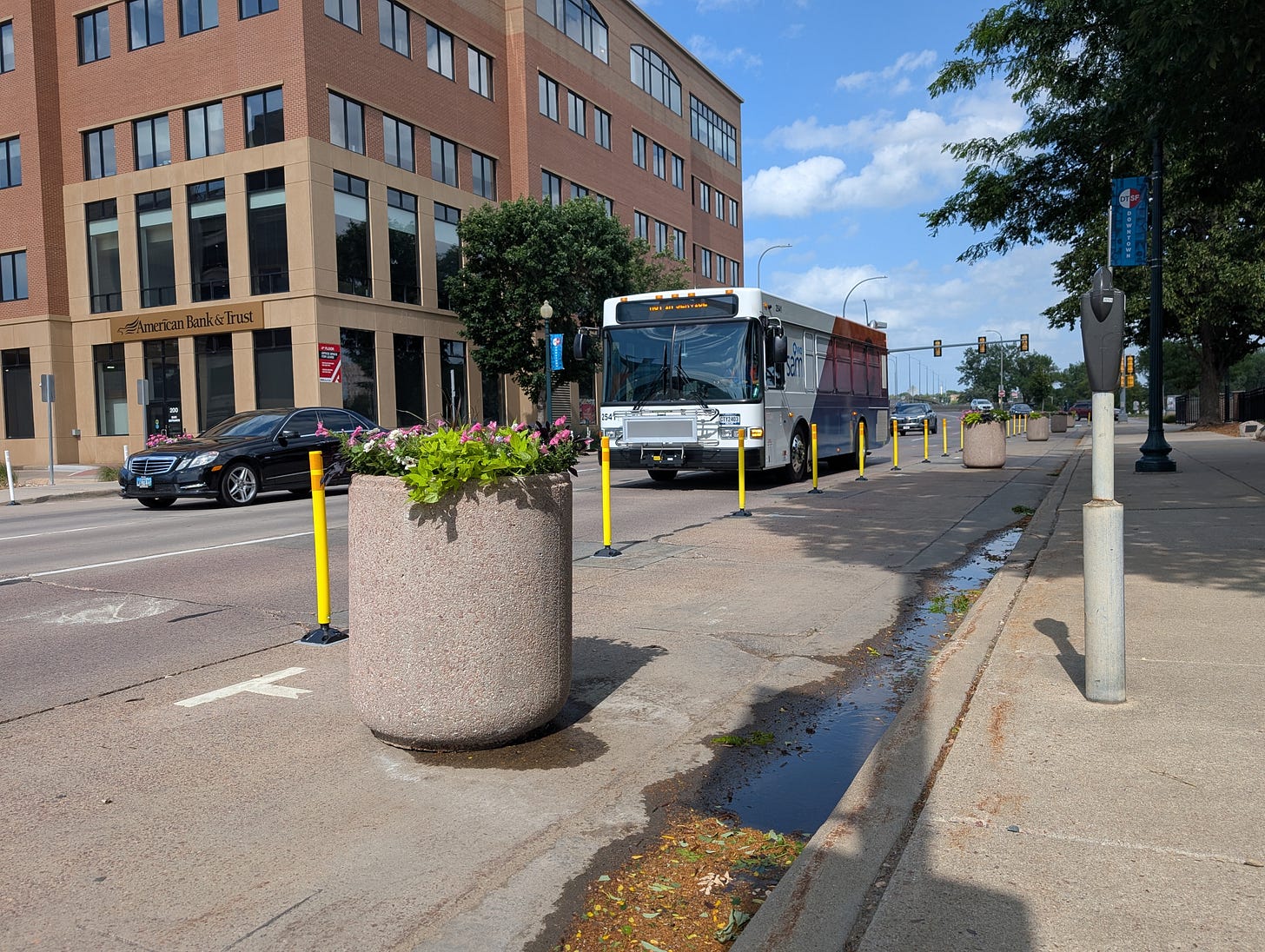
Deliberately slowed rush-hour traffic in downtown Sioux Falls is serving as a preview for commuters ahead of a major, yearslong overhaul of the city’s aging viaduct overpasses.
And Downtown Sioux Falls Inc. is using the opportunity to study traffic patterns in advance of the reconstruction of the 10th and 11th street overpasses on the east end of the core commercial district. Though the state-led project is still years away, the temporary traffic-calming measures are helping engineers gather data on vehicle speeds, volumes and behaviors.

2026 general election ballot set after referral effort falls short



-
New Jersey1 minute ago
News Flash • New Jersey Legislative Senate Democrats, NJ
-

 New Mexico9 minutes ago
Las Vegas police and fire to enforce zero-tolerance illegal firework ban
-

 North Carolina11 minutes ago
NC budget plan could boost Durham schools, workforce
-

 North Dakota16 minutes ago
Storm damage closes roads in Ramsey County
-

 Ohio24 minutes ago
Four arrested, 16 children removed from southeast Ohio home
-

 Oklahoma26 minutes ago
Oklahoma AG announces settlement that would cut PSO rate increase from 15% to 1%
-

 Oregon31 minutes ago
Oregon leaders celebrate, slam Supreme Court ruling on trans athletes
-

 Pennsylvania38 minutes ago
What to know as Pennsylvania’s state budget deadline arrives

