South Dakota
Left-wing Activists Urge South Dakota Democrat To Exit Senate Race In Favor Of Independent | Aberdeen Insider


Left-wing politicos are hurling spoiler accusations in South Dakota.
But this time, it’s backers of an independent calling for the Democratic candidate’s departure from the U.S. Senate race.
Bengs
Brian Bengs is a Democrat-turned-independent with statewide name recognition and a growing campaign war chest. He now lives in Hill City, but used to live in Aberdeen.
That has some progressive activists questioning whether Democrats are backing the strongest challenger to incumbent Republican Sen. Mike Rounds.
MORE: Rounds, Jackley cruise to GOP primary victories in Senate, House
The debate has intensified in recent weeks as Bengs continues to out-raise Democratic nominee Julian Beaudion. Public polling also suggests Bengs might be better positioned to compete against Rounds in November.
Both Bengs and Beaudion are longshots to unseat Rounds, the two-term Republican senator who also spent eight years in the governor’s mansion. But polling and fundraising disparities have fueled calls among some progressive activists for Beaudion to step aside.
“A Bengs–Rounds race could be very competitive — if only the Democratic candidate would step aside,” South Dakota Standard opinion writer Julia Natvig recently wrote in an op-ed published on the left-leaning political commentary blog South Dakota Standard, widely read by South Dakota progressives.
Natvig is a retired occupational health nurse and co-leader of Common Grounds Indivisible South Dakota.
She noted that, contrary to political tradition, an independent candidate in this race might not siphon votes from the Democrat — the dynamic could unfold in reverse.
The discussion has led some donors, activists and political operatives on the left to openly question whether Democrats should consolidate behind Bengs, who challenged Sen. John Thune, R-S.D., as a Democrat in 2022 before launching his current campaign as an independent.
Federal Election Commission filings show Beaudion reported about $3,000 cash on hand at the end of the most recent reporting period, also showing about $14,000 in outstanding debt. Bengs, meanwhile, reported raising more than $101,000 during the first quarter and approximately $721,000 for the election cycle. He had about $58,000 cash on hand.
The Bengs campaign, which notes that its candidate has been a lifelong independent sans 18 months when he ran for Senate in 2022, also points to internal polling it says shows the race tightening.
Bengs’ campaign, though, is not among those calling for Beaudion to leave the race.
“The decision to enter or exit a race is up to the individual running,” said Clara Bronikowski, press secretary for the Bengs campaign. “That decision should be made with what is best for the people of South Dakota in mind.”
Just south of the state line, Democrats in Nebraska have effectively cleared the field for an independent candidate for a better chance of defeating an incumbent GOP senator.
Democratic candidate Cindy Burbank ran in and won the Democratic primary with the stated intention of withdrawing from the general election and endorsing independent candidate Dan Osborn, whom many Democrats view as a stronger challenger to Republican Sen. Pete Ricketts. The strategy is designed to avoid splitting anti-Republican votes between a Democrat and an independent.
“Candidate Julian Beaudion should follow the Nebraska example, bow out and throw his support to Bengs to enable a competitive Senate race,” Natvig wrote.
Others on the left have voiced similar thoughts.
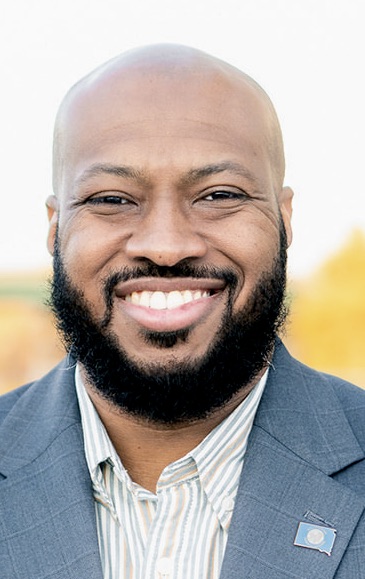
Beaudion
Beaudion isn’t on board and rejects the narrative that he’s the weaker candidate.
“I will not be dropping out of this race,” he said. “South Dakotans deserve a leader who listens and is an accurate reflection of who we are and serves their needs. I am the only candidate doing that work, and I am ready to lead.”
MORE: Former Aberdeen legislator crafted law that’s led to South Dakota’s first gubernatorial runoff
“I believe in allowing the process of democracy to play out,” Beaudion told The Dakota Scout. “As candidates, it’s our responsibility to go out and earn the support of voters. I have held 28 town halls across the state, visited with folks in 33 counties and three of the reservations. I am shaping my policies with the voices of South Dakotans leading the way,” the former highway patrolman added.

Rounds
For Rounds, incumbency coupled with affiliation with South Dakota’s majority political party gives him strong odds of winning a third term on Capitol Hill on Nov. 3, whether it’s a two-candidate field or three.
Rounds campaign spokesman Rob Skjonsberg said the posturing among progressives suggests both challengers’ campaigns don’t stand a chance.
MORE: Gallery: Families, flag, fun invade Wylie Park for weekend
“Maybe Julian should ask (Bengs) to drop out? That’d probably make more sense,” Skjonsberg said. “I would have won every track meet in high school if everyone would have quit for me. That’s an acknowledgment of a weak candidate and candidacy.”


The existing water treatment plant for the Minnehaha Community Water Corp. on June 9, 2026, south of Dell Rapids, S.D. (Photo: Bart Pfankuch / South Dakota News Watch)
DELL RAPIDS, S.D. – Scott Buss can only imagine what this town north of Sioux Falls might have looked like – and how many jobs and taxes would have been generated – if there wasn’t a local shortage of available water.
Buss, executive director of the Minnehaha Community Water Corp., sat in the conference room of the rural water system based in Dell Rapids recently and ticked off the industrial and agricultural projects turned away due to a lack of water.
After hitting its limit on how much water it can provide a few years ago, the rural system has had to turn away proposed projects valued at hundreds of millions of dollars that offered an untold number of new jobs, he said.
The rejected projects include the Agropur Cheese plant that eventually opened in Lake Norden. A few proposed hog farms and dairy expansions in northern Minnehaha County were also stalled, Buss said.
Get South Dakota news and information in a free email on weekdays. Cancel any time.
Subscribe
Other proposals, most of which never came to fruition in South Dakota, included the $1.5 billion Gevo corn-based jet fuel plant, the $5oo million Wholestone Farms hog processing plant and a data center that at some point all eyed the Dell Rapids area for development.
“All the water rights are spoken for between Dell Rapids and Sioux Falls, so there was no more water to be had in Minnehaha County,” Buss told News Watch in an interview in June. “With all the (residential) development that was coming in, we realized that our well capacity and our treatment capacity was limiting our ability to take on new high water-use customers.”

Buss and the nonprofit corporation’s board of directors aren’t waiting around to potentially miss out on more opportunities.
In a unique arrangement, the corporation is partnering with the neighboring Big Sioux Community Water System to the north on a $170 million expansion project called Shared Resources. The expansion, started three years ago, will use new wells into the Big Sioux Aquifer to generate 8 million gallons of water more per day starting this fall.
“It’s going to be a huge and great benefit for Big Sioux and Minnehaha water,” said Jodi Johanson, director of the Big Sioux system based in Egan. “This project is going to make sure that down the road we have enough water for the future.”
2 systems get stronger together
The Minnehaha water corporation is still able to bring on new residential and retail customers who consume part of the 9.2 million gallons of treated water it can provide on a daily basis.
The system was formed by a group of farmers and landowners in the 1970s but sought a reliable way of providing more and cleaner water to residents of Minnehaha County outside of Sioux Falls who relied exclusively on individual wells. The system started with about 1,200 customers but has grown to more than 5,500 now in seven cities, mostly north of the Sioux Falls metro area.
Given the limits on water from the aquifer, and balancing the water needs of consistent housing and retail growth in northern Minnehaha County, the water system had to say no to developments that request 1 million or more gallons of water per day, Buss said. A million gallons per day is equivalent to the water consumption of about 4,300 homes, he said.
Billions needed to keep South Dakota taps flowing
South Dakota water systems will increasingly turn to the Missouri River to provide water for future population, agricultural and industrial growth. But plans will require billions of dollars and decades of construction to keep taps flowing freely.

As with other rural water systems in South Dakota, the aquifers the systems rely on for their water are either running low or are legally tapped out, or both.
In the case of Minnehaha water corporation, the Big Sioux River Aquifer has gotten drier, but state law is also preventing it from taking more water from the aquifer.
In 1996, the state Water Management Board allocated water rights, or withdrawal limits, to systems that take groundwater from the aquifer, Buss said.
Those limits have now been reached, meaning that Minnehaha water cannot take any more than the 7 million gallons per day it is drawing now.
The system also receives about 2 million gallons per day from the Lewis & Clark Regional Water System, making its daily maximum capacity of about 9.2 million gallons per day, which it sometimes reaches, especially during spring planting season or hot summer months.

Directly to the north, the Big Sioux Community Water System produces up to 2 million gallons per day for about 2,400 customers in Moody and Lake counties as well as some in Brookings County and in western Minnesota, Johanson said.
The system still has room within its water rights to draw more water, making it an attractive partner for Minnehaha water.
Though Big Sioux Community Water System has not turned away any large projects, it needs more water to serve a boom in residential growth in the region, Johanson said.
In the area around Lake Madison, near Madison, developers are considering projects that could someday bring 500 new homes and a new nine-hole golf course, she said.
Support solutions-focused storytelling. Help South Dakota News Watch tell stories that identify and share solutions to the state’s biggest challenges.
Donate
The system also serves a number of dairies that use significant water and provides water to the Dakota Ethanol plant in Wentworth, which is undergoing an expansion. Farmers in the region are also using greater quantities of water to deliver chemicals onto their land, Johanson said.
“This is our first expansion,” she said. “We’re looking forward and we’re trying to find the solution before we face a problem.”
Federal government and customers pay the way
The biggest Shared Resources ticket item is a new $80 million water treatment plant that is nearly completed on 240th Street a few miles north of Dell Rapids.
A 20-inch pipeline from the plant to the east will end at a 1.5 million gallon water tower, and a 24-inch pipeline to the west will terminate at a ground-level storage tank with a 4 million gallon capacity.
Six new wells will draw the water, and the storage tanks will provide both pressure and the ability to adapt to changing demands without service interruption, Buss said.
As with most modern water projects, the costs will be shared by government and end users. The systems are funding the project with $49 million in grants from the Biden-era American Rescue Plan Act and $121 million in low-interest loans from South Dakota’s Drinking Water State Revolving Fund.
The two systems are sharing the cost of the project loans commensurate with how much water they will receive, meaning Minnehaha will pay 65% of the costs for its 5 million gallons per day while Big Sioux will kick in 35% for its 3 million gallons more per day.
Minnehaha water is assuming $87 million in new debt and Big Sioux will take on $42 million in new debt, Buss said.
The average residential consumer in both systems that uses about 7,000 gallons per month will see their bill rise to $135 a month, roughly double the cost in 2020.
“It’s a big project, and it’s a good example of how two systems can work together to have some economies of scale,” Buss said.
Ratepayers will see a significant increase in their monthly water bills. The average residential consumer in both systems that uses about 7,000 gallons per month will see their bill rise to $135 a month, roughly double the cost in 2020, Buss said.
A big project, but even more water needed
But both systems view the Shared Resources project as a temporary fix and both are looking toward proposed projects that will tap the Missouri River for more water in the future.
Buss said his system has applied for 10 million gallons more water per day from Lewis & Clark, which has two expansion efforts planned.
Minnehaha water has simultaneously applied to receive 10 million gallons per day from the proposed Dakota Mainstem Regional Water System, a potentially $10 billion project to carry Missouri River water to more than 50 communities and organizations across eastern South Dakota and parts of Minnesota and Iowa.

The dual application effort is to make sure Minnehaha water can rely on taking in more water from at least one of the two systems as they come online, Buss said.
Johanson said Big Sioux has also signed on to accept water from Dakota Mainstem, even if it takes 20 to 40 years for the water to begin flowing.
To ensure that steady supply of high-quality drinking water, four major projects are in progress to take more water from the Missouri River – including WEB Water in the northeast, Lewis & Clark and the proposed Dakota Mainstem in the southeast as well as the proposed Western Dakota Regional Water System in western South Dakota and the Black Hills.

The projects are part of a wide-scale increase in water service capacity now underway in South Dakota, where water managers of several systems are implementing plans to serve the state for the next 40 to 50 years.
Regional rural water systems such as Minnehaha and Big Sioux are critical components of those projects because they provide water to communities and individual customers at the end of the delivery system.
Alicia Deschepper, zoning administrator for Moody County, said the water system expansions should allow for more growth to occur in Moody and Minnehaha counties, which are seeing new single-family housing developed at a rapid rate.
“I think it will be a great thing for our county and hopefully enable us to bring in more bigger businesses as well as more homes,” Deschepper said.
South Dakota News Watch is an independent nonprofit. Read, donate and subscribe for free at sdnewswatch.org. Contact content director Bart Pfankuch: 605-937-9398/bart.pfankuch@sdnewswatch.org.

SIOUX FALLS, S.D. (Dakota News Now) – The South Dakota Department of Public Safety said a nine-year-old girl from Waterloo, Iowa, is dead following a fatal Hughes County crash on Saturday.
This crash happened on Saturday, July 4, near the Spring Creek Recreation Area about 15 miles northwest of Pierre.
Preliminary crash information suggests a utility vehicle driven by a 37-year-old Iowa man was driving south on Spring Creek Drive. He attempted to turn around and rolled the vehicle.
A 16-year-old boy was also in the vehicle and was hurt, while the driver was not hurt.
The South Dakota Highway Patrol is investigating the crash.
Copyright 2026 Dakota News Now. All rights reserved.

RAPID CITY, S.D. (KOTA) – Beginning July 7, six Little League All-Star teams from across South Dakota will compete at Collins Field during the 2026 South Dakota Little League State Tournament.
For many players, it’s the biggest stage they’ve experienced. Every pitch, hit and catch could help extend their summer and earn a trip to regional competition.
Rapid City will be well represented with both Canyon Lake and Harney Little League taking the field, while teams from Pine Ridge, Pierre, Brandon Valley and Sioux Falls round out the tournament.
The weeklong event also brings families, coaches and fans from across South Dakota to the Black Hills, creating a busy week at the ballpark filled with community support and hometown pride.
When the final out is recorded on July 12, one team will leave Rapid City carrying a state championship trophy—and a chance to keep its postseason journey going.
See a spelling or grammatical error in our story? Please click here to report it.
Do you have a photo or video of a breaking news story? Send it to us here with a brief description.
Copyright 2026 KOTA. All rights reserved.
-

 Seattle, WA4 minutes ago
‘They had hyped us up so much’: Seattle businesses near World Cup stadium report declining sales
-

 San Diego, CA7 minutes ago
San Diego and a yoga instructor go the mat over a ban on public classes
-

 Milwaukee, WI12 minutes ago
Vice President JD Vance to visit Milwaukee on Wednesday
-

 Atlanta, GA19 minutes ago
Metro Atlanta to see scattered storms before temperatures climb back into the 90s
-

 Minneapolis, MN22 minutes ago
Longtime Star Tribune Columnist Retires After 36 Years
-

 Indianapolis, IN27 minutes ago
Crash on Indy’s East Side Kills a Man
-

 Pittsburg, PA34 minutes ago
The Eastman aims to reinvigorate an East Allegheny space with new energy
-

 Augusta, GA37 minutes ago
Crews battle fire along Boy Scout Road

