Ohio
Long wait times, no answers: Workers frustrated after Ohio withholds tax refunds over unemployment claims

COLUMBUS, Ohio — Sharon Ganoe said she is literally paying for someone else’s crime.
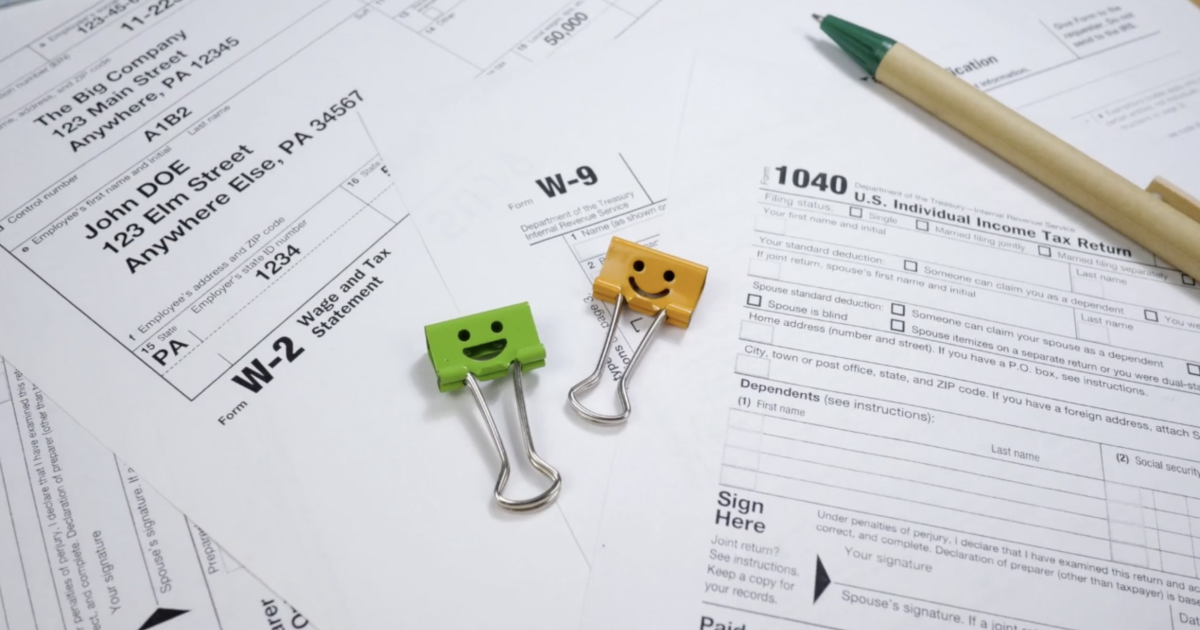
The Springfield Township resident said the Ohio Department of Taxation withheld her 2023 tax refund to offset a debt from a fraudulent unemployment claim filed in her name.
“I’m paying on a debt that somebody else accrued,” she said. “And they did it fraudulently.”
Despite spending hours on hold with three different state agencies, she said she has been unable to reach anyone who can help her.
“I just wonder if anybody is even really working there,” she said.
How it started
Ganoe said she and her husband, Barry, received an Offset Notice from the Ohio Department of Taxation in February. It said the agency was considering withholding their tax refund to offset their debt.
“We’re like, ‘What?!’ because we weren’t aware of any money that we owed,” she said.
After making several phone calls, Ganoe said she learned her identity was stolen. She said a crook filed an unemployment claim during the pandemic using her previous name and an old address.
Ganoe said she then filed a fraud claim with the Ohio Department of Jobs and Family Services, reported it to OH|ID, and made more calls to state agencies in an attempt to receive her refund.
“This has become a project for me,” she said. “One that I don’t want.”
But it didn’t work. Ohio kept their refund.
“It infuriates me that they wouldn’t listen to me,” she said.
How it happened
“The agency is not doing a good enough job to identify where is fraud really taking place,” Zach Schiller said. Schiller is the research director for Policy Matters Ohio, a nonpartisan, nonprofit research institute.
He has researched and written about problems with Ohio’s outdated and underfunded unemployment system for two decades.
I first talked to Schiller in January after a Parma business owner was told to back his pandemic benefits.
Ohio says Parma business owner has to pay back $26,000 in pandemic benefits because of missed deadline
Ohio says Parma business owner has to pay back pandemic benefits
“The Ohio Department of Job and Family Services is not sufficiently funded to support the level of service that Ohioans deserve and need,” he said.
Schiller said efforts have been made to modernize the state’s system, but it still falls short of what is needed to provide adequate customer service.
“We are not in a pandemic, we’re not in a high unemployment situation,” he said. “So why can’t the agency answer phone calls in a timely manner?”
ODJFS Director of Communications Bill Teets said the state is working to improve customer service, including reducing wait times.
He sent us the following statement:
“In March, the contact center had 65 FTE (full time employees). Since then, 33 additional employees completed training and are now on the phones. We are in the process of hiring 30 more. Those will likely start training in June, so they’ll start “coming online” this fall. So, in short, over this year, we’ll have double our contact center staff to more than 120 full time employees. For comparison, we had approximately 40 in the pre-pandemic era.”
He said the state has created a callback feature so callers do not need to wait on hold. Currently, the average time for a callback is 4 hours, according to ODJFS.
He also encouraged workers to use the ODJFS Unemployment website to find answers to their questions.
How it’s going
So, how many Ohio taxpayers’ refunds are being withheld in connection with unemployment claims?
In an e-mail, an Ohio Department of Taxation spokesperson wrote that the agency withheld 248,262 tax refunds this year.
In another e-mail, an ODJFS spokesperson wrote that “as of May 9, 2024, ODJFS has 465,814 cases in active debt collections with the Ohio Attorney General since March 2020.”
But no one we talked to with the Ohio Department of Taxation, Ohio Attorney General’s Office, or Ohio Department of Jobs and Family Services answered our questions about the number of tax refunds withheld in connection with unemployment claims this year.
However, ODJFS Public Information Program Administrator Tom Betti provided us with the following timeline on unemployment overpayment appeals and the collection process:
- ODJFS discovers a claimant may not be eligible for a previously paid week.
- ODJFS contacts the claimant and requests information specific to their eligibility and weeks. Claimants are notified that they have five days to respond to our requests.
- If there is no response, or the information provided establishes the claimant was not eligible for unemployment benefits, ODJFS issues a Determination of Unemployment Compensation Benefits (Determination), which spells out the ineligibility issue in question, the week(s) of ineligibility, any associated overpayments, and any penalties for fraud.
- The Determination also provides information for repayment, as well as outstanding debt referred to the Ohio Attorney General’s Office for collection, which may include state and federal income tax withholding.
- The Determination also provides information on appeal rights, how to appeal, and deadlines to appeal (21 calendar days after the date issued).
- ODJFS has 21 days to review an appeal and issue a Directors Redetermination (Redetermination). The Redetermination provides the appellant with the decision and reasoning, repayment information, and appeal rights, how to appeal, and deadlines to appeal (21 calendar days after the date issued).
- Appeals to Redeterminations are transferred to the Unemployment Compensation Review Commission (UCRC), and a hearing is scheduled. The UCRC has 21 days to review an appeal, conduct a hearing, and issue a decision. The Hearing decision includes the details of the ineligibility issue, the weeks, and repayment amounts and methods. It also includes information on appeal rights, how to appeal, and deadlines to appeal (21 calendar days after the date issued).
- Appeals to UCRC decisions, or Requests for Review, are reviewed by the full Unemployment Compensation Review Commission, and a decision is issued to the appellant, which includes appeal rights, methods, and deadlines (30 calendar days after the date issued).
- Appeals to Requests for Review should be filed with the county common pleas court where the claimant lives or was employed.
- Determinations and Decisions become final once applicable appeal deadlines have expired.
- Once a Determination or Decision becomes final, all associated debt becomes collectible. ODJFS takes collection action through the Determination repayment language and overpayment notices.
- All associated outstanding debt is certified to the Ohio Attorney General (OAG) for collection after 66 days. The OAG has various collection methods, including mail/phone outreach, third-party collectors, and special council, as well as offsets to state income tax refunds, Ohio lottery, and Ohio casino/racinos.
“There’s a lack of inter-agency communication,” Barry Ganoe, Sharon’s husband, said. “The left hand doesn’t know what the right hand is doing.”
Ganoe said the state should have figured out the fraudulent claim filed in his wife’s previous name was fraudulent.
After all, he noted, she changed her name to Ganoe when they got married in 2014.
Their refund was only $411. But Sharon won’t give up on getting her money back.
“I’m afraid somewhere in the future they’ll send us another letter saying we owe $20,000 dollars or something,” she said. “Plus, the fact it’s not right.”
News 5 Investigators have reported on problems with Ohio’s unemployment system since the pandemic started.
ODJFS said it identified approximately $6.9 billion in fraud and non-fraudulent overpayments during the pandemic.
This is not the first time efforts to reclaim those funds and reduce fraud have led to problems for Ohio workers. Last summer, I revealed some Ohio workers were temporarily locked out of their accounts in an effort to prevent fraud.
Unemployed Ohio workers temporarily locked out of accounts
Unemployed Ohio workers locked out of accounts
I requested an interview with ODJFS Director Matt Damschroder for this report but was told he was unavailable.
We Follow Through
Want us to continue to follow through on a story? Let us know.



A grand jury in Franklin County, Ohio, indicted nine people suspected of being involved in a human trafficking ring, officials said.
Ohio Attorney General Andy Wilson said in a news release on Monday that the nine people were indicted on a combined 42 felony charges in connection with the human trafficking investigation. Marcus Gant, Magon Smith, Raymond Valentine, Aimee Fabin, John W. Gibson II, Malik Jackson, Kayla Wheeler, Jeremy Lindsey, and Mackenzie Fitzpatrick face a variety of charges, including engaging in a pattern of corrupt activity. All nine are in custody.
The news release said they are accused of using narcotics to coerce women into commercial sex work at the Econo Lodge on North Wilson Road. The suspects then laundered money through Valentine Floral on Eakin Road, officials said. The alleged crimes took place between April 2025 and January 2026.
Some of those charged face trafficking in persons, compelling prostitution and promoting prostitution charges. Of the nine, Gant faces the most charges. The 37-year-old from Columbus faces 11 different counts related to the human trafficking investigation.
The Central Ohio Human Trafficking Task Force led that investigation, the news release added.
According to Monday’s news release, the Franklin County Prosecutor’s Office has taken previous legal action against the Econo Lodge. Officials said a lawsuit was filed earlier this year against the owner of a hotel, who was accused of “neglecting to address repeated drug and violent activity on the property.” A settlement was reached.
People can report human trafficking in Ohio by calling 844-END-OHHT, texting “ENDOHHT” to 847411, downloading the END OHHT app or submitting information online.


Ohio State enters the 2026 season as the reigning national champion’s chief rival for preseason hype — ranked No. 1 in ESPN’s initial Football Power Index and the trendy pick in several outlets’ way-too-early bracket projections. But before any of that matters, the Buckeyes have to get through a schedule that their own athletic department has openly called one of the toughest in the country. The question worth asking isn’t whether Ohio State is talented enough to win a title. It’s whether this slate is rugged enough that even a very good Buckeyes team could stumble to 9-3 — and if it does, whether that’s still good enough for the College Football Playoff.
By the school’s own count, nine of the Buckeyes’ 12 regular-season opponents either reached the CFP or played in a bowl game in 2025, and seven of them won at least nine games that season. Add up the 2025 records of Ohio State’s nine Big Ten opponents and you get a combined winning percentage north of .600 — a brutal number for a conference slate.
A few things stand out immediately:
Five true road games, including trips to two teams that made the 2025 CFP semifinals. The season opens with a Week 2 rematch at Texas, closing out the home-and-home series after Ohio State’s narrow 14-7 win in Columbus last year, followed later by a trip to Indiana on October 17th, the reigning national champion, and a first visit to USC since 2008 on October 31st. The Buckeyes will also make their first trip to Iowa’s Kinnick Stadium since 2017. Road trips to Texas, Iowa, Indiana, USC and Nebraska leave almost no margin for error away from the Horseshoe.
A CFP semifinalist at home, too. Oregon comes to Columbus on November 7th. Only two Big Ten teams have posted winning records against Ohio State this decade — Michigan and Oregon — and the Buckeyes will host both within the final four weeks of the regular season.
The Michigan game closes the regular season again, on Nov. 28, with a trip to Indiana and a home date with Oregon both looming in the weeks before it. A closing stretch of Indiana (road), Oregon (home) and Michigan (home), separated only by Northwestern and Nebraska, is about as demanding a finish as any team in the country will face.
Why 9-3 Is a Real Possibility, Not a Doomsday Scenario
Ohio State’s roster is loaded. Quarterback Julian Sayin returns after a Heisman-finalist redshirt freshman campaign, and Jeremiah Smith — already the most productive receiver in program history through two seasons — is back for one more year in Columbus. Ohio State ranks among the national leaders in returning offensive production, bringing back roughly seven in ten snaps’ worth of output from a year ago.
But the defense that carried Ohio State to the 2024 national title and a Big Ten title game appearance in 2025 was gutted by the NFL Draft. The Buckeyes had four players go in the first 11 picks of the 2026 draft, three of them defenders — receiver Carnell Tate plus linebackers Arvell Reese and Sonny Styles, and safety Caleb Downs. As a result, the defense returns only about half of last season’s production, a figure that ranks in the bottom third nationally. That’s a real question mark heading into a schedule with almost no easy weeks after October.
There’s also a late-season track record worth noting. Through 12 games in 2025, Ohio State looked nearly unbeatable, winning everything but the Texas opener by an average score of roughly 39-8. But when it came time to close, the offense stalled — the Buckeyes managed a combined 24 points in losses to Indiana in the Big Ten title game and Miami in the CFP quarterfinals, both defeats built around an overly conservative approach late in games. If a similarly cautious style resurfaces against this year’s closing gauntlet of Indiana, Oregon and Michigan, three losses in that stretch alone isn’t far-fetched.
Put it together — a true road loss at Texas, Indiana or USC, a slip-up somewhere in the Oregon-Michigan stretch, maybe an upset bid from Iowa or Nebraska — and 9-3 isn’t a pessimistic outcome. It’s a very plausible one for a team replacing this much defensive production while playing this schedule.
So Would 9-3 Be Enough for the Playoff?
Here’s where the format matters as much as the record. The CFP is staying at 12 teams in 2026, but the automatic-qualifier rules changed after realignment talks between the Big Ten and SEC broke down without a deal on expansion. Each Power Four conference champion — from the ACC, Big 12, Big Ten and SEC — is now guaranteed a spot regardless of final ranking. The highest-ranked Group of Six team also earns an automatic bid, and Notre Dame can qualify as an independent if it finishes in the top 12. Everyone else fills out the field as at-large selections, seeded purely by the committee’s final rankings, with only the top four teams overall earning first-round byes.
That structure gives a 9-3 Ohio State two realistic paths in:
Path 1: Win the Big Ten. If the Buckeyes go 9-3 but that includes a Big Ten Championship Game win, they’re in automatically — no ranking required, no committee debate. Given the schedule, a 9-3 team that beats Indiana, Oregon and/or Michigan somewhere along the way to Lucas Oil Stadium and wins there would carry more than enough quality wins to make that plausible.
Path 2: An at-large bid on the strength of schedule. If Ohio State doesn’t reach the title game, a 9-3 at-large case becomes a resume argument — and here the Buckeyes’ brutal slate actually works in their favor. A 9-3 record built on wins over the likes of Texas, Indiana, USC, Oregon or Michigan, with all three losses coming against genuinely strong opponents, is a very different case than a 9-3 team that padded its record against a soft schedule and lost to mediocre teams. The selection committee has rewarded strength of schedule and a “best three losses” argument over a cleaner record built on a weaker slate; in 2025, an 8-5 Duke team with no marquee wins was left out entirely, while 10-3 Alabama got in on the strength of who they played and beat.
The math gets tighter, though, if other Big Ten contenders also finish with strong resumes. Analysts already project this could be a three-bid year for the conference, with Oregon, Ohio State and Indiana viewed as the league’s strongest playoff bets and several others given outside chances. If Indiana, Oregon and Ohio State all finish somewhere in the 9-3 to 11-1 range, seeding — and head-to-head results — will matter enormously. An Ohio State team that lost directly to one of its direct competitors could find itself squeezed out if the at-large math gets crowded near the bottom of the field.
The Bottom Line
Ohio State’s 2026 schedule is genuinely one of the hardest in the country — five true road games, two CFP semifinalists on the slate, and a closing stretch of Indiana-Oregon-Michigan that would stress-test any roster, let alone one replacing three defensive first-round picks. A 9-3 finish wouldn’t reflect a team underachieving; it would reflect a team that played one of the nation’s toughest schedules and lost a few close ones to elite competition.
Under the current 12-team format, that record should still be good enough for the Playoff in most realistic scenarios — either by winning the Big Ten outright, which comes with an automatic bid regardless of ranking, or by leaning on strength of schedule to win the at-large argument. The one situation where it gets dicey is if Ohio State’s three losses include head-to-head defeats to the same Big Ten teams — Indiana, Oregon — it’s competing against for playoff positioning, and the conference ends up sending three or four teams that all finish with similar records. In that crowded scenario, being 9-3 with the wrong losses could matter more than being 9-3 at all.
For a program that’s made the field in three of the first three years of the expanded Playoff, the safer bet is still that 9-3 gets Ohio State in. But this schedule means the Buckeyes will have to earn every bit of that resume.
Follow
-
Missouri4 minutes ago
Missouri Lottery Powerball, Pick 3 winning numbers for July 13, 2026
-

 Montana10 minutes ago
Missoula and Western Montana neighbors: Obituaries for July 14
-

 Nebraska16 minutes ago
Cyclospora outbreak reaches Nebraska as health officials investigate source
-

 New Hampshire28 minutes ago
Thousands Of Sunflowers Hit Peak Bloom For Limited Time At Coppal House Farm In Lee
-

 New Jersey34 minutes ago
NJ fines Sen. Wimberly $24K after use of donations for hotels, airfare
-

 New Mexico40 minutes ago
New Mexico wants to get orphaned wells plugged — but did contractors get the word?
-

 North Carolina46 minutes ago
North Carolina attempted murder suspect arrested in Myrtle Beach
-

 North Dakota52 minutes ago
Families allege babies were switched at Grafton hospital

