Ohio
Lawmaker takes action after Ohio Supreme Court rules 'boneless' chicken wings can have bones


COLUMBUS, Ohio — The Ohio Supreme Court ruled that a man who ordered boneless wings should have expected bones to be in them, denying him a jury trial after he suffered major injuries, including several surgeries and two medically induced comas. A state legislator is so outraged by the decision that he plans to propose a bill to change the law.
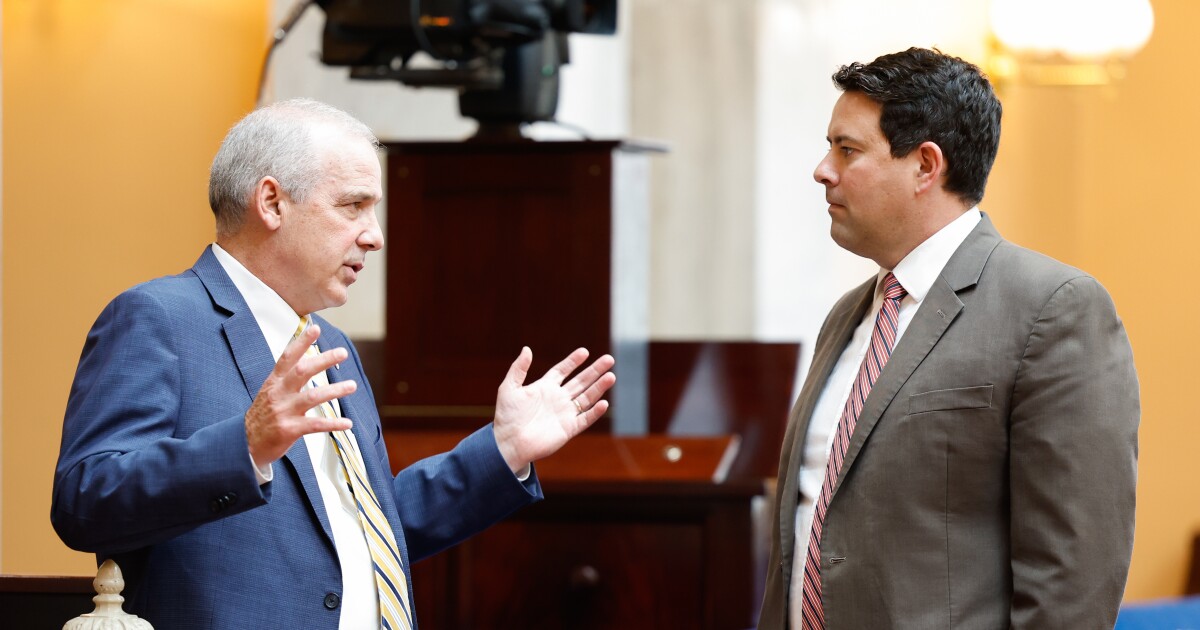
State Sen. Bill DeMora (D-Columbus) is an avid wing fan, having weekly wing nights with his friends when he was in college. Just recently, he went to an all-you-can-eat boneless wings event.
“I did not expect to have a bone in my boneless wings,” DeMora said.
But that isn’t how the state sees it.
Chicken wings advertised as ‘boneless’ can have bones, Ohio Supreme Court decides
The case
Back in 2017, Michael Berkheimer ordered boneless wings at Wings on Brookwood in Southwest Ohio, according to his lawsuit filed in Butler County. The menu of the restaurant was included the court documents and did not feature any disclaimer saying bone fragments could be in the food. As of Friday, it still doesn’t.
He had cut up his wing into thirds, eating the first two pieces of it normally. On his third one, Berkheimer felt like something went down the wrong “pipe,” the court documents said. He ran to the restroom and tried to vomit, unsuccessfully. That night, he developed a fever, and for the next two days, he couldn’t eat a bite of food without throwing up, records state.
He was rushed to the ER with a 105-degree fever, the lawsuit states. Doctors found a 1 and 3/8 inch chicken bone in his throat, one that tore open the wall of his esophagus. From there, he developed a “massive infection in his thoracic cavity,” the document says.
“The severity of the infection, which centered on Mr. Berkheimer’s heart and lungs, required several surgeries, two medically induced comas, and a week-long stay in intensive care, followed by two-to-three additional weeks in the hospital,” the lawsuit states.
The medical issues are still ongoing, records state.
Berkheimer sued the restaurant and their chicken suppliers, arguing that the sellers’ “negligence” led to his injuries.
Both the Butler County Court of Common Pleas and the Twelfth District Court of Appeals sided against Berkheimer, arguing that “common sense dictated the presence of bone fragments in meat dishes,” according to the courts. Neither court let the case go to trial.
Supreme Court
On Thursday, the majority of the Ohio Supreme Court ruled that the lower courts made the right decision, denying Berkheimer the ability to continue his lawsuit to a jury trial. The court was split four Republicans to three Democrats.
The justices were just supposed to decide whether or not it could go to trial, Case Western Reserve University law professor Jonathan Entin said.
“The majority said no way this case shouldn’t go to trial at all because no reasonable consumer would think that boneless chicken wings might not have bones in them, especially since bones are part of chickens,” Entin explained.
The court didn’t believe a jury would rule in Berkheimer’s favor, he said.
In the majority opinion, Justice Joe Deters wrote that the restaurant wasn’t liable “when the consumer could have reasonably expected and guarded against the presence of the injurious substance in the food.”
Deters added that “boneless wings” are a cooking style, according to the opinion. He compared “boneless wings” to the food “chicken fingers,” noting that people would not actually think they are eating fingers.
The courts used the ‘Allen test’ method to determine negligence, which evaluates both if the harmful substance was foreign to the food or natural and whether the customer could reasonably guard against it. They found that the bone was natural and large in comparison to the piece of chicken.
“Any reasonable consumer should have been able to find it,” Entin said, explaining the court’s opinion.
The Democrats emphatically dissented.
“The result in this case is another nail in the coffin of the American jury system,” dissenting opinion author Justice Michael Donnelly said.
The case is merely about whether Berkheimer can have a jury of his peers decide if the restaurant and suppliers were negligent according to law, he said.
“The majority opinion makes a factual determination to ensure that a jury does not have a chance to apply something the majority opinion lacks— common sense,” the justice continued.
He continued on to explain that they didn’t have the full facts, being unable to see what the bone looked like.
“If it did, then I suggest that the majority suffers from a serious, perhaps disingenuous, lack of perspective,” the justice said.
The idea that the label “boneless wing” is a cooking style is “Jabberwocky,” the Democrat said, saying the absurdity of the opinion reads like a “Lewis Carroll piece of fiction.”
This could have ripple effects, Donnelly argued. For people who are nut, dairy or gluten-free, the court seemed to have decided that if they order allergy-free food, it could still have the allergen because that is “natural” to the food.
Deters responded to this, claiming it was different.
“But unlike the presence of the bone in this case, the presence of lactose or gluten in a food that was advertised as lactose-free or gluten-free is not something a consumer would customarily expect and be able to guard against,” Deters said.
It’s a lot harder to detect gluten or lactose than it is to detect a bone, Entin explained.
Reaction
This is insane, DeMora said.
“This defies logic, it defies reason, it defies common sense,” DeMora said. “Now the definition of boneless, according to the Ohio Supreme Court, means… it could have a bone.”
The justices are blocking Berkheimer from having a jury trial because they don’t care about the “regular Ohioan,” he said.
“You get screwed out of your day in court because we have to protect our donors and our corporations more than we protect our citizens,” the lawmaker said.
DeMora has already directed his team to start looking into what they can do to help Berkheimer and other Ohioans.
“We can’t really pass a law saying that boneless chicken means there’s no bones in it — Although maybe we can, I don’t know. If that’s possible, I’m gonna do it for sure.”
Regardless of that idea, he is also researching other consumer protection provisions he can draft bills around, he said.
Berkheimer’s attorney, Robb Stokar, agreed that this case wasn’t fair.
“I believe the dissent correctly wrote that the ruling was “another nail in the coffin of the American jury system.” Mr. Berkheimer suffered catastrophic injuries from a bone contained in a menu item unambiguously advertised as “boneless” at every level of commerce. All we asked is that a jury be able to make a commonsense determination as to whether he should be able to recover for his injuries. But the Court’s majority ruled otherwise, simultaneously denying him that opportunity, and rendering the word “boneless” completely meaningless,” Stokar told me.
Some of these justices are up for reelection, so Entin anticipates some politicos could put ads up about this decision — especially because Deters’ tone did not need to be as harsh as it was.
“You don’t have to get into all of the technical details of legal doctrine to be able to say this is a decision that shows that a majority of the current court are not sympathetic to ordinary people who get hurt through, basically, no fault of their own,” Entin said.
Deters, Donnelly and dissenting Justice Melody Stewart are all up for election in November.
“Boneless means without bones,” DeMora said. “I can’t understand the logic of the Republican majority.”
Follow WEWS statehouse reporter Morgan Trau on Twitter and Facebook.




Where do bed bugs come from? How they get could get into your home
Does the thought of bed bugs keep you up at night? Here’s what to know.
Columbus remains one of the nation’s top cities for bed bug treatments, according to Orkin’s latest annual rankings, while Ohio continues to dominate the list more than any other state.
Orkin ranked Columbus eighth on its 2026 list of U.S. cities with the most bed bug treatments, the same position the city held last year. Cleveland ranked even higher at No. 4. Cincinnati came in at No. 15.
Overall, six Ohio cities made the Top 50, more than any other state: Cleveland, Columbus, Cincinnati, Youngstown, Dayton and Toledo. The rankings are based on residential and commercial bed bug treatments Orkin performed between May 2025 and May 2026.
Chicago claimed the top spot for the sixth consecutive year, followed by Los Angeles, Detroit, Cleveland and Indianapolis.
Ohio continues to rank high for bed bugs
Ohio’s strong showing on the list comes as the state has repeatedly appeared near the top of national pest rankings.
A recent USA TODAY report, citing an analysis by Casino.ca, estimated Ohio has the second-highest bed bug risk for travelers in the country, behind only Michigan.
The Orkin rankings do not measure the total number of bed bugs in a city. Instead, they reflect where the company performed the greatest number of residential and commercial treatments over the past year.
Columbus has dealt with bed bug sightings before
The rankings also follow several high-profile bed bug incidents in downtown Columbus government offices.
Last fall, The Dispatch reported a bed bug was discovered inside the Ohio Department of Medicaid’s downtown office, prompting treatment of the affected area.
The Dispatch also reported that employees at the Ohio Bureau of Workers’ Compensation had reported bed bug sightings, leading to inspections and pest-control efforts.
Those incidents highlighted the challenges large office buildings face when dealing with pests that can hitch rides on clothing, backpacks and luggage rather than originating inside the buildings themselves.
It’s not just bed bugs
Bed bugs aren’t the only pests putting Columbus on Orkin’s radar.
In October 2025, Orkin ranked Columbus No. 21 on its annual “Rattiest Cities” list, a slight improvement from previous years but still among the nation’s leading metro areas for rodent treatments.
Taken together, the rankings suggest central Ohio remains a busy market for pest-control companies as the city holds steady on this year’s bed bug list.
Which Ohio cities made Orkin’s 2026 list?
Among Ohio cities, the rankings were:
- Cleveland– No. 4
- Columbus– No. 8
- Cincinnati– No. 15
- Youngstown– No. 32
- Dayton– No. 38
- Toledo– No. 42
Trending reporter Amani Bayo can be reached at abayo@dispatch.com.

After years of unchecked dominance from the SEC, the Big Ten Conference cemented its place as the best in college football in the 2025-2026 season.
The Indiana Hoosiers completed a remarkable 16-0 season by winning a National Championship, beating Ohio State in the conference championship game, dominating Alabama in the Rose Bowl, then blowing out Oregon in the College Football Playoff semifinal.
That completed a Big Ten trifecta, with the Michigan Wolverines winning a championship in 2024, then the Buckeyes following it up by beating Notre Dame to win the title in 2025. While the SEC might have better depth overall, it’s no question that the top of the Big Ten is as good or better than anyone.
SEC, BIG TEN ARE DOMINATING COLLEGE FOOTBALL THANKS TO MASSIVE ADVANTAGES OVER OTHER CONFERENCES
Indiana Hoosiers head coach Curt Cignetti after defeating the Miami Hurricanes in the College Football Playoff National Championship game at Hard Rock Stadium in Miami Gardens, Florida on Jan. 19, 2026. (Mark J. Rebilas/Imagn Images)
And a new program might be ready to take their turn at the top of the Big Ten: those same Oregon Ducks.
One of the most predictive measures of a team’s strength from year to year is how much production they return from the previous season. It makes sense; the more key players that stay with the team, the better it is for continuity and development.
The Big Ten, oddly enough, has several teams that return much of their production on both sides of the ball. ESPN’s Bill Connelly ran the numbers, finding that teams like Maryland, Nebraska, Minnesota and UCLA all ranked in the top 10 nationally in returning value. Though given how these teams played in 2025, that’s less important. Number 12, though? The Oregon Ducks.
And that carryover production is coming from a team that lost just two games all season, both to Indiana. They handled a very good USC team, 42-27, overcame miserable conditions to outlast the Iowa Hawkeyes on the road, beat the rival Washington Huskies, and most impressively, shut out an elite Texas Tech team 23-0 in the College Football Playoff. And they bring back the players responsible for 66% of their overall production, including star quarterback Dante Moore.
Oregon Ducks quarterback Dante Moore (5) warms up prior to the 2025 Orange Bowl and College Football Playoff quarterfinal against the Texas Tech Red Raiders at Hard Rock Stadium in Miami Gardens, Fla. (Sam Navarro / Imagn Images)
Just behind them at 65%? USC, heading into a pivotal season under Lincoln Riley.
Here’s where Oregon has the advantage, however. They bring that percentage back from a team that was significantly better than USC. It’s no surprise then, that per Connelly’s SP+ projections, Oregon is expected to be the No. 2 team in the country, by efficiency on offense, defense and special teams.
IF YOU’RE LOOKING FOR A BIG 12 WINNER NOT NAMED TEXAS TECH OR BYU, CONSIDER THE HOUSTON COUGARS
What about the other Big Ten schools, though?
USC is the biggest wildcard. They sit at No. 13 in the SP+ projections, thanks to an elite offense and a defense that’s expected to be solid, if unspectacular. But their special teams projections are all the way down at No. 100 in the country, thanks to a series of disastrous mistakes in 2025. Special teams, though, should be the easiest area to improve upon. So if the Trojans can make some adjustments, they could exceed the eight game win expectancy.
Ohio State and Indiana, the two most recent champions, have a bit of a tougher hill to climb, though their roster composition is far from disastrous. The Buckeyes bring back 60% of their production, while Indiana is at 56%, even with several huge departures. That ranks at No. 31 and No. 52, respectively. Important, but not enough to push either team out of the top 5 in the national projections. And Ohio State sits at No. 1, thanks to consistently elite recruiting and key players like Julian Sayin and Jeremiah Smith returning.
Oregon head coach Dan Lanning attends Oregon Pro Day on March 17, 2026, at the Moshofsky Center in Eugene, Oregon. (Ben Lonergan/The Register-Guard / USA TODAY NETWORK via Imagn Images)
But if there is an upset brewing at the top of the conference, Oregon might be the place to look. The question then becomes, can they put it all together against a difficult schedule? The Ducks play USC on the road, host Nebraska, travel to Illinois, play Ohio State on the road, host Michigan and have their rivalry game against Washington at Autzen.
OUTKICK IS NOW ON THE FOX APP: CLICK HERE TO DOWNLOAD
It won’t be easy, but don’t be surprised if at the end of the season, Dan Lanning and the Ducks are right back in the mix.

A Kentucky woman who had been missing for more than two weeks was found dead in her vehicle in Ohio, authorities said.
The body of Debra Wireman was found in her vehicle on July 3 in Clermont County, Ohio, the Flemingsburg Police Department in Kentucky said on Facebook on Wednesday. Investigators were called to the scene after a report identifying the vehicle as belonging to a missing person, police said. The remains were identified as Wireman’s by the Clermont County Coroner’s Office on July 7, according to law enforcement.
Police in Kentucky said the Clermont County Sheriff’s Office in Ohio is investigating the woman’s death. No additional information will be released by Flemingsburg police “out of respect for Debra’s family and the integrity of that investigation.”
“While this is not the outcome any of us hoped and prayed for, we are thankful that Debra has been found and that her family can now begin to receive the closure they deserve,” police added on Facebook.
Wireman, according to police, was last seen on June 17 at around 4:30 p.m. in Aberdeen, Ohio, while traveling toward Maysville, Kentucky. She was driving a white 2020 Kia Forte with front-end damage. Police said family and friends were “concerned for her welfare.”
“The overwhelming response from our community, neighboring agencies, the media, and countless individuals across the region demonstrated the very best of people coming together in the hope of bringing someone home safely,” Flemingsburg police said.
-

 News9 minutes ago
Trump fires last members of election commission, inciting fears of midterm ‘chaos’
-

 Los Angeles, Ca1 hour ago
California teen e-biker baiting police to chase tracked by drone, arrested
-

 Detroit, MI2 hours ago
Our picks for state\nSenate from Wayne Co. | Endorsements
-

 San Francisco, CA2 hours ago
Man reported missing in San Francisco
-

 Dallas, TX2 hours ago
How to buy France World Cup semifinal soccer tickets in Dallas
-

 Miami, FL2 hours ago
Miami-Dade Schools names six semifinalists for superintendent
-

 Boston, MA2 hours ago
Lawsuit: ICE detained East Boston father despite legal status
-

 Denver, CO2 hours ago
Victor Marx wins GOP primary for Colorado governor, defeating veteran lawmaker after unorthodox campaign

