Midwest
Obama Presidential Center slammed for promoting ‘far-left’ agenda on public land
NEWYou can now listen to Fox News articles!
The Illinois Republican Party has blasted as “divisive” the hiring language the Obama Foundation is using for the Obama Presidential Center, arguing it shows the privately run project is using public land to advance a political agenda.
The Obama Foundation, which is developing the hotly debated center on Chicago’s South Side, recently advertised roughly 150 jobs at the facility, stating that successful applicants are expected to align with the foundation’s “anti-racism” goals.
“It’s an Illinois Democrat tradition to insert divisive, far-left policies into the lives of everyday Americans and to balk at the rule of law,” Illinois Republican Party Chair Kathy Salvi told Fox News Digital.
OBAMA PRESIDENTIAL CENTER DEPOSITS JUST $1M INTO $470M RESERVE FUND AIMED TO PROTECT TAXPAYERS
An aerial view shows the Obama Presidential Center under construction in Chicago’s Jackson Park, where the privately operated campus is being built on public parkland. Illinois Republicans blast Obama Presidential Library’s ‘anti-racism’ hiring requirements as divisive, arguing the project advances political agenda. (Fox 32 Chicago)
“The Obama Center is no different. It is a recipient of taxpayer funds built on public lands and flouts ‘anti-racism’ hiring goals,” Salvi said. “But such employment practices sound discriminatory and unmoored from any assessment of merit.”
The Obama Foundation secured control of a 19.3-acre section of Jackson Park — often described as Chicago’s equivalent of Central Park — under a 99-year agreement for just $10, after city officials approved the project under the premise that the center would function as a civic institution serving the public interest.
Opponents argued the land transfer violated the public trust doctrine, a legal principle requiring public land to serve a public purpose, and filed multiple lawsuits seeking to halt construction. The courts ultimately allowed the project to proceed without adjudicating the merits of those claims.
While commonly referred to as a presidential “library,” the Obama Presidential Center is not operated by the National Archives and Records Administration (NARA) and does not function as a traditional presidential library.
Instead, it is run entirely by the Obama Foundation, the former president’s private nonprofit organization, which also oversees leadership and civic programs reflecting the values and priorities of former President Barack Obama.
The foundation will operate from the center and oversee a 225-foot-tall museum, conference facilities, a gymnasium and a regulation-sized NBA court. There will also be a digital library, although it will not house original presidential records in the same manner as NARA-run libraries.
Construction costs for the site have ballooned from an original estimate of $330 million to at least $850 million, and the project has also relied on publicly funded infrastructure work surrounding the site.
OBAMA LIBRARY, BEGUN WITH LOFTY DEI GOALS, NOW PLAGUED BY $40M RACIALLY CHARGED SUIT, BALLOONING COSTS
Former President Obama and the Obama Center construction ( Ian Forsyth/Getty Images, left, Fox News Digital, right.)
The foundation committed to creating a $470 million endowment — a reserve fund commonly used by nonprofits and universities to help cover long-term operating costs by generating investment income — but its latest tax filings show that only $1 million has ever been deposited.
Salvi said the hiring language reinforces concerns that the Obama Presidential Center is operating as an ideological institution despite being built on public land under a civic justification.
For instance, job postings state that the foundation is “deeply committed to creating an actively anti-racist organization, leveraging our global reach to combat systemic racism and inequity wherever it exists.”
“Anti-racism” is the belief that people must not simply eschew racism, but must actively fight any perception of it. The term came into widespread use amid the rise of Black Lives Matter, and was touted by author Ibram X. Kendi in his 2019 book, “How to Be an Antiracist.” Critics say anti-racism stresses outcomes over opportunity and assigns collective guilt to people who may be unfairly viewed as “oppressors” based on their own skin color.
The Obama Center’s postings link to the foundation’s anti-racism and equity statement, which describes a commitment to embedding anti-racism into hiring, leadership programs and organizational practices. It also shows two people of color marching and holding hands with their fists raised in the air.
“In the United States, we are still grappling — in ways large and small — with the legacy of slavery and Jim Crow and the scourge of racism,” the statement reads.
“That’s why our goal is to make sure every member of the Foundation team is committed to anti-racism, sets expectations for how we will engage, and makes space for the work,” the statement continues. “We’re focused on making sure our actions match our intent — removing barriers for diverse vendors, building anti-racism and equity into our hiring practices, and recruiting diverse cohorts for our leadership programs.”
OBAMA LIBRARY, BEGUN WITH LOFTY DEI GOALS, NOW PLAGUED BY $40M RACIALLY CHARGED SUIT, BALLOONING COSTS
Exterior view of the Obama Presidential Center tower under construction in Chicago. (Fox 32 Chicago)
Critics like Salvi have also pointed to the project’s long-standing emphasis on diversity, equity and inclusion initiatives as evidence that ideological priorities were embedded into the center from its inception.
Those initiatives have already given rise to real-world legal and financial disputes.
As Fox News Digital previously reported, a Black-owned construction subcontractor filed a $40 million discrimination lawsuit tied to the project, alleging racially discriminatory treatment by an engineering firm involved in construction. The engineering firm has argued that diversity-driven contracting decisions resulted in less qualified subcontractors being selected, contributing to inferior workmanship, delays and cost overruns.
WATCH: The Brian Kilmeade Show: Obama Presidential Center rocked by $40M racial bias lawsuit
“The Illinois Republican Party stands with President Trump and the Justice Department to end the tyranny of DEI and woke, performative politics plaguing the federal government, our military and the private sector,” Salvi said.
“As the Trump Administration investigates such employment practices at-large, we will continue to demand accountability and fairness from civic and educational sites like the Obama Center claims to be.”
CLICK HERE TO DOWNLOAD THE FOX NEWS APP
The Obama Foundation responded to criticism of its hiring language by pointing to its stated values.
“Our values remain the same as the day we began; we will continue to actively work to combat racism as we strive to build a more perfect union,” Emily Bittner, the foundation’s vice president of communications, said in a statement to Fox News Digital.
Supporters of the project have said the Obama Presidential Center will serve as a cultural and educational anchor on Chicago’s South Side and reflect the values and legacy of former President Obama.
Read the full article from Here
Illinois
5 tornadoes confirmed in Illinois from Friday’s storms
Freeze Watch
from MON 12:00 AM CDT until MON 9:00 AM CDT, Lake County, Kankakee County, La Salle County, DuPage County, Northern Will County, DeKalb County, Southern Will County, Kendall County, Southern Cook County, Northern Cook County, Grundy County, Eastern Will County, Kane County, McHenry County, Lake County, Newton County, Jasper County, Porter County
Indiana
An Indiana district turned to voters to fund more preschool seats. Here’s what happened next.
(CHALKBEAT INDIANA) — When Pete Hinnefeld and his wife started looking for a preschool for their daughter, they hoped to send her to the same school her brother attended, which was just down the road from their house and offered Spanish-language immersion.
To do this for Lydia, then age 3, they were prepared to pay the $600 monthly cost.
But after voters approved a property tax referendum to fund early learning for children living within the Monroe County Community School Corporation, the family’s preschool bill was cut by more than half. Nearby preschool cut down time spent commuting to their parents’ house for babysitting, and helped Lydia build social skills.
The family are one of hundreds now benefitting from the 2023 referendum, which has more than doubled the number of children attending 3- and 4-year-old preschools in the district.
“For us, this is why you pay taxes,” Hinnefeld said. “It’s important for young kids to have access to school and if parents need to work, it’s an opportunity to let them work.”
The referendum put forward by the district, located in Bloomington, is a first in the state, offering all families tuition support on a sliding scale based on income, no matter whether children attend a district preschool or a partner provider.
It represents a local solution to problems with accessing and affording early learning that have left thousands of Indiana families waiting for help. Indiana in December 2024 froze its Child Care and Development Fund, or CCDF, and On My Way Pre-K dollars, which provide funding for early learning for income-eligible households.
A $200 million funding increase for CCDF approved by the State Budget Committee this week will allow Indiana to begin issuing vouchers againin May to around 14,000 more children, for a total enrollment of around 57,000. Those funds will last around one year.
Still, around 20,000 children will remain on the waitlist, and families may have fewer options for where to use their vouchers as hundreds of providers have closed since the freeze was announced, according to early learning advocates in the state. In a recent survey of early childhood educators in Indiana — which includes those working in a variety of settings — 90% of respondents said families are struggling to pay tuition.
A statewide universal preschool program is unlikely, Republican leaders have said. Instead, a legislative proposal this year would have let cities and counties — not just school districts — ask voters to fund preschool seats. It failed to get traction, but its advocates expect it to return.
The political climate isn’t especially promising for local tax increases: A new Indiana law has placed caps on property tax revenue that are already affecting local budgets. Lawmakers also recently restricted when schools can place referendums on the ballot.
Still, a new local revenue stream could be a boon in some Indiana communities, such as those with high demand for preschool, existing programs, and high social cohesion, said Sam Snideman, vice president of government relations for United Way of Central Indiana.
“There are going to be communities where this makes a ton of sense,” Snideman said. “The increasing challenge for an entity that goes before the public for a referendum is making a very clear value case. What is the common good and what is in the community interest is very important.”
School district’s pre-K enrollment doubles after referendum
Before Monroe schools brought the referendum request to voters, the district conducted a study that showed there were not enough early learning seats to serve children in the community, said Timothy Dowling, director of early learning and enrollment at Monroe schools. And families couldn’t always afford the seats that were available.
But the district also knew that research links quality early learning improved later academic outcomes, Dowling said.
“We wanted to do everything we can to help our students get the benefit of early learning, because we know it pays off in huge dividends,” Dowling said.
The referendum equated to around a $50 increase yearly for a home with an assessed value of $250,000, according to the district website, and also paid for instructional supplies for K-12 students. It passed with 55% of the vote; Dowling said the community study and transparency about how the referendum funds would be used were key to its success.
As a result of the successful referendum, all families in the district qualify for at least $4,000 in tuition assistance for preschool for 4-year-olds, whether their children attend a district school or at one of seven community providers.
Around 76% students in the district’s program attend for free based on their family’s income, Dowling said. Families in the lowest income tier who send their children to community providers receive $8,000 in tuition assistance.
The program also offers tuition assistance for 3-year-old preschool based on income and where the student attends school. For families making 225% or less of the federal poverty level, preschool is free at district programs. Often those families struggled the most to afford child care, even when state child care vouchers were available, Dowling said.
In 2024-25, the year after the referendum passed, the number of 4-year-olds attending preschool doubled from 184 to 378, with 64 of those children attending preschool at outside centers. This year, the district expanded preschool for 3-year-olds, based on the timeline laid out in the referendum. Enrollment jumped from 78 to 123, with another 33 students attending community child care centers, Dowling said.
With multiple types of providers, families have options, said Kelly Sipes, the executive director for Penny Lane Childcare Centers, which is a partner provider with the district. Those who need transportation might choose a district-run preschool, she said, but those who need year-round care during school holidays can choose a center like Penny Lane instead.
Her centers are usually at capacity, Sipes said, and child care needs in the community persist. When CCDF funding was cut, some of her families turned to the funding from the district instead.
“It’s awesome for the families,” Sipes said. “We should be all in this together as a community.”
Pitching child care: ‘We live in a society’
Replicating referendum-funded preschool might work well in communities where school-based providers already exist, and where there’s a sufficient tax base and steady demand for child care, Snideman said. It would also be an incentive to attract working families.
But it could be a harder sell in rural districts, where there are fewer families and less demand.
Generally, school referendums pass in districts that are wealthier, and in areas with less farmland, said Larry DeBoer, a Purdue University professor emeritus of agricultural economics, who has studied school referendums in depth.One of the biggest predictors of success is whether a school district has tried to pass a referendum before — even if they’ve failed, a second referendum is more likely to pass, DeBoer said.
Monroe schools had previously passed an operating referendum the year before its 2023 preschool referendum. As a county, Monroe has a slightly lower per-person income than Indiana as a whole, and has more students than the small and medium-sized districts most likely to propose successful ballot measures. It’s home to Indiana University, and tends to vote Democratic in a largely conservative state.
A legislative proposal this year, HB 1430, would have given the power to levy preschool referendums to counties and cities, potentially casting a wider net for both family demand and child care providers.
The bill did not receive a hearing, in part because Indiana legislative leaders are usually reluctant to consider bills with a fiscal impact in even-numbered years where they don’t pass a state budget. And the most recent state budget passed in 2025 was tight, with cuts to spending and programs due to a revenue shortfall.
The bill’s author, Rep. Blake Johnson, a Democrat, said that conversations about the bill have been fruitful, and that he expects the idea to return in a future session.
Given budget concerns, a locally funded solution that communities can tailor to their own needs may be more successful than a statewide one, said Patrick McAlister, who leads the Preschool Choice Alliance, a statewide group.
“This is an economic development need. Here’s the tool and the option to exercise it or not,” Johnson said.
A successful referendum would be a boon to working parents who struggle to afford the cost of early learning, said McAlister, who used to be the director of the Indianapolis Mayor’s Office of Education Innovation. But even for non-parents, a preschool referendum could have a positive impact on property values and in other ways, McAlister said.
Ultimately, it would be one part of an “all and above strategy” addressing care for children from birth to age 2.
“We live in a society,” McAlister said. “There are certain things we hold true and caring for children is a value many people share.”
Aleksandra Appleton covers Indiana education policy and writes about K-12 schools across the state. Contact her at aappleton@chalkbeat.org.
Iowa
Vote: Who Should be Iowa’s High School Athlete of the Week? (4/19/2026)
Here are the candidates for High School on SI’s Iowa high school athlete of the week for April 13-18. Read through the nominees and cast your vote.
Voting closes at 11:59 p.m. PT on Sunday, April 26. The winner will be announced in the following week’s poll. Here are this week’s nominees:
Taylor Roose, Pella boys track and field
Roose competed in three events at the Norwalk Invitational, winning all three in the 100-meter dash, 200-meter dash and long jump.
Daxon Kiesau, Urbandale boys track and field
Kiesau swept the throwing events at the Norwalk Invitational, taking first place in the shot put and the discus.
Alex Burger, Southeast Valley boys track and field
Competing at home, Burger dominated, earning four gold medals. He won the 400-meter hurdles and the long jump while running on the winning 4×200-meter relay and shuttle hurdle relay.
Kolby Hodnefield, Clear Lake boys track and field
Hodenfield, a defending state champion, broke the meet, venue and school record in the 200 and the 400 at the Clear Lake Invitational. He added victories as part of the 4×100 and 4×400 relays. Both relays also set meet records.
Easton Moon, North Polk boys tennis
Moon has started off his senior season on the courts unbeaten, winning all four matches while dropping just one game in 44 played.
Ava Lohrbach, Gilbert girls golf
One of the top golfers in the state, Lohrbach has had a hot start, firing a 35 in her nine-hole debut and a 72 for her 18-hole opener.
Nathan Manske, Algona boys golf
An elite quarterback and basketball player, Manske is showing his golfing skills this spring, coming out with a state-low 30 in a nine-hole event.
Ella Hein, Tipton girls track and field
Hein set school records in the 400-meter run and long jump at the Tiger/Tigerette Relays while also locking in the Blue Standard and qualifying for the Drake Relays. She won the long jump (18-6) and was second in the 400.
Maeve Bowen-Burt, Iowa City High girls track and field
The sophomore helped the Little Hawks land three Drake Relays events on the last night of qualifying, advancing in the 400 hurdles, along with the sprint medley and 4×400 relays.
About Our Athlete of the Week Voting
High School on SI voting polls are meant to be a fun, lighthearted way for fans to show support for their favorite athletes and teams. Our goal is to celebrate all of the players featured, regardless of the vote totals. Sometimes one athlete will receive a very large number of votes — even thousands — and that’s okay! The polls are open to everyone and are simply a way to build excitement and community around high school sports. Unless we specifically announce otherwise, there are no prizes or official awards for winning. The real purpose is to highlight the great performances of every athlete included in the poll.
Follow
-
Austin, TX1 minute agoStorms dump small hail throughout Austin area Saturday
-
Alabama8 minutes agoYMCA of South Alabama holds Healthy Kids Day in Spanish Fort
-
Alaska14 minutes ago
Bear injures two US soldiers during military training in Alaska | The Jerusalem Post
-
Arizona20 minutes agoNFL mock draft: 4-round projections for Arizona Cardinals
-
Arkansas26 minutes agoNo. 6 Arkansas ends top-ranked OU’s 31-game home winning streak with 3-2 decision
-
California32 minutes ago
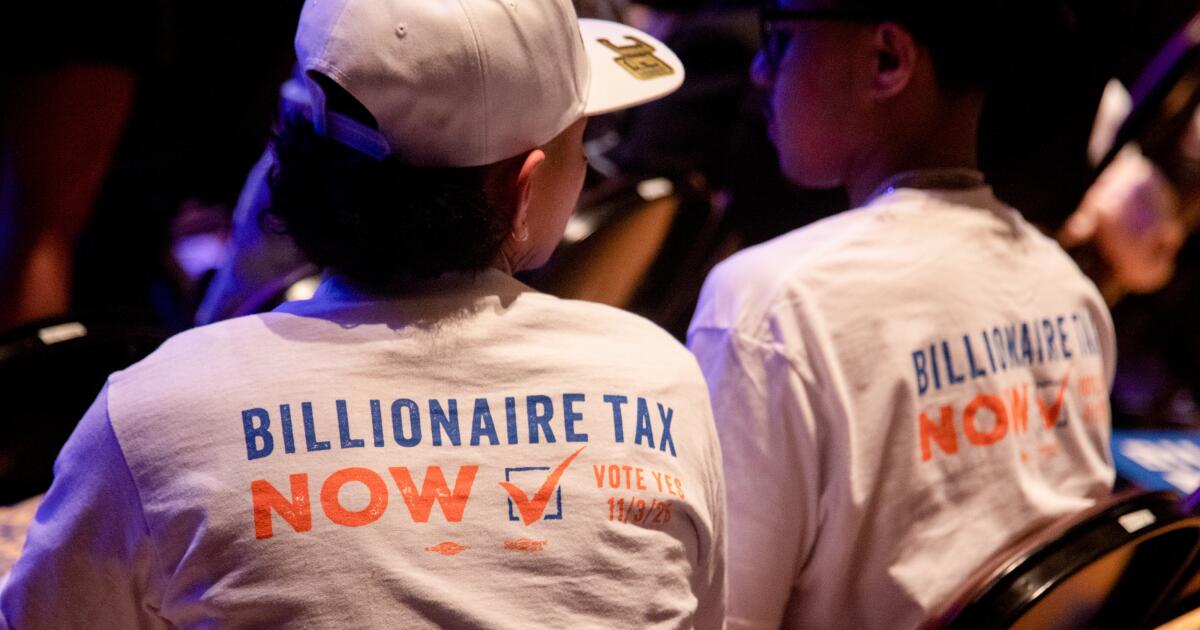
Billionaire Steyer’s spending binge dwarfs rival campaigns in California governor’s race
-
Colorado38 minutes agoLandeskog – April 18 | Colorado Avalanche
-
Connecticut44 minutes agoOvernight Forecast for April 19