North Dakota
Local notebook: Grand Forks' Lee Baker to be inducted in North Dakota Track and Field Hall of Fame


GRAND FORKS — The Grand Forks throwing program for track and field has a long history of success.
In a reflection of that success, one of Grand Forks’ veteran throwing coaches will be honored next weekend.
Lee Baker will be inducted into the North Dakota Track and Field Hall of Fame in a presentation in conjunction with the state’s high school meet in Bismarck.
“Lee has a good rapport with this athletes,” said Tim Tandeski, who’s also a long-time throws coach in Grand Forks. “(Baker) works well with all levels of kids.”
Baker has coached 25 North Dakota Class A state champions in the shot put and the discus over his coaching career, and has coached 100 state place-winners in the same events.
Baker coached Bryan Bjerk, the current Class A boys state track discus record holder, overall state meet record holder and owner of the longest boys discus throw ever in the state of North Dakota.
Bjerk threw 192 feet, 8 inches at the 2012 state track meet and 198-1 at the East Region meet in 2012.
Baker also coached Shelby Frank, who was a four-time state champion in the discus and would have been an overwhelming favorite to win her fifth if it hadn’t been for COVID during the 2020 season.
Frank is now one of the top throwers in NCAA Division I with the University of Minnesota.
Baker has coached four girls who rank in the Top 10 for farthest throws of all time in the state in girls shot put and two boys in the Top 10 for farthest throws in the shot put.
Baker, who has coached since 1991, will be inducted May 24.
Former Langdon athlete Julie Dinius will also be inducted. Dinius collected 15 individual region championships and eight state titles.
Greg Kuch from Beulah and Fargo South’s McKenzie Mehlisch will also be inducted. Three athletes from pre-1980 were also voted in to the Hall of Fame by the committee: Cavalier’s Gordon Fisher (1915), Hebron’s Roger Reinbold (1961) and Bismarck’s Randy Lussenden (1968).
Choice Bank donates to GF Gladiators
Choice Bank, partnering with The Member Impact Fund, has donated more than $600,000 to support affordable housing and community development in North Dakota and that includes a donation to a Grand Forks wrestling club.
The club received a donation of $16,000 that will provide scholarships to those who can’t afford tournament fees, club practice fees or travel expenses.
“At Choice Bank, we make it a priority to invest in the communities we serve by supporting local families and businesses,” said Chris Johnson, Choice Bank Grand Forks Location President. “With this $16,000 donation to the Grand Forks Gladiators Wrestling Club, we are investing in the youth, particularly those who might not otherwise have the opportunity, by providing them with the chance to develop their wrestling skills.
“The donation will fund scholarships that cover various costs associated with the sport, ensuring that financial constraints do not impede the participation of aspiring young athletes.”
Hjelle hoping to run with pro shot
East Grand Forks’ Jake Hjelle had to cancel a fishing trip last week. The former Minnesota Crookston standout received his call to start a professional baseball career.
Hjelle has signed with the Fargo-Moorhead Redhawks.
“This year, (the UMC) season got finished, and I was sitting around a few days,” Hjelle said. “I was planning to go on a fishing trip and then (UMC coach Steve) Gust called me and said it sounds like (Redhawks coach Chris) Coste wants to sign you. That was a no-brainer in my eyes.”
HJelle said Coste has told him to take practice repititions at first base and outfield.
“As I was growing up, the biggest goal was to get paid to play this game,” Hjelle said. “I want to keep getting better and moving up. I want to take my opportunity and run with it and see how far it takes me.”
The 23-year-old Hjelle graduated the first week of May from UMC with a degree in natural resources.
Urlacher claims Big Ten title
Grand Forks Central product and University of Minnesota track and field athlete Jak Urlacher won the Big Ten Championship in the pole vault last weekend, clearing a personal-best 18 feet, 1 inch.
Urlacher’s mark tied the fourth-best in Gophers program history.
Urlacher’s mark is also the No. 6-ranked performance in the NCAA Division I West Region.
As a high school senior, Urlacher broke the North Dakota state record in the pole vault at 15-7.5 in 2021.
The college junior was fifth at the Big Ten Championships as a sophomore in 2023.
Grabanski becomes NAIA all-time RBI leader
Former Grand Forks Central athlete Joey Grabanski, now at Concordia (Neb.), became the NAIA’s all-time home runs leader earlier this spring.
Now, he’s also the NAIA’s all-time RBI leader. Grabanski passed this mark during the NAIA National Tournament, where his team was eliminated earlier this week to halt a 42-win season.
Grabanski finishes his Concordia career with 88 home runs, 300 RBIs and program records in career batting average (.382), total bases (626) and walks (129).
Grabanski’s 88 home runs are tied for the third-most in college baseball history across all divisions: Division I, Division II, Division III and NAIA.
Labatte earns high Summit honor
After recording two All-Summit League performances at the 2024 Summit League Outdoor Championships, UND distance runner Luke Labatte was named the Men’s Most Outstanding Performer of the Championship, the conference offices announced Wednesday.
Labatte took the track in the 3,000-meter steeplechase on Friday night and claimed the title in a time of 8:50.89. His race was not close, with him winning by over 8 seconds.
With the win, Labatte successfully defended his titles from the 2022 and 2023 Summit League Outdoor Championships and became the first steeplechase runner to become a three-time steeplechase champion at the meet since Jeff Mettler of South Dakota did it from 2012-14.
On Saturday, Labatte had his second All-Summit League performance of the meet and earned the bronze medal in the 5,000 meters in 14:29.10.
UND had 11 athletes named to the All-Summit League Team, which is accomplished by finishing in the top three in respective events at the Summit League Outdoor Championships.
Those athletes include Yonca Kutluk (1,500, 5,000 and 10,000), Labatte (3,000 steeplechase, 5,000), Kenna Curry (shot put, hammer throw), Tiffanie Magnusson (heptathlon, long jump), Jadyn Keeler (3,000 steeplechase), Frida Giersdorff (3,000 steeplechase), Justice Dick (800), Jesse Middendorf (800), Malene Kollberg (heptathlon), James Weninger (high jump) and Justina Esangbedo (triple jump).
Devils Lake’s Abrahamson honored
Devils Lake’s Ashley Abrahamson was one of 25 players named to the All-USA Today HSSA Girls Hockey Team on May 9.
Abrahamson led the state of North Dakota with 69 points, while nobody else reached 50. The second-highest mark was another Firebird, Siri Olson, with 49.
Abrahamson scored 52 goals, while nobody else had more than 27 goals.

North Dakota
Challengers declare victory after ND Supreme Court rules against Legislature’s attempt to alter term limits

BISMARCK — A constitutional ballot measure to amend the state’s term limits law as proposed by the Legislature will not appear on November’s ballot, the North Dakota Supreme Court ruled Thursday, siding with petitioners who argued the Legislature exceeded its authority and violated the state constitution in proposing the changes.
“The people’s voice was heard,” Grand Forks County Commissioner Terry Bjerke said in reaction to the news.
Bjerke was a member of the sponsoring committee behind the successful 2022 effort to pass a term limits initiative, which amended the state constitution by capping legislative term limits to eight years in the House and eight years in the Senate. The amendment, which became article XV of the state constitution, also included a clause barring the Legislature from making constitutional changes to term limits.
During the 2025 session, however, lawmakers narrowly approved Senate Concurrent Resolution 4008, in which the legislature proposed Constitutional Measure 1, a ballot measure to amend the term limits language to allow legislators to decide in which chamber they want to serve their 16 years, and to repeal the clause limiting the legislative assembly’s authority to propose an amendment to alter or repeal term limits.
Bjerke and former Minot legislator Oley Larsen brought the lawsuit challenging the validity of the Legislature’s action in January, and the state Supreme Court
heard oral arguments in the case
this spring.
“Those term limits may only be altered by a measure proposed by the people rather than the Legislative Assembly. And yet a few years later, the Legislative Assembly is doing what they are prohibited from doing,” attorney Zachary Wallen argued on Bjerke and Larsen’s behalf.
Tanner Ecker / The Bismarck Tribune
The Legislature’s attorneys argued the clause prohibiting legislative proposals to alter the constitutional term limits language “infringes on our republican form of government” by “limiting the people’s ability to vote on amendments proposed by their elected officials.”
Justice Jon Jensen seemed skeptical of that argument during the April 2 hearing, questioning whether a second vote was appropriate.
“The public did speak on this. The public spoke on it when it passed the original constitutional amendment and they said, ‘Legislature, you don’t even get to propose a change.’ They have already spoken on it,” Jensen said. “You want a second shot, or a second bite at the apple, not a first one, a second.”
In Thursday’s ruling, all five justices sided with Bjerke and Larsen.
“We … conclude the Legislative Assembly’s adoption of S.C.R. 4008 violated N.D. Const. art. XV … and declare S.C.R. 4008 and Constitutional Measure 1 void … We enjoin the Secretary of State from placing Constitutional Measure 1 on the November 2026 general election ballot,” the ruling said.
Bjerke thanked the legal team that worked on behalf of their lawsuit, and said he was grateful the court reached the conclusion it did.
“I’m thrilled that what the people voted on and approved has been validated,” Bjerke said.
He added that the Legislature had “multiple opportunities” to address term limits prior to 2022’s initiated measure and chose not to, and gave a nod to the country’s coming milestone and the process by which voters expressed their support for term limits.
“We’ve lasted 250 years,” Bjerke said. “I have two words for those elected leaders who think they aren’t: everyone’s replaceable.”
North Dakota
Fargo woman convicted in North Dakota fraud case now faces charges in Minnesota: A deeper dive

FARGO, N.D. (Valley News Live) – A North Dakota woman who was sentenced to 180 days in jail in Cass County for defrauding healthcare providers and Medicaid programs is now facing additional fraud charges in Minnesota.
Christine Marie Pryor, 55, pleaded guilty in November 2024 to theft by deception involving more than $50,000. She was sentenced to first serve 180 days with a 3-year sentence suspended. She received credit for 44 days already served.
Pryor was ordered to pay $82,584.78 in restitution to Southeast Human Services in Fargo, where she worked between 2018 and 2019.
How the scheme unfolded
According to court documents, Pryor worked at multiple healthcare facilities in North Dakota and Minnesota between 2018 and 2023, using the identities and credentials of three licensed professionals without their knowledge. She submitted fraudulent Capella University diplomas and transcripts to gain employment.
Investigators say Pryor admitted she searched state licensing websites for therapists who shared her first name, then used those therapists’ last names and license numbers when applying for jobs.
At Southeast Human Services, where she worked as a Licensed Addiction Counselor, Pryor earned $55,584.82 while providing therapy services to approximately 150 patients. She also opened her own counseling center, NIAM Brain Injury Center, in Fargo between 2020 and 2021, and worked at The Lotus Center in Moorhead, Minnesota, from 2021 to 2023.
Court documents say the three licensed professionals whose identities were used told investigators they had no knowledge of Pryor’s actions and did not give her permission to use their information.
Two additional charges against Pryor in North Dakota, unauthorized use of personal identifying information, were dismissed on motion of the state.
Additional charges in Minnesota
Pryor is also facing charges in Minnesota. Minnesota Attorney General Keith Ellison announced on Tuesday charges against Pryor in Clay County District Court for six theft offenses and six identity theft offenses related to defrauding Minnesota’s Medicaid program of more than $150,000.
According to the Minnesota complaint, Pryor claimed to provide psychotherapy and alcohol and drug counseling services to Medicaid recipients despite having no license or credentials to do so. Prosecutors allege she used the credentials and identities of three licensed professionals while claiming to provide Medicaid-funded services to 169 clients.
The Minnesota charges were filed as part of National Health Care Fraud Takedown Day, a joint effort involving the Department of Justice and more than 40 state Medicaid Fraud Control Units.
Copyright 2026 KVLY. All rights reserved.
North Dakota
NCAA Set to Change Unpopular Football Rule Just in Time for North Dakota State’s FBS Jump

North Dakota State playing in the FCS playoffs and College Football Playoff in back-to-back years? It’s likelier than you think.
That’s because on Wednesday, according to a report from Ross Dellenger of Yahoo! Sports, the NCAA Division I cabinet voted to repeal a rule that effectively barred teams transitioning from FCS to FBS from playing in postseason games in their first FBS seasons. The Bison are making that move along with Sacramento State in 2026.
The reported change has been a long time coming; the rule has hampered teams from immediate bowl eligibility for decades. Its good intentions of dissuading teams from rashly making the FCS-to-FBS leap have been rendered obsolete in recent years by the fact that programs generally arrive in FBS more prepared than ever before.
Consider the number of new FBS teams that have had to work within the provision in the past decade alone
That list includes: Liberty (home for the holidays at 6–6 in 2018), James Madison (8–3 in 2022 under coach Curt Cignetti, and barely able to play in a bowl at 11–1 in ’23 due to a lack of bowl-eligible teams), Jacksonville State (8–4 in ’23 before backing in like the Dukes), Missouri State (7–5 in 2025, also backed in) and Delaware (6–6 in ’25, ditto).
James Madison in particular became a cause célèbre in ’23 because it started the season 10-0, climbing as high as No. 18 in the AP Poll in mid-November. Then-Virginia attorney general Jason Miyares bandied about suing the NCAA before the Dukes lost 26–23 to Appalachian State, an event that caused the program to back off and accept a bid to play Air Force in the Armed Forces Bowl. James Madison lost that game 31–21, by which time Cignetti had left for Indiana.
There was a time when the FCS-to-FBS jump was an imposing one, and the NCAA did not want to incentivize making it lightly—not even a proud Florida A&M program could make a mid-2000s attempt at a jump stick. However, the Flames, Dukes and other teams have shown it’s not so great a climb for programs with the right resources and management.
Now the Bison and the Hornets stand to benefit.
How far can North Dakota State and Sacramento State go in the near term?
The Bison opened 12–0 last year before a shock loss to Illinois State in the FCS playoffs’ second round, so that question may answer itself. North Dakota State does not play a single Power 4 team—a potential strength-of-schedule albatross if it has designs on really surging. A potential roadblock: the fact that the Bison have to visit the Mountain West’s two favorites, UNLV (Oct. 10) and New Mexico (Oct. 24).
It’s a different story for the Hornets, a 7–5 squad a year ago whose move to the FBS is widely seen as a gamble on their growth potential. Sacramento State also does not play a major-conference team, but has a breakneck travel schedule ahead of it—the Hornets will visit Ypsilanti, Mich.; Bowling Green, Ohio; Muncie, Ind.; Mount Pleasant, Mich. and Honolulu. Combine that with a first-year coach—Oakland native and ex-MC Hammer choreographer Alonzo Carter—and it could be a long FBS debut in California’s capital.
More College Football From Sports Illustrated
Listen to SI’s college sports podcast, Others Receiving Votes, below or on Apple and Spotify. Watch the show on SI’s College YouTube channel.
 Add us as a preferred source on Google
Follow
-
 Politics11 minutes ago
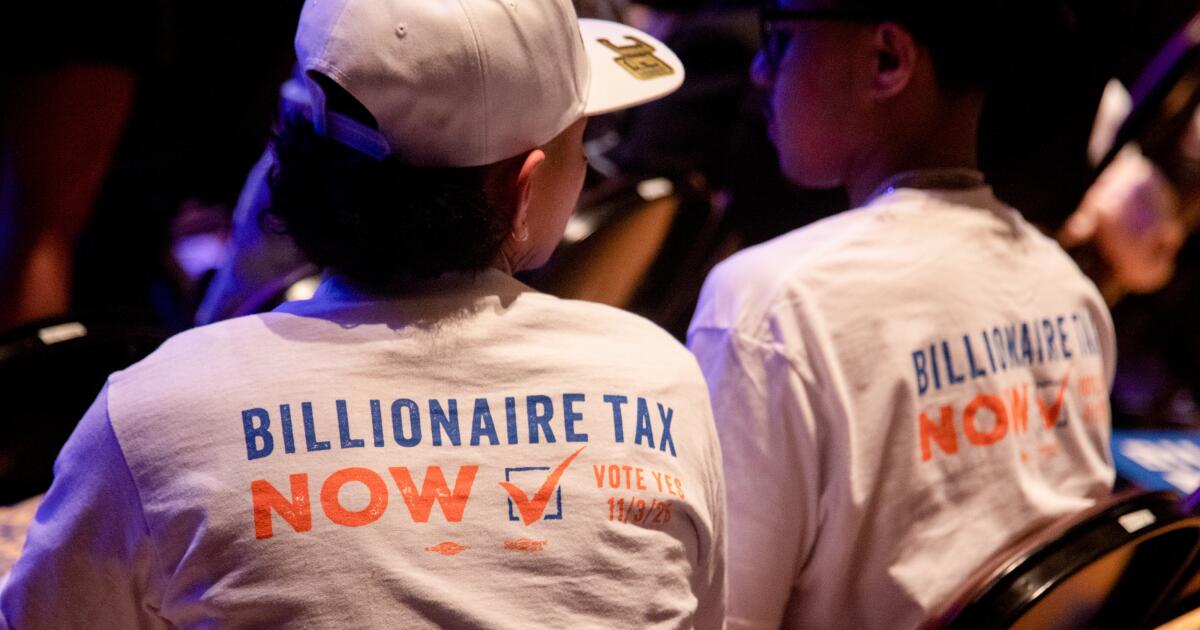
Controversial billionaire tax proposal will appear on November ballot
-
 Sports19 minutes ago
Shohei Ohtani is the first Dodger to be named 2026 All-Star
-

 World29 minutes ago
Who will control Africa’s AI infrastructure and at what cost
-
 News56 minutes ago
The Supreme Court says the U.S. can turn away asylum seekers at the border
-

 Los Angeles, Ca2 hours ago
Jury says it is deadlocked in trial of man accused in Palisades Fire
-

 Detroit, MI3 hours ago
Scene active as police shoot, kill man on Detroit’s west side
-

 San Francisco, CA3 hours ago
Civil grand jury report warns of wildfire risk at SF’s Glen Canyon Park
-

 Dallas, TX3 hours ago
Ivory Coast advances at World Cup, how to buy Ivory Coast tickets

