Nebraska
Commentary: Nebraska and its ‘Great Plains Economic Opportunity Zone’


American businesses don’t have enough workers. The
U.S. Chamber of Commerce
notes that there are 1.7 million fewer workers in the labor force today compared to February 2020.
Great Plains states like the Dakotas, Montana, Nebraska and Wyoming have some of the
most severe labor shortages
in the nation. Now, the Nebraska legislature has opened the doors that are desperately needed to economic opportunity in the Great Plains, with the passage of legislation last month creating a unique economic opportunity zone in the middle of the country.
Like most of its neighbors, Nebraska employers need help finding workers.
Recent research
from the Kansas City Fed notes that the problem is worse in Nebraska than elsewhere: There are 2.5 job openings for every unemployed worker in Nebraska, almost twice the national average.
Recognizing the challenge is one thing. Taking common sense action to help improve the situation is much better. Legislators in Nebraska have done this with the passage of the measure. With the governor’s signature, the doors to opportunity are open in Nebraska.
Why is this legislation necessary? First, it addresses a barrier created by Nebraska’s occupational licensing requirements. If either of us wanted to drive in Omaha, our driver’s license would be recognized, and we could drive. Unfortunately, occupational licenses do not work this way. If licensed barbers from Iowa wanted to move to Nebraska and begin working, they would face significant delays and hardship in moving forward with their careers.
The new measure addresses this critical labor market friction for many occupations by implementing universal recognition. The bill will allow licensed workers with licenses in good standing for at least one year to have their licenses recognized. Nebraska joins 21 other states in taking steps to reduce barriers to interstate mobility — an important step when
licensing reduces workers moving between states
by about 7 percent.

Nebraska is not alone in moving forward with these reforms. There are
21 additional states
with some version of licensing recognition, and 39 states have passed licensing reforms for people with criminal records. Now, Nebraska has joined all of its neighbors in reforming universal recognition and most of its neighbors in reforming requirements for people with criminal records. Only South Dakota lags in permitting blanket barriers to workforce opportunities for workers trying to make a fresh start reintegrating into society, limiting opportunities there compared with nearby states.
Workers on the sidelines in Nebraska — perhaps underemployed or out of the labor force entirely — will now be able to work with fewer bureaucratic delays. This can have beneficial effects on the labor market in Nebraska and for workers moving between states in the region.
Research bears this out, showing that states that pass universal recognition experience a 1 percentage point gain in employment. Where do these new workers come from? Some come from other states; other workers come from the sidelines.
Research also shows fiscal benefits for states that adopted universal licensing recognition. These states saw a $1.7 million increase in adjusted gross income after enactment, compared with states that keep interstate licensing barriers in place.
These fiscal benefits come from households moving to states with licensing recognition, including households with dependents. Licensing recognition enables families to move to places of economic opportunity together.
However, there is always room for improvement. Limiting exclusions for several occupations is one way to make a good reform even better.
People with criminal records can also make a fresh start in Nebraska, creating the groundwork for a safer community. These reforms make it easier for people starting over to actually make a fresh start in the occupation of their choice.
Nebraska and its neighbors still license
dozens of lower-income occupations
. When licensing boards bar qualified individuals with criminal records from becoming licensed, even after applicants have completed the required education and training,
they can worsen public safety
instead of protecting it.
Nebraska’s law states that individuals can be barred from a license only when their criminal offense is directly related to the occupation or represents a substantial risk to public safety. Combined with greater due-process protections and setting time limits for how long a criminal offense can bar someone from working in a licensed occupation, this legislation significantly expands the economic opportunities of people trying to restart their lives.
In recent years, Nebraska has reduced some of its licensing requirements for lower-income occupations, reducing barriers to work for people just starting out in a profession. Together with these reforms, Nebraska policymakers have taken bold policy action to ensure employers will continue to have access to the workers they need.
Edward Timmons is a service associate professor and director of the
Knee Center for the Study of Occupational Regulation
at West Virginia University. Darwyyn Deyo is an associate professor of economics at San Jose State University and a senior research fellow with the Knee Regulatory Research Center at West Virginia University. They wrote this for
InsideSources.com
.


OMAHA, Neb. (WOWT) – Legalizing online sports betting has met with resistance in the Nebraska Legislature for years.
Tax Relief Nebraska, a group backed by Nebraska casinos and online sports betting groups, took the issue to the people of the state through a petition drive.
Those petitions are now in, and casino officials say they expect to have enough signatures to make the November ballot — but also expect pushback through Election Day.
The case for online betting
Currently, legal sports bets cannot be placed on a phone in Nebraska. Casino operators say people who choose to wager are finding other ways to do it.
“They’re just doing it illegally through a virtual private network, or they’re driving over to the first exit between Iowa and Nebraska, placing a bet and then driving back to their home,” said Lynne McNally of Warhorse Casino.
Nebraska casino operators say the state has already collected millions of dollars in state taxes and property tax relief from casino gambling, and that online sports betting would add to that total.
A majority of Nebraskans voted for casino gambling to enter the state in 2020, and casino operators expect similar support if the online betting petition makes the November ballot.
“As you know, we got 65% on the constitutional amendment and actually got nearly 70% on the tax portion of the statute when the casinos were legalized in 2020. I think that we’ll be in that area, if not maybe a little higher than that,” McNally said.
“There’s always going to be a sector of the public that doesn’t want to gamble. They don’t want to go to our facilities and that’s just fine. I guess I have an objection with trying to tell other people what to do,” McNally said.
The opposition
The Nebraska Family Alliance stands against online gambling and plans to campaign against the initiative across the state. The nonprofit group issued a statement that reads in part: “Online sports betting has been a massive public policy failure that benefits national sportsbooks at the expense of kids, student-athletes, families and businesses. While they have more money, they don’t have the truth.”
Pat Loontjer, director of Gambling with the Good Life, has opposed expanded gambling in Nebraska for 30 years.
“They’re telling the same lie — property tax relief. Well in Nebraska you say property tax relief and everybody says where do I sign,” Loontjer said.
Loontjer also raised concerns about the impact on young people.
“Sports betting on the phone is the most addictive thing for young people, young men especially. You’ve got kids that are going to lose their scholarships, lose their future,” Loontjer said.
What comes next
If enough signatures are verified and the issue is placed on the November ballot, Warhorse Casino officials say Nebraskans could be able to make sports bets on their phones by spring of next year.
Copyright 2026 WOWT. All rights reserved.

Along with marching in the parade, the high schools will tour the U.S. Capitol, visit Mount Vernon and other monuments and museums.
Around 80 Grand Island students are making the trip. Lee said the students cover their own costs, with fundraising largely run though the school’s booster program helping offset the expense.
Bishop Neumann’s 53 students benefited from community donations, along with a holiday greenery sale and fundraisers, which Kellett said helped cover airfare and other costs.
For both directors, the trip carries extra weight tied to the nation’s 250th anniversary.
“That’s a pretty big milestone,” Lee said. “And to be able to be a part of that is pretty neat.”
Kellett said the moment will stay with students long after the parade ends.
“These kids, they’ll be around for the 300th anniversary of the country, and they’ll be able to look back and tell their grandkids, ‘you know, I was there at 250 and was able to march in the National Independence Day Parade,’” Kellett said.
Both bands have spent the summer preparing. Grand Island started working on its music after its final spring concert in May, rehearsing its marching and music together on Tuesday evenings.
Bishop Neumann has rehearsed continuously over the summer and marched in two parades to prepare, a 150th anniversary celebration in Weston and the Papillion Days parade.
Kellett said the band’s last rehearsal in Wahoo drew residents who lined the streets holding signs and cheering the students on.
“The students have come in, and they’ve worked really hard,” Kellett said. “They have their music memorized and they’ve worked on their marching skills, and so all that effort into this they’re ready to go for the parade.”
The parade starts at 9:30 a.m. CT Saturday at Third Street and Constitution Avenue.

LINCOLN, Neb. (KOLN) – Like his father, Zack Erstad is a Husker. Erstad, the son of Hall of Fame baseball player Darin Erstad, joined the Nebraska men’s golf program on Tuesday.
Zack signed with the Huskers one month after winning a state championship at Lincoln East. With the Spartans, Erstad was a two-time NSAA champion. He was Class A’s individual runner-up in 2026. The previous year, Erstad claimed the Nebraska Junior PGA Championship title.
Erstad said joining the Huskers is a dream come true. The Nebraska newcomer grew up playing baseball and hockey. However, he focused solely on golf while in high school.
Click here to subscribe to our 10/11 NOW daily digest and breaking news alerts delivered straight to your email inbox.
Copyright 2026 KOLN. All rights reserved.
-
 Lifestyle34 seconds ago
DLTA’s former Ace Hotel is reborn as a ‘creative hub’ — and yes, you can still sleep there
-
 Politics4 minutes ago
Trump wants to show off D.C. for the Fourth. His construction is in the way
-
 Science9 minutes ago
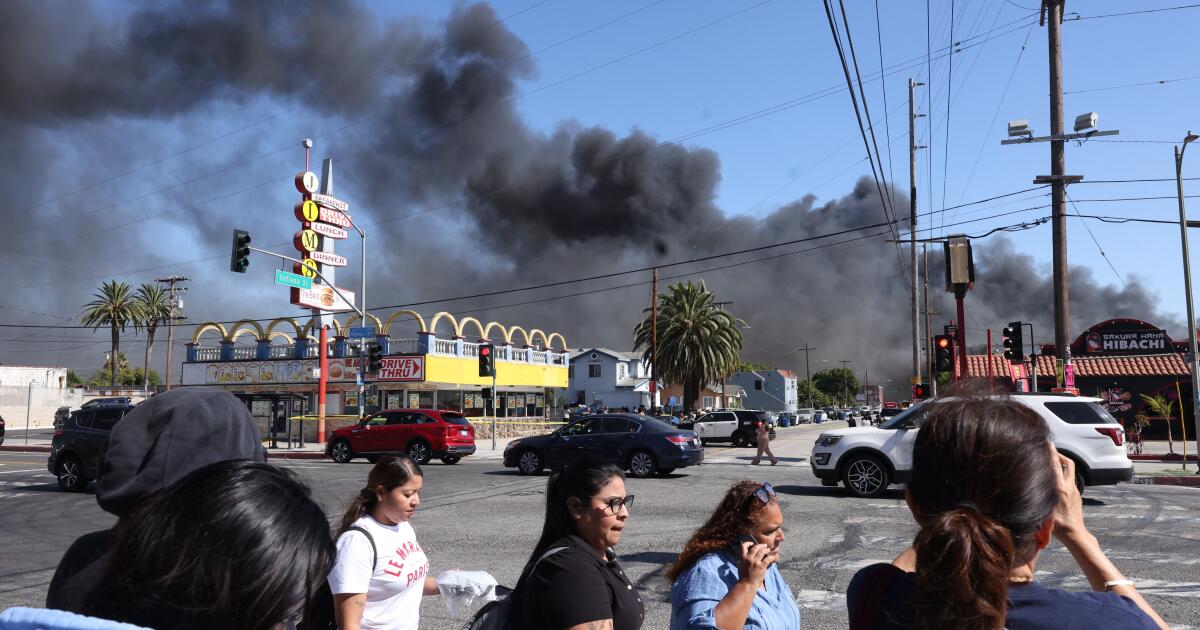
Boyle Heights blaze choked L.A. with astronomical soot pollution
-
 Sports16 minutes ago
Lakers announce summer league schedule, roster
-
World24 minutes ago
How the Entry-Exit System is becoming a nightmare for Europe's summer travellers
-

 News49 minutes ago
Newsom’s office responds to SCOTUS ruling on women’s sports as California faces ongoing trans athlete wave
-

 Los Angeles, Ca2 hours ago
Family of boy, 8, killed by falling tree branch at Calabasas park to get $14.6M
-

 Detroit, MI3 hours ago
The worst Detroit sports uniform from every pro team

