Nebraska
Can a Mechanic Running as an Independent Steal a Senate Seat From Republicans?


In an election year where the Senate map is objectively advantageous to Republicans, Texas and Florida have been seen as the two red states where a Republican seat could maybe flip if everything broke just right for Democrats.
Then in December, a poll from Nebraska showed a steamfitter and industrial mechanic, Dan Osborn, was beating incumbent Republican Sen. Deb Fischer by 2 points, 40-38 percent. In early May, Osborn’s campaign released a new poll from Public Policy Polling that had him down four points (37-33 percent with 30 percent undecided).
While some political watchers were skeptical of the early polling, it has directed attention to Nebraska. In June, for instance, Osborn received the endorsement of the United Auto Workers and was even promoted on social media by Julia Louis Dreyfus.
As eyes turned to Cornhusker State, a question began to emerge: Could Osborn, who was not just straying away from a typical Senate campaign playbook — but throwing it out — beat an incumbent Republican senator in a state that is widely seen as being ruby red? And could the Nebraska Senate race help Democrats maintain slim control of the Senate?
With the possibility for an upset in the air, both sides have pushed data making their respective cases. In mid-July, Fischer released a poll showing her up 26 points. A week later, Osborn’s camp highlighted a poll that showed him tied with Fischer at 42 percent.
Fundraising has shown a similarly mixed narrative. Osborn outraised Fischer in the second quarter ($1 million to $679,000), while Fischer’s over $3 million in cash on hand swamps his $650,000.
Osborn is no stranger to receiving national and local coverage. In 2021, he led the Kellogg’s Strike, which resulted in a new labor contract with wages increases and enhanced benefits. After he announced his run for Senate, he spent the first eight months of his campaign working 50 hours a week, continuing his apprenticeship, all while still having to go to school and pass tests.
Where handfuls of candidates running to be reelected or elected to the Senate can talk about the intricacies of courtrooms and boardrooms, Osborn is the only one simultaneously knocking doors while getting his EPA 608 license, which allows him to handle and purchase refrigerant.
But, what really sets his race apart is not just who he is, but how he is running. Osborn has positioned himself as an Independent. Or, as they say in Nebraska, nonpartisan.
Osborn is far from the first Senate candidate to run as Independent. Sen. Bernie Sanders of Vermont and Sen. Angus King of Maine have both run and won as such. In 2022, Evan McMullin ran as an Independent (and lost the race) for a Senate seat in Utah.
But, where McMullin ultimately accepted the Utah Democratic Party’s nomination, Osborn has disavowed the endorsements of any political parties or politicians. Where Sanders and King caucus with the Democrats, Osborn has made no such commitment.
In May, his campaign sent out a press release announcing this distinction.
“Probably no political campaign has ever done this but we want to put people above politicians, parties and profits,” Osborn was quoted as saying in the release. “Whether you are Republican, Independent, Libertarian, Democrat, I don’t care. I welcome all to join me to change Washington.”
This decision was met by swift rebuke from the Nebraska Democratic Party, who had planned to endorse him, and said they were now looking for write-in candidates.
Nebraska Democratic Party Chair Jane Kleeb said they have endorsed 11 Independent candidates this cycle, including two running for the legislature.
“We embrace Independents and have a now-long history of embracing Independents and supporting Independents,” Kleeb tells Rolling Stone. “I mean obviously our Party respects when a candidate changes their mind on an endorsement, but having Dan lead the Party on for months, telling us how critical the Democratic Party endorsement and infrastructure was for him winning the seat, and then him essentially saying, ‘No,’ once he knew the deadline was past for when we could have a candidate on the ballot, has left obviously a lot of Democrats in the state questioning the integrity of his campaign.”
Osborn disputed that characterization. “No one was led on,” he says. “I’ve been clear that I was not going to take the endorsement of any one party.”
A source close to the Osborn campaign points out that in a New York Times article about his candidacy in early March, Osborn said he was not sure he wanted the Democratic endorsement.
To add further political complexity to the already atypical dynamics of this race, Nebraska’s other Senate seat is also up this year in a special election — the first time both seats have both been on the ballot concurrently since 1954. In that race, the Nebraska Democratic Party does have a candidate, Preston Love Jr., who is challenging former Gov. and current Sen. Pete Ricketts, who secured that seat through appointment in 2023.
Osborn attributes his path to his candidacy with his ultimate decision to establish and maintain political independence. Members of the railroad unions who noticed his leadership in the Kellogg’s Strike recruited him to run, not a political party.
One of those people was Mike Helmink, a railroad employee and labor leader who himself started an exploratory committee to run for Fischer’s seat before ending it after being denied leave from work. Helmink — who is the treasurer for Nebraska Railroaders for Public Safety which has endorsed Osborn — thinks the nonpartisan path is one that could lead to a victory.
“There’s kind of a contrarian vibe to politics in the state,” Helmink says. “The Independents, or nonpartisans, are becoming a larger and larger group. We’ve got a large group of people that feel like their voice isn’t being heard.”
Helmink argues the Democratic message is not working outside of the cities of Lincoln and Omaha. The last Democrat to win statewide was former Sen. Ben Nelson in 2008.
“The only problem with Dan is he’s from Omaha,” Helmink says, laughing. “But, you know, at least he’s not one of the rich elite folks from Omaha. That helps. He works for a living. That definitely sells. So, yeah, we are highly optimistic we can replace Deb Fischer with Dan Osborn.”
While not having the money or infrastructure of a major party has its disadvantages, Osborn sees it as a strength. “The advantage is, being grassroots I’m not beholden to any party and I’m not beholden to special interests,” he says. “So nobody can tell this campaign how to think, what it is we should be doing, and the message that we should be portraying.”
Osborn doesn’t find it surprising that the race is close. Rather, he sees the explanation as pretty simple. “I think it’s the fact that people are frustrated, you know, with the parties catering to their extremes,” he says. “There’s around 300,000 registered nonpartisan voters in Nebraska. It’s the fastest growing demographic for registering voters.”
Nationally, the percentage of Independent voters is also at a high. Despite independents being a much larger voting bloc than either party, there are only four Independent senators currently in Congress: Sen. Kyrsten Sinema of Arizona and Sen. Joe Manchin of West Virginia, in addition to Sanders and King — and all four Caucus with Democrats. Sinema and Manchin are not running for reelection in 2024.
With that current reality in mind, Osborn says voters are always questioning who he plans to support for president (he has not committed to any of the candidates) and, if elected, which party he would caucus with.
“I think what they’re looking for when they ask that is ‘Oh, is he a Democrat? Or is he a Republican?’,” Osborn explains, saying many people think deep down you have to be one or the other. “Well, I’m gonna kinda call BS on that because I feel like I truly am an Independent. I’m for working people.”
Osborn said he sees his independence as something Nebraska voters should see not as a liability, but rather as a source of power for them and their state. “I’m an Independent and when I get to the United States Senate, I kind of want to be a maverick,” he says. “Why can’t I create an Osborn caucus? Or an Independent caucus? Especially if I’m the 51st swing vote in the United States Senate. People are gonna have to work with me.”
Before that can happen, he has his work cut out for him. Nebraska has a Republican governor and fully Republican congressional delegation. In 2020, former President Trump secured over 58 percent of the state’s popular vote.
Osborn’s campaign pushes back on the idea that Nebraska is irreversibly ruby red, highlighting the uniqueness of the state’s political system with its unicameral legislature that is technically bipartisan. Nebraska currently awards two Electoral College votes for the winner of the statewide popular vote, and one electoral vote for the winner of each congressional district (which delivered former President Trump four votes total, and President Joe Biden one vote in 2020.)
Osborn said he believes Nebraska’s identity of approaching the political system with its own individualized frame is what could allow him to be the first Independent U.S. senator from the state since George Norris won as one in 1936.
His platform certainly reflects that. As a union president and worker whose hand was severely injured on the job, it is fittingly pro-labor and pro-workers’ rights. Otherwise, it doesn’t fit into neat boxes during this hyperpolarized political moment in the country. Osborn actively calls for both the legalization of cannabis, and for the securing of the border. He supports both abortion rights and the Second Amendment — saying both are areas where he feels the government should not overreach.
Osborn says he does not see any of his stances as being at odds with each other, asserting that this range and nuance is common among the voters he meets on the trail, and when he knocks their doors.
This independence from existing parties and their established platforms, he argues, is the reason he can build the coalition of Nebraska voters necessary to win.



LINCOLN, Neb. (Nebraska Athletics) – The No. 9 Nebraska softball team hit four home runs, including three in the second inning, to down the No. 7 UCLA Bruins by a score of 8-4 on Sunday afternoon at Bowlin Stadium.
With the win, the Huskers clinched the series over the Bruins and moved to 26-6 on the season with an 8-1 mark in Big Ten play. UCLA fell to 29-5 (10-2 Big Ten).
Hannah Camenzind accounted for three RBIs and two hits for the Big Red, as she knocked a three-run homer as part of the Huskers’ six-run second inning. Alexis Jensen and Ava Kuszak contributed the other two home runs in that inning. Jordy Frahm was 2-for-4 with a homer and Lauren Camenzind went 2-for-3 with an RBI. Jesse Farrell also added two hits.
Jensen (13-2) threw six innings with four runs and six hits, along with five strikeouts, to claim the win in the circle. Frahm threw a scoreless final inning to close out the win. Brynne Nally (2-1) took the loss for UCLA.
UCLA loaded the bases with one out in the top of the first, but NU worked its way out of a jam and only allowed one Bruin run.
Frahm tied the score, 1-1, in the bottom of the first on a solo shot to center field.
In the bottom of the second, Farrell singled and Jensen hit a 273-foot homer to score the both of them. Frahm singled and Coor walked to set up an H. Camenzind homer and Kuszak hit a solo shot immediately after to give the Huskers a 7-1 advantage.
UCLA added a run in the top of the fourth to cut the lead to 7-2.
Farrell singled to lead off the bottom of the fifth and advanced to second on a throwing error. Kacie Hoffmann singled to send Farrell to third and Farrell crossed the plate on a Lauren Camenzind RBI single to extend the lead to 8-2.
The Bruins knocked a two-run homer with no outs in the top of the fifth but the Huskers retired three of the next four batters to earn the 8-4 win.
Nebraska is set for a midweek game against the Creighton Bluejays in Omaha, Neb., on Tuesday, March 31. The contest will start at 5 p.m. (CT) and will be streamed on ESPN+ and can be heard across the Huskers Radio Network.
Click here to subscribe to our 10/11 NOW daily digest and breaking news alerts delivered straight to your email inbox.
Copyright 2026 KOLN. All rights reserved.

A windy day led to a wild slugfest at Hawks Field Saturday, but No. 24 Nebraska baseball knocked off Indiana, 12-7, clinching the conference series for the Cornhuskers while running Nebraska’s home record to 11-0.
The Huskers scored three runs in the first and two in the fourth to build a 5-0 lead. The Hoosiers answered with three in the sixth and one in the seventh to cut the NU lead to 5-4. Nebraska took control of the game with seven runs in the bottom of the seventh to grow the lead to 12-4. IU scored one in the eighth, but drew no closer.
Drew Grego was 2-for-4 with two RBI. Dylan Carey drove in five runs and hit a home run, while always drawing a pair of walks. Case Sanderson was 2-for-3 with an RBI and a pair of walks. Jeter Worthley added a 2-for-4 showing with an RBI and a walk. Carson Jasa (5-1) earned the win, throwing 5.2 innings for NU. He allowed four hits while striking out 10 and walking five. For Indiana, Owen ten Oever was 1-for-3 with three RBI. Cooper Malamazian was 2-for-4 with an RBI.
The Huskers aim for the sweep Sunday at Hawks Field against Indiana. First pitch is slated for noon with pregame coverage at 11:30 a.m. on KLIN.

LINCOLN, Neb. (Nebraska Examiner) – Hundreds of Nebraskans protested against the Trump administration Saturday along Nebraska Parkway in Lincoln, and thousands protested near Northwest Radial Highway in Omaha as part of No Kings demonstrations statewide.
The third iteration of No Kings protests organized border to border gatherings to vent displeasure at President Donald Trump and his administration’s policy decisions. The Lincoln protest was held on the Helen Boosalis Trail between North 27th Street and North 56th Street.
“I don’t like what’s going on … I know it’s not the world I want to live in,” said Ford Kloepper, a 17-year-old Lincoln resident.
Kloepper said people his age are going to take the “brunt” of Trump’s “mistakes.” He pointed to the recent U.S. conflict in Iran as a motivator to protest for him, as he doesn’t want to get “drafted into a war in the Middle East for no reason at all.”
Many of the protesters, much like previous demonstrations, held anti-Trump signs with slogans like, “Trump lies” and “Stop Trump, save democracy.” Others held American flags and wore costumes. Volunteers from different groups gathered signatures for ballot initiatives and at least one candidate. One of the petitions sought to let voters decide on a state constitutional amendment requiring larger majorities to repeal or change any law passed by voters. Volunteers for nonpartisan U.S. Senate candidate Dan Osborn collected signatures to get him on the November ballot.

Organizers planned 18 protests across Nebraska. In Omaha, the rally was held at Gallagher Park, with thousands of protesters filling the sidewalks and grassy areas near the intersection of Maple Street and the Northwest Radial.
Organizers said the spot let protesters draw attention to historic Benson and all of the restaurants, galleries and coffee shops that have made the neighborhood a cultural destination since 1887. Among the crowd filled with a variety of ages and races was Lorin and Elwin Moseman, waving signs that said, “End Wars Before Wars End Us” and “No Kings No ICE.”
It was the Mosemans’ third anti-Kings rally, and despite the chill of the day, they said they wouldn’t have missed it.
“It could have been an ice storm,” said Elwin, who was motivated in particular by “the Epstein files and Trump being in them, this stupid war we’ve got involved with Iran.”
His wife, Lorin, said she came to “stand up for democracy.”
“I want to show up, stand up and speak out about our country,” she said, decrying “leadership incompetency from the very beginning.”
She said the nation needs a presidential job description and interview, and she was not short on words to describe her disgust and disappointment about current leadership: “Shameful, disgusting, exhausting.”
“We’re in a broken world,” she said.
Nearby, a bundled up woman in a wheelchair held onto a sign that said, “I’m mad about everything.”

Sara Peterson led buses carrying about 75 protesters from First United Methodist Church of Omaha. She said people felt a sense of unity and joy seeing the chanting crowd, which she said reflected her group’s makeup — diverse in age, ethnicity and political party.
“We’re not alone,” she said “It’s an exciting day to be a part of.”
Peterson called the rally a “tangible sign of people coming together … for democracy.” Her group included church members and their friends — some of whom never participated in such a protest or rally before but felt the urge and were nudged “out of their comfort zone to take back our country and democracy.
Since the return of Trump for a second term, the anti-Trump group has organized national protests. Nebraska, much like the rest of the nation, saw multiple demonstrations throughout 2025.
The group also bought ads in local newspapers ahead of the Saturday protests. Nebraska Republican Party chair Mary Jane Truemper had no immediate comment on the protests.
As Election Day gets closer, political observers have wondered how organizers might harness the political energy, whether the demonstrations might signal a coming wave of change at the polls, or whether momentum will fizzle after the crowds go home. Some have argued Democrats and progressives are good at mobilizing people for large-scale protests but have lagged conservatives in building local infrastructure to affect sweeping policy changes.
Back in Lincoln, Erik Betts, a University of Nebraska-Lincoln student, said the political winds are in Democrats’ favor, and he feels the possibilities are endless, even in a reliably red state. He said he thinks Osborn could beat Republican U.S. Sen. Pete Ricketts, and he hopes the “blue” wave might be large enough to beat Nebraska 1st Congressional District Republican U.S. Rep. Mike Flood, a former speaker of the Legislature.
“We need to really show up this time …We’ve got to take this motivation … and make a difference,” Betts said.
Betts said events like these help him stay hopeful because it reminds him that he is not alone.
“When you are in your own house and just scrolling on social media, it’s easy to feel just defeated,” Betts said. “So I come out as much to show support for everyone else, to feel that maybe a bunch of people agree with [me] and things can change.”
Nebraska Examiner is part of States Newsroom, a nonprofit news network supported by grants and a coalition of donors as a 501c(3) public charity. Nebraska Examiner maintains editorial independence. Contact Editor Aaron Sanderford for questions: info@nebraskaexaminer.com.
Click here to subscribe to our 10/11 NOW daily digest and breaking news alerts delivered straight to your email inbox.
Copyright 2026 KOLN. All rights reserved.

Commentary: UCLA women prove they’re tough enough to handle any Final Four test

Newsletter: G7 ministers to hold talks on war’s economic fallout
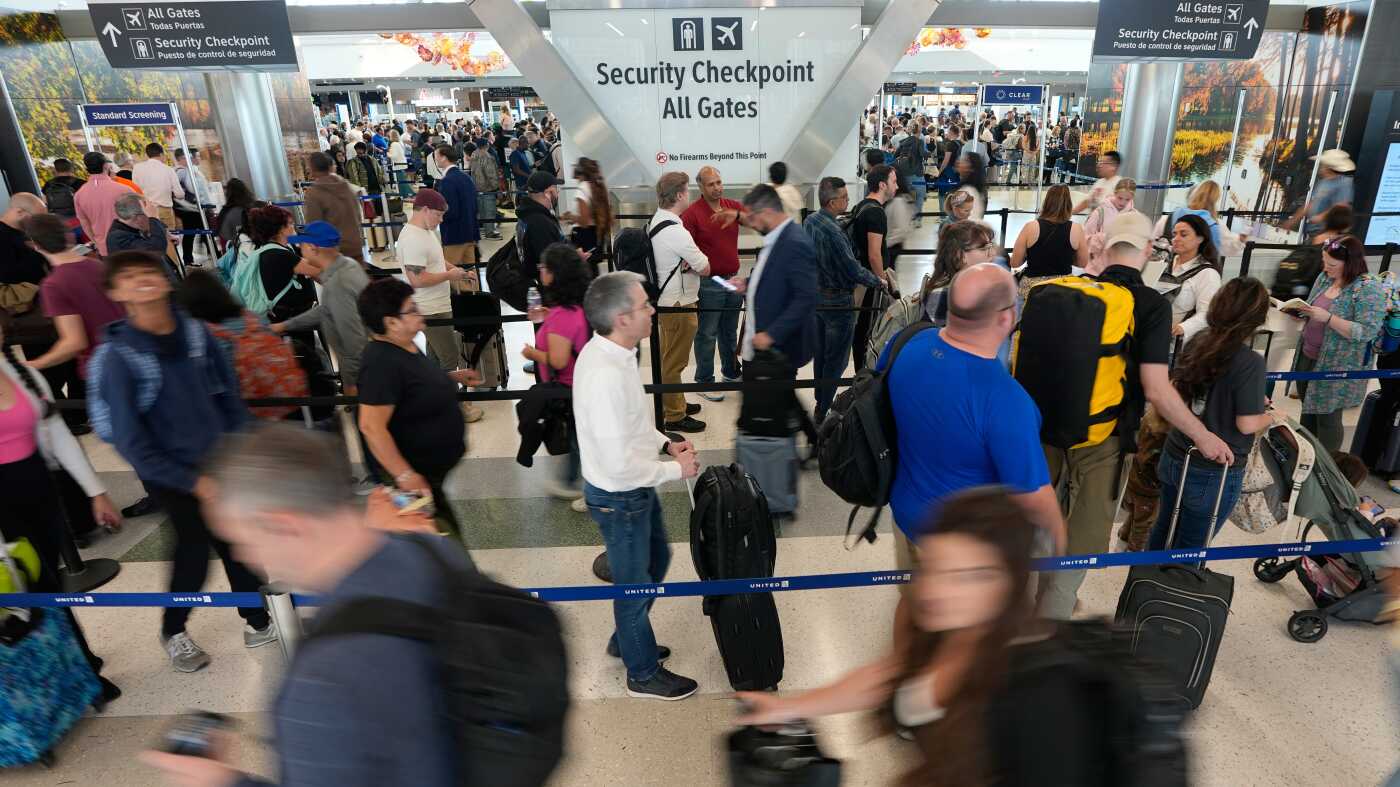
ICE officers could remain at airports after TSA workers are paid

Wolverines make Frozen Four

Bay Area residents hold rally in SF as war with Iran enters 2nd month

Florida High School Football Rankings: Top 25 teams – Oct. 21

How old is Bo Nix? What to know about Oregon quarterback ahead of 2024 NFL Draft

Cleary's 21 help Le Moyne down Central Connecticut State 69-64 in OT

99th annual Pony Swim held in Virginia

Indiana Members Credit Union announced as new anchor tenant at Bottleworks District
Newsletter: G7 ministers to hold talks on war’s economic fallout
ICE officers could remain at airports after TSA workers are paid

Scathing report claims nation’s oldest labor union ‘betrayed’ MAGA members through ‘shocking’ spending

Republican US lawmaker demands Congress vote on any Iran troop deployment

So you went to a No Kings protest. Now what?
-

 Sports1 week ago
IOC addresses execution of 19-year-old Iranian wrestler Saleh Mohammadi
-

 New Mexico1 week ago
Clovis shooting leaves one dead, four injured
-

 Miami, FL4 days ago
Jannik Sinner’s Girlfriend Laila Hasanovic Stuns in Ab-Revealing Post Amid Miami Open
-

 Tennessee6 days ago
Tennessee Police Investigating Alleged Assault Involving ‘Reacher’ Star Alan Ritchson
-

 Minneapolis, MN4 days ago
Boy who shielded classmate during school shooting receives Medal of Honor
-

 Politics1 week ago
Schumer gambit fails as DHS shutdown hits 36 days and airport lines grow
-

 Science1 week ago
Record Heat Meets a Major Snow Drought Across the West
-

 Technology1 week ago
YouTube job scam text: How to spot it fast