Nebraska
As spring practice begins, Nebraska football wants to dispel these 4 narratives


LINCOLN, Neb. — Nebraska returned to the practice field this week. And despite the shifting winds in college football, it’s not cutting names this spring from an oversized roster.
Not yet, anyway.
“I think of these first few days as classroom instruction,” coach Matt Rhule said Tuesday after the Huskers’ second of 15 March and April workouts. “A ton of teaching, a ton of installation.”
Yes, when the Huskers open the 2025 season in five months, they must carry a roster of 105 players. That’s pending approval next month of terms in the House v. NCAA settlement, which is set to bring revenue sharing and changing roster limits to college sports.
For now, the Huskers are OK with 126 players in spring practice. Seven more incoming freshmen remain on track to join the group this summer.
The impending cutdown looms. But among the 26 defensive backs, discussion has stayed minimal on the subject of a reduced roster, senior safety Marques Buford said.
“Everybody’s coming in and working their butts off every day to prove that they belong here and prove that they should be on this team,” Buford said. “Every guy in our room has the potential to be on this team in the fall.
“And honestly, that sucks that we can’t bring everybody with us. But at the end of the day, that’s where the game of college football is going. We have to accept that.”
Rhule said he does not have a depth chart this early in spring.
“It’s not the coach’s job right now to figure out who’s going to play and who’s not going to play,” Rhule said. “It’s our job to figure out who can play.”
According to Ty Robinson, the defender whose eligibility expired in December, Rhule’s teaching attitude elevates the program. It helped convince Robinson to return in 2024 as a graduate student for his sixth season.
Robinson’s strong play earned him an invite to the NFL combine, at which he impressed scouts by running a 4.83-second 40-yard dash — fastest among defensive linemen — at 6-foot-5 and 288 pounds. He met with more NFL evaluators on Tuesday at Nebraska’s pro day.
“I represent Nebraska through and through,” Robinson said. “I’m proud to say that I played at Nebraska. All these scouts I’ve talked to, I’ve made them aware of how great Nebraska is – and how it’s honestly under the radar.”
2025 Nebraska Football Pro Day
Live from Lincoln, Nebraska https://t.co/2uK06Rmxvh
— Nebraska Football (@HuskerFootball) March 25, 2025
Robinson looks to lead a draft class at Nebraska in April that exceeds three players for the first time since 2016. It’s a myth, he said, that the Huskers’ talent is down.
“It’ll be a gold mine here pretty soon,” Robinson said.
In the spirit of spring narratives, here are four that the Huskers are aiming to dispel.
1. Nebraska needs a running back from the transfer portal. Not so, according to Rhule. “I have no concerns at running back,” he said.
Emmett Johnson, the junior who has rushed for 1,008 yards in the past two seasons, leads the group. But the backs feature no additional experience of note.
Rhule has long spoken highly of third-year sophomore Kwinten Ives. He scored his first career touchdown on a 2-yard run in the Pinstripe Bowl. Ives simply needs an opportunity, Rhule said.
Redshirt freshman Mekhi Nelson is “dynamically explosive,” according to Rhule, with an edge that the coach loves. Rhule also mentioned walk-on Kenneth Williams and said that the Huskers are eager to get a look this spring at early enrollees Conor Booth and Jamarion Parker. Parker has bulked up from 175 pounds to more than 190 since January.
The coaching staff will assess the running back lineup after spring practice, but Rhule anticipates standing pat.
“We’ve got guys that we know can play,” he said.
Coach Matt Rhule has “no concerns” with his running back room, which includes junior Emmett Johnson. (Dustin Satloff / Getty Images)
2. Dylan Raiola is out of shape. Commenting on the importance of adding an element of escapability to Raiola’s game, Rhule said two weeks ago that the sophomore “won’t be a great quarterback at 240 pounds” and that he was working on his body composition.
It caused a stir, leading to speculation that Raiola had gained weight above his listed 230 pounds. The coach clarified on Tuesday. “I said he knows he can’t be 240. I didn’t say he was 240.”
Raiola threw to the Nebraska wide receivers at pro day, looking fit and stronger than in his final appearance last season. He’s practiced well this week, Rhule said, and the QB has focused this offseason on maintaining a good weight.
“He’s done a really nice job with his body,” Rhule said.
3. Name, image and likeness and revenue-sharing payments are spinning out of control. You can believe that, Rhule said. But you might be wrong.
“The hardest thing right now is (that) I still don’t know the rules, the parameters,” Rhule said.
If approved, the House settlement would allow athletic departments to use up to $20.5 million in revenue sharing to pay athletes. As much as 70 percent of that figure could fund a salary pool for football players. But outside of revenue-share dollars, the future of NIL payments is uncertain.
The settlement includes language that would require third-party NIL deals above $600 to pass through an NCAA clearinghouse. It’s a stipulation that could significantly limit the earning power of football players beyond their revenue-sharing checks.
“You (could) no longer just stockpile players through money,” Rhule said.
An effective cap, even at roughly $14 million per team, would even the playing field among power programs.
“There’s a lot of schools that have benefited from unlimited bank accounts,” Rhule said. “If it’s limited, then it changes everything.”
4. Recruiting for 2026 has lost direction. Nebraska counts three commitments for the Class of 2026, ranking 40th nationally and 12th in the Big Ten, according to the On3 industry average.
The Huskers hosted a junior day on Feb. 1, but developments have been slow to get rolling among the next group of Nebraska recruits.
“We are probably just being very measured right now in trying to figure out how exactly this goes,” Rhule said.
Why? Again, follow the money.
“If you’re a coach who doesn’t care about saying something and then having to go back on it,” Rhule said, “it’s really a great time.”
For instance, Rhule said, he won’t allow himself to get in a situation where a player is promised $700,000 to come to Nebraska — but he shows up and gets $50,000 because rules didn’t permit the school to exceed that number.
“It’s a hard time to make a lot of promises,” the coach said.
Presumably, in April, more direction will arrive on revenue sharing, along with clarity on third-party NIL payments. For now, Rhule said, “it’s a time of great uncertainty.”
Nebraska won’t get left behind in this recruiting cycle, Rhule said. Its methods are by design.
“We’re prepared to have great June visits,” Rhule said. “And then we’re prepared to recruit all the way up until signing day — and be as aggressive as anybody in the country.”
(Top photo of Dylan Raiola: Dustin Satloff / Getty Images)



LINCOLN, Neb. (KOLN) – Red Flag Warnings are in effect across Nebraska as dangerous fire conditions develop heading into the weekend, paired with unseasonably warm temperatures and strong winds that could quickly spread any flames.
Red Flag Warnings are in place for eastern Nebraska through 9 p.m. Friday night. The warning area expands significantly on Saturday, covering the entire state from throughout the entire day Saturday.
Friday: Moderate Fire Danger, Drying Trend
Friday’s fire concerns are lower than Saturday’s, but still significant. A Red Flag Warning remains in place for eastern Nebraska through 9 p.m. tonight as northerly winds pull in drier air throughout the afternoon. Dewpoints are expected to fall between 0° and 10° this evening as wind speeds taper.
The strongest winds and driest air won’t occur at the same time Friday, which is why confidence in Red Flag conditions is lower than normal today. By sunset, winds will become light and shift to the south as a surface high pressure system moves through the area.
Saturday: Extreme Fire Danger
Saturday brings the most critical fire weather conditions of the period. The Red Flag Warning expands to encompass the entire state as relative humidity values plummet to 8-15% — dangerously dry levels that will allow fires to spread rapidly.
Winds will be the primary concern. Southerly winds are expected to be sustained between 20 and 30 MPH for most — with gusts between 40 and 50 MPH possible at times. These powerful winds combined with extreme dryness create a recipe for rapid fire spread.


Temperatures will warm into the 60s and low 70s on Saturday — warmer in the west — but the heat is secondary to the wind and dryness threat. Relative humidity values will fall below 30% as early as 9 a.m. when the Red Flag Warning begins.


Sunday: High Fire Danger, Lighter Winds
Fire danger remains high to very high Sunday as an upper ridge moves overhead. Temperatures will climb to the upper 70s to upper 80s. The good news: southerly winds won’t be as strong, with gusts peaking at only 20 mph. This provides some relief from the most critical conditions, though fire danger will still be elevated.

Record Heat Monday
Monday will be the week’s warmest day, with mid- to upper-80s and low 90s forecast across Nebraska. Records are within reach — for many areas across the state. Lincoln’s forecast high of 88 degrees would tie the 1917 record.


Pattern Change Ahead
A cold front will slice through the area Tuesday morning, bringing cooler and cloudier conditions back to Nebraska. Highs will fall back to the 50s and 60s — a dramatic 30+ degree temperature drop from Monday. Winds will remain gusty from the north.
Precipitation chances will increase by early to mid-week. Tuesday through Thursday will see low chances (~20%) for light precipitation, with a mixture of rain and snow possible at times. No winter impacts are expected. Better chances are forecast for Wednesday night and Friday night as a wholesale pattern change develops, bringing southwest flow and surface moisture back to the region.

Click here to subscribe to our 10/11 NOW daily digest and breaking news alerts delivered straight to your email inbox.
Copyright 2026 KOLN. All rights reserved.

Iowa coach Ben McCollum met with the media following his team’s 77-71 victory over the Nebraska Cornhuskers in the Sweet 16. The Cornhuskers led by three at the half but Iowa was able to outscore Nebraska 34-25 in the second half.
Pryce Sandfort led all scorers with 25 points while shooting 8 of 13 from the field and 6 of 10 from the 3-point line. Bennett Stirtz led the Hawkeyes with 20 points and played for all 40 minutes.
Advertisement
Iowa shot 52% (27-52) from the floor, 43% (13-30) from beyond the arc and 83% (10-12) from the free throw line. Nebraska struggled shooting 41% (24-58) from the field, 34% (13-38) from the 3-point line and 91% (10-11) from the charity stripe.
The Hawkeyes’ head coach acknowledged that his team had a poor start but a great finish and said that his team will need to play better to advance beyond the Elite Eight.
Yeah, I think to start we weren’t fantastic to start. They had an elite game plan to start. They played with elite pace. They adjusted their defense quite a bit. I think a lot of people will talk about the rivalry. I was around it when I was in Iowa, you know, and grew up in Iowa and understand the rivalry and whatnot. It’s nice to have — I guess if you would a call it rival that runs such a class program.
I think Coach Hoiberg, they have got great kids. They completely turned everything around from the previous season, and they have absolutely nothing to hang their heads about or anything. I have the utmost respect for them, all their players, and especially Coach Hoiberg. Heck of a season. I know it’s no consolation, but we still want to beat ’em every time and they want to beat us every time.
But from and internal perspective, there’s not a lot of bad blood there. It’s actually a lot of respect. I was really pleased with our second-half performance. I thought we actually decided we were going to try — not try. They had a lot to do with it, but kind of. Yeah, they’re smiling over there because they saw me break my marker.
And I thought our kids did a good job of executing offensively in both halves. We spent a lot of time trying to make sure that we could score, and you saw the result of that. We didn’t defend. But we were able to score, so we were able to stay in the game long enough and then get enough stops and had some big possessions down the stretch. Really good program win for everybody, coaches, managers, everybody included.
Iowa advances to the Elite Eight with the victory. Nebraska’s season ends with a record of 28-7.
Contact/Follow us @CornhuskersWire on X (formerly Twitter) and like our page on Facebook to follow ongoing coverage of Nebraska news, notes and opinions.
Advertisement
This article originally appeared on Cornhuskers Wire: What Iowa coach Ben McCollum said after defeating Nebraska on Thursday

LINCOLN, Neb — Gov. Jim Pillen has appointed Antonio Gomez of Jackson to the Nebraska Racing and Gaming Commission, adding a longtime Siouxland business leader and public servant to the panel.
Commission members serve four-year terms and are subject to approval by the Nebraska Legislature.
Gomez launched Gomez Pallets in South Sioux City in 1983. He has since retired from daily operations, but last year the Siouxland Chamber of Commerce recognized him with the W. Edwards Deming Business Leadership and Entrepreneurial Excellence Award.
Gomez previously served on the Nebraska Commission on Latino Americans from 1981 to 2002. He also served as a Dakota County commissioner for 12 years and was on the Foundation Board for Northeast Community College.
Gomez’s appointment is effective April 1.

‘The Madison’ adds to Taylor Sheridan’s ‘Yellowstone’ legacy — ‘Marshals’ not so much

Bluetti’s Sora 500 solar panel is incredibly powerful for its size

Russian man who assaulted woman during Barron Trump FaceTime call sentenced to 4 years

Dem senators dodge crucial question on illegal alien accused of killing Chicago college student

Giant golden spiders could spread this summer; experts downplay health risk

Florida High School Football Rankings: Top 25 teams – Oct. 21

How old is Bo Nix? What to know about Oregon quarterback ahead of 2024 NFL Draft

Cleary's 21 help Le Moyne down Central Connecticut State 69-64 in OT

99th annual Pony Swim held in Virginia

Indiana Members Credit Union announced as new anchor tenant at Bottleworks District
Dem senators dodge crucial question on illegal alien accused of killing Chicago college student

EU Parliament unblocks key political hurdle in digital euro talks
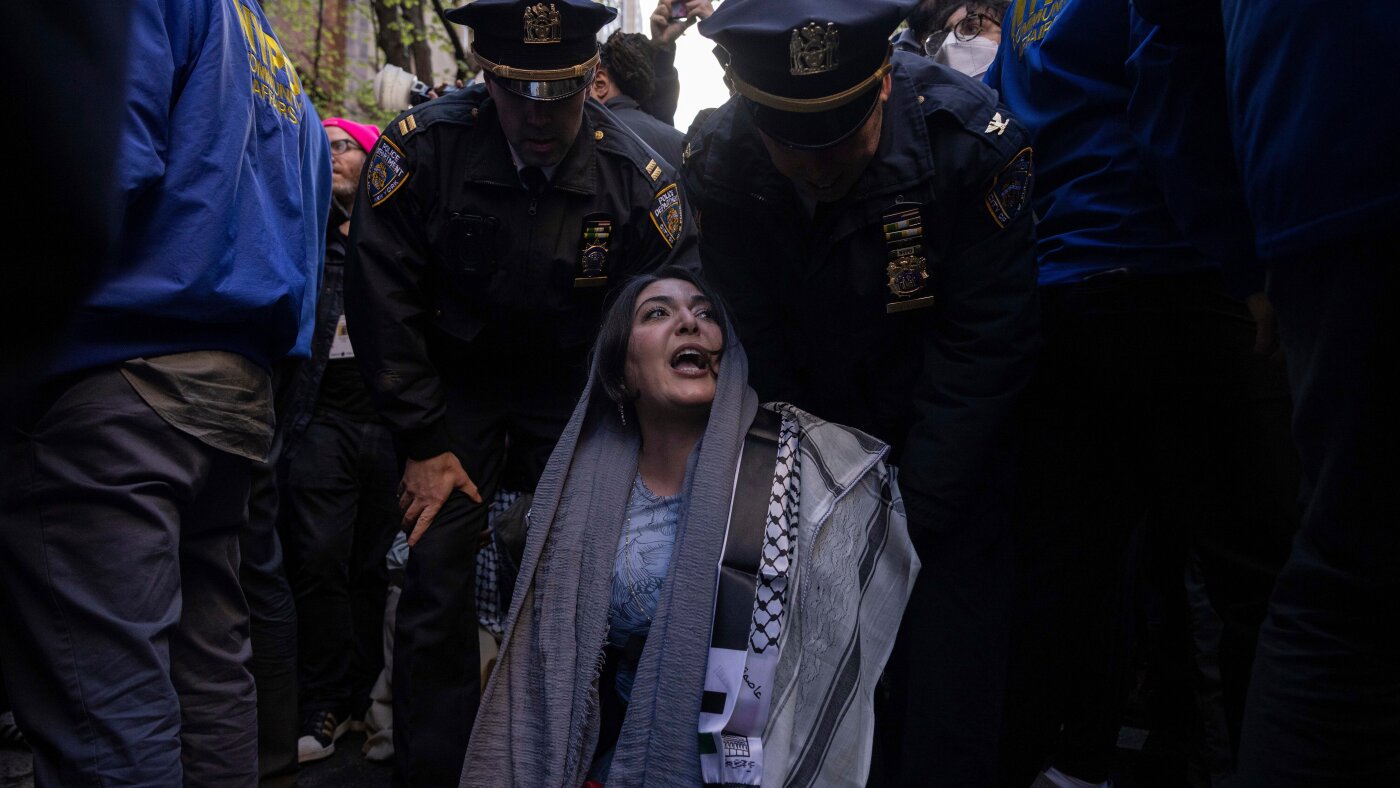
Man arrested in plot to firebomb Palestinian activist’s home after undercover op

WATCH: Senate hearing goes silent after Angel Father confronts top Dem over daughter’s death

US diplomat Marco Rubio denounces settler violence, tolls in Hormuz strait
-

 Detroit, MI1 week ago
Drummer Brian Pastoria, longtime Detroit music advocate, dies at 68
-

 Movie Reviews1 week ago
‘Youth’ Twitter review: Ken Karunaas impresses audiences; Suraj Venjaramoodu adds charm; music wins praise | – The Times of India
-

 Sports7 days ago
IOC addresses execution of 19-year-old Iranian wrestler Saleh Mohammadi
-

 New Mexico5 days ago
Clovis shooting leaves one dead, four injured
-
 Business1 week ago
Disney’s new CEO says his focus is on storytelling and creativity
-

 Technology6 days ago
YouTube job scam text: How to spot it fast
-

 Tennessee4 days ago
Tennessee Police Investigating Alleged Assault Involving ‘Reacher’ Star Alan Ritchson
-

 Texas1 week ago
How to buy Houston vs. Texas A&M 2026 March Madness tickets