Connect with us

Missouri

U.S. House may consider extending nuclear weapons damages program without Missouri • Missouri Independent

Published

on

U.S. House may consider extending nuclear weapons damages program without Missouri • Missouri Independent


A proposal to renew compensation for cancer victims who were exposed to radioactive material from the nation’s weapons development without expanding the program to Missouri and several other states amounted to a betrayal, Missouri advocates and lawmakers said Tuesday.

Members of Congress from Missouri learned late Tuesday that U.S. House Speaker Mike Johnson plans to extend the federal program for two years despite pressure from communities harmed by nuclear bomb testing and waste to expand the program. 

The announcement dealt a huge blow to advocates from St. Louis, the Navajo Nation and other communities that have been left out of the program, originally created in the 1990s. The existing program covers civilians in parts of Arizona, Utah and Nevada and uranium miners. 

“I cannot believe how emotionally manipulated we feel that Speaker Johnson would sit back and allow sick and dying community members to beg him for a meeting for months — then to spend (an) hour and a half with staff only to have the door slammed in our faces!” Dawn Chapman, co-founder of Just Moms STL, said in a social media post.

Advertisement

Chapman was reacting to a post from U.S. Sen. Josh Hawley, a Republican from Missouri, who said Johnson told Hawley’s office he’ll seek a bill that doesn’t cover either state. Hawley said he’ll put up roadblocks to keep any such bill from passing the Senate without a fight. 

“Total dereliction,” Hawley said. “No member from Missouri can possibly vote for this.”

Since last summer, Hawley has been pushing for an expansion of the Radiation Exposure Compensation Act, which was initially passed in 1990 and offered compensation to uranium miners and residents who lived downwind of nuclear bomb testing sites in certain states.

Hawley’s legislation, which has twice passed the U.S. Senate, would expand the program to “downwinders” in the remaining parts of Arizona, Utah and Nevada and bring coverage to downwinders in Colorado, Idaho, Montana, New Mexico and Guam. It would also expand coverage to those exposed to radioactive waste in Missouri, Tennessee, Alaska and Kentucky. 

The existing RECA program expires June 10, and advocates and lawmakers from states hoping to be brought into the program have been urging Congress to renew and expand it.

Advertisement

U.S. Rep. Ann Wagner, a Republican from the St. Louis suburbs, said on social media that a RECA bill without Missouri “is dead on arrival.” 

“I will continue to fight for the expansion of RECA so Missourians are given the justice they deserve,” she said. “The House can and must take up the Senate-passed version.” 

U.S. Rep. Cori Bush, a Democrat from St. Louis, also wrote on social media that “failing to expand RECA is not a viable option.”

“Next week, Speaker Johnson plans to rip off Missourians and thousands of others who are suffering from radioactive waste dumped in our backyards by the federal government,” Bush said. 

Parts of the St. Louis area have been contaminated for 75 years with radioactive waste left over from the effort to build the world’s first atomic bomb during World War II. Uranium refined in downtown St. Louis was used in the first sustained nuclear chain reaction in Chicago, a breakthrough in the Manhattan Project, the name given to the effort to develop the bomb. 

Advertisement

After the war, waste from uranium refining efforts was trucked from St. Louis to surrounding counties and dumped near Coldwater Creek and in a quarry in Weldon Spring, polluting surface and groundwater. Remaining waste was dumped at the West Lake Landfill in Bridgeton, where it remains today. 

Generations of St. Louis-area families lived in homes near contaminated sites without warning from the federal government. A study by the federal Agency for Toxic Substances and Disease Registry found exposure to the creek elevated residents’ risk of cancer. Residents of nearby communities suffer higher-than-normal rates of breast, colon, prostate, kidney and bladder cancers and leukemia. Childhood brain and nervous system cancers are also higher. 

Johnson’s office did not immediately return a request for comment.


Source link

Advertisement

Missouri

Missouri Farm Bureau to host agritourism conference in Hermann | Fulton Sun

Published

on

Missouri Farm Bureau to host agritourism conference in Hermann | Fulton Sun


Missouri Farm Bureau’s 2026 Agritourism Conference will be held Sunday through Tuesday in Hermann, bringing together agritourism stakeholders to explore opportunities in Missouri’s growing agritourism sector.

The conference usually draws 60-70 attendees annually, said Janet Adkison, director of public affairs and advocacy with Missouri Farm Bureau. This includes farmers, agribusiness leaders, tourism professionals and local economic development partners.

At the conference, participants will see firsthand how farms, wineries, orchards and other value-added agriculture business and rural destinations are connecting tourists and consumers with the state’s agriculture scene, while diversifying revenue streams for farm families and rural communities.

“Whenever folks think of agritourism, they think of a pumpkin patch or a flower farm,” Adkison said. “But agritourism is really anything that gets folks to connect with the agriculture industry. So from your Airbnbs that are out in rural Missouri to the wineries that you see across the countryside, to even a tree farm or just a simple orchard, those are all part of Missouri’s agritourism industry.”

Advertisement

The conference kicks off Sunday with welcome remarks by Missouri Farm Bureau president Garrett Hawkins and a dinner at Hermann Farm Store Barn. Participants will spend the nights at The Inn at Hermannhof.

Monday will include an agritourism bus tour, with stops at Thierbach Orchard, Heritage Valley Tree Farm, White Mule Winery & BNB and Cool Cow Cheese, where participants have the opportunity to speak to business owners.

It will be followed by a farm-to-table, wine-pairing dinner at Hermannhof Winery Court with the Missouri Wine & Grape Board.

“If you are somebody who’s interested in agritourism, you get to hear from somebody who’s been there and done that, and some of the hurdles that they may have experienced along the way,” Adkison said. “You’ll have that exposure both on the tour and also during the programs that they’ll provide on Tuesday.”

On the final day of the conference, participants will attend educational workshops and network with other vendors at Hermannhof Festhalle. Topics discussed in the workshops include marketing, risk management, USDA Rural Development resources for agricultural businesses.

Advertisement

“You’ll hear from some folks as far as the missteps or wins that they had while trying to market and get those crowds to come to the farm, and sometimes something might work, (or) something surprises you and it doesn’t work,” Adkison said.

The conference location rotates around the state each year — past stops have included northeast and west central Missouri, which Adkison said gives the conference a chance to showcase how agritourism looks based on the terrain and agricultural strength of each region.

Find out more about the event or register for it at mofb.org/event/2026-agritourism.


Source link

Advertisement
Continue Reading

Missouri

Missouri politicians champion unity, diversity on America’s 250th

Published

on

Missouri politicians champion unity, diversity on America’s 250th


Former Missouri Gov. Jeremiah “Jay” Nixon followed in his ancestor’s footsteps, 250 years to the day.

On July 8, 1776, Colonel John Nixon was the first person to publicly read the Declaration of Independence from the steps of the Pennsylvania State House, now Independence Hall.

Jay Nixon, along with other Missouri officials from local, state and national offices, participated in a semiquincentennial celebration at the Historical Greene County Courthouse on July 8, 2026.

“As we commemorate 250 years of American independence, may we remember not only the courage of those who signed the declaration, but also our responsibility to preserve the freedoms they declare,” said Connie Yen, director of the Greene County Archives and Records Center.

Advertisement

While the reading of the Declaration of Independence was the main event, patriotic music from the Salvation Army Band, Springfield Sound, the Patriotic Chorale — as well as the national anthem sung by former U.S. Attorney John Ashcroft and former judge and representative Max Bacon — rang throughout the courthouse’s rotunda, which was packed with people. The music itself, Ashcroft said, was a metaphor for the nation.

“There is something charming about America that doesn’t require that we be uniform. There’s a difference between unity and uniformity. As a matter of fact, you can’t have harmony if you only have one note. You have to sing different notes for things to be harmonic and it’s much more beautiful,” he said. “Maybe America is America not because of uniformity or everybody being in unison, but America may be America because we have disparity, but we’re in harmony. We believe in unity, not uniformity.”

Before reading the Declaration of Independence, Nixon shared part of a speech he gave at Fulton’s Westminster College in August 2025, where he encouraged people to “resist apathy with action” through involvement with civic and faith organizations, and by voting. Like others, he emphasized diversity as the strength of America.

Advertisement

“(We’re) a nation of immigrants. Many of our ancestors fled poverty, injustice and tyranny to build something better. We are the great-great-great-grandchildren of slaves, and those who enslaved them; the first families who inhabited these lands, and those who drove them from it,” Nixon said. “A nation of scrappy strivers stitched together by our ideals, marked by original sins, but redeemed by the courage and sacrifice that saved us from fascism and unleashed freedom and prosperity — the envy of the world. That is the true story we all need to tell, the promise we made to each other that we work every day to keep.”

The reading was followed by an ice cream social, co-hosted by the Greene County Democratic and Republican women’s clubs.


Source link

Continue Reading

Missouri

UPDATE: Suspect wanted in Kansas captured near Columbia; Missouri State Highway Patrol aircraft plays key role | 93.9 The Eagle

Published

on

UPDATE: Suspect wanted in Kansas captured near Columbia; Missouri State Highway Patrol aircraft plays key role | 93.9 The Eagle


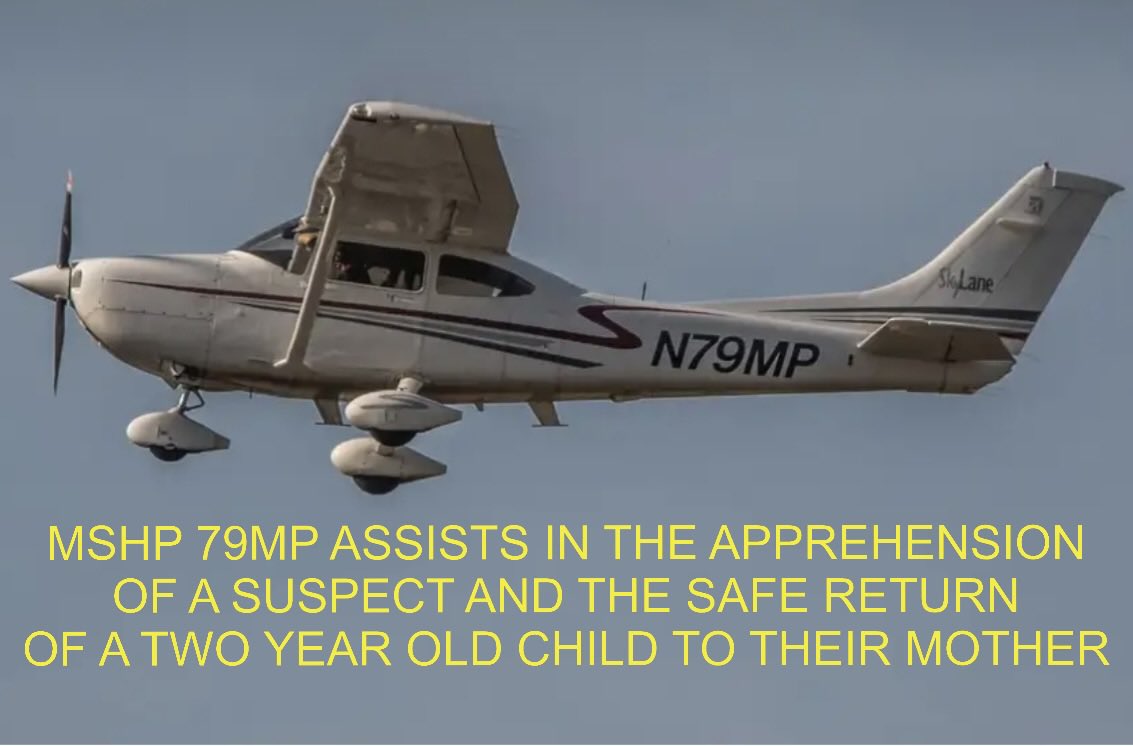
The Missouri State Highway Patrol says one of its planes played a key role in Tuesday morning’s capture on I-70 near Columbia of a Kansas suspect wanted for child endangerment.

Missouri state troopers say they were on patrol near a rest area on eastbound I-70 in Cooper County, when they located a Dodge Durango wanted for an alleged incident in Topeka. Troopers say the suspect drove off after seeing troopers and that the Patrol plane was used to avoid a pursuit.

Troopers say they were able to get in position after the plane’s pilot located the vehicle and that the Patrol deployed stop sticks and safely deflated the suspect’s tires.

hmqqi61wwaa0bs7
A Missouri State Highway Patrol aircraft played a key role in Tuesday morning’s capture in mid-Missouri (July 2026 graphic courtesy of Highway Patrol Twitter)

The Highway Patrol says the suspect was captured without incident and that the two-year-old child, who was unharmed, has been reunited with their mother.

Advertisement


Source link

Continue Reading
Advertisement

Trending